

Welcome to a milestone blog for Workbench, our 50th edition! Today we're marking fifty feature packed editions and almost two years of news and exclusives from behind the scenes at Airfix. Although this is clearly a momentous occasion for the entire Airfix team, it would not have been anything like as significant without the steadfast support of our readers and we would like to sincerely thank you all for helping to make Workbench a resounding success. As readership numbers continue to grow, we look forward to the next fifty editions of our blog where we will endeavour to keep on bringing you exclusive announcements and interesting features from the world of Airfix and our shared passion for the modelling hobby.
As this is such a special edition, we really wanted to bring you something befitting of our half century blog and Workbench readers will be pleased to hear that we think we have done just that. You will be the first to discover some exclusive modelling news as we bring you exciting confirmation of a completely new model tooling in 1/72nd scale for 2018. If that was not excitement enough for one blog, we also have news of a unique opportunity for one lucky Workbench reader to be immortalised in Airfix history! This is something really special and a prize any Airfix fan would love to boast about. We think we have set the scene for Workbench edition 50 now, so it’s about time we got started.
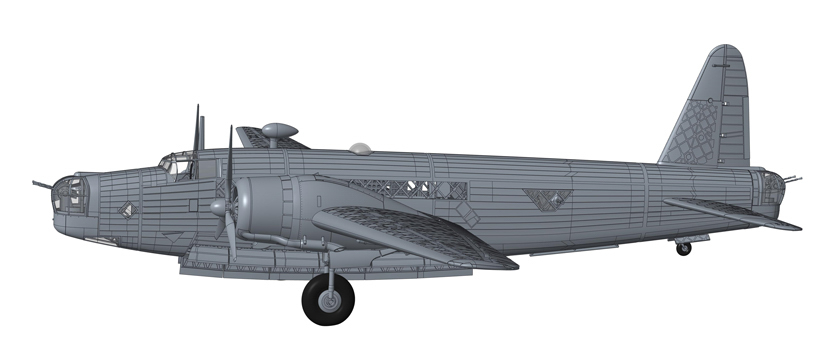
A tantalising CAD screenshot of the new Airfix 1/72nd scale Vickers Wellington Mk.IC
There is no way that we could let the occasion of publishing our 50th Workbench blog pass without bringing our readers something a little special. Experience has shown us that the blog content you prefer above all other features is to have exclusive confirmation of new Airfix model tooling before anyone else and as this is something of a significant occasion, that is exactly what we have for you. You are the first to learn of a new 1/72nd scale tooling for release in the 2018 model range, which will introduce a highly detailed example of one of Britain’s most successful aircraft of the Second World War and one which proved crucial during the early years of the conflict. Adopting a revolutionary construction method, this medium bomber would go on to serve throughout WWII and be produced in greater numbers than any other British made bomber – the 2018 Airfix model range will include a newly tooled example of the Vickers Wellington Mk.IC.
It is accurate to say that many of the aircraft developed in the years immediately preceding the outbreak of war in 1939 went on to become some of the most important machines of the conflict. From the perspective of the Royal Air Force, Hurricane and Spitfire fighters of the Battle of Britain would be forced to challenge a concerted onslaught by superior numbers of Luftwaffe aircraft, determined to clear the air of British air power as a precursor to invasion of southern England. Britain’s bomber force would be used to target invasion barges moored in ports along the channel coast, before taking the war to German cities following the Luftwaffe’s bombing of London. At sea, the obsolete Fairey Swordfish would launch the first successful naval strikes against Axis warships and prove to be a devastatingly effective weapon in the hands of highly capable Fleet Air Arm crews. Of course, the situation would also be exactly the same for Axis air forces, although it could be argued that they were better prepared for war.
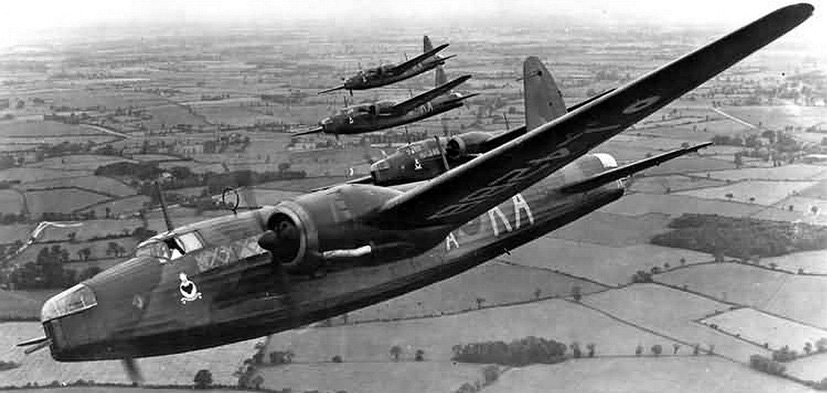
A spectacular formation of early RAF Vickers Wellington bombers over the British countryside
Britain’s bomber force at the beginning of the Second World War only consisted of around 300 aircraft and was made up of both light and medium bomber squadrons. The most capable medium bomber of the day was the twin-engined Vickers Wellington, which first flew 1936 and entered RAF service with No.99 Squadron at Mildenhall in October 1938. The production aircraft bore little resemblance to the prototype aircraft and compared to contemporary medium bombers already in service, the Wellington appeared to be much more advanced in design and an aircraft to be feared by any potential enemy. Its sleek monoplane design and heavy defensive armament placed the new Wellington as one of the most advanced and capable medium bombers in the world.
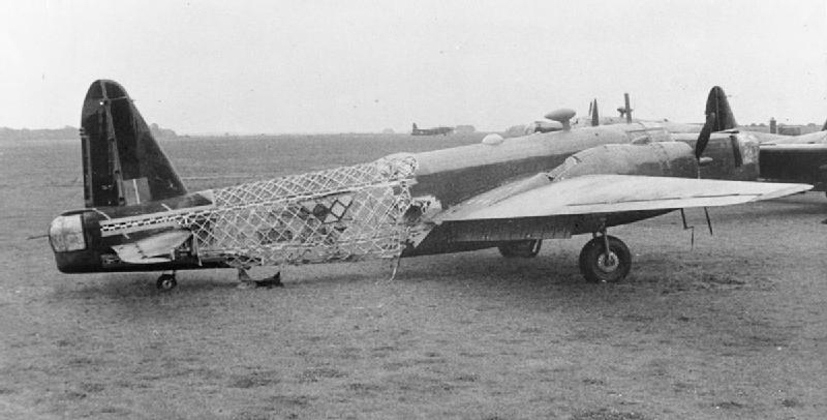
The distinctive geodetic construction used on the Wellington can be seen in this image
Perhaps the most significant feature of the Wellington's design was the adoption of a geodetic construction method, which was developed by famous British engineer and inventor Barnes Wallis. Duralumin W-beams were used to form a metal lattice-work construction on to which wooden battens would be screwed, which would then allow the doped fabric outer skin of the aircraft to be attached. The resultant fuselage was relatively light in weight but possessed great strength and whilst this method of construction posed challenges for companies engaged in manufacturing Wellington bombers, the inherent strength of the design would prove crucial when the aircraft was thrust into combat. Capable of withstanding significant battle damage, numerous RAF Wellingtons managed to bring their crews back home, when other bombers would have failed to do so.
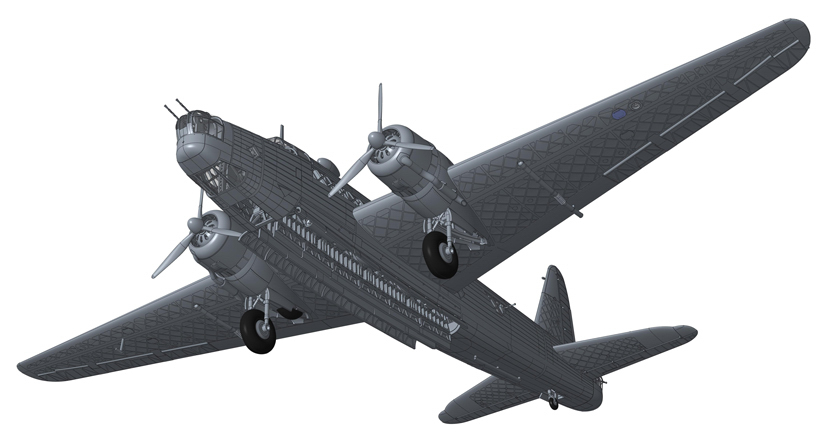
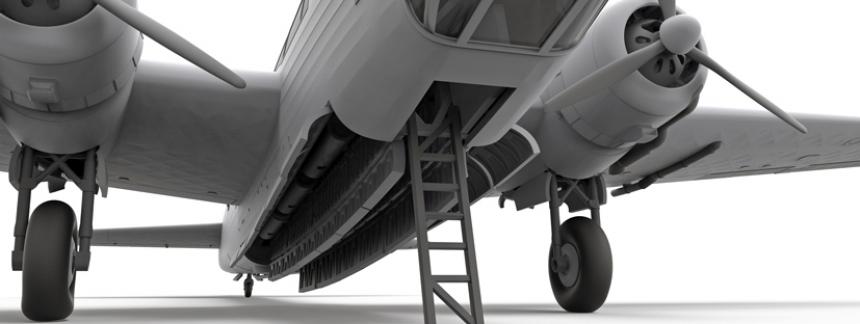
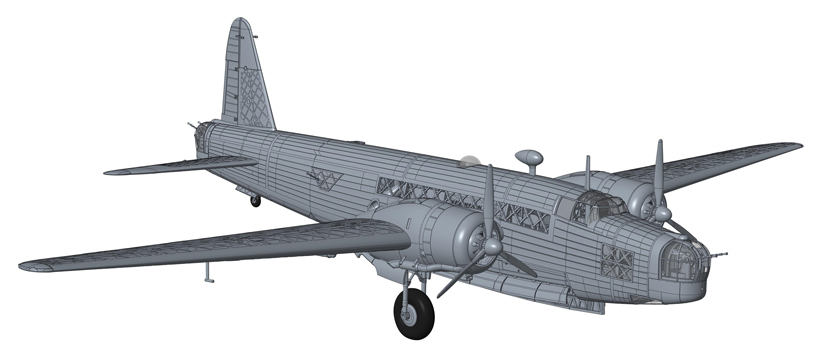
Another pair of CAD screenshot views from the new Wellington Mk.IC tooling
Many Airfix modellers will have fond memories of building their 1/72nd scale Vickers Wellington kit in their youth – in fact for many of us, we have probably built several examples over the years. Most will have been inspired by the incredible artwork of Roy Cross, which featured the dramatic scene of a Wellington B.III flying just above the sea, one engine feathered and smoking and with a large section of its rudder shot away. It is being chased by a pair of Bf 109 fighters intent on bringing the bomber down, but the tail gunner is letting them feel the full force of his quad browning machine-guns as the Wellington heads for home. In truth, the Wellington kit was always one of the most impressive in the range and built into one of the most interesting models in our collections – it would be interesting to know just how many of us tried to emulate the box artwork in our displays, with a couple of Messerschmitts positioned behind it.
It is difficult to believe that a kit which still holds such affection with Airfix modellers was first released in the late 1950s and must rank as one of the most successful releases in our history. The popularity that the venerable old Wellington continues to enjoy is one of the main reasons why the aircraft was considered as a future new tooling project and the Airfix team are proud to announce the production of a new 1/72nd scale Vickers Wellington IC tooling, which will take its place in the 2018 model range. Announced much earlier than would usually be the case, we only have a small number of images currently available for the development of this exciting new kit, but certainly enough to give you an idea of how spectacular it is going to be. Utilising all the latest design and manufacturing techniques modellers have come to expect from Airfix, we will bring you many more updates from this new tooling project in future editions of Workbench, as the Wonderful Wimpy advances towards release.
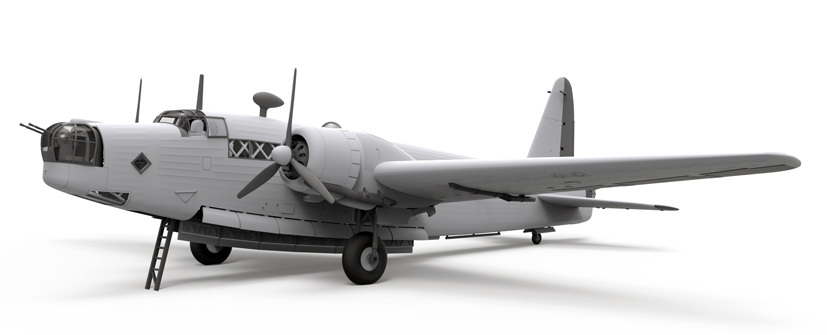
This next selection of images show various computer rendered 3D images from the new 1/72nd scale Wellington Mk.IC project
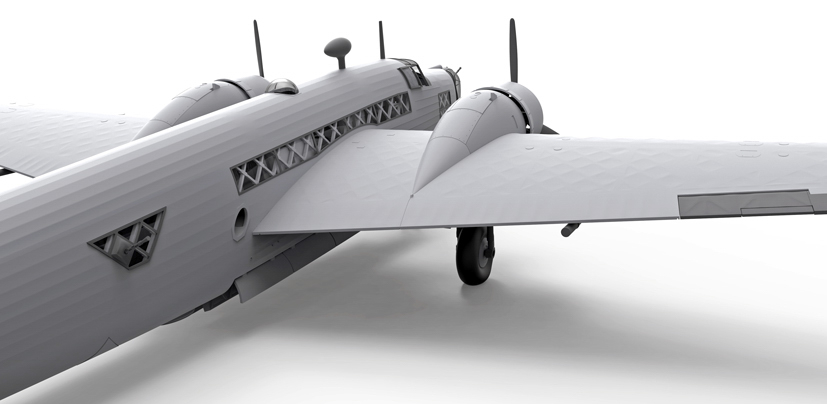
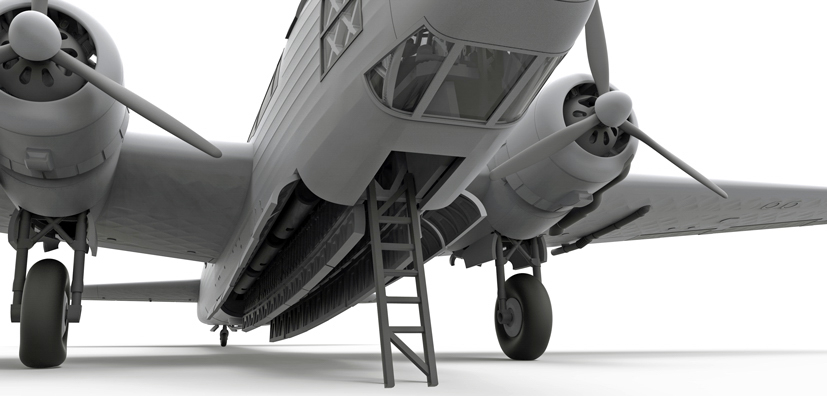
The Vickers Wellington was undoubtedly a significant contributor to Britain’s war effort during the dark days of the Second World War. Built in greater quantities than any other British built bomber and in production throughout the war, it is difficult to believe that from the 11,461 aircraft constructed, only two complete examples survive to this day - a Mk.X (MF628) undergoing long-term restoration at the RAF Museum Cosford and Wellington Mk.lA (N2980) recovered from Loch Ness in 1985 and now on display at the magnificent Brooklands Museum (Wellington N2980 was originally manufactured at Brooklands). The development team behind the new Airfix Wellington Mk.IC tooling project were fortunate enough to have access to original engineering drawings and other rare Wellington information which helped them to obtain the most accurate information available, which is a crucial component of any new tooling project. They would like to place on record their grateful thanks to the knowledgeable staff and officials at the Brooklands Museum for their invaluable help in obtaining the information they required to produce their latest plastic masterpiece.
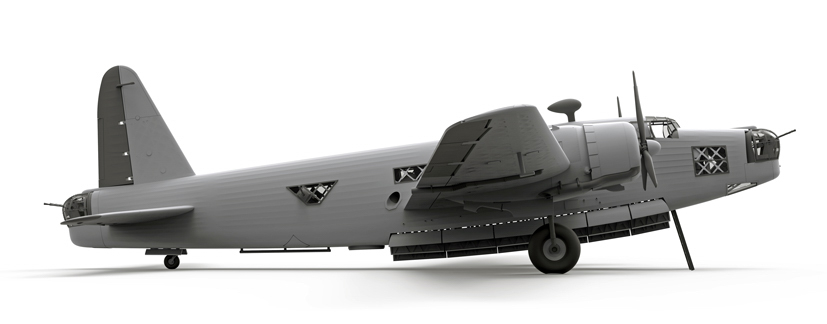
This computer rendered 3D image will leave many modellers looking forward to the arrival of this model
The Wellington proved to be an important weapon for Britain’s Bomber Command during WWII and as such, saw development throughout its service life. The second most numerous version, the Mk.IC was similar in appearance to the earlier Mk.IA, but could boast a number of alterations and improvements. Structurally, the IC disposed of the weighty and difficult to operate retractable ventral turret of the earlier version and replaced it with a pair of sideways firing .303-inch browning machine guns mounded in mid-fuselage positions on either side of the aircraft. Internally, the Mk.IC benefitted from an improved hydraulic system and new 24 volt electrical system and was the first Wellington to be fitted with the ‘Lorenz beam’ blind landing equipment.
The Mk.IC entered RAF service in April 1940, when the costly daylight raids of the previous few months had finally been halted due to poor results and heavy loss rates. The Wellington would fare much better during night operations, which was the environment in which the aircraft was designed to operate. RAF Wellingtons took part in the first bombing raid against Berlin on the night of 25th August 1940, as retaliation for the Luftwaffe bombing London the previous night. It is not thought the German bombing of London was intentional and was merely a disorientated Luftwaffe bomber crew straying off course, but the incident did present the RAF with an opportunity to change the course of the Battle of Britain. Hitler was so enraged by the symbolic Bomber Command raid that he vowed to flatten London in retaliation and diverted his bombers away from Fighter Command sector stations, which had been taking a merciless pounding over previous weeks and were close to collapse.
Wellingtons would also be significant contributors to Bomber Commands first 1000 bomber raid on the night of 30th-31st May 1942, as a maximum effort was launched against the German city of Cologne. Of the 1,042 aircraft taking part in the raid, 599 were Wellingtons – significantly though, the raid also included the first of the RAFs new four engined heavy bombers, which would be the future of the force.
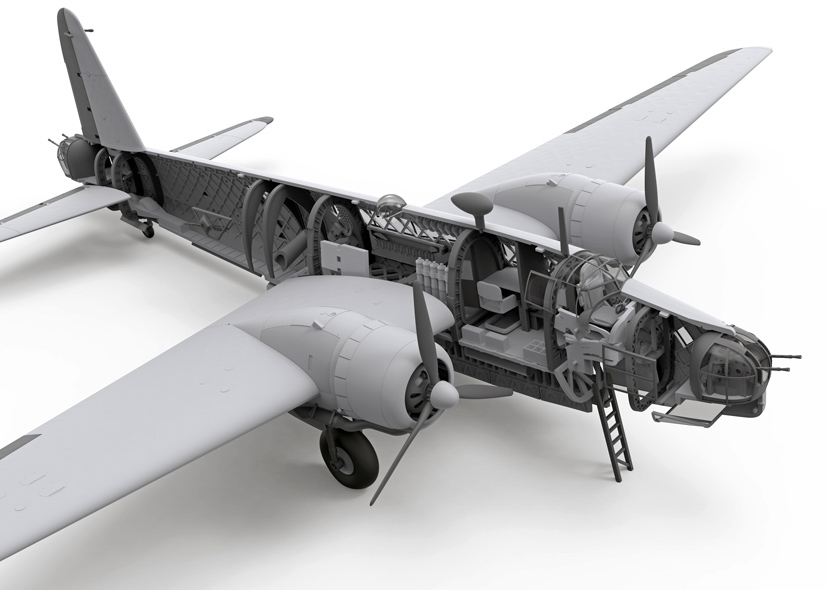
This final rendered 3D image shows a cut-away view of the fuselage of the new Wellington tooling.
Although the Wellington Mk.IC project is still very early in its development, we are happy to share this fantastic news with you, by way of marking the 50th edition of our Workbench blog. We have included a number of CAD screenshot images from the project, along with several computer rendered 3D images, which certainly show some of the impressive levels of detail we have to look forward to on this beautiful model. We know this will be a popular addition to the 1/72nd scale kit line-up and we look forward to bringing you plenty of updates from the Wellington Mk.IC project as it advances towards its eventual release which is currently slated for May 2018. For now, we hope you have enjoyed this exclusive new tooling preview and a first look at the development images from this new model tooling.
Over the past two years, Workbench has brought you exclusive new tooling announcements, artwork reveals, decal scheme details, project updates and numerous reader supplied features. Our aim has always been to make our blog an interesting read for anyone who enjoys the modelling hobby and to bring you exclusive content wherever possible. With this in mind, we wanted to mark the occasion of our 50th edition with a competition prize that would really appeal to modellers all over the world and one that everyone would feel was definitely worth winning – we think we have just the thing!
In Workbench editions 45 and 46, we included features which looked at the artistic talents of Airfix Illustrator Richard Petts and his distinctive work in producing kit instruction booklets, which have become such a significant component of any Airfix model release. These two blogs proved a fascinating insight into these booklet that we are all so familiar with and are already amongst the most popular editions of Workbench from a readership perspective – based on this popularity, we thought that there had to be a 50th edition prize opportunity here.
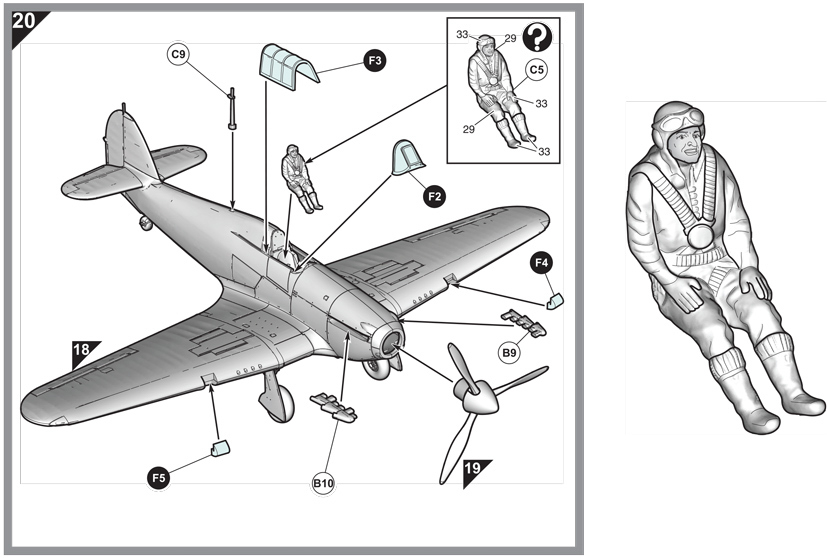
A future Airfix instruction booklet will include a pilot figure caricature of our competition winner
The prize awaiting our competition winner is quite simply Airfix immortality. One lucky winner will have a caricature representation of their face included in the official Airfix instruction booklet of a forthcoming kit release – your face could be the pilot in the next Airfix new tooling announcement instruction booklet. This is a fantastic prize and one that is unique in the modelling hobby. It will be a high profile prize for anyone interested in modelling and will receive wide exposure across multiple media channels, bringing modelling fame to our lucky winner. At this point we have to stress that the caricature representation will only be on the instruction booklet itself and not the plastic pilot figure in the kit. Nevertheless, this is a significant prize and instant modelling fame for our winner.
Our talented Airfix Illustrator Richard Petts has kindly agreed to use his artistic skills to immortalise the winning entrant in Airfix history, by producing a caricature of their face to be used as the pilot illustration in a future instruction sheet. He will need a couple of clear photographs of the winner's face from different angles, which will then allow him to create the caricature and produce this unique prize. Surely something that anyone who has ever made an Airfix model would want to win, we hope as many Workbench readers as possible will enter our special 50th edition competition and be in with a chance of winning this fantastic prize. As you can imagine, there have been some lengthy discussion behind the scenes in order for us to offer this prize, so we would like to thank the Airfix team and particularly Richard Petts for helping us to achieve this little bit of Airfix history.
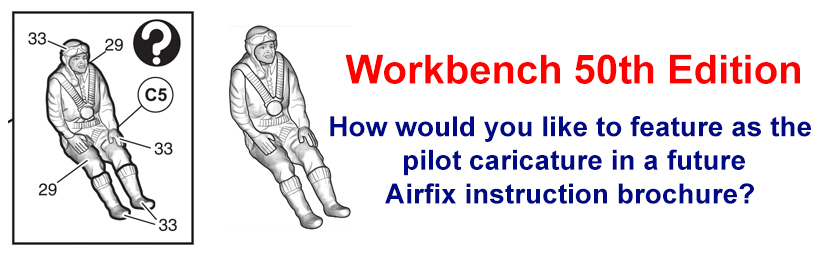
Airfix immortality awaits our lucky winner
To give as many people as possible the opportunity to win our caricature prize, we have a simple question for you to answer – please head over to our Competitions Page to enter. The competition runs until Thursday 20th July and we look forward to announcing our lucky winner in a future edition of Workbench. Good luck to everyone!
We end this latest edition of Workbench by delving into our ever popular Customer Images section and featuring some of the impressive modelling talents of Workbench readers and website contributors. We spotted this beautifully finished Bristol Blenheim Mk.IF (A04059) which was recently uploaded by Mariusz Kornatka and asked if we could use a selection of images in the current edition of Workbench and Mariusz kindly agreed. Here are some of the build images he sent us:
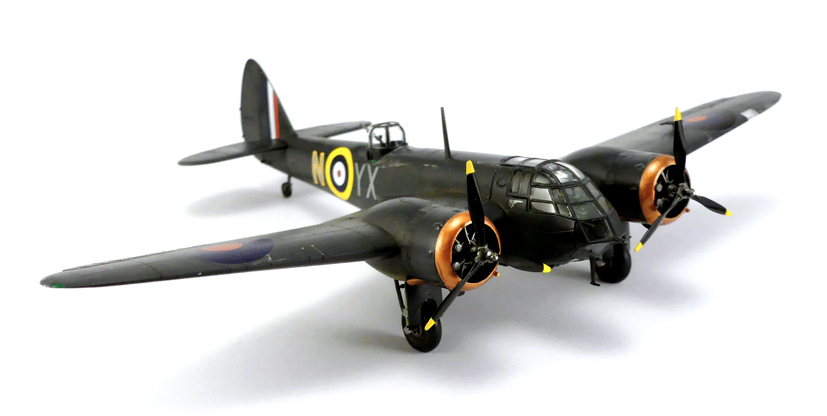
A selection of Blenheim Mk.IF Nightfighter build images supplied by Mariusz Kornatka
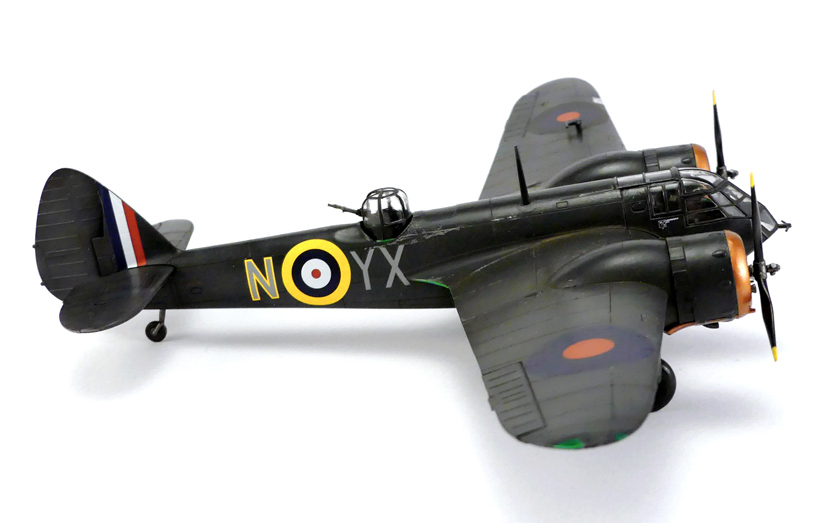
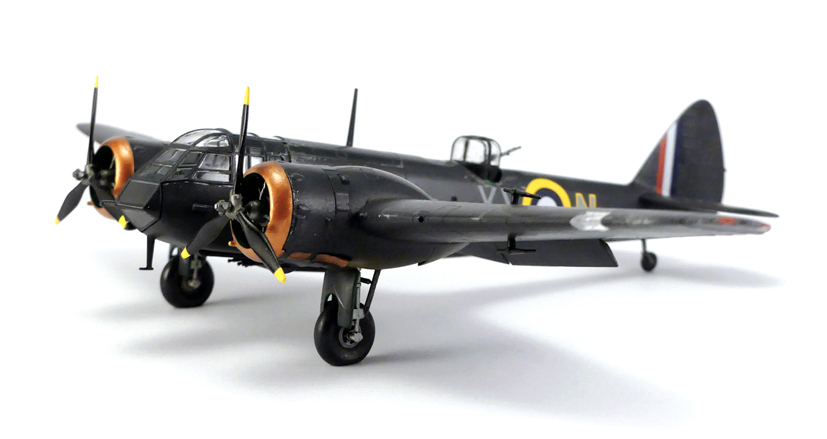
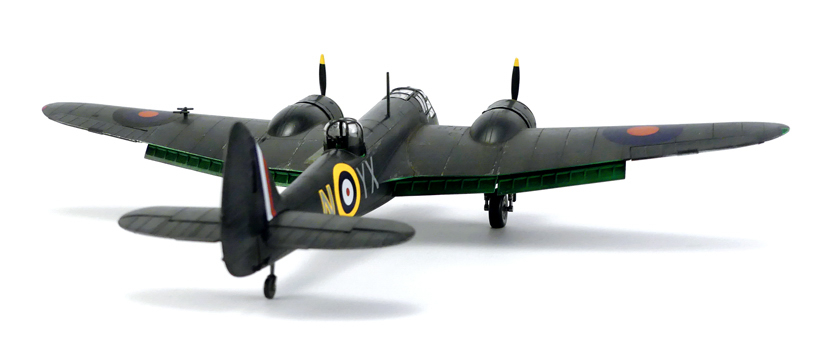
The aircraft that Mariusz decided to model is Bristol Blenheim Mk. IF K7159 / YX-N, RAF No. 54 Squadron Operational Training Unit, Church Fenton, North Yorkshire, December 1940.
Equipped with the Airborne Intercept radar unit to aide night detection of enemy aircraft, this particular Blenheim was employed in training nightfighter crews in interception techniques, before they went on to fly either Mosquito or Beaufighter nightfighters. Flying from RAF Church Fenton, the northern situation of the airfield meant that training could take place with only a limited threat of attack by Luftwaffe bombers.
Thank you to Mariusz for sending us his fantastic Blenheim build pictures – he likes to go by the forum nickname of Panzer Machine and you can see more of his work on his website.
That’s it for this landmark 50th edition of Workbench – we hope you enjoyed the exclusive new tooling announcement and don’t forget to enter our competition and your chance to become the most talked about person connected with Airfix.
As usual, we are always interested to hear what our readers have to say and are grateful for any modelling features or build pictures you may care to send us. There are several ways you can contact us, including our dedicated e-mail address workbench@airfix.com and of course the Workbench thread over on the Airfix Forum.
If social media is more your style, you could access either the Airfix Facebook page or our Twitter channel, using #airfixworkbench where you will find plenty of modelling news, views and discussion. Whichever medium you decide to use, please do get in touch, as it is always interesting to hear from fellow modelling enthusiasts.
Finally, the Airfix website is the place where you can find all the latest model release information, with our New Arrivals and Coming Soon sections all accessed by clicking on the above links. As updating the website is a constant process, a quick search through each section of the Airfix web pages will reveal new information and updated images in many of the product sections and this is always an enjoyable and rewarding way to spend a few minutes.
We look forward to bringing you the landmark 50th edition of Workbench on 7th July.
The Airfix Workbench Team
© Hornby Hobbies Ltd. All rights reserved.

