

Welcome to the latest fortnightly edition of Airfix Workbench and our regular review of all things Airfix. For this latest edition, we have an exciting update on one of the most significant new Airfix kit announcements from 2015, which was first revealed at the IPMS Scale ModelWorld show at Telford in November. We are pleased to be in a position to bring you a major update on this project, including a number of exclusive images which show the current state of this magnificent new kit. We will also go on to bring you up-to-date with two further model projects announced during 2015, which are fast approaching release. With so much to fit into this latest edition of Workbench we had better make a start.

The unmistakable outline of Britain’s third V-Bomber, the Handley Page Victor
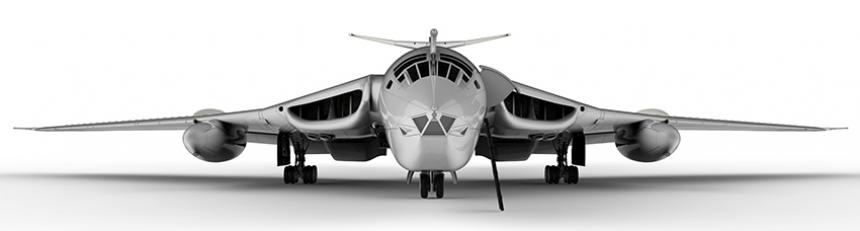
As Britain entered the volatile post WWII Cold War period and was in need of a potentially devastating nuclear deterrent force of her own, the RAF were charged with ensuring the effectiveness of this force. With two nuclear capable bombers already in service with the Royal Air Force, the Handley Page Victor bomber was viewed as something of a radical design option, and at the time was very different to any British aircraft that had gone before it. Incorporating a sweeping crescent shaped wing design, which had three stepped ‘kinks’ from the wing root to its tip and reducing in angle at each point, the Victor was most certainly a distinctive looking aircraft.
Designed with high speed flight stability as a primary consideration, the Victor had a high T-tail unit and a distinctive pointed front fuselage profile, which gave the bomber a unique appearance, but certainly did not detract from the effectiveness of the design. The Victor was the last of Britain’s three V-Bombers to enter service, but many observers regard it as being the most capable of the trio, even eclipsing the capabilities of the much loved Avro Vulcan. Without doubt, the most impressive version of the Victor was the nuclear ‘Blue Steel’ equipped B.2 bombers, which just looked so ominous that it certainly helped to protect Britain from the horrors of nuclear conflict.
Despite the undoubted success of the Victor B.1 bombers, Handley Page felt that they had not realised the full potential of the design and they began work on producing an upgraded ‘Super Victor’. Clearly demonstrating the flexibility of the original design, the Victor B.2 featured a number of significant improvements over the earlier aircraft, as designers looked to send the aircraft higher and faster. The new Rolls-Royce Conway turbojets replaced the original Sapphires, but required some significant re-design of the wing area. The intake inlets were increased in size to allow for greater airflow into these more powerful engine units, and wing modifications to the root and tip areas resulted in an overall span increase of some 10 feet. A host of internal equipment upgrades made the aircraft more effective and the inclusion of an auxiliary power unit in the right wing stub allowed the aircraft to self-start, without the need for specific ground support units.

This computer rendered 3D CAD image of the Airfix Victor has got modellers just a little excited
As the Victor showed itself to be a strong and flexible airframe, other modifications soon followed and the clean, sleek appearance of the early aircraft soon disappeared beneath a multitude of probes, lumps and bumps. These were all designed to increase the operational effectiveness of the aircraft, as its operating environment evolved and better technology became available. Almost as soon as the B.2 Victors entered service, a significant modification was required to allow the aircraft to carry the ‘Blue Steel’ nuclear stand off missile. This was carried in a semi-recessed position under the fuselage of the Victor, with the missile adopting a distinctive nose down attitude. These white anti-flash Victors were arguably Britain’s most feared and ominous looking nuclear deterrent aircraft during the period when the RAF carried this significant responsibility.
The IPMS Telford announcement that Airfix intended to produce a new Handley Page Victor B.2 in 1/72nd scale was understandably met with great excitement amongst the modelling community and images of a mock-up model on the Airfix stand at Telford only served to heighten the anticipation. Looking absolutely resplendent in its anti-flash white V-Bomber scheme, this model was possibly the most photographed exhibit at the 2015 show and allowed anyone lucky enough to see it to get an impression of just how impressive the new Airfix Victor kit would be. As many modellers will have been following this project with interest, we are pleased to be in a position to show you the latest images from the new Victor B.2 tooling in the latest edition of our blog.

Victor mock-up model on the Airfix stand at Telford 2015
Although this impressive new model was only announced towards the end of last year, the Airfix designers have been working on this project for many months now. This is clearly a significant new model for Airfix, and for an aircraft as large and complex as the Handley Page Victor B.2 every ounce of their skill and experience has been brought to bear, as the unique shapes and contours of Britain’s final V-Bomber will have posed some significant challenges. Incorporating the impressive levels of detail and accuracy associated with the very latest Airfix kit releases, the new 1/72nd scale Victor will certainly be a modelling highlight when it is released towards the end of the year.

‘First Shot’ test frame images of the Handley Page Victor B.2 tooling

More test frame components from the all important first tooling shot

Interesting test build images of the cockpit and ‘Blue Steel’ missile sections

Underside detail from the first test build of the Victor B.2

First test shot image, showing cockpit and undercarriage component detail
The exclusive images we have included in this latest blog illustrate the current status of the Victor project and show that it is advancing nicely. They show the first test frame images from the Victor tooling, which is a critical stage in the life of any new model. Before it can advance any further, the designer responsible for the project will have to inspect every aspect of the components, assessing them for accuracy, detail and eventual construction fit. He will undertake a test build of the components, painstakingly compiling a review of his findings which will need to be incorporated into the tooling design before the project can advance further. It has to be stressed that the images you are seeing here are of the first test shots from the Victor tooling and any number of alterations and modifications may be required, before the tooling is released for production. Indeed, following our attendance at IPMS Telford with the mock up model, we changed the shape of the engine intakes after receiving some expert feedback.

Test build image highlighting the impressive levels of detail incorporated into the Victor project
The images clearly show the impressive levels of detail that have been incorporated into this new model and will certainly keep this project at the forefront of many modellers' minds. As work continues on the new Victor over the coming months we will keep you fully informed on all the latest developments and we hope that you have enjoyed seeing the current status of this exciting project.
A12008 Handley Page Victor B.2 1:72 is currently scheduled for release in October 2016.

Box artwork showing Canberra WT313 spoiling someone’s day
Arguably one of the most impressive kits that has ever appeared in an Airfix model line up is the 1/48th scale English Electric Canberra and although this particular model has not been available for some time now, it will make a triumphant return to the range later in 2016. The Canberra was an early jet powered medium bomber, which really was cutting edge technology in the early years of jet aviation and proved to be a hugely successful aircraft for the British aviation industry. Possessing performance greater than that of the jet fighters of the day, the Canberra was even of interest to the US military, who built 400 aircraft under licence with the designation Martin B-57.
The re-issue of the 1/48th scale Canberra kit (A10101A) later in the year will be welcome news for many modellers and it is sure to be a popular build project during 2016. We are now in a position to bring you the scheme details for the decal options that will be included in this release:

Decal Option A
English Electric Canberra B(i)6, WT313, RAF No.213 Squadron, Bruggen, Germany, 1969
The RAF Canberra was to remain in service over an impressive 50 year period as the initial design of the aircraft proved so successful, and proved difficult to replace. This particular version of the Canberra performed as an Interdictor strike aircraft and was equipped with a belly mounted gun pack, which housed four 20mm cannons. In this configuration, the Canberra was capable of mounting devastating strafing attacks against ground targets, at relatively high speed.
WT313 was declared a write off, after severe damage was discovered during routine maintenance at 431 MU, RAF Bruggen. Struck off charge, the aircraft was eventually scrapped.

Decal Option B
English Electric Canberra B.20, A84-205, No.1 (Bomber) Operational Conversion Unit, Royal Australian Air Force, Amberley, Queensland, 1968
This beautifully appealing RAAF scheme will tempt many modellers, as it really does lend itself to the clean lines of the Canberra. The B.20 version of the aircraft was basically a B.2 airframe with additional fuel tanks in the wings and licence built in Australia. Australia eventually purchased just under 60 Canberra bombers and trainers for their air force.
The current anticipated arrival date for Canberra A10101A is early June, but you can stay abreast of the latest release information by checking the Airfix website regularly.
Eighth Air Force diorama delight

Product artwork for the USAAF 8th Air Force re-supply set
Many Workbench readers will recall that the fourth edition of our blog included the exclusive announcement that Airfix would be producing a 1/72nd scale USAAF bomber re-supply set (A06304), which is surely destined to find its way into many model collections. Featuring a number of US airfield support vehicles which were commonplace on airfields across the UK during the latter stages of WWII, this new set will add aesthetic appeal to any display of WWII US aircraft, but will be especially appropriate for the new 1/72nd scale Boeing B-17G Flying Fortress, which is due to arrive late May.
For the first time in the Airfix range, this new set will allow modellers to produce a range of vehicles which will certainly add some modelling drama to any WWII US Bomber display and most certainly if the model is of an aircraft that flew in the colours of an Eighth Air Force Unit. It will include a multitude of scale items that could be seen on any US airfield during WWII, but will specifically allow the modeller to produce the following vehicles – Autocar U-7144-T tractor unit and F-1 fuel tanker, Chevrolet M6 bomb service truck and trailer and Cushman Model 39 Package Car. These vehicles would have been used to fuel, arm and load bombs into US bombers, in preparation for the next bombing raid against targets in Germany and occupied Europe.

Individual vehicle details from this fantastic USAAF re-supply set
This is the first opportunity to provide you with an update on these highly anticipated models which are scheduled for release later in the year – we can now bring you details on the paint and decal details which will accompany the release. For the WWII enthusiast modeller, there will be no real surprises here with regard to the schemes selected for these vehicles, but we can certainly start to get excited about these models arriving in the near future and how great they will look underneath the wing of a Liberator or Flying Fortress. To obtain all the very latest release information on impending Airfix releases, please head for the New for 2016 section on the Airfix website, which is updated regularly. We look forward to bringing you further updates when they become available.

Classic Airfix Starter Sets for the coming Airshow season
The UK Airshow enthusiast is lucky to have a large number of display events to choose from during the summer months, with the opportunity to get closer to the aircraft that fascinate them so much. It is also a fantastic opportunity for youngsters to become a little more enthusiastic about the subject of aviation, and whenever this occurs it is always nice to be able to accommodate this interest. With this in mind, there are a number of excellent Airfix Starter Kits which whilst appealing to modellers of all abilities, are perfect for younger modellers, or people coming back to the hobby after a break. The beauty of these particular kits is that they support the enthusiasm and excitement of the model purchase and allow the modeller to begin building their kit almost as soon as they open the packaging.
The Starter Sets are supplied complete with a selection of acrylic paints, either one or two paint brushes and a tube of poly cement and these excellent kits are intended to introduce new or younger modellers to this fantastic hobby and to hopefully stimulate them into taking up modelling on a regular basis.
Obviously, the models that will appeal most to the novice modeller will be aviation subjects that they have just seen performing at their latest Airshow and there are a couple of current Starter Sets that certainly fall into this category and will be in high demand over the coming summer months.

Stunning box artwork featured on the Red Arrows Starter Set
A55202B is a new starter kit release, arriving next week, which presents the modeller with an example of the British Aerospace Hawk T.1A in the famous colours of the Royal Air Force Aerobatic Display Team ‘The Red Arrows’. Always a highlight of any Airshow programme, the Red Arrows are perhaps the most visible aircraft of today’s Royal Air Force and continue to thrill and inspire enthusiasts and the general public alike. This newly released kit includes decals to complete your model as Hawk T.1A XX310 (c/n. 145/312135), which is based at the home of the Red Arrows, RAF Scampton in Lincolnshire and presents the aircraft in the 2015 design of this iconic scheme.
If the bright red Hawks of the Red Arrows are some of the best loved aircraft of today’s Royal Air Force, then surely the magnificent Supermarine Spitfire is the most famous RAF aircraft of all time. The hero of the Battle of Britain and the only Allied fighter aircraft to remain in production throughout the war, the Spitfire is almost the stuff of legend and remains as one of the most instantly recognisable aircraft to ever take to the skies. With a large number of restored Spitfires flying on the UK Airshow circuit, Britain’s infatuation with the Spitfire shows no sign of abating and the sight (and sound) of one will always draw admiring glances.

The iconic Spitfire remains one of the most popular models in the Airfix range
The undoubted popularity of the Spitfire has dictated that model versions of this important aircraft continue to be amongst the best selling kits in the Airfix range and just in time for the 2016 Airshow season, there is a superb Spitfire in the Starter Set range, which will surely be in high demand over the coming months. A55100 is supplied complete with 4 acrylic paints, a paint brush and the all important tube of poly cement – everything you might need to finish your example of Britain’s most famous fighter. The decal and painting options supplied with the kit allow you to build Supermarine Spitfire Mk.Ia X4561 / QJ-B, which still retains the black underwing recognition marking applied to many earlier RAF fighters. Flying with No.92 Squadron out of RAF Manston in Kent during December 1940, this particular aircraft did not actually see combat during the height of the Battle of Britain, but is a fine representation of a Spitfire from this era of RAF operations.
As with the Red Arrows Hawk kit featured earlier, this is a great kit for both beginners and experienced modellers alike, but it would be great to think that these impressive starter kits may encourage a new generation of modellers to this beloved hobby of ours. Spitfire A55100 is available at all good model stores and from the the Airfix website now and Red Arrows Hawk A55202B will follow next week. Importantly, you will be able to pick up both sets throughout the coming Airshow season.

One of the stunning schemes available with the forthcoming 1/48th scale Tropical Hurricane release A05129
Our regular review of the imminent new model releases and popular kit re-stocks begins with the exciting news that the eagerly anticipated 1/48th scale Tropical Hurricane Mk.I (A05129) is just around the corner and we can start to create some space on our workbenches for its imminent arrival. Although not expected in stock until early May, this model is definitely one that many of our readers have been looking forward to and we thought that we would just put you all on stand-by. As usual, for all the latest release news, please check the Coming Soon section of the Airfix website, which will be regularly updated with all the latest arrival dates.
Models due for imminent release:
With additional supplies of low stock and previously sold out kits arriving at our warehouse all the time, a quick visit to the Back in Stock section of the Airfix website will always be time well spent. As we approach the busy Airshow season and modellers begin to fill up the space in their model cache from all those winter projects, we expect to see many more visits to this particular section of the website over the coming months.
Some particularly noteworthy re-stocks include:
Model re-stocks:
A50097 Vulcan to the sky Gift Set 1/72nd Scale
A55205 Hawker Siddeley Harrier GR.1 1/72nd Scale
A55105 Red Arrows Folland Gnat 1/72nd Scale Starter Set
A55100 Supermarine Spitfire Mk.Ia 1/72nd Scale Starter Set
A03304 RAF Emergency Set 1/76th Scale
A04003 Supermarine Swift Mk.5 1/72nd Scale
A03080 Messerschmitt Bf 110C-2/C-4 1/72nd Scale (due Monday)
A50125 Mini Cooper S 1/35th Scale Starter Set
A08016 Armstrong Whitworth Whitley Mk.V 1/72nd Scale
For the latest information on the release of new and re-stocked model kits, please keep checking the Coming Soon and Back in Stock areas of the Airfix website, which will have all the latest availability details for you. We will have more release information for you in our next Workbench.
I am afraid that is all we have for you in this latest edition, but we look forward to bringing you more news from the fascinating world of Airfix in the next edition of Workbench. Please continue sending us your ideas, pictures and stories for future editions, as we are always pleased to receive your contributions – importantly, you may just feature on the Airfix website for all to see!
As usual, you can get involved in all the latest Airfix modelling chat via our dedicated Workbench thread on the Airfix Forum, or if you prefer, by logging onto our Facebook or Twitter social media channels and using #airfixworkbench.
Until next time, enjoy your modelling.
The Airfix Workbench Team
© Hornby Hobbies Ltd. All rights reserved.

