

Welcome to the latest edition of Workbench and your regular update from the fascinating world of Airfix modelling. As usual, we have another feature packed edition for you, with the very latest updates on some of the projects we have been following over the past few months and the latest announcement in our ever popular exclusive box artwork reveals. We also delve into the Airfix Forum, to feature some of the impressive modelling talents of our blog readers and forum contributors, as well as welcoming the magnificent BBMF Lancaster back to the UK Airshow circuit in Airfix style. We begin by looking at a release scheduled for later this year, which commemorates one of the most significant days in the history of the 20th century.
It will not have escaped the attention of many modellers and aviation enthusiasts that this coming December will see the American nation commemorating the 75th anniversary of the Japanese raid against the US Pacific Fleet at Pearl Harbor. Not only is this a significant commemoration for the US, but also the entire world, as this infamous attack proved to be one of the most significant actions of the 20th century and a pivotal point during the Second World War. Indeed, many military historians feel that the actions of the Japanese Navy strike force on the 7th December 1941 effectively consigned the Axis forces to eventual defeat, even though it would take almost four years of fighting to achieve.
On 26th November 1941, a Japanese carrier task force left their home islands and headed for Hawaii, home of the powerful US Pacific Fleet. At the time, Japan was still trying to negotiate a settlement to a dispute with America that had seen crippling sanctions imposed against their nation, but as they had clear military expansionist ambitions in South East Asia, the hope of a satisfactory settlement was fanciful at best. Fearing this and wishing to prevent America from challenging their ambitions in the Pacific region, an audacious plan to launch a surprise attack against the American fleet moored at Pearl Harbor was drawn up, with its success very much dependent on stealth and the American forces being completely unprepared to repel the initial attack.
At 7.55am on Sunday 7th December 1941, the first wave of Japanese aircraft arrived over Hawaii and launched their devastating attack – over the course of the next two hours, the Japanese inflicted terrible damage and significant loss of life at Pearl Harbor, in two coordinated air attack waves. Despite their successes, a potentially catastrophic third wave was cancelled for fear of American counter attack against the Japanese strike force and the raid failed to destroy any US aircraft carriers, which were to prove crucial in the Pacific battles to come. Importantly, the Japanese misjudged the mood of the American people and their stomach for war – a once divided nation was now united in their resolve to win a war they now found themselves in, whatever it took.
To mark this year’s significant 75th Anniversary of the Pearl Harbor attack, the Airfix range will soon benefit from the addition of a magnificent new Gift Set release, which will feature highly accurate kits of three of the aircraft that saw combat on the morning of the 7th December 1941. The set will also include 12 acrylic paints, 2 paint brushes and 2 tubes of poly cement. Always popular with modellers of all ages and abilities, we are pleased to be in a position to bring our readers confirmation of the decoration and decal guides that will accompany this new set (A50180).

Curtiss P-40B Warhawk (160/15P) flown by 2nd Lt. George Welch, of the 47th Pursuit Squadron, 15th Pursuit Group, US Army Air Corps, at Wheeler Field, Oahu, Hawaii, on Sunday December 7th 1941
For the American people, this particular aircraft has to be one of the most significant in their aviation history and illustrates the defiance and determination of their service personnel in the face of overwhelming adversity. It also marks a glorious chapter in the history of the US Air Force and for this reason, we are going to take another look at this iconic scheme, even though it was covered previously in edition 22 of Workbench.
Following an extremely late night at the Squadron Christmas party the day previously, USAAF pilots George Welch and Kenneth Taylor woke early the following morning to the sound of explosions and low flying aircraft. The date was Sunday 7th December 1941 and the United States naval base at Pearl Harbor was under attack by the Japanese Navy Air Force. Still wearing their mess dress from the previous night, the men rang ahead to Wheeler Field, where their Squadron had been temporarily deployed for gunnery practice flights and instructed ground crews to prepare two Curtiss P-40 fighters for combat. Driving their Buick at high speed and coming under fire from Japanese aircraft during the journey, the men arrived at Wheeler Field and immediately made for their aircraft – taking off beneath waves of attacking enemy aircraft, the two pilots fought valiantly against overwhelming odds, even landing to re-fuel and re-arm, only to take off and fight again. During a frantic few minutes of combat, Welch destroyed four enemy aircraft, with Taylor accounting for at least a further two. For their heroic actions during the Pearl Harbor attack, George Welch and Kenneth Taylor were both awarded the Distinguished Service Cross – Welch was actually recommended for the Medal of Honor, but this was denied him, as his commanding officer reported that he had taken off without orders.
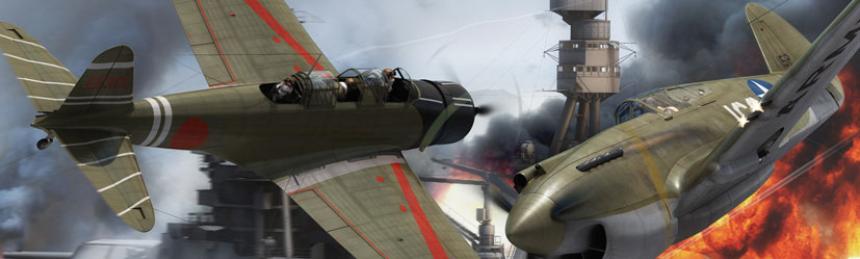
The new Pearl Harbor 75th Anniversary Gift Set (A50180) will not only feature this most famous USAAF fighter, but also two of the attacking Japanese aircraft, which were both amongst the most advanced aircraft of their types in the world at that time, the Nakajima B5N2 Kate attack bomber and the superb Mitsubishi A6M2B-21 Zero fighter.

Nakajima B5N2 Kate (EII-301), Lt. Commander Shigekazu Shimazaki, Imperial Japanese Navy Carrier ‘Zuikaku’, Second Attack Wave, Pearl Harbor, December 7th 1941
As the world was plunged into war in September 1939, the Imperial Japanese Navy possessed some of the finest aircraft in the world. The Nakajima Type 97 carrier attack torpedo bomber was without doubt the most capable aircraft of its type when it entered service in 1937 and was the envy of every navy in the world. It retained this reputation until the US Navy introduced the Grumman Avenger in mid 1942, but by this time, the Kate had inflicted significant damage on Allied forces across the Pacific region.
Shigekazu Shimazaki was given the significant responsibility of forming a new Air Wing on board the new Imperial Japanese carrier Zuikaku, in large part due to the reputation he forged for himself during operations in the second Sino Japanese War. When the carrier became operational, Shimazaki was promoted to the rank of Air Wing Commander and would be heavily involved in both the planning and carrying out the raids against Pearl Harbor. On the morning of 7th December 1941, Shimazaki led the second strike raid against targets in the Pearl Harbor area, consisting of 54 high-level bombers and 78 dive bombers, which included 27 B5N2 Kates which attacked Hickam airfield.
During the two Pearl Harbor raids, B5N2 Kate crews inflicted significant damage on the US warships they were sent to attack - Eighteen ships were either sunk, or ran aground, of which five were Battleships. They were also involved in the destruction of large numbers of US aircraft on the ground and damage to military infrastructure on Hawaii, during this attack which caught American forces completely unprepared. For his success, Shimazaki was granted an audience with the Emperor at the Tokyo Imperial Palace, on 25th December 1941.
Although the Kate was one of the most capable aircraft of its type in the world, it did not take the US Navy long to introduce fighters that were more than a match for this stable and aerodynamically simple bomber. The lack of a more capable replacement attack bomber resulted in Kate crews having to face the onslaught of these improving American fighters, with predictable consequences – many of the Japanese aircraft were destroyed, with their crews paying the ultimate price. This level of attrition was so great that no original Type 97 Kate remains in airworthy condition today, with even substantial wreckage being extremely thin on the ground. There are a small number of replica aircraft flying in the US, which were produced to star in the movie ‘Tora! Tora! Tora!, released in 1970. Using various components from T-6 Texans and BT-13 Vultee Valiant trainers, aero engineers managed to produce a small number of aircraft that very much resembled these famous Japanese strike aircraft. To this day, the Commemorative Air Force fly an exciting Airshow routine, which recreates the Japanese attack on Pearl Harbor and employs the extensive use of impressive pyrotechnics. This is without doubt one of the most popular acts on the US display scene and helps to reinforce the message that todays American public must remain vigilant at all times.

Mitsubishi A6M2B-21 Zero (AI-102), Lieutenant Saburo Shindo, Lead Aircraft of Carrier Division 1, Air Superiority Command, 2nd Strike Unit, Imperial Japanese Navy Carrier ‘Akagi’, Operation AI, Pearl Harbor, December 7th 1941
Although the Nakajima Kate was clearly one of the most accomplished naval aircraft in the world at the beginning of WWII, it cannot claim to enjoy anything like the notoriety of the aircraft that was assigned to protect it during strike operations. The Mitsubishi A6M Zero was without doubt one of the most effective fighter aircraft of the entire war and ruled supreme in the skies above the Pacific for many years. Light and highly manoeuvrable, the Zero was the perfect dogfighter, with performance statistics that certainly gave Japanese forces an aerial advantage in the early 1940s. Capable of operating at high speed and over long distances, the Mitsubishi Zero was a feared adversary and even the most modern fighter available to the Americans at the time of the Pearl Harbor attack, the Curtiss P-40 Warhawk, would not allow itself to be drawn into a turning dogfight with the Japanese fighter.
Although US pilots were to become very aware of the capabilities of the Zero, the vast expanses of the Pacific region dictated that it took many months of combat before they could get their hands on a complete example of this feared adversary – a Japanese pilot had been forced to crash land his aircraft on Akutan Island, in the Aleutians, which was discovered by a US patrol aircraft a few weeks later. The aircraft was salvaged and sent back to the US for evaluation, which revealed that the Zero had something of an Achilles Heel. In order to increase the range and maneuverability of the fighter, designers at Mitsubishi had removed all weight that was deemed unnecessary – unfortunately for pilots, this included armour protection around the cockpit and self-sealing fuel tanks.

Terrain of the Aleutian Islands and this little known WWII campaign

Restored to flying condition and wearing US markings, the Akutan Zero provided valuable information for the US military
Evaluation of the Akutan Zero helped the US Navy to develop new tactics for its existing fighters and ultimately led to the development of the Grumman F6F Hellcat, which would go on to become the most effective fighter aircraft of the Pacific war. The unbelievable 12:1 combat victory ratio in favour of the Zero would soon be eroded and problems with the introduction of more capable Japanese fighters would result in the Zero continuing to fight well into the final stages of WWII. Even at this stage, in the hands of a capable pilot, the Zero was still a match for most US aviators.
On the morning of 7th December 1941, Lieutenant Saburo Shindo and his A6M2B-21 Zero fighter were to be the lead element of the Carrier Division 1 second strike unit. Taking off first from the Imperial Japanese Carrier ‘Akagi’ at 7:15am, Shindo and his flight of Zeros were assigned to protect 27 Kates from ‘Zuikaku’, on a strike against the US air base at Hickam. Following the bombing attack, Shindo ordered the Zeros to make a strafing attacks against targets of opportunity, including aircraft, support buildings and even ground crews – despite the perilous low level nature of these attacks and the fact that Shindo himself made three separate runs, all aircraft later returned safely to ‘Akagi’.
Saburo Shindo is credited with sending the now famous ‘Tora! Tora! Tora!’ message back to Japanese Naval Command, informing them that the surprise attack against Pearl Harbor had been successful. The literal translation of the message is ‘Tiger! Tiger! Tiger!’, although it is thought that in this case, the message was an acronym of ‘Lightning Attack’.
There seems to be some conjecture regarding the eventual fate of Lt. Shindo in the years following the Pearl Harbor raid. Some sources describe him as having a relatively unconvincing combat career, surviving the war and living until the year 2000. Others describe how he became disillusioned by the rapid advance in US fighter technology and the inability of his own nation to provide upgraded aircraft to front line units. This is highlighted in the fact that some reports seem to suggest that he may have been involved in the first instance of a Kamikaze attack against Allied shipping, but this will require much detailed research to corroborate.

Exclusive artwork reveal from the new Pearl Harbor 75th Anniversary Gift Set release
The release of the forthcoming Pearl Harbor 75th Anniversary Gift Set (A50180) not only presents modellers with examples of three of the most important aircraft types involved in the actions of this historic day, but also provides decoration details for aircraft that could have seen combat in the area around Hickam Field on 7th December 1941. As you can see from the fantastic image above, this impressive set will also benefit from a new piece of Airfix artwork, which certainly captures the drama of the Pearl Harbor attack and one of the most significant two hours in the history of mankind. As we head towards the 75th Anniversary commemorations later this year, many more people will become familiar with the historical significance of the Pearl Harbor attack and how it had such a bearing on the outcome of the Second World War. From a modellers perspective, this new set will allow them to build examples of three of the most advanced aircraft available to both the Japanese and American air forces on 7th December 1941 and create their own modelling commemoration of this infamous raid.

What we will be seeing on the shelves of our local model store
The new Pearl Harbor 75th Anniversary Gift Set is scheduled for release during October, but as we always encourage Workbench readers to do, please check the Airfix website for the very latest information.

Lancaster attack run - modelling inspiration for a Lancashire community
Regular Workbench reader and modelling contributor Colin Duckworth recently contacted us regarding an interesting modelling project he was close to completing and we felt it was very much worth sharing with our readers. At a time when many modellers have some difficulty in finding a model shop that is close enough for them to visit regularly, Colin has been working with a shop owner close to his home in Lancashire, Clark Craft in Ramsbottom, with a view to trying to develop a new modelling emporium for local enthusiasts. Between them, they have hatched a plot to create an eye catching model display for the shop window, which will be used to encourage more modelling engagement in the local community. Central to this future display was Colin’s offer to build an old kit of the Airfix Dambuster’s raid Lancaster diorama, which had been gathering dust in the storeroom for a number of years. Colin was told that the model had been sold many years ago as a gift, but had been returned by the customer days later, as they had changed their mind. Over the years it appears that some of the parts had gone missing from the box, so it was not suitable for sale and just stayed on the shelf gathering dust. As Colin has a handsome collection of spares and accessories, he decided to take on the challenge and here are the results.

A different angle on the Dambusters Lancaster diorama build by Colin Duckworth
Using a number of bespoke components, including a knitting needle as the main support for the model and some scratch built spinning propeller discs, Colin attempted to recreate the attack run of Avro Lancaster ED932 ‘G for George’, piloted by Wing Commander Guy Gibson. As you can see from the image below, the Upkeep bouncing bomb can be seen above the water and on its way to hugging the dam wall, prior to detonation – the pictures were taken with a black plastic bin-liner as a backdrop, in an attempt to try and simulate the dark waters of the dam, on the night of the night of 16th/17th May 1943. Colin has done rather an effective job with this challenging build, which will surely make an attractive and eye-catching centerpiece for his local model store. These pictures were taken just prior to the model being delivered, so we will try to obtain an update in the near future and hope that this little corner of Lancashire will see an increase in modelling activities – watch this space.

The bouncing Upkeep bomb can be seen in the bottom right hand section of the image
As usual, we would like to thank Colin for letting us know about this interesting local modelling project and for supplying these fantastic images.
In support of our lead Pearl Harbor feature, viewers of the Airfix forum will have probably spotted a recent submission by regular contributor Jonathan Mock, who sent in some beautiful build pictures from one of his latest projects. The recently released and newly tooled Nakajima B5N1 Kate (A04060) will encourage many modellers to look at Japanese aviation subject matter, possibly for the first time and Jonathan’s fantastic pictures will certainly act as a modelling catalyst. Although perhaps not one of the most instantly recognisable aircraft of the 1930s and 40s, the Kate was actually one of the most advanced aircraft in the world when it entered service in 1937. By the time of the Pearl Harbor raid, the task force was equipped with the later and more capable B5N2 machine, which although improved significantly on the performance of its predecessor, shared most of its design characteristics. Looking at Jonathan’s fantastic work, you can see the beautifully clean lines of the Kate along with its distinctive naval heritage.

These pictures show the clean lines of the B5N1 ‘Kate’ and Jonathan’s impressive weathering work
In the Pearl Harbor section earlier, we saw how the Kate was a vital component of the Imperial Japanese Navy’s strike capabilities in the early years of the Second World War and how the lack of an effective replacement aircraft dictated that the venerable Kate would have to fight on long after it should have been replaced by more modern technology. As a result, there are no airworthy examples of this aircraft flying in the world today and this new Airfix release is a fitting modelling tribute to one of the most significant aircraft of the Pacific war.
The new Airfix kit is supplied with two attractive, yet distinctly different scheme options to complete your model and Jonathan elected to go with this beautiful silver and red machine, which was based on board ‘Zuiho’ in early 1941 – let’s take a closer look at this particular scheme.

The new Airfix Kate will surely see more modellers looking towards Japanese aviation subject matter
Nakajima B5N1 ‘Kate’, C1-301, 1st Koku Kantai, 3rd Koku Sentai (Carrier Division), Imperial Japanese Navy, on board IJN carrier Zuiho, Early 1941
This colourful B5N1 Kate was based on board the IJN carrier Zuiho and represents one of the most advanced carrier borne strike aircraft in the world, at that time. The Kate was capable of delivering devastatingly accurate bombing attacks, either using traditional iron bombs, or a single Type 91 torpedo and would earn the respect of their adversaries for the skill and tenacity of their well-trained pilots. By the time of the Pearl Harbor attack, the Kate was coming towards the end of a major upgrade programme to the more powerful B5N2 version of the aircraft and none of the earlier models were to see action during the infamous attack. The light aircraft carrier Zuiho was completed during the first year of WWII and stayed on patrol in home waters, during the attack on Pearl Harbor.
This scheme is a fine example of the early Japanese ‘Kate’ bombers that gave the Japanese Navy such an advantage when they were first introduced in the late 1930’s and we are extremely grateful to Jonathan for allowing us to use his magnificent build images in this latest edition of Workbench. We will certainly be keeping an eye out for more of his modelling handiwork – thanks Jonathan.
We are afraid that this is all we have for you in this latest edition of Airfix Workbench, but we are already looking forward to the next edition in two weeks’ time. We hope that we have managed to include something to interest most of our readers, but if there is anything that you would like to see covered in a future edition, please do drop us a line with your suggestion.
There are now many ways for our readers to get involved in all the latest Airfix modelling chat and sharing ideas with other modellers. You can always e-mail us directly by using our workbench@airfix.com address, or there is our dedicated Workbench thread on the Airfix Forum. If social media is more your style, you could either access the Airfix Facebook page or our Twitter channel, using the #airfixworkbench hashtag. Whichever medium you decide to use, please do get in touch with us, as it is always great to hear from fellow modellers.
With regard to all the latest model release information. please check the New Arrivals and Coming Soon sections of the Airfix website, which can be accessed by clicking the shop section at the top of the webpage. With updating and improvement work going on all the time, a quick search through the Airfix website will usually reveal new information and images on many of the product pages, so this is always time well spent.
Until next time, we hope you are enjoying your latest modelling project and please don’t forget to send us pictures of your completed kits.
The Airfix Workbench Team
P.S. Have a look at the Armstrong Whitworth Whitley Mk.VII 1:72 page where we have added a new aircraft information collector card - which model should we do next? Let us know...

© Hornby Hobbies Ltd. All rights reserved.

