

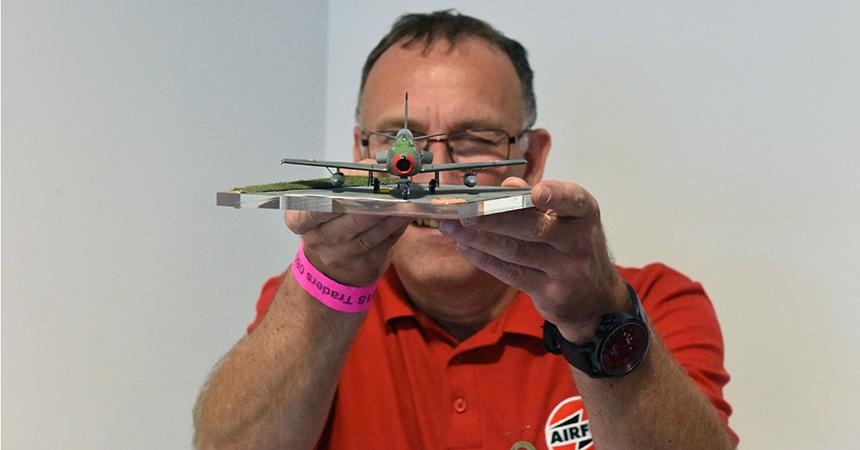
Welcome to this latest edition of Workbench and all the news, updates and exclusive announcements from the fascinating world of Airfix modelling. In yet another feature packed edition, we will be heading back to this year’s Scale Modelworld show to follow two of our senior team members as they spend a pressured, yet extremely rewarding couple of hours attempting to critique which of the superb model entries in this year’s model competition were in the running for winning the 2018 Airfix Trophy, a significant modelling accolade which we are proud to present each year at the Telford show. We follow them around the competition hall as they go about their important business and bring you pictures of the award presentation itself, as well as going behind the scenes of the build project which emerged victorious in this year’s competition. We also have something of a Spitfire exclusive, with the latest built sample images from the recently announced 1/48th scale Supermarine Spitfire Mk.XIV tooling and a further look at why this is proving to be such a popular addition to the Airfix range. We end with a little bit of festive fun, by asking members of the Airfix team to name their ‘Christmas Crackers’ and nominate which model from the current 2018 range they would most like to find under their own Christmas Tree on the big day. Let’s begin by returning to the first of our 2019 new tooling announcements and the purposeful profile of the majestic Rolls Royce Griffon powered Supermarine Spitfire Mk.XIV.
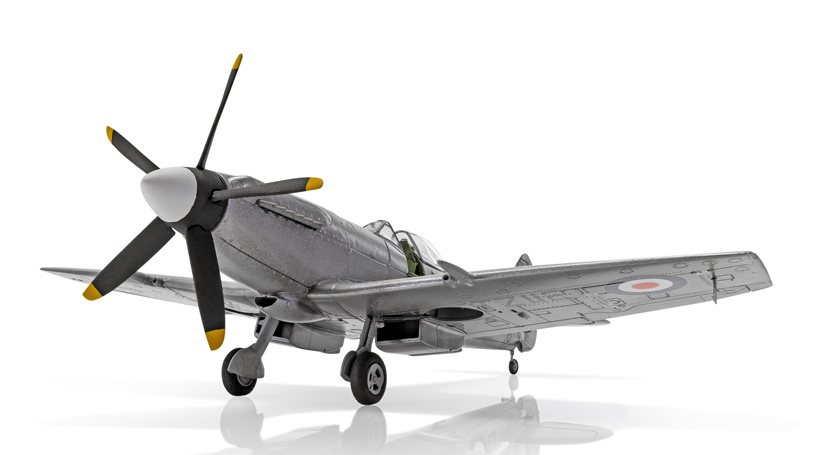
The Griffon powered Spitfire Mk.XIV is an extremely purposeful looking fighter and represents a significant development of the original Spitfire airframe
There is a popular saying amongst modellers that you simply can’t have too many Spitfires, as the enduring fascination with this magnificent aircraft has resulted in quite literally millions of scale representations of this aircraft emanating from workbenches and dining room tables the world over, since the end of the Second World War. From an Airfix perspective, this has seen the Spitfire occupying our top selling model position for many years now, with the appetite for new and updated Spitfire kits showing absolutely no sign of abating – our first aircraft kit back in 1955 was a Spitfire and it seems rather fitting that one of our latest new tooling projects is also an example of R.J Mitchell’s flying classic. For these reasons, it will come as no surprize whatsoever that the exclusive Workbench announcement of our new 1/48th scale Griffon powered Spitfire Mk.XIV in the 83rd edition of our blog has met with an overwhelmingly positive reaction and resulted in record levels of early pre-ordering activity coming from both individual modellers via the Airfix website and from our extensive trade network. That being the case, we pleased to be in a position to bring you an update on this project, including a series of exclusive built sample images and confirmation of one of the scheme options which will be included with the early 2019 release of this fantastic kit.
If you have ever been fortunate enough to attend an Airshow which boasts several variants of the Spitfire on its display programme and seen an early mark aircraft from the Battle of Britain era parked next to a Rolls Royce Griffon powered Mk.XIV, you will quickly see that these are very different beasts altogether. Although clearly from the same stable, the cultured, clean lines of the early machines gave way to the powerful profile and massive five bladed propeller of its successor, an aeroplane which really does look like it has to be tamed before it can be flown. Resulting in a significant increase in the Spitfire’s performance, the Griffon powered variants can trace their origins back to the days before the Battle of Britain and a Royal Navy requirement for a new engine capable of powering a significant new fighter aircraft, which must possess excellent performance at lower altitudes. It seems incredible that even at this early stage, the Rolls Royce Merlin which would go on to power many of the most famous and effective British aircraft of the Second World War, was thought to have only limited development potential by Rolls Royce engineers, who had already started working on a new powerplant. In a fascinating juxtaposition, the Supermarine team responsible for Spitfire development were adamant that their aircraft was suitable for significant development and could be adapted and improved to accept whatever new technology became available. Working under the guidance of R.J. Mitchell, Joseph Smith was heavily involved in all aspects of Spitfire design and development and was to take a lead role following the unfortunate death of Mitchell in the summer of 1937. Under his stewardship, he would not entertain calls to develop a new aircraft to replace the Spitfire, supremely confident that the existing airframe possessed exceptional potential for future improvement and was a long way from reaching its maximum capacity.
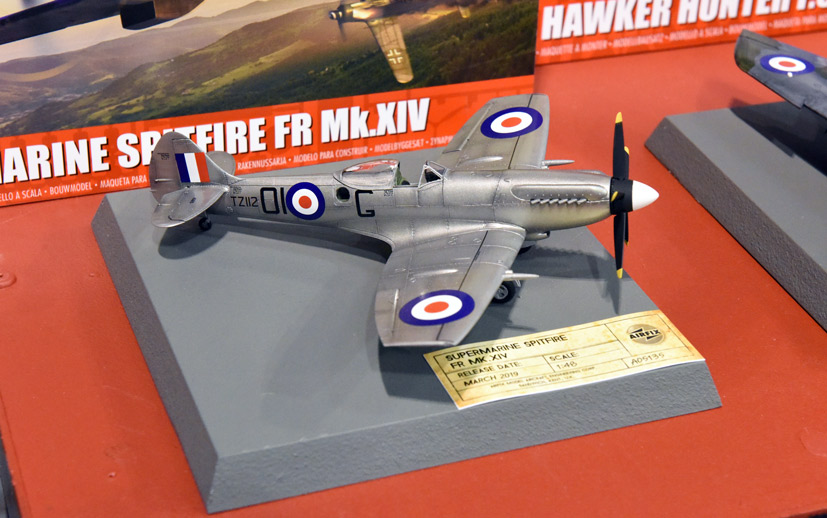
Pictured on the Airfix stand at the recent Telford show, this built sample from the new 1/48th scale Spitfire Mk.XIV tooling came in for a lot of attention
The first Rolls Royce Griffon powered Spitfires to enter Royal Air Force service were the Mk.XIIs of Nos 41 and 91 Squadrons from January 1943, which whilst representing a significant stage in the wartime development of the Spitfire, were not initially regarded as an overwhelming success. The extra power provided by the Griffon engine posed some early problems for pilots converting from Merlin powered machines, not least of which was the significant torque produced by this powerful engine and its massive propeller, allied to the fact that the propeller turned in the opposite direction to the Merlin. As earlier Spitfires had a tendency to swing to the right on take-off, this was reversed on the clockwise turning Griffon, which could have serious implications for a converting pilot calling on his previous Spitfire experiences. No.41 Squadron would take the honour of claiming two significant firsts for Griffon powered Spitfires – on 3rd April 1943, they mounted the first operational sortie by the aircraft (a Mk.XII) and just two weeks later, they also had the type’s first combat success. On 17th April 1943, Spitfire Mk.XII (EN235) was flying a patrol off the French coast, near Dunkirk, when its pilot spotted a black Luftwaffe Junkers Ju88 flying below him. He immediately gave chase and opened fire, causing the enemy aircraft to set ablaze and crash into the sea – the Griffon powered Spitfire had opened its combat account and announced its arrival in the European air war.
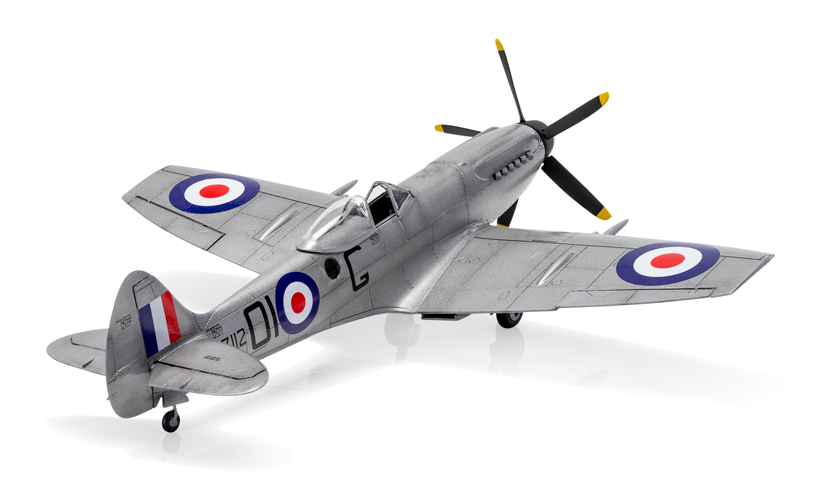
A beast of a Spitfire. This exclusive built sample image clearly illustrates why the announcement of this new Spitfire model has got everyone just a little but excited
For an aircraft which possessed such rich development potential and would eventually go on to see service long after the end of the Second World War, several of the most successful Spitfire variants were only ever initially intended as interim introductions. This was the case with the Griffon powered Mk.XIV, which was introduced as something of a stop-gap measure until the next major variant, the Mk.XVIII, could be fully developed. As it turned out, the Mk.XIV would go on to be the definitive fighting Rolls Royce Griffon engined variant of the Spitfire, ensuring that this classic aeroplane remained at the forefront of world fighter design in the final months of the Second World War. This constant wartime development was not only to ensure the maximum possible performance could be entrusted to the Spitfire airframe, but also to equip the RAF with an effective fighter aircraft, capable of challenging and eclipsing the performance of the latest Luftwaffe fighters. Just as Britain constantly developed their most famous fighting aeroplane, the Luftwaffe were also producing faster, more powerful and better armed variants of their Messerschmitt Bf 109 and Focke Wulf Fw 190 fighters, aircraft which would compete in the deadly ebb and flow of aerial combat supremacy in the skies above the battlefields. The Fw 190 proved to be a particularly capable adversary and was itself regarded as an exceptionally versatile aeroplane. It would be developed throughout the remaining months of WWII and following its dramatic impact on the European air war in 1941, successive upgrades and mission configuration options maintained its position as one of the most capable combat aeroplanes in the world.
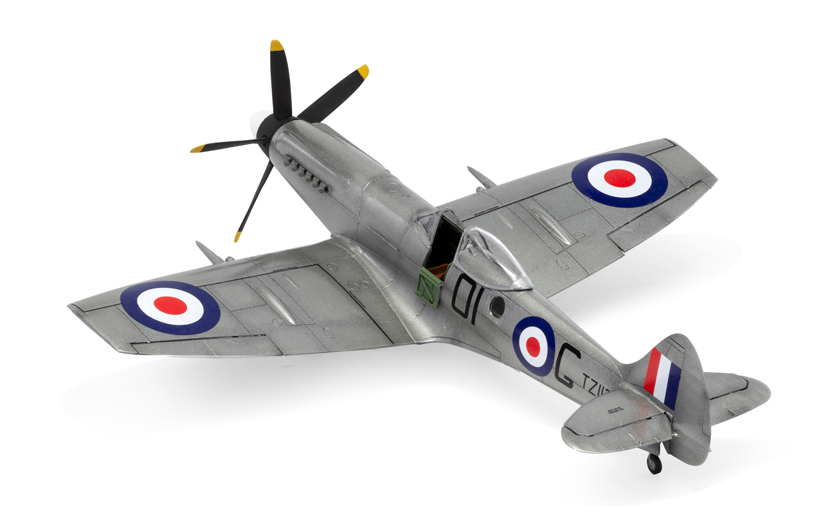
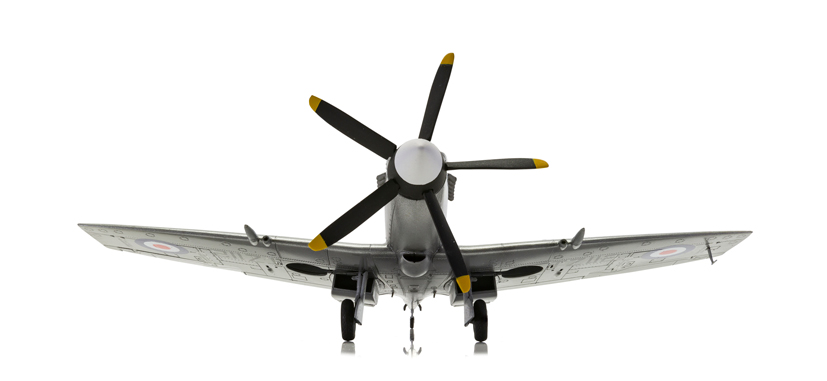
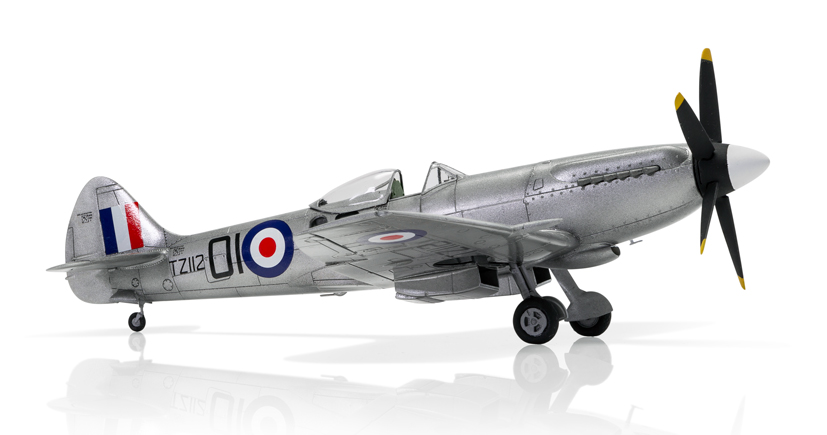
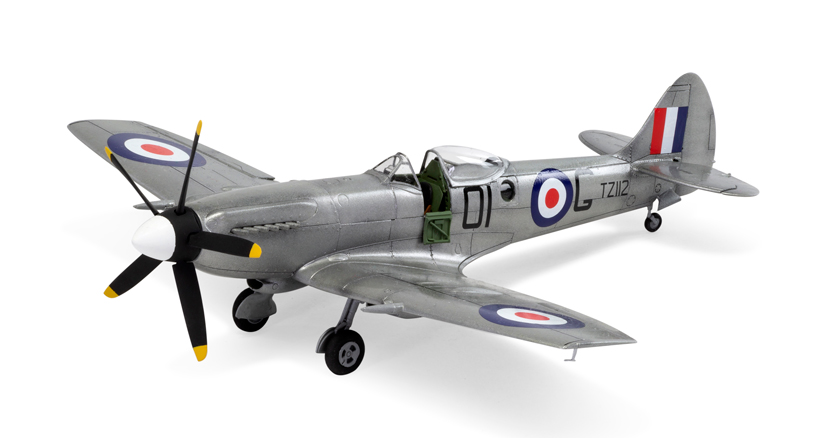
A selection of built sample images from the new 1/48th scale Spitfire Mk.XIV tooling, finished in the ‘B scheme’ to be included with the kit
Trading the huge power output from its large BMW radial engine for the more aerodynamic appearance of its Messerschmitt stablemate, the Focke Wulf proved particularly effective at altitudes below 20,000ft, where its combination of speed, firepower and manoeuvrability made it a fearsome adversary. The aircraft matured into an extremely effective fighter bomber and once more became the scourge of the RAF, as specialist units mounted ‘Jabo’ strike raids against targets in southern England, often at low level and always at high speed. These raids proved particularly difficult to counter and resulted in wasteful and often uneventful standing patrols having to be mounted by aircraft which would be better employed elsewhere. The introduction of the Griffon powered Spitfires finally resulted in more of these cross Channel raiders being shot down and a challenge to the aerial supremacy of this latest variant of the Focke Wulf, even though these first fighters would only be produced in relatively small numbers and would be superseded by arguably the definitive variant of Griffon Spitfire, the Mk.XIV.
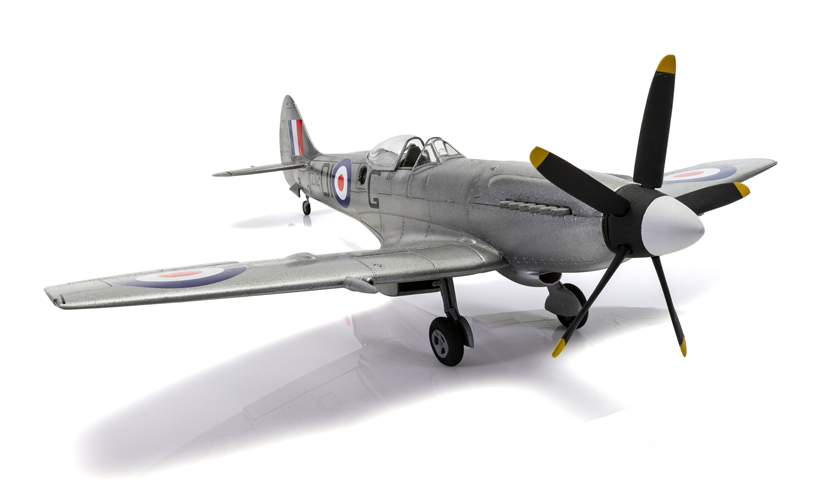
Two more views of the sample Spitfire build, showing why this is already proving to be a popular addition to the Airfix range
The first RAF squadron to receive the new Spitfire Mk.XIV was No.610 (County of Chester) Squadron based at Exeter in January 1944, quickly followed by Nos 91 and 322 Squadrons. Pilots converting to the new aircraft immediately knew that they were being introduced to a superb fighting aeroplane, however, you don’t achieve aviation greatness without having to overcome some initial challenges and they would have to learn how to tame this powerful beast. The Spitfire was already notorious for requiring careful handling whilst on the ground and particularly during take-off and landing, so equipping the aircraft with a longer nose, a massive 10ft 5in diameter, five bladed propeller and a much more powerful engine must have induced some sleepless nights on pilots waiting to make their first flights. Significantly, the Griffon engine turned the airscrew in the opposite direction to the Rolls Royce Merlin and the aircraft’s tendency to swing on take-off was exacerbated greatly by the significantly increased torque from the new engine/propeller combination and in the opposite direction to that of Merlin powered Spitfires. Many pilots making their first flights in the new aircraft described them as hairy beasts to fly and during take-off, even when using full aileron, elevator and rudder, this brute of a fighter would climb into the air slightly sideways. As RAF pilots became more proficient in operating their new aircraft and combined with their existing combat experience, the exceptional performance of the Spitfire Mk.XIV soon made its mark on the European air war and it would not only be V-1 Doodlebugs which would fall to their guns in large numbers. As the Luftwaffe were now coming under increasing pressure from Allied air forces and many of their most experienced fighter pilots had been lost, the appearance of this capable new Spitfire proved something of a nightmare. Famous RAF fighter ace Pete Brothers described the Mk.XIV as a truly impressive machine and one possessed enough power to climb almost vertically. He famously wrote how the aircraft ‘gave many Luftwaffe pilots the shock of their lives when, having thought they had bounced you from a superior height, they were astonished to find the Mk.XIV climbing up to engage them head on, throttle wide open’. The Griffon powered Spitfires of the RAF would become feared by what remained of the Luftwaffe, no matter which of their latest aircraft they may have been flying.
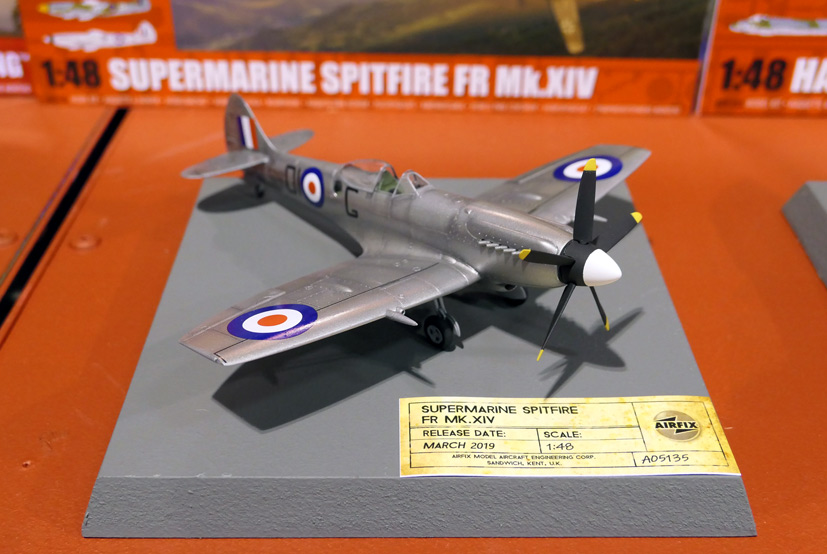
Another view of the built sample Spitfire on the Airfix stand at Telford, which showed everyone what we can look forward to in March next year
Representing a significant stage in the development of the Spitfire, the 2019 release of this newly tooled kit will shore up something of a Spitfire sized hole in the Airfix range and allow modellers to build this most impressive looking version of the iconic Spitfire in this slightly larger scale. The extra size associated with 1/48th scale model kits really does lend itself to the production of powerful WWII fighter aircraft and much more effectively portrays the impressive size and majesty of these awesome aircraft. Even though our recent Telford attendance was dominated by the announcement of our 1/24th scale F6F-5 Hellcat, a built and finished sample of the new Griffon powered Spitfire was also on display on the Airfix stand and received plenty of attention over the show weekend. Indeed, images of this sample build have been used to illustrate this update feature, as it clearly shows us all what we have to look forward to next year.
As luring the Luftwaffe into open combat became increasingly difficult during the final months of the Second World War, the RAF would often mount armed reconnaissance sorties, releasing their pilots to engage any target of opportunity which may present itself. The Spitfire Mk.XIVs of the 2nd Tactical Air Force would take a heavy toll of enemy aircraft during this period, often fighting at lower altitudes and even attacking aircraft whilst they were still on the ground, although still having to face the murderous anti-aircraft fire of enemy ground units. As some of the most capable fighter aircraft to have ever seen RAF service, these new Spitfires would become the mount of many of the RAF’s late war air aces, serving extensively in the European Theatre and remaining in service for several years after the end of hostilities.
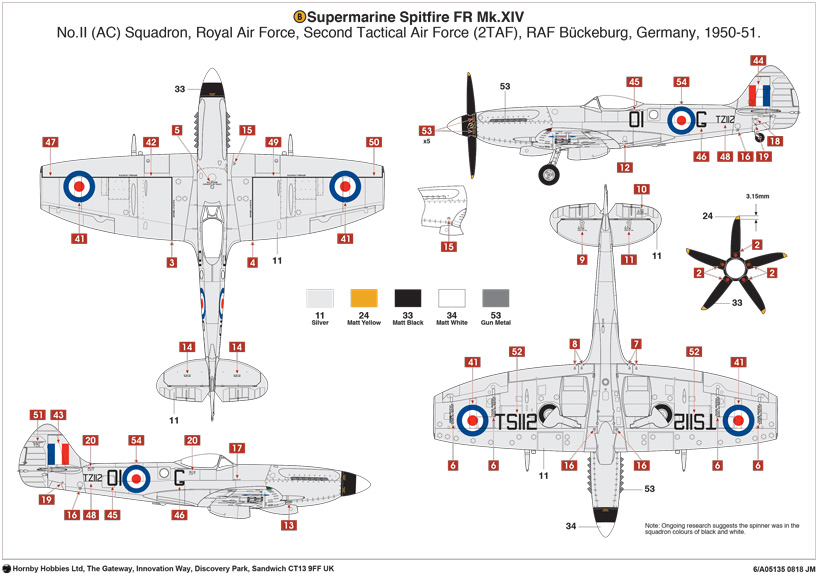
The full ‘B scheme’ details, which were used to finish the sample build model – a silver Spitfire stunner!
Currently scheduled for a March 2019 release date, A05135 will include the scheme option featured above, which is a striking all-over silver Spitfire FR Mk.XIV, operating in the fighter/reconnaissance role for the Second Tactical Air Force, during their occupation of Germany in the years following the end of WWII. The aircraft features the low back, camera installation and bubble canopy associated with this later variant of the Spitfire XIV and despite the longer nose, increased tail area and huge five-bladed propeller, these speed demons also sported clipped wings, to further increase their rate of roll during combat at lower altitudes. Remaining in service until the early 1950’s, the Rolls Royce Griffon engine not only allowed the Spitfire to continue being regarded as one of the most potent piston engined fighter aircraft of the war, but also allowed it to remain in service right up until the widespread adoption of jet power. This handsome aircraft is a significant addition to the Airfix range and will build into a striking display model, especially if placed next to an example of an early Merlin powered Spitfire, effectively helping to tell the story of a famous fighting aeroplane which became a British aviation icon and one which managed to keep pace with technological developments during the latter stages of WWII. A gentleman’s aeroplane which became something of a cad with muscles.
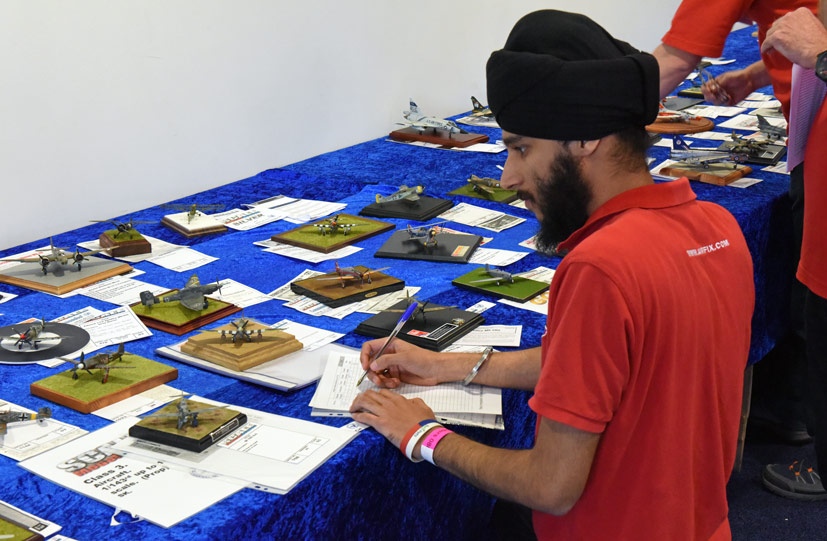
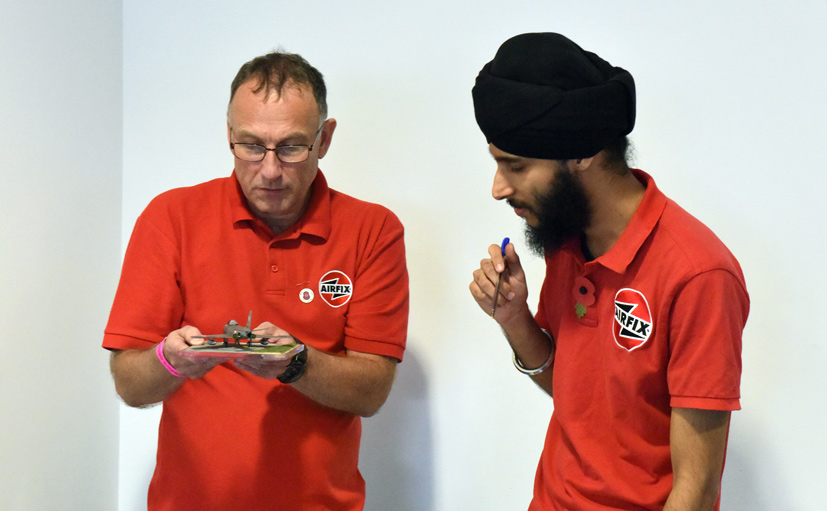
Getting down to business. Paramjit was judging his first Airfix Trophy competition, but took to the task with a great deal of enthusiasm
Now firmly established as one of the most important weekends in the modelling calendar, the Scale Modelworld show at Telford is the culmination of many weeks of planning for the Airfix team and this year saw the announcement of our latest 1/24th scale new tooling project for 2019. Always an enjoyable opportunity to spend time speaking to modellers about our latest releases and perhaps some of the more nostalgia inducing models from the Airfix back catalogue, this is an extremely busy time for everyone involved and most members of the team will have little opportunity to spend time away from our display stand itself. One significant exception to this rule is the task which befalls two members of the team, who each year have the enjoyable, if distinctly challenging task of attending the model competition hall for several hours, trying to select a suitable winner of the latest Airfix Trophy. The only criteria required to be considered for this award is that the model project must be based on an Airfix kit, which usually dictates that they have plenty of models to assess, each one impressive in its own right. With the standard of competition always incredibly high at the Telford Nationals, this is a modelling responsibility the team takes very seriously indeed.
Deep in model conversation. The standard of modelling on show made the task of choosing a winner extremely difficult for the Airfix team
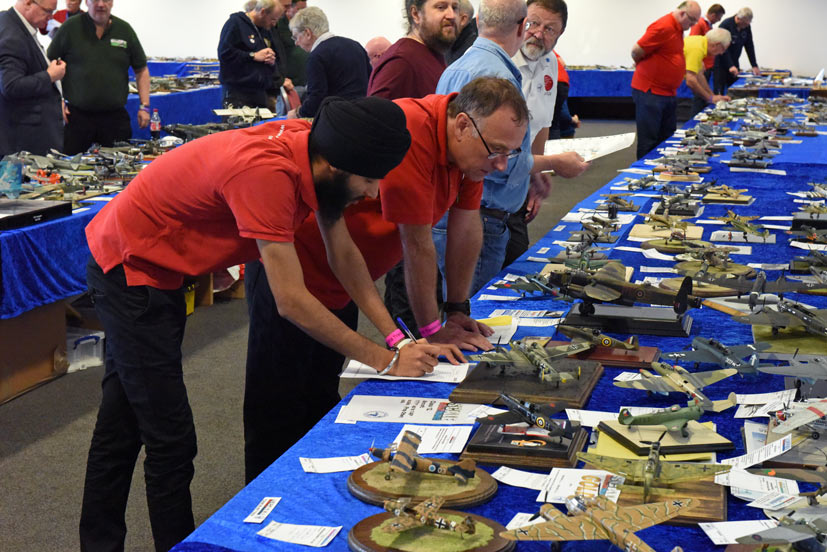
Using their tried and trusted marking criteria, it was eventually possible to select a winner from the magnificent models gathered at Telford
This year would be the first time Workbench has followed the Airfix officials as they have gone about the business of selecting their Telford winner and it was fascinating to see how determined they were to give each model entrant exactly the same opportunity to win, adopting a strict marking procedure for each model they inspected. For this latest competition, the adjudicating pair came from opposing ends of the Airfix company spectrum – we had our incredibly experienced Head of Brand Darrell, who was accompanied by the newest member of the Airfix team, Paramjit, who joined earlier this year as a Product Designer. Paramjit has quickly settled in to his new role and is already a valued member of the team - it was felt that he would enjoy the responsibility of helping select the latest Airfix Trophy winner, especially as he is an accomplished modeller in his own right. Their task would not be an easy one however, as the exhibition hall was packed with stunning model builds of every conceivable variety, from dinosaurs to spaceships, aeroplanes to motor vehicles and everything in between. With row upon row of eye-catching models laid out before them, the pair could not be deflected from the task at hand and only entries featuring Airfix kits were to be assessed – they settled down to what would surely be a challenging few hours.
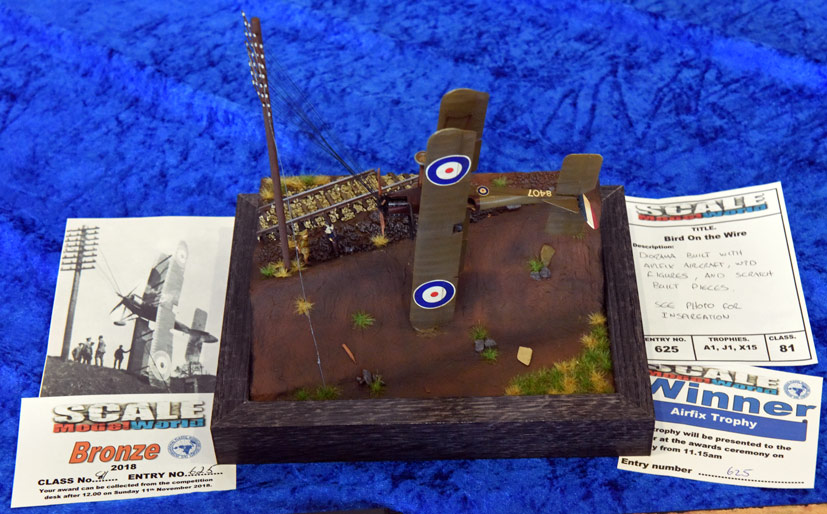
A modelling triumph. This extremely imaginative BE2c diorama build impressed Darrell and Paramjit enough to earn Richard Nicholl the Airfix Trophy for 2018
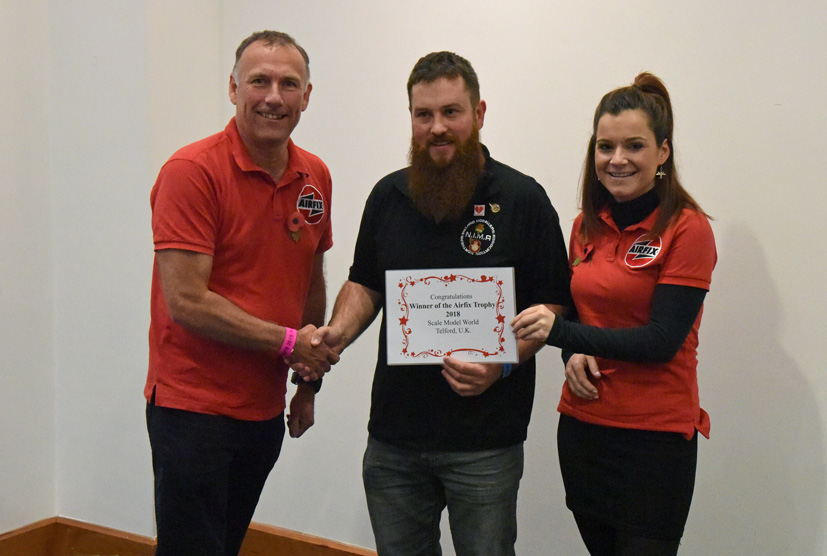
Darrell and Sally presenting Richard with his winners certificate at the award ceremony on the Sunday of the Scale Modelworld show
Moving from one impressive model to the next, Darrell and Paramjit used their marking criteria to produce a total score for each entrant, with the high standard of modelling expertise on show resulting in a tightly grouped collection of scores and many entrants which were proving difficult to separate. The eventual winner was actually amongst the final selection of models to be judges and impressed the Airfix team not only for the excellent modelling skills on display, but by the imagination shown by the modeller in producing a diorama scene, replicating an unusual incident from almost 100 years ago. Finally producing a score which placed his entry above all others, the winner of the 2018 Airfix Trophy at Scale Modelworld was Richard Nicholl and his magnificent ‘Bird on the wire’ diorama. Congratulations to Richard and to everyone who submitted a model to this year’s competition – the standard was incredibly high and it was a real treat to look at all your work, which displayed skill, imagination and real artistic flair, highlighting the current healthy state of the modelling hobby in Britain today.
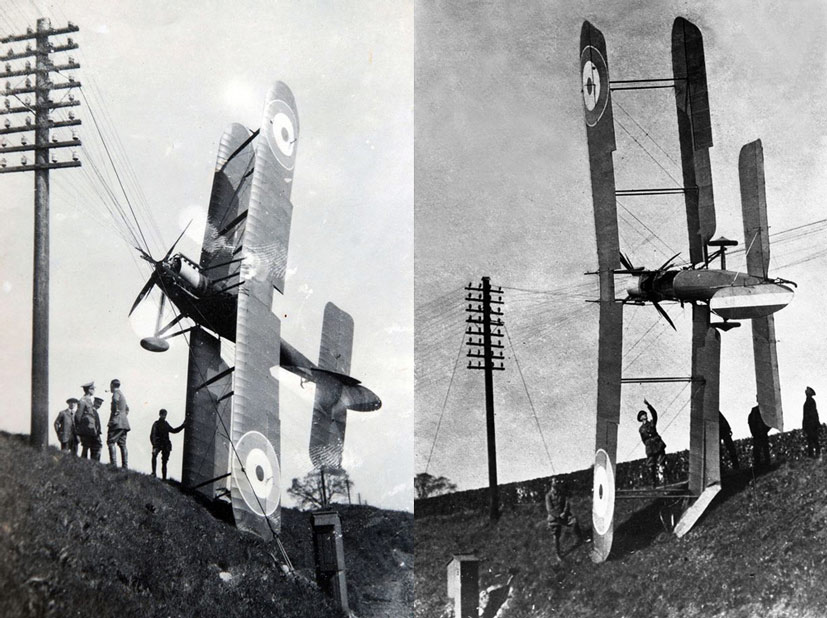
The pictures which served as inspiration for Richard’s impressive diorama build
There is nothing like a little historical context with which to provide inspiration for a modelling project and that was certainly the case when modeller Richard Nicholl stumbled across the images shown above, whilst spending some time browsing the internet. He though that this would make a really interesting subject for a model build and immediately sent the details to his good friend and fellow modeller – as a diorama specialist, Richard thought that his friend would be better placed to carry this project off, especially as he is more than happy to describe his friend as the more accomplished modeller of the two. Discussions quickly followed on who should tackle the project and it was finally decided that if Richard had an Airfix BE2c kit in his stash, he would be the one to take the plunge – sure enough, a pristine example of A02101, the Zeppelin killing BE2c was sat there just waiting to be brought to life and the modelling scene was set for a hectic period of activity. It was at this point that Richard told us that this was his first real diorama build and as he intended to show the model at this years IPMS Ireland model show, he would have just six days to complete the project.
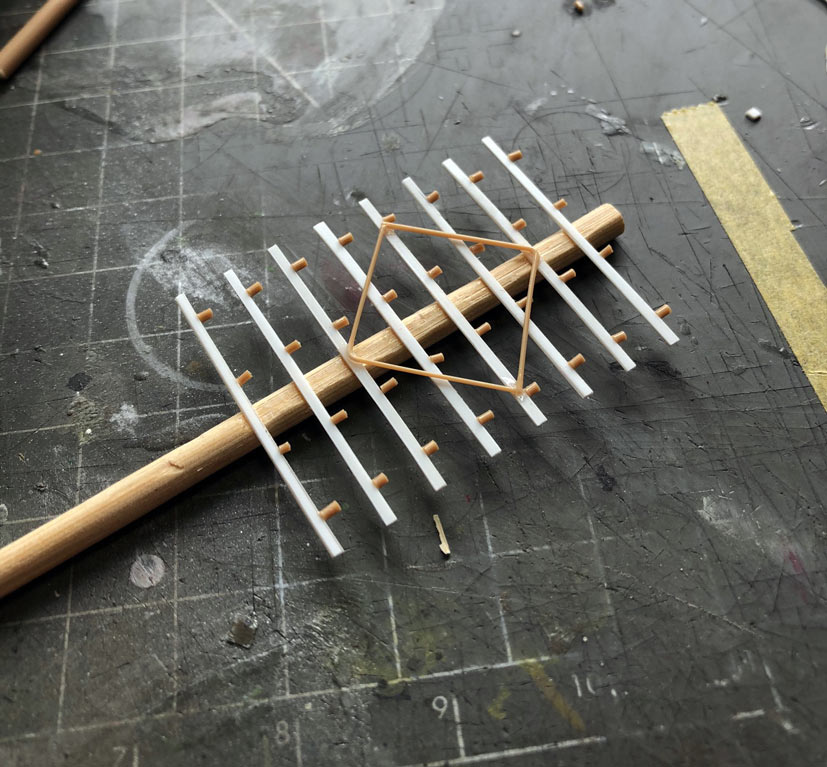
This project would require imagination and modelling skill, if it was to turn out as Richard had planned. Here, a combination of chopstick, plasticard and stretched sprue has produced a rather effective telegraph pole
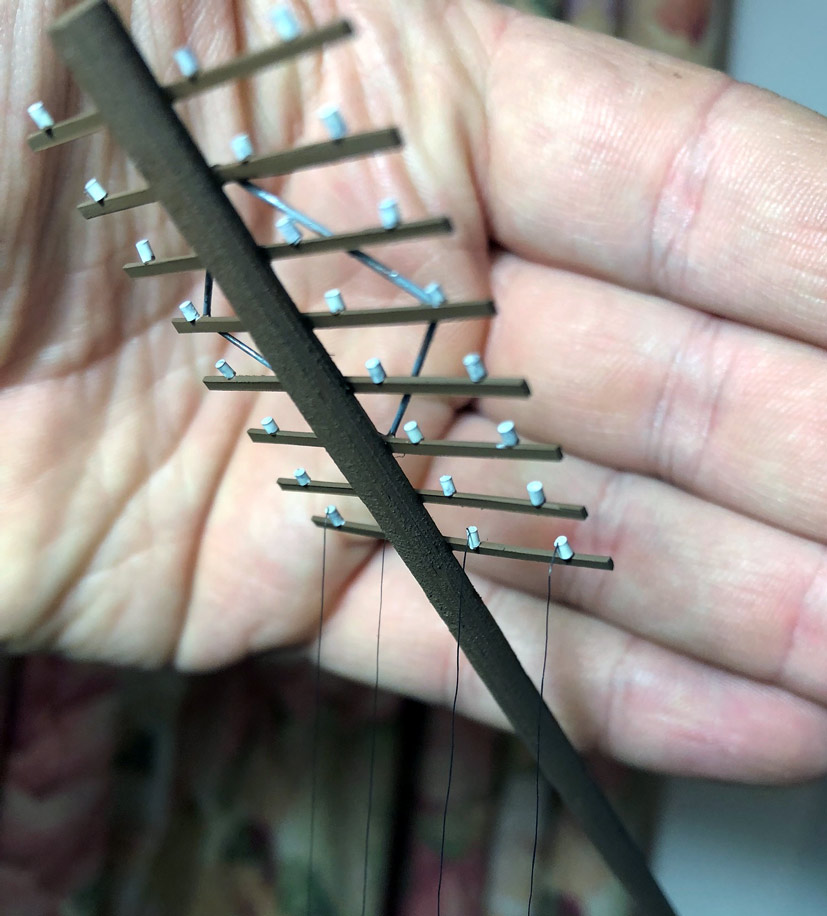
Once finished, the pole looked really effective and would take its place on a diorama which was a faithful recreation of the historic photograph it was attempting to replicate
Although the lack of time available for this project would have deterred most of us from even considering attempting this build, Richard told us that this pressure situation actually worked in his favour on this project and had he had more time, he would probably have talked himself out of doing it. Describing his modelling tastes, Richard is more than happy to have a go at any subject, although his main preference would usually be for WWII aviation subject matter, particularly anything which has links to Northern Ireland, or family members who had served in the Royal Air Force. Richard also happens to be quite an accomplished modeller himself and whilst he would be too modest to tell you, he has had some significant recognition of his skills in the recent past. This year would only be the second time he had been to the Scale Modelworld show, but on his previous visit, his competition entries managed to scoop a gold, two bronze and commended awards – not bad for a first effort.
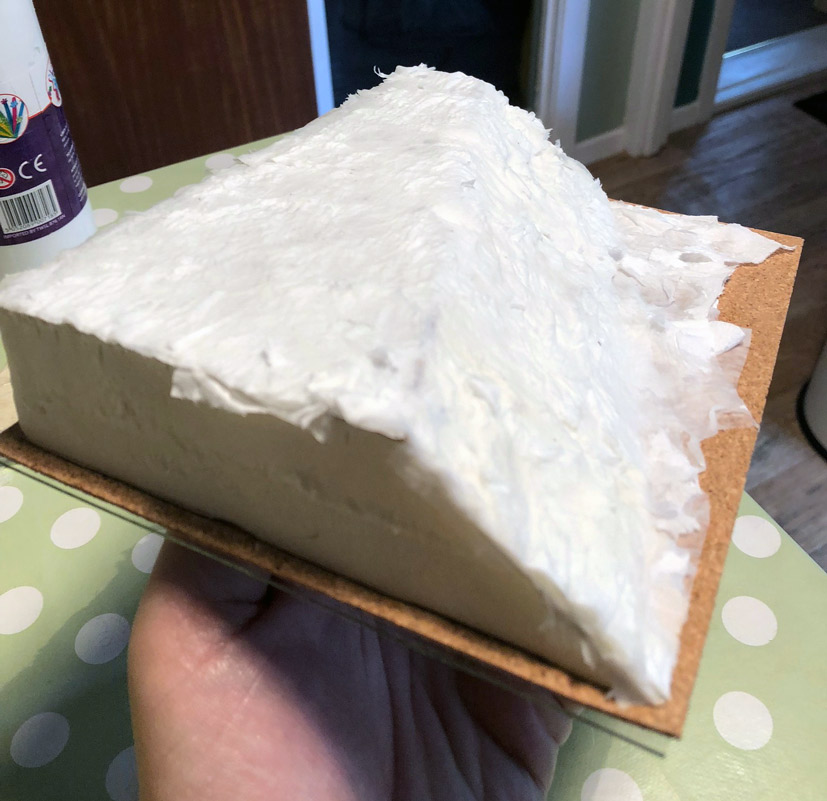
Although it doesn’t look like it yet, Richard’s vision could see beyond this piece of foam insulation and see a rather effective railway embankment for his ensnared BE2c to rest upon
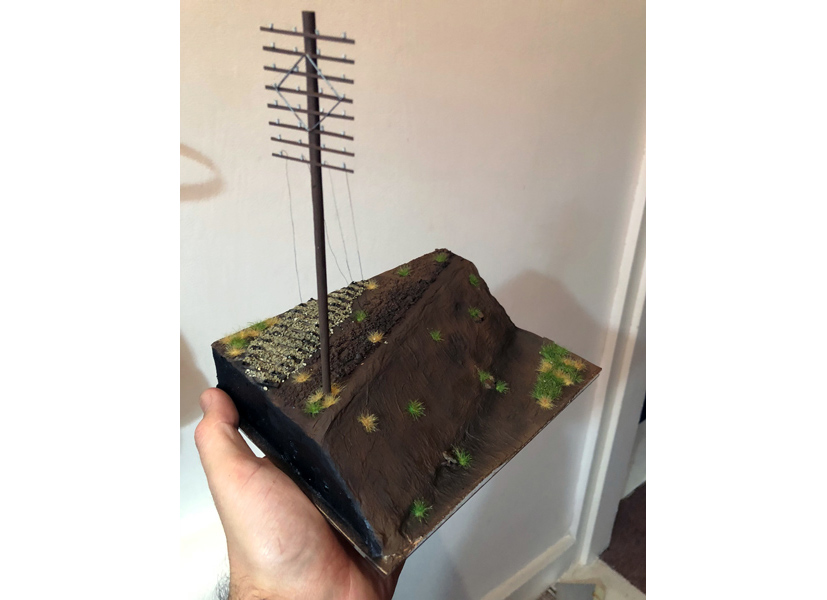
Looking much more like it … now where did that bit of foam go?
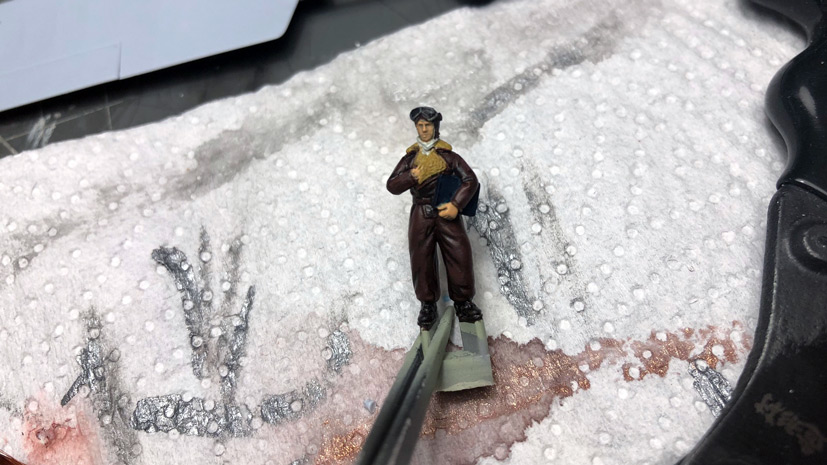
These WWI scale figures were used in the build, expertly painted to replicate the people engaged in deep discussion on the original photograph
For this latest project, Richard wanted to use the picture of the the BE2c incident as his modelling blueprint, but to follow it as closely as possible, adding a new dimension to his modelling. As mentioned previously, this would be the first time he had attempted a diorama build, but he was fully aware of the high modelling standards required to achieve awards at Britain’s flourishing model shows, so he wanted this build to tell a story, challenging both his imagination and his modelling skills. His research could not ascertain the actual identity of the BE2c involved in this incident, so he decided to simply use one of the decal options supplied with the kit and with the aircraft fast approaching completion, it was time to attempt the all important diorama. Clearly demonstrating a great amount of modelling skill, Richard would have to scratch build the majority of the diorama, using plasticard and stretched sprue, along with some more unusual items which were pressed into service. The telegraph pole started life as the chopstick he used whilst enjoying a Chinese meal earlier in the year and the main wire support for the pole is a piece of speaker wire. The banking on which the aircraft rests is a reworked piece of insulation foam, which also benefits from a host of scratch built additions, as well as two after-market figures, rocks, ballast and foliage, all topped off with an appropriately cut piece of Hornby railway track. The power wires which have ensnared their aviation victim are rigging wires which would usually be applied to sailing ships and they have been wrapped around the propeller, as if it was still turning when the aircraft hit the power lines. For a first effort, this is nothing short of spectacular and an accurate modelling representation of the fascinating crash photograph Richard discovered whilst looking for inspiration. Entered into the IPMS Ireland show just days after the project was started, it was given a gold award in the aircraft diorama category and vindication of all the hard work Richard had put into his model in a relatively short space of time – it was also a fine use of an Airfix BE2c kit.
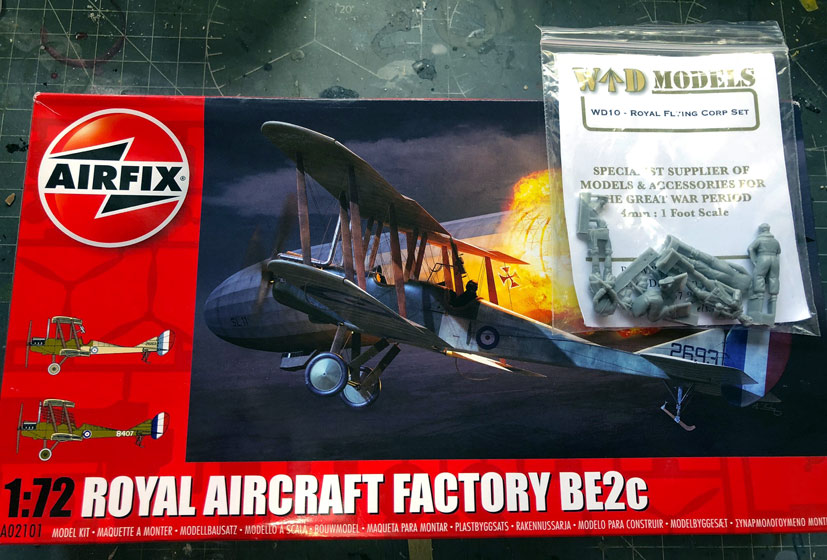
A final selection. The Airfix BE2c kit on which this diorama project was based, complete with additional RFC figures
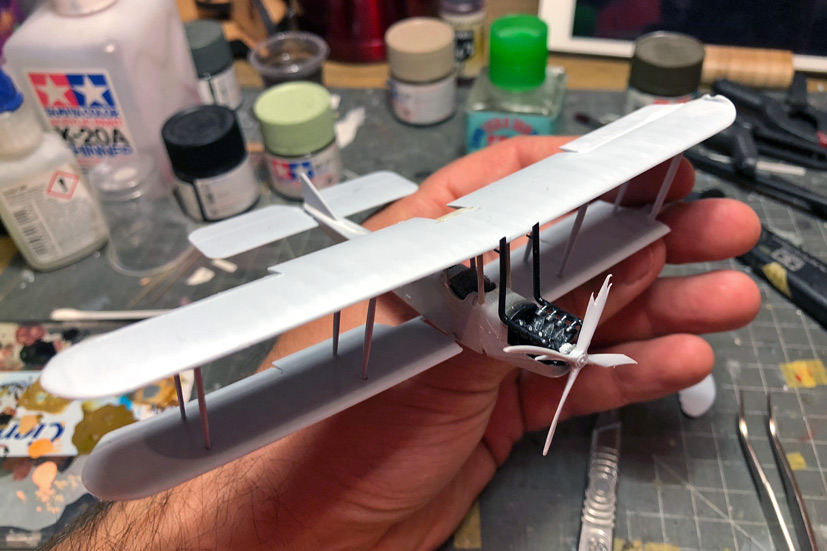
Not only would Richard have to construct the kit alongside his diorama, he would also have to replicate the damage sustained by the aircraft in the original picture
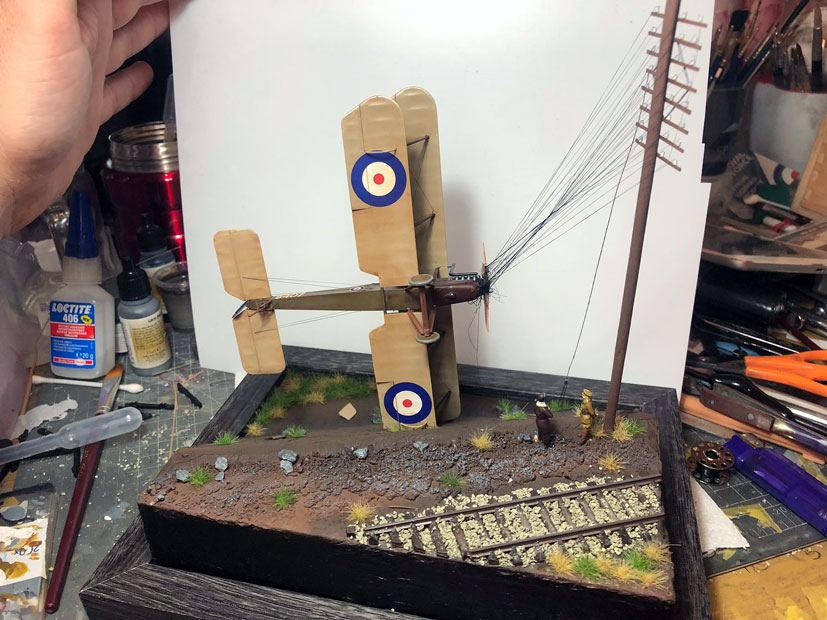
Finished and ready to go. After a hectic six days of modelling, it would now be down to the judges on what they thought of Richard’s diorama
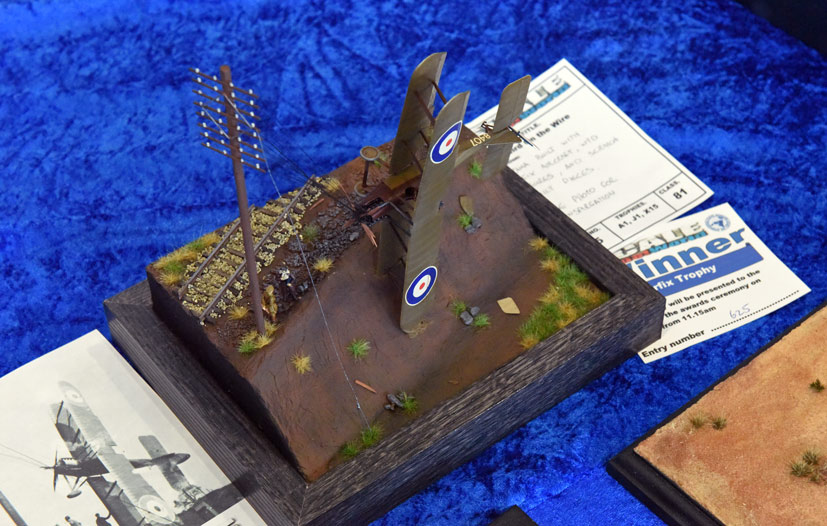
A final look at the Bird on the wire on the competition table at Telford. A fantastic example of modelling and worthy winner of the Airfix Trophy for 2018
Amongst all the fantastic entries at this years Scale Modelworld show, Richard’s ‘Bird on the wire’ diorama was without doubt one of the most interesting and could always be relied upon to have several admiring modellers discussing the subject. Richard could not resist loitering in the vicinity of his exhibit a few times over the course of the weekend, just to hear what people thought about his model. One of the most memorable comments he overheard came from a couple of gents who had been closely inspecting the diorama for several minutes – one turned to the other and said, “That’s a really fantastic model, but you realise there is absolutely no way that that could actually happen, don’t you?” This was despite the fact that the actual photograph which served as inspiration for the project was intentionally displayed at the side of the model – a priceless moment in what proved to be a rather successful Telford for Richard’s latest creation. As well as scooping the Airfix Trophy for 2018, the model also won a bronze award and continued Richard’s success in exhibiting his modelling creations. He has set the bar incredibly high from a competition modelling perspective and has put pressure on himself for subsequent shows. His next project will be a 1/48th scale Supermarine Seafire, which will be based around an aircraft which operated from an Ulster base and he already has something in mind for next year’s Telford show – we are going to have to wait until the 2019 show before we can see this one though. We would like to congratulate Richard once more on winning the Airfix Trophy and for sending us additional build details from the project. We are also grateful that he allowed us to share these details with our readers and we are happy to include these links for both Northern Ireland Modellers Association and IPMS Ireland. Something tells us that we may not have heard the last of Richard’s impressive modelling successes.
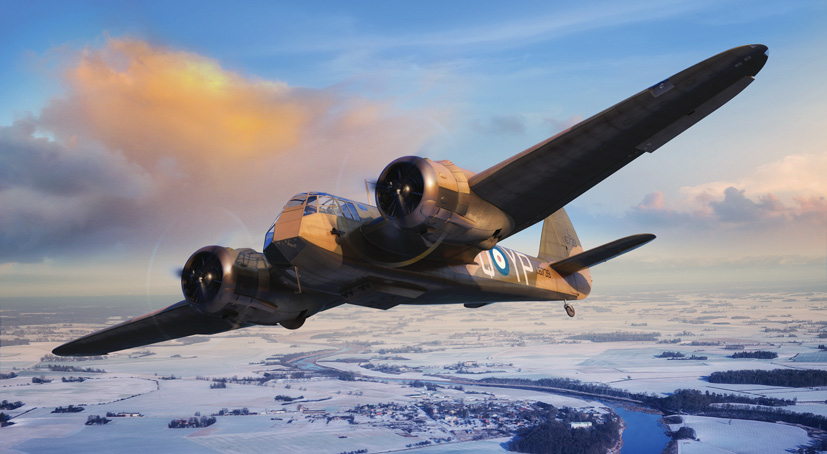
The magnificent new 1/48th scale Bristol Blenheim is now in the shops and will surely be a popular modelling gift over the festive period
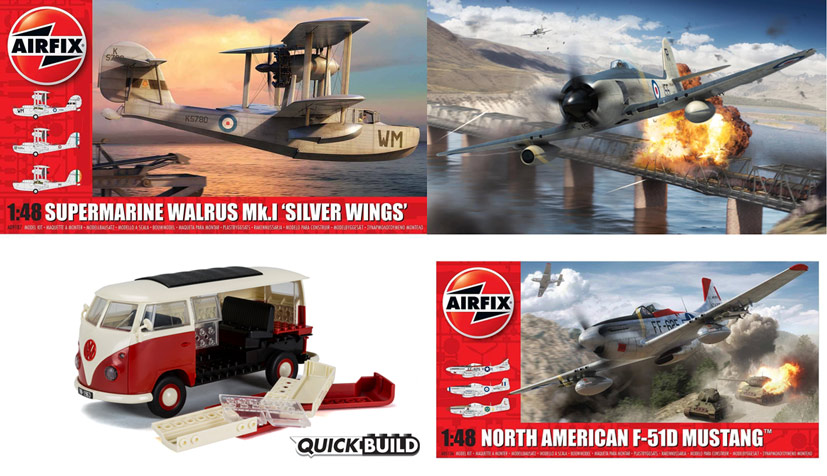
We would like to end this latest edition of Workbench with a little festive feature, where we ask some of the Airfix people whose impressive work we have been bringing you news of all year round, to nominate their Airfix Christmas Crackers – one model which they would be delighted to find under their tree on the big day itself. Let’s begin with the big guns and ask two of the most senior Airfix personalities for their selections, the people who have been instrumental in producing the fantastic models we have all enjoyed building this year. Development Manager Martin had no hesitation in selecting the latest 1/48th scale Supermarine Walrus Mk.I ‘Silver Wings’ as his choice, particularly as this period of aviation is the one which interests him most. Working with so many impressive Airfix projects, Martin describes the Walrus as one of the most interesting aircraft kits of recent times and if he has any free time over the Christmas period, he would be delighted if he could make a start on this handsome fleet spotter.
Our lead researcher Simon is challenged with providing robust support in the initial stages of any new tooling development project and often travels the world in search of the detail he needs. It must be a proud moment for him when he sees the model projects he may have researched many months ago eventually arriving in model stores, especially when they prove to be a real hit with modellers. One of the latest 1/48th scale releases has proved particularly rewarding for him and reminded him of an enjoyable trip to Finland in search of detailed information needed to help make this one of the most spectacular releases of recent times. The 1/48th scale Bristol Blenheim Mk.IF is the latest new tooling release to hit the stores and is already proving to be one of the most popular models in the range – we don’t think Simon will be alone in hoping to find one of these beauties in his stocking.
On to our hard working photographer and the man without whom most of the blogs on the Hornby website would be much the poorer. David has to shoot every model from every conceivable angle, in order to illustrate both the website and range catalogues - with this in mind, you might think it could be difficult to get him to nominate a suitable Christmas Cracker, but that was not the case. Quick as a flash, he came back with the 1/48th scale Mustang and didn’t really have a preference on which one. He said, “The Mustang is such an iconic shape and really is far too beautiful to be a fighting machine.” With some of the most attractive schemes applied to any of the WWII and post war fighters, the Mustang is one aircraft he never gets tired of photographing. Social Media and Web Content Co-ordinator Adam has a rather nice collection of models around his workstation and stated that he would not be against adding a Hawker Sea Fury to the group. Adding many hundreds of picture submissions to the Customer Images section of the Airfix website, it has been the Sea Fury which has impressed him most throughout 2018 and even though he does not feel that he could match the modelling skills of our talented customers, he would not mind having a go at this ultimate piston powered fleet fighter.
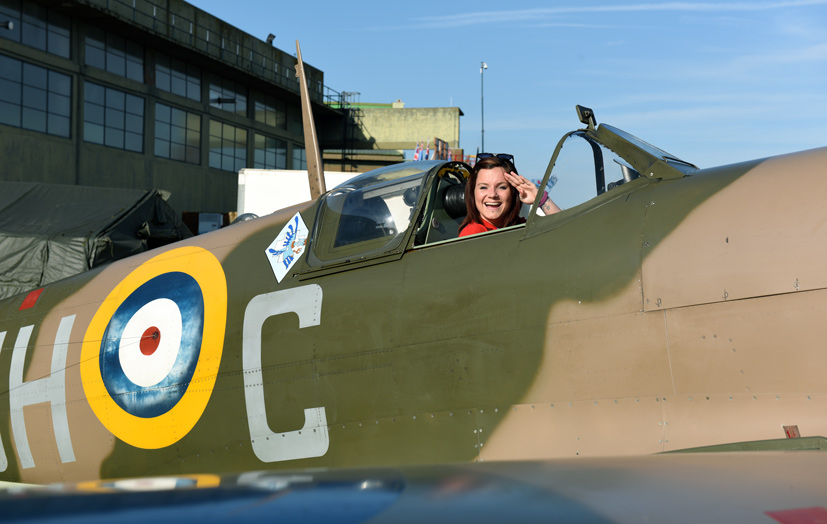
Is it any wonder why Sally is such a Spitfire fan? She had the opportunity to sit in HAC’s Spitfire Mk.Vb BM597 at this year’s Cosford Airshow … Tally Ho! (or should that be Ho Ho Ho?)
Now on to the girls and the selections of our fantastic Assistant Brand Managers, ladies who do great work in supporting the Airfix brand in a multitude of ways. Emily is all about style and would love to find a Quickbuild VW Camper van under her tree – “These vehicles are eternally cool and the Quickbuild range allows you to either enjoy the iconic shape of this motoring classic, or have fun seeing who in the family is the most dextrous when it comes to putting one together”. Sally, on the other hand, is definitely a Spitfire girl and would be happy with any Spitfire kit on Christmas day, any scale or any mark. When pressed though, she went for the Spitfire starter set, as this would allow anyone to get stuck in to building an example of this famous aircraft straight away and discovering the simple delights of modelling. Sally can often be found assisting on our make and paint tables at Telford and other outside events and as you can see from the picture above, her logbook already includes some time spent on Spitfires.
Thank you to everyone for allowing us to disturb your busy days and for letting us share your Airfix selections with Workbench readers. This will be the last edition of our blog before Christmas, as the next Workbench will be the Review Edition, which will be posted on Friday 28th January. All that remains is for us to wish you a very Happy Christmas from the entire Airfix team and to thank you for your magnificent support throughout 2018. We hope that Santa brings you a couple of Airfix goodies on the big day itself and we hope you will join us for our review edition, which will include information about the 2019 range launch – until then, please go easy on the sprouts!
That’s all we have for you in this latest edition of Workbench, which we hope you found an enjoyable read - we will be back in three weeks’ time with a further selection of Airfix modelling delights for your enjoyment. In the meantime, if you have any suggestions for subjects you would like to see covered in a future edition of the blog, or ways in which we could enhance your enjoyment of Workbench, please do not hesitate in contacting us. We can be reached via our usual e-mail address workbench@airfix.com or by contributing to our Workbench thread over on the Airfix Forum. If social media is more your style, you could access either the Airfix Facebook page or our Twitter channel, using #airfixworkbench where you will find plenty of modelling news, views and discussion. Whichever medium you decide to use, please do get in touch, as it is always interesting to hear from fellow modelling enthusiasts and the projects you have on the go at the moment.
As always, the Airfix website is the place to go for all the latest model release information, with our New Arrivals, Coming Soon and Last Chance to Buy sections all accessed by clicking on the above links. As updating the website is a constant process, a quick search through each section of the Airfix web pages will reveal new information and updated images in many of the product sections and this is always an enjoyable and rewarding way to spend a few minutes.
The next edition of Workbench is due to be published on Friday 28th December, when we look forward to bringing you all the latest news, updates and exclusives from the fascinating world of Airfix modelling.
On behalf of the entire Workbench team, thank you for continuing to support our Airfix blog.
The Airfix Workbench Team
© Hornby Hobbies Ltd. All rights reserved.

