

Welcome to the latest edition of Workbench and your regular update from the fascinating world of Airfix modelling. There is no let-up in the pace of developments at Airfix HQ and we have another feature packed blog for you, which we hope will include something for every modelling taste. Always of interest to Workbench readers, we have some exclusive box artwork reveals from forthcoming model releases, along with build images and re-stock notifications from some of the most popular new 1/48th scale models in our range. We also take a look back at some classic Airfix military models and the impressive work of former squaddie and Airfix Forum contributor Ian Price. We end by asking readers to send us their pictures of any models they may have completed in a less than pristine condition, but we will have more on this strange request later. Let’s make a start by looking at the latest update on arguably Britain’s most famous aircraft of all time, the incomparable Supermarine Spitfire.

Exclusive artwork reveal for 1/72nd scale Spitfire Mk.II/Va release (A02102)
There can be no doubting that the magnificent Supermarine Spitfire and the Airfix range of model construction kits are inextricably linked. When the first 1/72nd scale Spitfire model was released in 1955, it was to herald the beginning of the model construction hobby in Britain and cement the modellers love for Britain’s most famous fighter aircraft. Since these early days, the Airfix range has seen more Spitfire models produced than any other aircraft type, with examples appearing in numerous scales and in various marks. As the popularity of the Spitfire continues to endure and model manufacturing techniques are always improving, new Spitfire models continue to be developed and produced, as ever more accurate representations are demanded by the discerning modeller.
Readers may recall that the 22nd edition of Workbench included decal scheme details for the forthcoming 1/72nd scale re-issue of the hugely successful Spitfire Mk.I/IIa kit, which will now include decal options to complete either a Mk.II, or a Mk.VA machine. From a technical perspective, the Spitfire Mk.VA was basically a Mk.IIA airframe with the addition of a more powerful version of the Merlin engine - as the airframe and armament remained unchanged from the Mk.IIA version of the Spitfire, this new kit will be supplied with all the components of the previous Spitfire Mk.I/IIA release, with the inclusion of the new decal options. We are pleased to confirm that the magnificent artwork featured above will adorn the box of this latest Spitfire release (A02102) and marks the interesting story of aircraft that were flown by a Squadron of Argentine volunteer pilots during WWII.

Supermarine Spitfire Mk.Va, R7127/FJ-A, RAF No.164 Argentine (British) Squadron, Peterhead, Aberdeenshire, Scotland, April – September 1942
A really interesting scheme choice for this latest Spitfire kit release, RAF No.164 Squadron was a unit made up of volunteer pilots from families living in the UK, who were all of Argentine descent. Around 600 Argentine volunteers joined the British and Canadian Air Forces, determined to do their bit for the war effort. Many were incorporated into No.164 Squadron at Peterhead, which initially became operational in May 1942, flying their Spitfire Mk.Va aircraft. A number of the pilots decorated their aircraft with a popular Argentine cartoon character of the day, who was called ‘Patoruzu’ – similar to our Popeye, he was an inconspicuous indigenous man who possessed incredible strength, which he generally used for good. Although this does make for an interesting story about this unusual RAF unit, most of the Spitfires flown did not carry the ‘Patoruzu’ artwork and our artwork depicts one of the more common aircraft to fly with No.164 Squadron. Even though this particular scheme seems certain to be extremely popular with modellers, there is another equally interesting option included with the kit, this time for a Spitfire Mk.II.
The subject of ‘Presentation Spitfires’ from WWII is a fascinating one that underlines the determination of the British public to feel like they were doing their bit for the war effort. Entire communities would come together in times of severe austerity and attempt to raise enough funds to buy their own Spitfire, which would carry the name of the town or organisation into battle against the enemy. This proved to be a huge morale boost for the nation, at a time when the war was at a pivotal point and was a huge source of pride for the communities who purchased an aircraft. The second scheme included in this kit is for Spitfire P7666, which was purchased by the Royal Observer Corps and went into battle wearing the ROC crest on the side of the fuselage. P7666 proved to be a particularly successful machine in combat, claiming at least three enemy aircraft destroyed and a number of others claimed as shared or probable victories. This latest Spitfire release (A02102) is scheduled for release during the first week in September, but please check the Airfix website for all the latest details.

The stunning artwork that will accompany the release of the new 1/72nd scale Boeing B-17G Flying Fortress
Although 2016 has already been a fantastic year for new model releases to the ever expanding Airfix model range, the modeller still has plenty to look forward to over the coming few months. At the very head of this pack of impending new model releases is undoubtedly the magnificent 1/72nd scale Boeing B-17G Flying Fortress, a model which has attracted a lot of attention from the modelling community. With pre-order levels already ensuring this will be one of the biggest model releases of 2016, we are always being asked to provide the latest update on the B-17 project and as you can see from the image above, we have a significant development for you in this edition.
The much anticipated release of box artwork imagery that will accompany any new model project is a clear indication that the model is advancing nicely towards its actual release date and for a model as eagerly anticipated as the B-17G, we had to do something a little special. Many Workbench readers will be familiar with the magnificent box artwork of Roy Cross, which was used to illustrate the Airfix kit box lids and catalogues we revered so much in our youth. One of his best loved creations was his B-17G Flying Fortress picture, which featured ‘A BIT O’ LACE’ releasing her bombs, whilst coming under attack from Luftwaffe fighters and was at least partly responsible for this model becoming such a successful release. In a move specifically intended to pay respect to this iconic piece of Airfix artwork, the new 1/72nd scale B-17G kit will feature the magnificent image shown above, which takes inspiration from the Roy Cross B-17 classic, albeit from the opposite angle. Incidentally, we hope to feature the magnificent work of current Airfix digital artist Adam Tooby in a future edition of Workbench, and as his images are now such an important part of the Airfix release process, we will be devoting an entire edition to this feature.

The classic Airfix box artwork of Roy Cross, which inspired generations of modellers. Both old and new versions complement each other perfectly
The aircraft pictured in the new Boeing B-17G Flying Fortress artwork is 43-37521 ‘Skyway Chariot’, which flew with the 351st Bomb Squadron, 100th Bomb Group, US Eighth Air Force, from Thorpe Abbots airfield in Norfolk, during March 1945. This particular aircraft was delivered from the United Airlines Modification Centre (UAMC) at Cheyenne, Wyoming and was assigned to the 351st BS/ 100th BG at Thorpe Abbots on 30th May 1944. ‘Skyway Chariot’ was lost on a mission to Berlin on 18th March 1945, after coming under concerted attack from a number of Messerschmitt Me 262 jet fighters. On the first attack, a Luftwaffe jet took out the tail gunners position and shredded the vertical stabilizer – the next attack effectively knocked out all the bombers control lines, rendering the mighty aircraft completely helpless. The order was given to abandon the aircraft, which later exploded in mid-air, with wreckage coming down near the German town of Tangermunde, west of Berlin. Tragically, three of the crew were killed in action, with the other six becoming prisoners of war.
This is one of two fantastic US Eighth Air Force schemes included with this newly tooled 1/72nd scale B-17G Flying Fortress kit (A08017) and the stunning box artwork will surely serve as inspiration for many modellers to attempt this famous WWII bomber over the coming months. Currently scheduled for release towards the end of September, we will be looking to bring you further updates on this exciting project as it approaches release – for now, this magnificent artwork is certainly serving to whet our modelling appetites.

Image montage from Ian Price’s magnificent ‘Ole Bill’ bus build
In the previous edition of Workbench, we included a pair of images which featured an impressive WWI vehicle build by Airfix Forum contributor and accomplished modeller Ian Price. There is no way we could allow this beautiful model to escape without a more detailed inspection, so here we have our ‘Ole Bill Re-visited’ build feature.
The distinctive London General Omnibus Company B-Type double decker bus is often considered to be the first mass produced bus and was introduced to the streets of London in late 1910. Constructed around a wooden frame, with steel and rubber road wheels, the bus could carry a maximum capacity of 34 passengers, with 16 people in the covered lower deck and a further 18 on the uncovered top deck. The bus first started carrying passengers in 1911 and by 1913, somewhere in the region of 2,500 vehicles were in service.
During the Great War, the War Office were in desperate need of a quick and effective way to move large numbers of troops behind the savage fighting on front lines and they purchased 900 LGOC buses to help with this task. Initially, many of these buses were supplied still wearing their original public service liveries, but were quickly adapted for life on the Western Front. The glass sides of the buses, which were susceptible to blast damage and causing injury to the men inside, were boarded up with wooden planks and the entire bus was painted in khaki green, as befitted a military vehicle. Some of the buses were converted to mobile pigeon waggons, essential in providing back-up communications during heavy fighting and any vehicles still serviceable following the armistice were used to bring the troops home.

Ian has gone to great lengths to produce an outstanding model
At the outset of this build, Ian was looking for a project that would suitably mark the centenary commemorations of the Great War, whilst being something just a little different. As a former squaddie himself, Ian was quite taken with the thought that these former London buses that had previously taken passengers to work, or for days out around the parks of the capital, were now taking young men in their thousands to an uncertain fate on the front line. He was also keen to inject some of the well-known army humour into the build, something of which he has first-hand knowledge.

These former London buses were pressed into service taking troops towards the front line
As a keen modeller, Ian loves nothing more than adding scratch built parts to his model builds, helping to make them more authentic, whilst also challenging him creatively. His spares drawer is full of unused kit parts, unwanted household items and anything else that just may come in handy for a future model build. For his Ole Bill bus (A50163), Ian used pins, copper wire, various bits of brass tubing and even syringe needles to produce the desired effect he was looking for. He also likes to thoroughly research his model builds and often finds that searching on the internet can yield many interesting and unusual facts, as well as providing inspiration to produce something just that little bit special. To illustrate this, he wanted to include at least one period wartime poster in his build and researched the subject, printing off a number of alternatives at the correct scale size. He eventually decided on the Lord Kitchener recruitment poster inside the lower deck, as he thought that this was ‘the bloody silly sort of thing the army would put on a vehicle that was transporting men to the front line’.

A fitting modelling tribute to the British troops of the Great War
From speaking with Ian, it is clear that he felt it was important to add some army humour to the build and he conducted some pretty extensive research into the subject. The graffiti included on the sides of the bus was applied thanks to a white gel pen donated by his wife and was hand written to achieve the desired effect. Ian described how the ‘Wipers Times’ graffiti made reference to the fact that the British soldiers had difficulty pronouncing Ypres, so it became known as Wipers in Tommy slang – it was also the name of a trench magazine produced to entertain the troops. Perhaps the most poignant aspect of the build is the fact that even though these buses would have taken many thousands of soldiers towards the front lines, many of them would not be fortunate enough to be making the return journey and the empty bus was Ian’s attempt to pay a personal tribute to the soldiers of the Great War. We think you will agree that he managed to achieve this in some style.

Ian had been wanting to build the Airfix 1/32nd scale Crusader Mk.III since he was a youngster
Ian described how his modelling preferences are not restricted to any one type of kit and he enjoys turning his hand to any modelling subject. Despite this, he did direct us to another of his military vehicle builds which has special significance for him. He told us that as a young modeller, he had always wanted one of the 1/32nd scale Airfix Crusader Mk.III Tank kits, but was never lucky enough to be bought one. Every Christmas and birthday, he opened his presents hoping to find a Crusader amongst them, but it never showed up and his army career soon got in the way of his modelling. His return to the hobby rekindled his interest in the Crusader, which he simply describes as ‘a great looking tank – it just looks like a tank should do’. He was determined to finally build this model that had eluded him for so many years and as was the case with the WWI bus we saw earlier, he was determined to do the kit justice.

Many scratch built and scavenged parts were used in this build
Taking what he described as a beautiful kit, Ian again raided his spares drawer and anything else he could find in his modelling shed and set to work on producing a beautiful scale representation of this famous British medium tank. Using brass tubing for the gun barrels and muzzles and a host of other additional parts to complement the model, this impressive build took around four weeks of work to complete, which included some research time in making sure everything was as accurate as it could be. Ian described how two of the most challenging aspects of the build were scratch building the lights, (for which he used brass tubing and the clear plastic collar support you get when buying a new shirt) and hand painting the unit colours on the uneven contours of the hull. Once again, Ian has produced a spectacular model and if you were to place it on a desert backdrop, or on a suitable diorama base, you would be hard pressed to tell this model from an actual Crusader tank.

The finished Crusader is perhaps the most impressive military vehicle build we have ever featured
We would like to sincerely thank Ian for taking the time to speak with us and for allowing us to feature his magnificent model builds. You can see more of his modelling prowess by heading to the various build sections of the Airfix forum and we hope to be featuring more of his impressive work in future editions of Workbench – thanks again Ian.

The Boulton Paul Defiant is one of the more interesting aircraft of WWII
One of the most rewarding aspects of producing our Workbench blog has been the opportunity to bring our readers news of some newly tooled model announcements and see these new projects through to release. Since our first edition back in July last year, we have charted the progress of some fantastic new models, including an increasing number of releases in 1/48th scale, which have clearly become extremely popular with the modeller. Unfortunately, the success of these models has seen them sell out almost as soon as initial supplies have reached the Airfix warehouse and they have sometimes proved difficult for modellers to obtain. With this in mind, we are making readers aware that two of the most popular 1/48th scale recent releases are due to be re-stocked soon and this could be a good time to secure your example.

Now would be a good time to visit your local model store and try to locate one of these beauties
For many modellers, the fantastic 1/48th scale Boulton Paul Defiant Mk.I (A05128) is one of the most accomplished new models in the Airfix range, and as one of the more interesting aircraft to take part in the Battle of Britain it was always assured of being a particularly successful release. Proving incredibly difficult to keep in stock, a new consignment of models is due to arrive in the very near future, so it could be worth keeping an eye on the Airfix website, or paying a visit to your local model store to grab one of these elusive models.

Build montage of the popular new 1/48th scale Gloster Meteor F.8 (A09182)
In the same way that the Defiant has captured the imagination of the modelling community, the new 1/48th scale Gloster Meteor F.8 (A09182) proved to be an instant hit when it was released earlier this year, with initial supplies selling out almost immediately. We know that a great many of you are waiting patiently for your chance to add one of these to your build programmes, so we thought that you would like to know that the next shipment of Meteors is due to arrive later this month – as usual, please keep checking the Airfix website for the very latest release information.

Surely one of the most attractive jet aircraft to ever take to the skies
As Britain’s first jet powered fighter and the only one to see service during the Second World War, the Gloster Meteor is not only an extremely important aircraft in the history of British aviation, but also one of the most attractive jets to see RAF service. The importance of the Meteor has been reflected in the level of interest that has been shown in this new model following its announcement, around this time last year. The scheme worn in this series of build images mark a Gloster Meteor F.8 which served with No.111 Squadron and wears standard RAF day fighter camouflage, but benefits from the addition of this distinctive yellow tail. Even though Meteor WL123 was to end its RAF service at No.5 Maintenance Unit at Kemble, where it was eventually sold for scrap in July 1959, this beautiful new 1/48th scale model helps to immortalise the aircraft during the height of its RAF career.

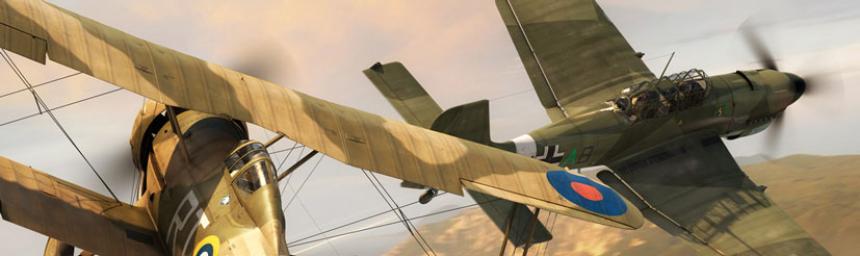
Exclusive artwork reveal for the forthcoming Gladiator and Stuka twin Gift Set (A50179)
Not content with bringing you two exclusive box artwork reveals in this latest edition of Workbench, we have another one for you to get excited about, this time in conjunction with a future 1/72nd scale double model gift set release. Many readers will be of the opinion that we have saved the best until last, as this magnificent picture really does demand closer inspection and you can almost lose yourself in the detail and drama of the image. Showing an RAF Gloster Gladiator Mk.I fighter challenging rampaging Stuka dive bombers around the coastal area of a Mediterranean island, it clearly illustrates that whilst the Gladiator represented the very pinnacle of biplane fighter design, the pace of aviation development around the time of its introduction dictated that it was outclassed by almost every enemy aircraft it would come into contact with. Despite this, the strength of the basic design and the quality of the RAF pilot training programme dictated that where the Gladiator was thrust into combat, it could always be relied upon to give a good account of itself.
The top scoring Gladiator ace of WWII was the impressively named Squadron Leader Marmaduke Thomas St John Pattle, more usually referred to as ‘Pat’ Pattle, who scored at least 15.5 victories whilst flying the last RAF biplane fighter. The aircraft modelled in this new gift set and the subject of this latest artwork was the personal aircraft of Flight Commander Joseph Frederick ‘Joe’ Fraser and carried an elephant motif on the port fuselage side, under the rear cockpit glazing. Fraser proved to be extremely proficient in fighting with the Gladiator claiming 10 enemy aircraft destroyed and one shared – indeed eight of these victories were scored using this particular aircraft N5627. This Junkers JU87R-2 Stuka and Gladiator Mk.I Gift Set (A50179) is due to be released towards the end of September and we will have further updates in a future edition of Workbench.

Would you think of producing a crashed aircraft diorama as your next build project?
We end this latest edition of Workbench by asking a really interesting modelling question – ‘What do readers think about aircraft crash dioramas?’ Would you purposely think of starting a build project with the intention of producing a finished model that looks as if it has befallen an unfortunate accident? A recent customer image submission to the Airfix forum has certainly sparked discussion amongst modellers, but no matter what your opinion on this subject might be, there can be no denying how interesting the model looks. The image was submitted by forum contributor Robert Blokker, who has produced this impressive crash landing scene featuring a JG27 Messerschmitt Bf 109E, during the North African campaign of WWII.
As many modellers prefer to finish their models to represent aircraft that had actually taken part in operations and not just been rolled out of the paint shop prior to the engine starting, or the guns being fired, would you consider going that one step further and producing a model that depicts an aircraft that has been damaged, or succumbed to a worse fate? It would be really interesting to gauge readers' opinions on this subject and better still to see pictures of projects you have attempted – please do drop us a line at workbench@airfix.com and let us have your thoughts on the subject.
The image used in the previous section leads us nicely on to the final topic this week.
Earlier this year we selected one of the pictures uploaded to our Customer Images Gallery to appear on our monthly Desktop Calendar Wallpaper - congratulations to Robert Blokker whose shot was chosen for the May wallpaper.

We had such a great response last time that we've decided to do it again. Have a look at the news article, and send us your images now to be in with a chance of appearing on September's calendar wallpaper.
That is all we have for you in this latest edition of Airfix Workbench. Don’t forget that you can find out all the latest model release information by heading to the New Arrivals section of the Airfix website, although spending a little time searching through all the various sections of the website can certainly be rewarding.
There are now many ways for our readers to get involved in all the latest Airfix modelling chat and sharing ideas with other modellers. You can always e-mail us directly by using our workbench@airfix.com address, or there is our dedicated Workbench thread on the Airfix Forum. If social media is more your style, you could either access the Airfix Facebook page or our Twitter channel, using the #airfixworkbench hashtag. Whichever medium you decide to use, please do get in touch with us, as it is always great to hear from fellow modellers.
Until next time, enjoy your modelling and please let us have your thoughts on the subject of aircraft crash dioramas.
The Airfix Workbench Team
© Hornby Hobbies Ltd. All rights reserved.

