

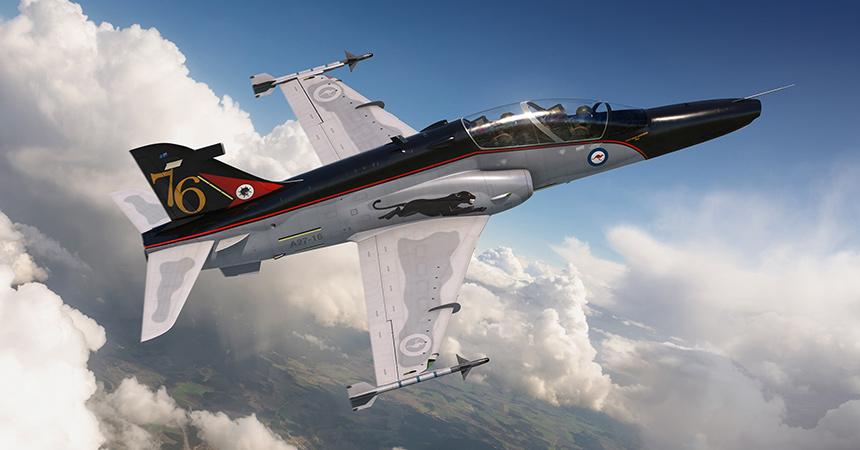
Welcome to this latest edition of Workbench and all the news, updates and exclusive announcements from the fascinating world of Airfix modelling.
In this latest update, we have something old, something new, something re-visited and something yellow … that old saying sort of strayed a little towards the end. Taking a closer Workbench look at several of the 2020 projects which are now fast approaching release, we begin by looking at a modern British aviation classic which continues to provide fast jet pilot training support with a number of air forces around the world, before moving on to an aircraft which used to do the same job, but on more of a home-grown basis. We look at an Airfix classic which is about to have nostalgic modellers rushing to their local model shop and feature a WWII Tank Destroyer which always had to be quick on the draw.
We end by returning to our lead feature and use a series of fantastic built model images to showcase the same classic training aircraft, but in its earlier guise. Strap yourself in for an enjoyable few minutes of unashamed Airfix modelling indulgence.
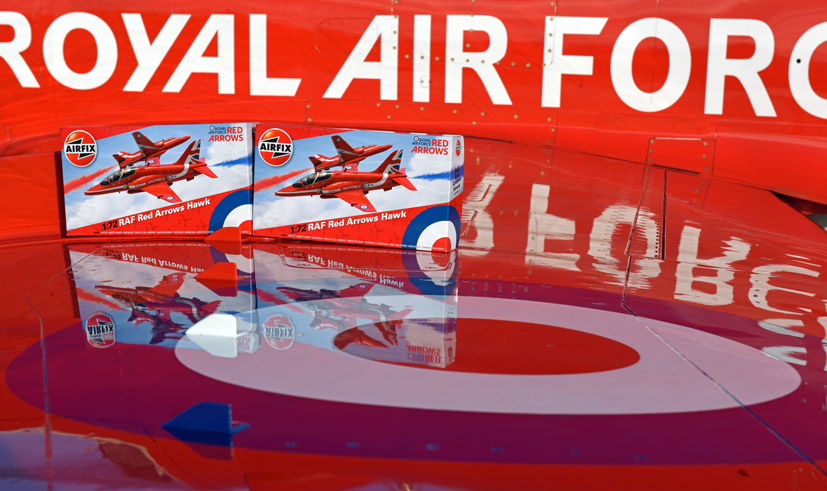
Whichever scale they appear in, our Red Arrows Hawk jet kits are always amongst the most popular models in any Airfix model range
When most people think of the British Aerospace Hawk training aircraft, they will probably immediately conjure up mental images of the Red Arrows performing graceful formation manoeuvres, or the dynamic opposition passes executed by the daredevil Synchro Pair at Airshows all over the world, and why not! With their reputation for excellence and unequalled popularity, the ‘Reds’ have done much to secure the reputation of Hawk and its sales success, acting as flying ambassadors for the nation and unofficial salesmen for Britain’s aviation industry.
Away from the Red Arrows though, the little Hawk has to be recognised as a hugely successful aircraft, one which has been used to train thousands of front line pilots for air forces all over the world and one which is now in an impressive 46th year of continuous Royal Air Force service. With over 1000 aircraft already produced, the original Hawk T.1A variant is scheduled to remain in service for around another ten years, however, there is a relatively new aviation kid on the block which whilst still possessing strong Hawk heritage, is a very different beast altogether.
With British Aerospace knowing they had a winner on their hands, they were obviously keen to ensure they realized the full development potential possessed by the Hawk and whilst the RAF and other air forces were busy using it to train their latest intakes of student pilots, BAe were busy looking at how they could make their little trainer even more effective. The Hawk 100 series shared much of the structural profile of the original aircraft, but incorporated a great many upgrades and design enhancement, not all of which can be seen by the naked eye. Externally, the most visible differences are a lengthened fuselage, most noticeable on the nose of the aircraft, permanent wingtip weapons stations for mounting air to air missiles, a different wing profile, which incorporates a discernible leading edge droop and a tail which now featured a forward protruding housing for electronic countermeasures equipment.
Benefitting from a more powerful version of the Adour turbofan engine, the new aircraft had the ability to carry a greater load and variety of offensive stores, further enhancing the Hawk’s weapons training and offensive capabilities, making this aircraft an attractive, relatively low cost option for a number of the world’s air forces. It was, however, the new ‘glass cockpit’ which really saw the main capability improvements, turning the previously analogue pilot working environment into a fully configurable space which could simulate the cockpit of the latest front line aircraft the student would be converting to following the successful completion of his course. This was very much a Hawk for the future. Making its first flight during the Autumn of 1987, the upgraded Hawk began to attract interested buyers almost straight away and represented just the start of a concerted development and capability upgrade program.
To mark the impending release of our new Hawk 100 Series kit A03073A, let’s take a look at the three appealing scheme options which will be included in the box, each one irresistible in their own way.
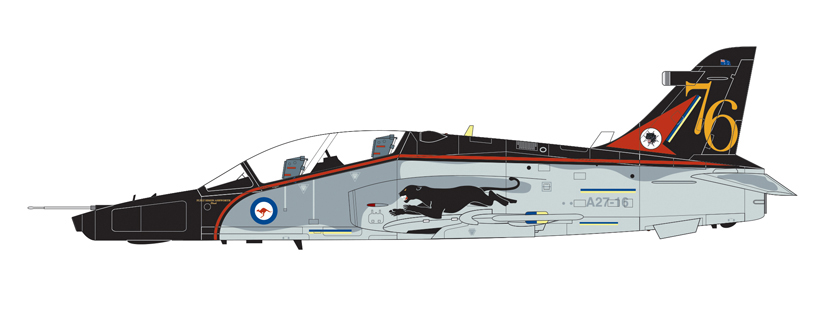
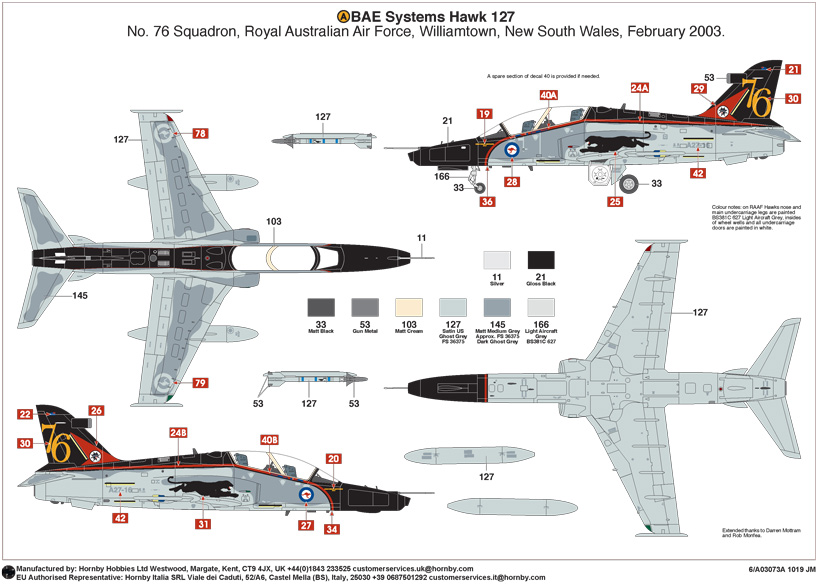
Quite early on in the development of the Hawk 100 series program, the Royal Australian Air Force placed an order for 34 aircraft, which would be designated Hawk 127. These were to be delivered from 2000 and would take the form of 12 British built aircraft (plus an additional development airframe) and a further 21 to be built under licence in Australia. Powered by a Rolls Royce Turbomeca Adour 871 engine, the Australian Air Force Hawks entered service in 2001 and since that date, have been providing advanced flying training support for the country’s most capable student pilots and those in need of refresher training.
With the advanced nature of the cockpit avionics, students embark on two separate courses which both test their abilities and prepare them for the next stage in their training. The first 14 week course will see them fly the Hawk on an introductory lead-in fighter program, which if successfully negotiated will lead them to a further 20 week Hawk course where they will receive air to air and air to ground weapons tuition. A significant achievement in itself, should they advance past this stage, their next stop will be an operational conversion course and the opportunity to fly either the awesome McDonnell Douglas (Boeing) F/A-18A/B Hornet of the even more capable F/A-18F Super Hornet. The adaptable RAAF Hawks have just undergone a further capability upgrade in preparation for the arrival of the next generation of combat aircraft and training support for future Lockheed Martin F-35A Lightning II pilots.
Further enhancing the already attractive scheme adopted by the RAAF on their Hawks, this particular aircraft was to spend some time in the paint shop in preparation for its parent squadron’s 60th anniversary commemorations. RAAF No.76 Squadron’s unit badge features a black panther’s head and this was used as the inspiration for this specially designed scheme. With the top of the spine, fin and complete nose area painted gloss black, red cheat lines and a red fin flash, the large gold 76 on the tail left nobody in any doubt as to who the owners of this stunning aircraft were. A representation of the panther’s head squadron crest was also added to the tail, as were two large black panthers on either side of the fuselage – quite spectacular.
This beautifully presented anniversary jet was to be one of the star attractions at the 2003 Avalon International Airshow – we think we are correct in thinking this was the display aircraft for the show. Whatever its role, it must have made for a spectacular sight.
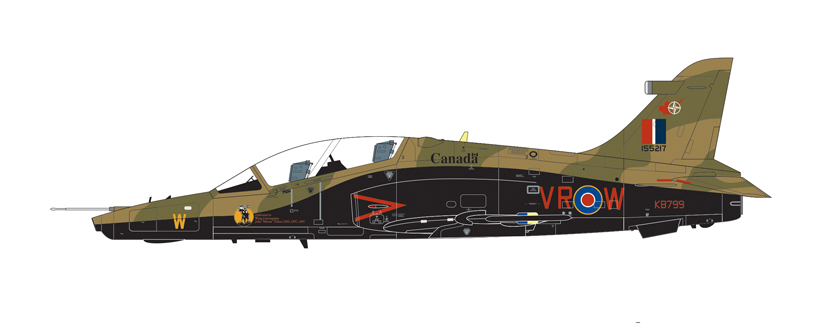
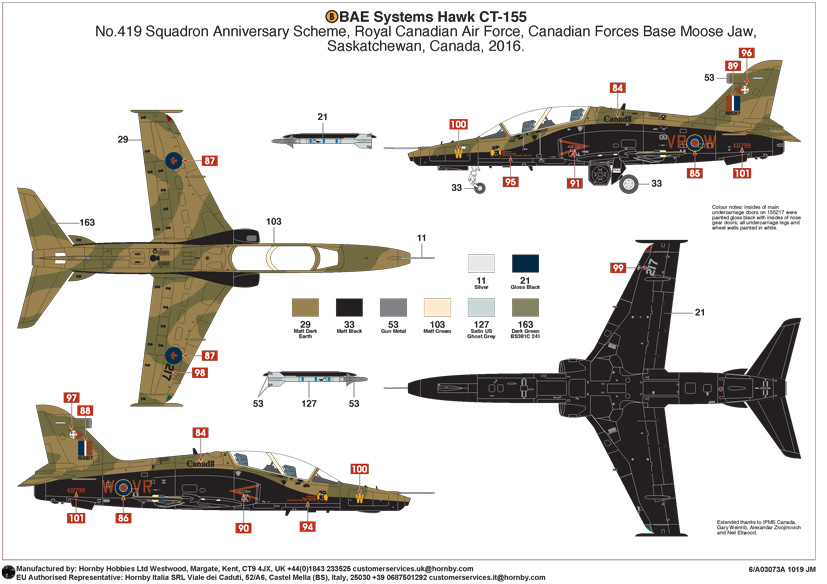
The Royal Canadian Air Force were also attracted by the training capabilities of the upgraded Hawk and were to purchase 23 aircraft between July 2000 and August 2004. The first aircraft delivered were soon entered into service with No.419 Squadron at Moose Jaw and No.2 Canadian Forces Flying Training School, where they were to provide fighter lead-in training for their future fast jet pilots. Satisfying Canada’s commitment to the NATO flying program, these aircraft would ensure that the air force would have a constant supply of qualified pilots for their squadrons, secure in the knowledge that this capable little trainer could be adapted to support any future changes in requirement, or combat aircraft types, should this be required.
Since entering service, it is thought that at one time or another, every RCAF pilot has spent time at No.419 Squadron’s Moose Jaw base, either to undergo Hawk training, providing instruction for student pilots or if needing a refresher course, further illustrating the importance of this aircraft in Canadian service. With its advanced cockpit technology, head-up display unit and fully integrated navigation and targeting system, the Hawk prepares student pilots for future service flying the CF-188A/B Hornet fighter.
Usually wearing the same high visibility black scheme adopted by Royal Air Force training aircraft, this particular RCAF Hawk is a striking exception to this norm and wears a representation of a WWII Bomber Command scheme. Tracing its history back to the Second World War, RCAF No.419 Squadron decided to commemorate their 75th Anniversary by presenting this Hawk CT-155 in the colours of a Vickers Wellington, wearing the codes VR-W, which was the aircraft flown by the unit’s first commanding officer John ‘Moose’ Fulton. Further adding to the appeal of this scheme, squadron historians added additional details marking the wartime heritage of the unit, including markings applied during their time operating Handley Page Halifax and Avro Lancaster heavy bombers. Canadian enthusiasts would surely have been keen to ensure the air force retained these beautiful markings for as long as possible.
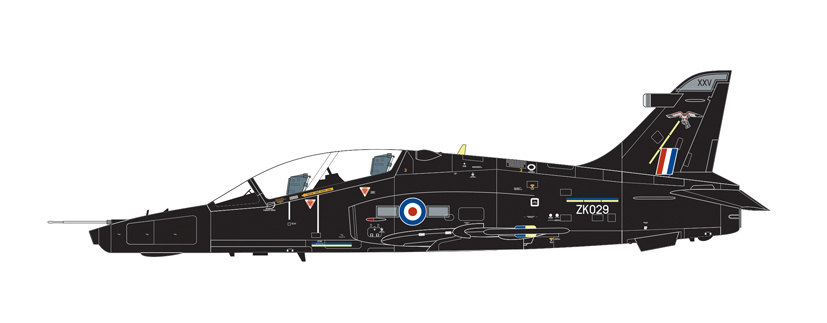
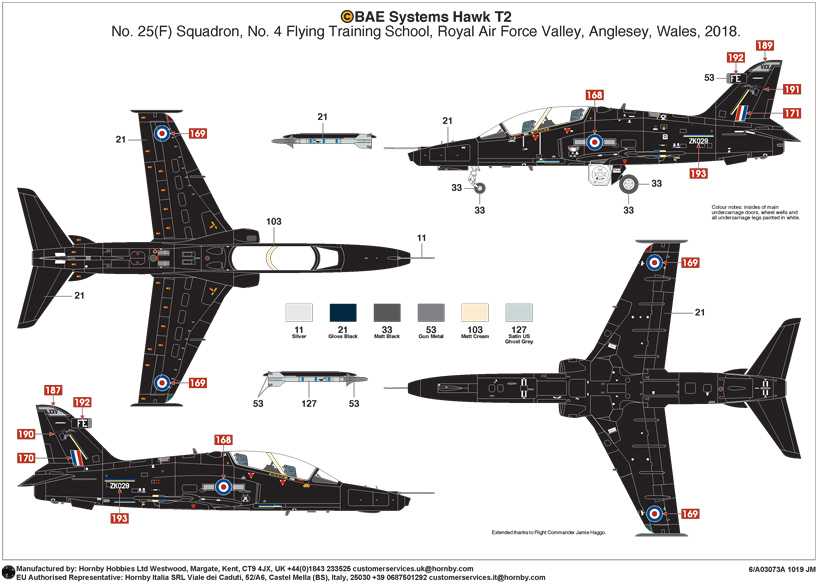
Continuing the proud legacy of one of Britain’s most successful post war aviation types, the BAe Hawk T.2 is undoubtedly the most exciting aircraft currently based at RAF Valley, one of the UK’s most active military airfields and is the latest incarnation of this successful two seat training aircraft. A much more capable aircraft than its predecessor, the Hawk T.2 (officially designated Hawk Mk.128) helps to ensure that successful pilot trainees are ready to embark on their operational conversion training as soon as they leave RAF Valley. The Hawk’s new glass cockpit and advanced avionics allow it to be configured in a similar way to the front-line aircraft the student is destined to fly operationally, allowing them the opportunity to become familiar with the complex operating environment they will go on to face.
Clearly, this is much more cost effective than using a Typhoon or Lightning II in a similar training role, but still helps to prepare the student pilot for life at a front-line RAF squadron. Indeed, the aircraft has proved to be even more adaptable than was first envisaged, helping to ensure the RAF can continue to provide world class fast jet training programmes for both UK and overseas students, posing mission challenges which were simply not possible in the previous jet. All of the RAF’s Hawk T.2 trainers are currently based at RAF Valley, an airfield which is steeped in military flying training history, a role which is seems certain to continue performing for many years to come.
The first RAF students to commence a flying training course on the Hawk T.2 climbed into the aircraft’s cockpit at the beginning of April 2012 and since that date, these attractive aircraft have been a regular sight in the skies above Anglesey. BAe Hawk T.2 had been operating in the colours of No.IV(AC) Squadron in a Fast Jet Training role since its arrival at RAF Valley, however, an interesting development towards the end of 2018 would see it exchanging its squadron allegiances. An increased demand for fast jet pilots destined to fly Typhoon and Lightning II aircraft saw No.IV Squadron splitting in two, with half of the aircraft joining the newly reformed No.25(F) Squadron.
The new Hawk squadron would be responsible for providing the first stage of fast jet conversion training, with No.IV Squadron taking them through the next stage of tactics and weapons training. No.25(F) Squadron had previously operated the Tornado F.3 fighter in an air defence role, but the gradual drawdown of the type would bring about their disbandment in 2008 and their remaining aircraft being sent to Leuchars. In what has to be viewed as a fascinating development for British military aviation, No.25 Squadron’s crest features a hawk rising on a gauntlet and it seems somehow fitting that these famous old markings will now adorn the fin of the RAF’s latest Hawk T.2 trainers. With this still being a relatively recent development, the squadron’s new Hawks are sure to become popular attendees at Airshows around the country, once we return to some sort of event normality.
We are pleased to report that this fantastic new kit is just about to be released, but apologise for not making your selection of finish option an easy one. With all three schemes having great appeal for different reasons, this kit is surely destined to be a popular build project over the coming weeks, but which scheme option you decide to go for may take a little more deliberation than the initial purchase decision.
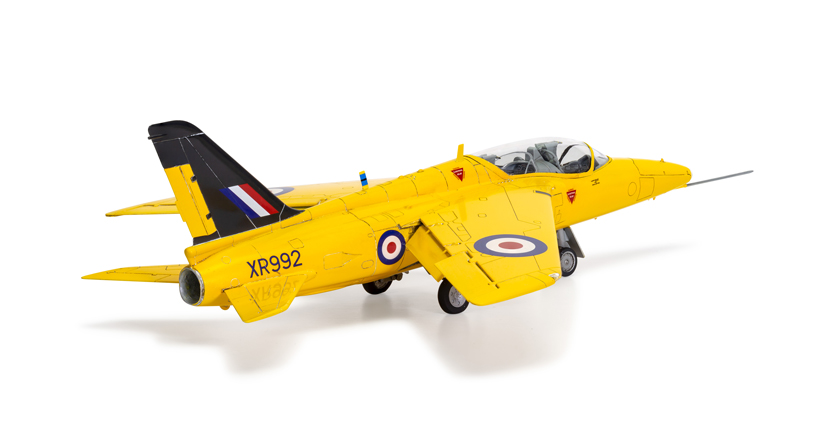
Staying with a Red Arrows linked theme for just a while longer, even though the team have now been inextricably linked with the British Aerospace Hawk jet for over forty years, it is not the aircraft they actually started their displays in. Indeed, the team can actually trace their history back to several little yellow aeroplanes, instead of the red jets we are all more familiar with. Thanks to the latest modelling efforts of our now famous product designer Paramjit, we are delighted to bring you exclusive build pictures of our forthcoming 1/48th scale Folland Gnat T.1 kit, which we think you will agree looks absolutely stunning in this ‘Yellowjacks’ display team livery. As this kit is only a few weeks away from release and it just looks so good in this livery, what other excuse do we really need to take another look at this stunner?
The second scheme option to be included with this latest re-issue of the magnificent 1/48th scale Gnat T.1 kit has to be considered one of the most striking to appear on any post war RAF jet. As the Folland Gnat entered squadron service, the RAF were keen to display the many qualities of their new trainer to the huge audiences at the Farnborough Air Show and a group of instructors at RAF Valley thought they had just the thing. With many RAF stations boasting a solo display aircraft, instructors at No.4 Flying Training School had the idea of forming a display team consisting of five aircraft (two either side of the leader) and as the project began to gain some momentum, it was decided that the aircraft should be painted in an unusual colour scheme. Forming unofficially during 1963, the team began training in the skies above RAF Valley, immediately attracting the attention of the locals.
It is thought that a local reporter had seen the aircraft displaying over the airfield and made an official request to watch the team practicing from the lofty vantage point of Valley’s control tower. This was granted and whilst he was marvelling at the precision flying he was seeing, he overheard the radio communications of the leader calling a break to land – using the team’s callsign, the reporter heard ‘Yellowjacks Break’, something he would later use in his newspaper article. As this seemed to be an entirely appropriate name for the team, it naturally stuck and the ‘Yellowjacks’ were born.
As information about the team began to circulate, the roads around RAF Valley began to fill with locals and holidaymakers desperate to catch a glimpse of this exciting new aerobatic display team and their brightly coloured aircraft on practice days. Indeed, the situation became so serious that the local council had to build a dedicated viewing area to accommodate at least some of the extra visitors, an area which is now used as a car park and meeting point by members of the Valley Aviation Society. The colour itself was extremely popular with enthusiasts, particularly as the jets looked absolutely stunning against a clear blue sky, especially whilst streaming white smoke. It was quickly discovered that the Gnats were much less visible on grey and overcast days, which would be quite a significant problem considering the delights of the good old British weather.
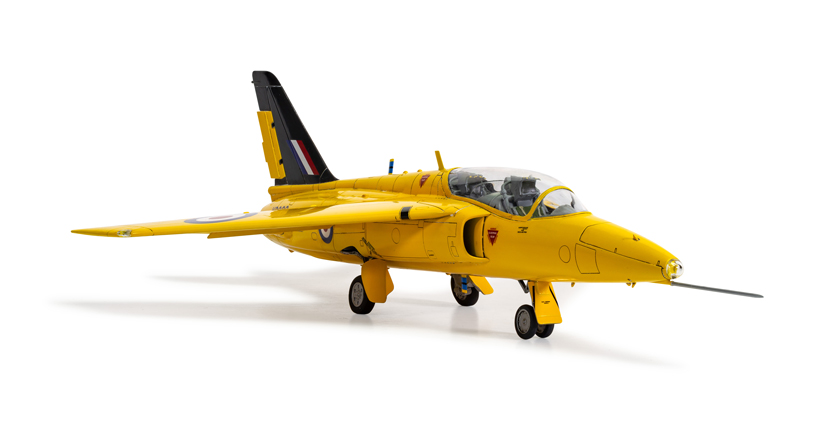
This fantastic series of ‘Yellowjacks’ Gnat built model images have been produced by our talented product designer Paramjit Sembhi and are being published for the very first time. Marking the genesis of the aerobatic team we now all celebrate as the Red Arrows, these diminutive little jets might look completely different to what we have become used to , but they have to be regarded as some of the most attractive jets to see Royal Air Force service
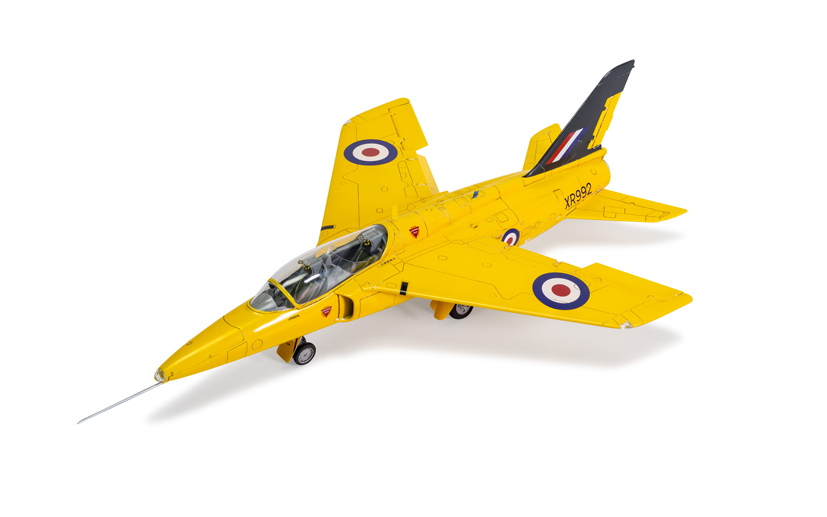
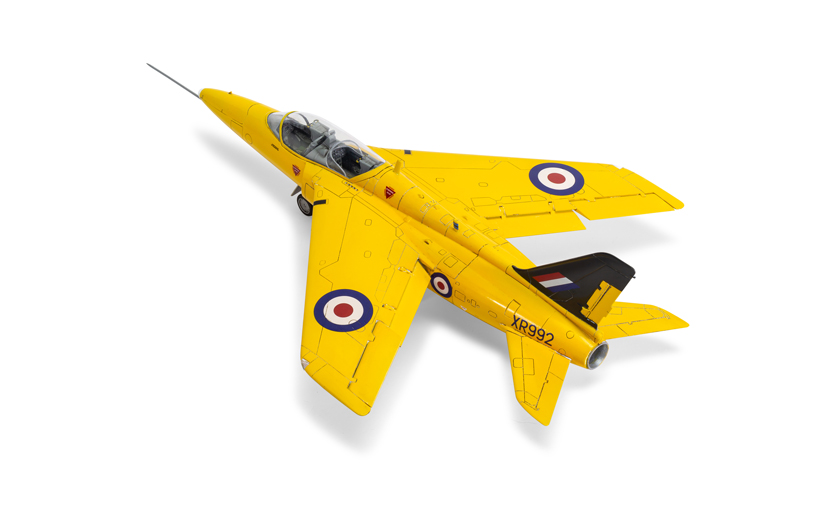
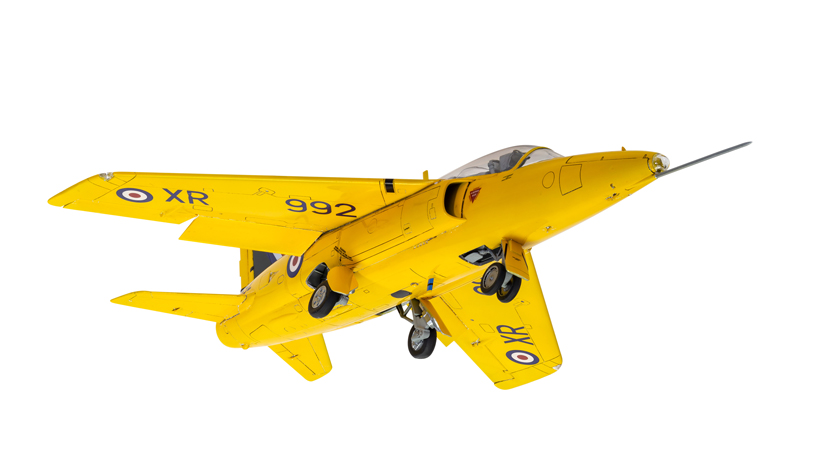
The scheme presented here was only applied to a single Yellowjacks Gnat and was a trial to see if it would make the aircraft more visible during displays in poor weather conditions. The aircraft was flown in all positions within the formation, however, it was thought that results were inconclusive and this was not rolled out across all the jets. It can be seen from the full scheme details that the rudder of the aircraft was left yellow and whilst there are many photographs in existence showing XR992 with its unusual black tail, it is thought that ‘Black Fin’ only flew during practice displays and never appeared during an official public demonstration.
With a number of RAF display teams now on the circuit, service officials were becoming increasingly concerned that individual units were spending too much time on unofficial flying activities, with the sheer number of teams causing some confusion amongst the general public. Wishing to regain some central control, but also wanting to maintain the undoubted public popularity of the ‘Yellowjacks’, the yellow Gnats were ordered down to Little Rissington at the end of the display season, where they would go on to form the nucleus of a new, official RAF Aerobatic Display Team, utilising the undoubted qualities of the Folland Gnat – a team which would go by the name of the Red Arrows.
Folland Gnat T.1 XR992 was one of the former ‘Yellowjacks’ aircraft to be transferred to the Red Arrows, but would later be destroyed in a rather unusual incident. Whilst engaged in a practice display over RAF Kemble in December 1969, the pilot of this Gnat was informed by the tower that his aircraft was on fire, so he immediately ejected from the machine. He landed safely, with the jet crashing some way in the distance, however, it was later discovered that there had been a misidentification and he had ejected unnecessarily – the actual aircraft which had suffered an engine fire was XR995, with this jet also being destroyed following the safe ejection of its pilot. Indeed, 1969 would prove to be a bad year for the Gnats of the Red Arrows, with four aircraft being destroyed during that year, with the team tragically losing one of its pilots.
Paramjit's latest model build is the perfect way in which to let Workbench readers know that this magnificent new Folland Gnat T.1 kit in 1/48th scale A05123A is now only a few weeks away from release, so be sure to place your order for what is certain to be an incredibly popular release.
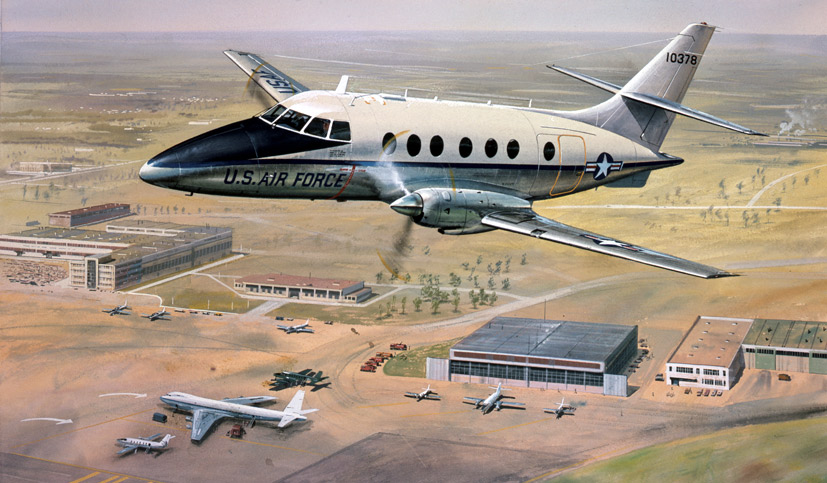
Once again, our ever growing Vintage Classics range has been receiving plenty of modelling plaudits over recent weeks, with interest in an impending US version of a former RAF training aircraft coming in for particular attention. At a time when the aviation world was in full swing and competition between rival manufacturers was rife, Britain’s Handley Page company thought they had identified an opportunity to market a small twin turboprop feeder airliner/executive transporter for the American market, satisfying the US commuter and regional airline market. Their HP.137 Jetstream was a handsome aeroplane which featured a distinctive circular pressurised fuselage and economical turboprop engines and with orders for 20 aircraft placed even before the type had made it off the drawing board, company officials must have thought they were on to a winner.
Resisting the opportunity to merge with a larger British manufacturer for a number of years, Handley Page were finding it increasingly difficult to go it alone in the face of stiff competition and ultimately, the Jetstream would be the last aircraft type developed by the company. Keen to secure as many orders for their new Jetstream as they could, Handley Page tried to interest the RAF in selecting the aircraft as a potential multi-engine/navigational trainer and light transport aircraft, even entering the aircraft in a fly-off competition with a US competitor. Unfortunately though, initial RAF indifference led the company into voluntary liquidation in March 1970, with the Jetstream having the notoriety of being the last aircraft produced by this famous old company.
Perversely, the Jetstream would go on to enjoy an impressive 38 years of combined service with both the Royal Air Force and Royal Navy in a multi-engined pilot training role, initially selected to replace the RAF’s ageing Vickers Varsitys. Manufacture of the aircraft was taken over by Scottish Aviation at Preswick, however, many of the aircraft they would produce actually used fuselages and major components which had been manufactured by Handley Page before their collapse.
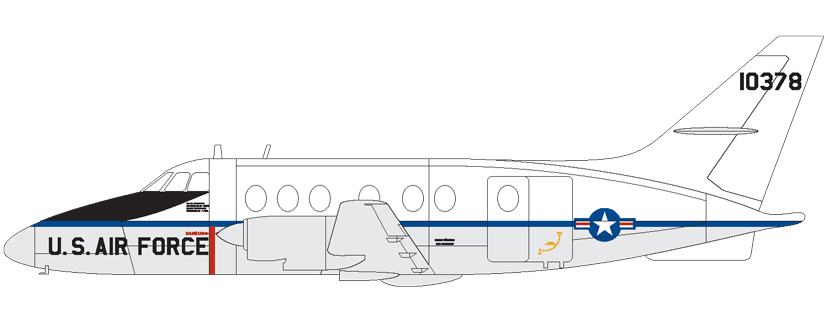
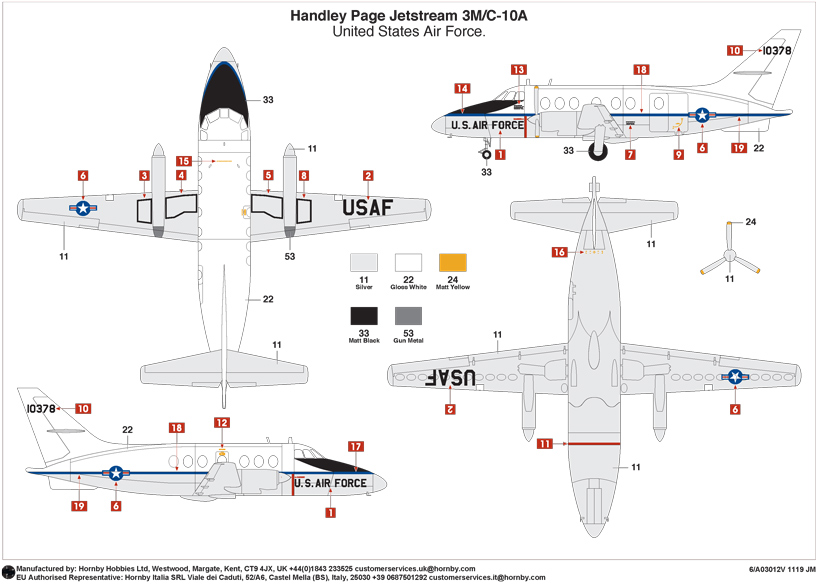
The 5th Jetstream prototype was fitted with the American Garrett TPE331 turboprop engine, specifically with the intention of making the aircraft more appealing to US suitors and with the Garrett’s in place, the company actually received an order from the United States Air Force. Fitted with a cargo door and the ability to accommodate 12 passengers or 6 stretcher cases, the USAF placed an order for 11 aircraft which were to be designated C-10A in US Military service. This aircraft, carrying the serial number 68-10378 and construction number 219, was started but never actually delivered, with the USAF cancelling their entire order in October 1969, citing late delivery as the reason. Clearly this did not help the Handley Page company at a critical period in their history.
This classic Airfix kit of the Handley Page C-10A Jetstream 3M was released in 1969, when the contract for the USAF aircraft was still very much in place and looking like a significant export opportunity for this attractive new aircraft. A fascinating variant of an aircraft which would go on to see lengthy service with both the RAF and Royal Navy, the kit was extremely successful when first released and made it in to several subsequent ranges. Over recent years, modellers have found it increasingly difficult to find examples of this kit, with anyone fortunate to have one in their stash reluctant to let it go. Following the completion of a full assessment survey of the tooling blocks, we were delighted to be able to include this unusual kit in our Vintage Classics range and are even more pleased to say that it will be available once more in just a few short weeks time. There will be many Workbench readers who will be rushing to add a couple of these to their model stash, including some of us here at head office. Hopefully, we can also look forward to the sight of some built models featuring on our Customer Images page in the not too distant future.
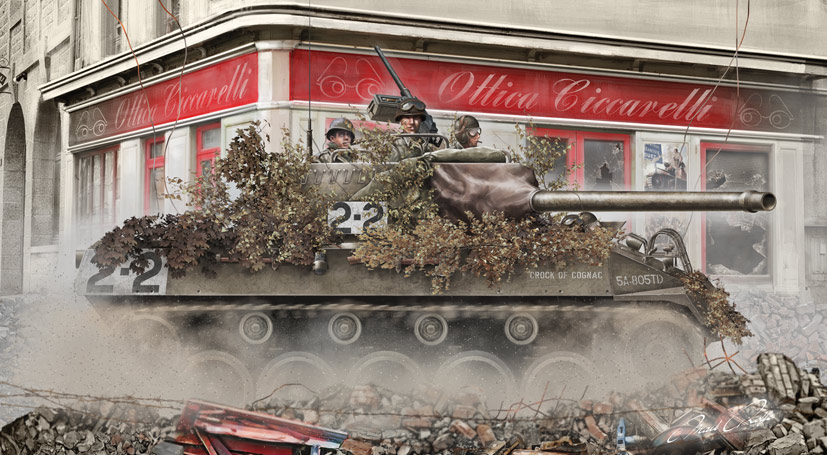
The ability to assess modern mechanised warfare in action on the battlefields of Western Europe before their entry into this global conflict allowed the US military to initiate important changes to their own mechanised forces. Central to their plans to counter large scale panzer assaults was the creation of a highly mobile force of Tank Destroyers, capable of dealing with the Panzer III and IV tanks which had proved so devastatingly effective in Europe – one of the vehicles developed during this period was the M18 Hellcat. Much smaller than the M10 Wolverine, the Hellcat was an attempt to equip armoured units with a fast, cost effective and highly mobile tank destroyer, without compromising on firepower.
This all sounds very promising in theory and indeed most of these requirements were satisfied by the 76mm Gun Motor Carriage, however, in the world of military vehicle design there are always trade-offs and compromises and the Hellcat was no exception. Weighing in at under 20 tons, the M18 was certainly a fast machine and could achieve on-road speeds of 50 mph, but its Achilles heel was its lack of armour protection. With an open crew compartment already leaving them vulnerable to grenade attack and shrapnel damage, the Hellcat itself was only produced with modest armour protection all round, making it vulnerable to almost every German tank and anti-tank weapon on the battlefield. Benefitting from the rather aggressive sounding ‘Hellcat’ nickname, M18 crews would have to be brave and aggressive on the battlefield, if they were to be effective and emerged unscathed from combat.
The tactical word which was very much on the mind of every Hellcat commander was ‘Outflank’. Using the impressive speed of the vehicle, he would have to try and outflank enemy tanks and ensure he was in position to shoot first, before retiring and repositioning to deal with remaining threats – ‘Shoot and scoot’ was very much the order of the day. Usually held in reserve and used strategically to challenge massed panzer thrusts wherever they occurred, the Hellcat was capable of knocking out even the heaviest of German armour, including the feared Tiger and Panther tanks, however, they themselves could even be knocked out by the ageing panzer IVs still deployed around Europe. If they fell victim to an enemy outflanking manoeuvre, there was only one thing for it, step on the gas and get the hell out of there!
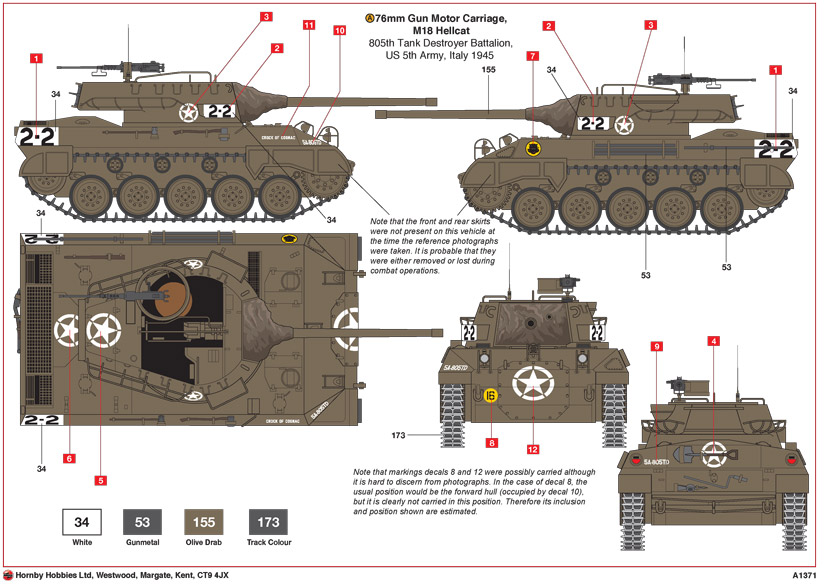
The combat introduction of the M18 Hellcat came during the savage fighting in Italy, following the amphibious landings at Anzio in early 1944. These first crews were impressed by the reliability and speed of their new tank destroyer, but discovered several design flaws in the vehicle, which would limit the combat effectiveness of the Hellcat throughout the rest of the war. The main 76mm gun was found to be less than impressive in operation and lacked the killing power the M18 needed if it was to survive on the battlefield. In addition to this, the interior layout of the fighting compartment also made it difficult for the crew to react quickly during engagements and offered them little protection from enemy fire. Indeed, the Hellcat as a whole offered little protection from enemy fire, not something that would instil great confidence, especially when they were in danger of coming up against German Panther and Tiger heavy tanks.
The impressive speed and agility of the Hellcat was very much its strength and their initial use was closely controlled by senior commanders. Adopting a seek, strike and destroy policy, it was intended that the M18s would be deployed at speed and in some strength to deal with concentrations of panzers during counter attack offensives. As it was, the Germans rarely deployed their tanks in this manner, so the Hellcats were used more in an infantry fire support capacity. When they did meet the enemy, M18 commanders soon learned that stealth and speed offered them their best chance of survival, so Hellcats were always on the move.
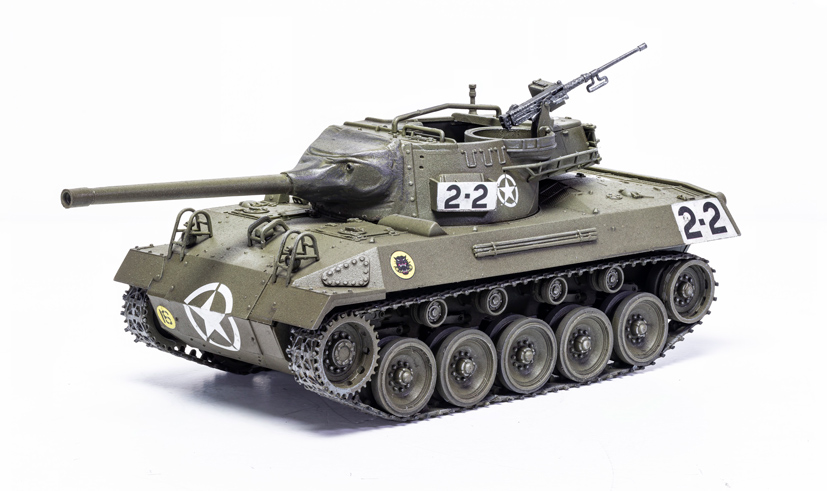
Built model images showing this beautiful 805th Tank Destroyer Battalion M18 Hellcat and the other 705th TDB scheme option included with this latest 1/35th scale armour release
Providing plenty of photographic inspiration for the modeller, this particular machine was the subject of several fascinating wartime images, which showed it moving towards the front line during a lull in the fighting in Italy. It looks as if the crew have attempted to further camouflage the already diminutive profile of their tank destroyer by attaching plenty of locally sourced foliage to the vehicle – there is so much of it that it is to be hoped that none of them suffered with hay fever.
The impressive speed of these vehicles was often negated by the fighting terrane over which they were operating in Italy and even though these were the latest tank destroyers in theatre, they would mainly be deployed as mobile artillery or infantry fire support appliances. The M18 Hellcats of the 805th Tank Destroyer Battalion had the distinction of being the only M18s to see combat in the Mediterranean Theatre of Operations and would see action during advances to capture Bologna and the Brenner Pass. This vehicle proudly displays the unit’s distinctive badge on the starboard side of its hull and the name ‘Crock of Cognac’ on the port side.
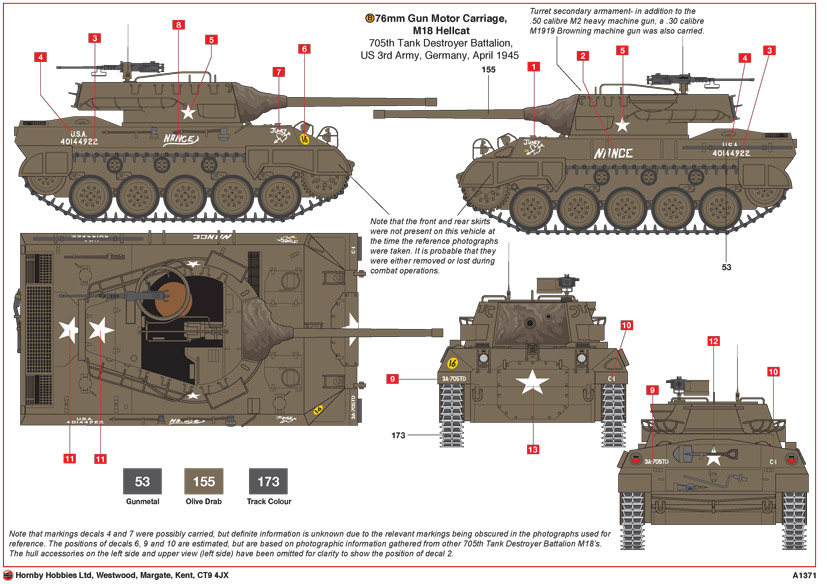
As a result of the early combat experiences of Hellcat crews in Italy, Lieutenant General Omar Bradley was not keen to convert the tank destroyer battalions under his command to the M18 Hellcat whilst making his preparations for D-Day. As a result, of the nineteen tank destroyer battalions which were allocated to the Normandy invasion, only three would be equipped with the Hellcat. When initially arriving in France, the M18s were not really required to perform the tank destroyer role, as the German armoured response to invasion was sporadic at first, so they were release to provide infantry support and supply convoy protection duties. This was perhaps just as well, because when they did come up against the German Panther and Tiger heavy tanks, the M18 was found to be at a serious disadvantage.
Whilst the Americans could be targeted at extreme ranges, the 76mm gun of the Hellcat was only reliably effective at ranges of less than 300 metres, dangerously close for these brave crews and leaving them incredibly vulnerable. Even if they did manage to creep to these close quarters positions, they still had to be creative with their shooting if they hoped to avoid coming under return fire. The gunner would attempt to place his round in the space between the German tank’s gun mantlet and hull, hoping the round would deflect into the interior of the tank. It is difficult to comprehend the unbelievable bravery of the men who contested these armoured engagements during the Second World War.
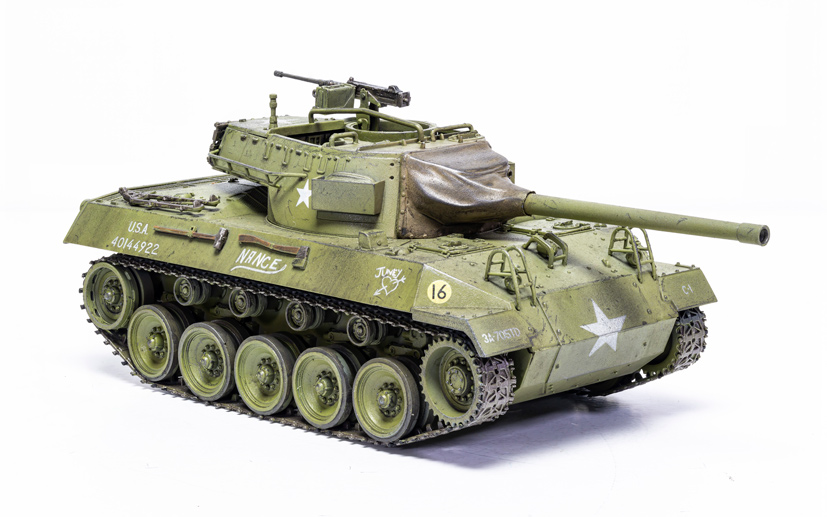
The 705th Tank Destroyer Battalion arrived in France in the weeks following D-Day, landing on the now secured Utah Beach, to initially be held in reserve. Once committed to combat, they would be involved in heavy fighting right up until the end of the war in Europe, crossing the Austrian border on 1st May 1945, where they linked up with Soviet troops. Particularly noteworthy was their contribution during the Battle of the Bulge, where they provided support for the 101st Airborne Division around the embattled town of Bastogne. During these engagements, the battalion destroyed around 40 German tanks for the loss of only 6 M18 Hellcats.
With crews rarely straying from their assigned M18s during combat, they must have become quite attached to their vehicles, even though conditions must surely have been extremely uncomfortable, in addition to the constant dangers they were exposed to. The crew of this particular machine have personalised her with what appears to be the names of wives or girlfriends on the hull. Featuring the names Nance and Juney, it would be interesting to know if their was an artwork pecking order amongst the five man crew when it came down to whose sweetheart made it on to the side of their Hellcat.
This magnificent new model is about to become the latest addition to our popular 1/35th scale Military Vehicle range, adding this important tank destroyer to an already impressive variety of WWII scale armour.
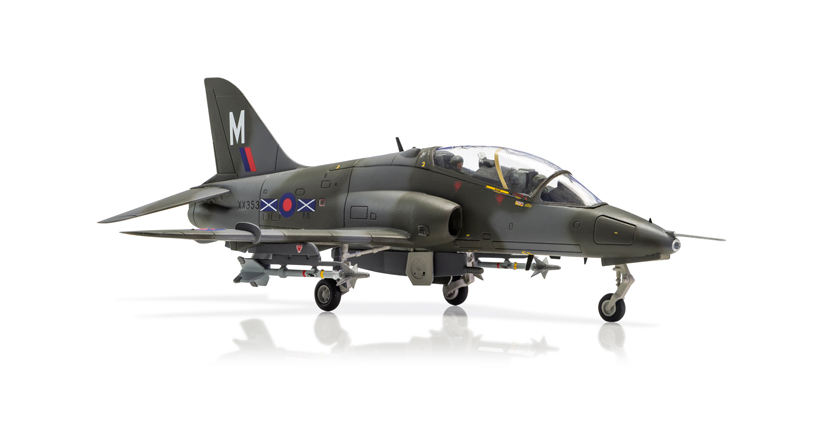
We end this latest edition of Workbench by re-visiting the aviation subject we opened with, the various guises of the ultra-successful British Aerospace Hawk. During the aircraft’s already impressive 43 years of service, Hawks have been presented in a wide variety of different schemes, from the classic red and white training scheme applied to the RAF’s first aircraft, to the iconic jets of the Red Arrows which are instantly recognisable to millions of people. Despite being able to boast many an attractive scheme over the years, has the Hawk ever looked better than when wearing wrap around RAF camouflage markings? As we had access to some fantastic built model images of a camouflaged RAF Hawk, this really did seem like the ideal way to bring this latest blog to a close.
Once a pilot had demonstrated their flying capabilities in the Hawk, they would then progress to learn how to fight in the aircraft and receive instruction on how to deliver and manage its weapons systems. This transition would be a comfortable one for the student pilot, who was already familiar with the Hawk and for the Ministry of Defence, as this offered an extremely cost effective training solution. As a weapons trainer, the Hawk T.1 could be equipped with an under fuselage mounted Aden cannon and rocket pods or practice bombs on under-wing hard points, allowing the student to perfect their attack skills. For pilots who were hoping to join an air defence squadron, the Hawk was similarly at home with a pair of Sidewinder missiles and in the event of conflict, was more than capable of becoming a highly maneuverable, short range air defence fighter, freeing up the Tornado F.3 (at the time) and Typhoons for long range interception duties. At lower altitudes, the diminutive Hawk would prove to be a capable adversary and when combined with the excellent training afforded to RAF aircrews, would surely have taken a significant toll of enemy aircraft, should a significant incursion have occurred.
The North Devon airfield at Chivenor was re-activated in 1979 and was home to No. 2 Tactical Weapons Unit, flying the British Aerospace Hawk T.1 with Nos.63 and 151 Squadrons, training fast jet pilots and navigators in both air to air and air to ground weapons tactics. Taking around 50 pilots each year, they would be instructed on low level formation flying, evasion and air combat techniques and if successfully completing the four month course, were posted to front line Operational Conversion Units. In addition to these duties, the unit was in great demand across the RAF for providing fast jet threat and Dissimilar Aircraft Combat Training, due to the effectiveness of the Hawk at lower altitudes. Indeed, in this role, No.151 (F) Squadron were indirectly involved in the Falklands War, as they simulated Argentinean aircraft threats for Harrier pilots working up for deployment to the South Atlantic.
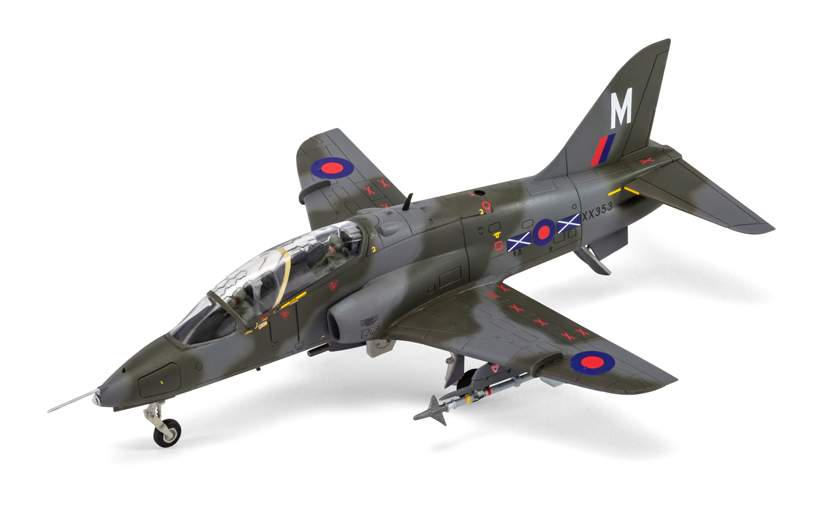
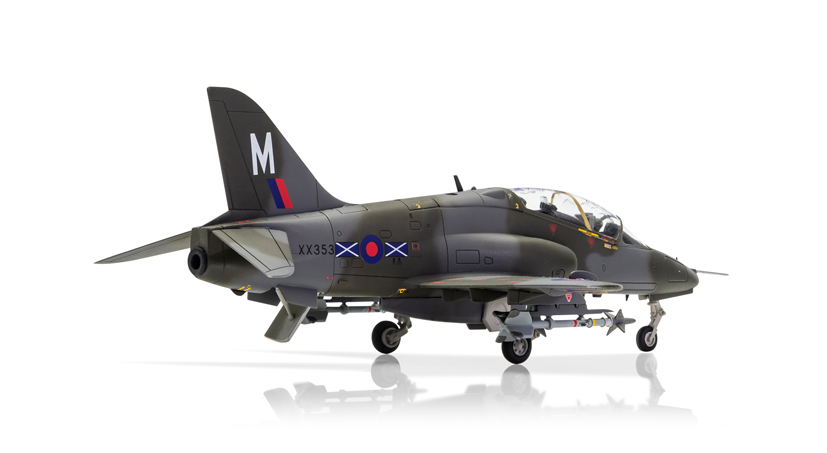
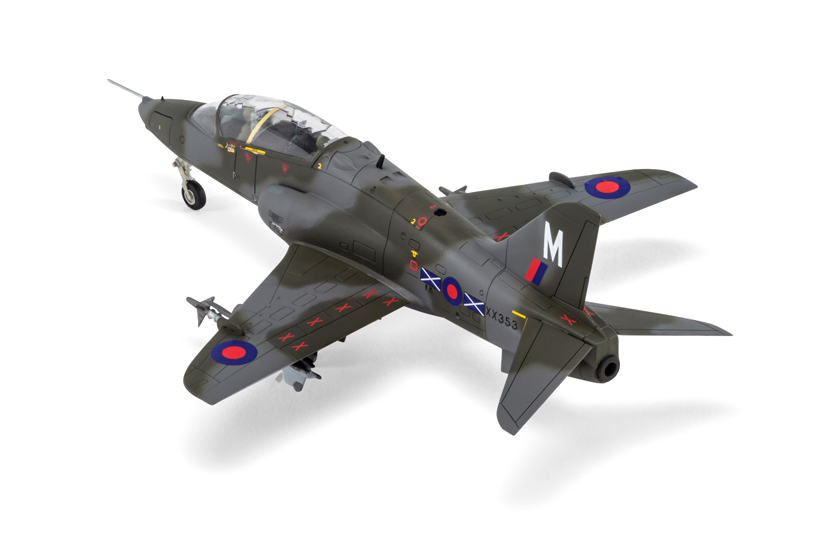
The attractive scheme applied to this Hawk marks one of the distinctive aircraft to serve in the TWU training role at Chivenor and one which was to be involved in an unfortunate incident, underlining the aggressive and demanding nature of this type of flying. The aircraft was engaged in performing tail-chase manoeuvres with Hawk squadron mate XX336 over the North Devon countryside when the two aircraft collided – the crew of XX353 immediately lost control of their aircraft and safely ejected, leaving the stricken aircraft to crash near the village of Holsworthy.
The crew of the other Hawk intended to nurse their damaged aircraft back to Chivenor, but the damage to the nose sustained during the incident would probably have placed the instructor in danger during the landing. The Hawk headed out to sea, where the instructor safely ejected. Unfortunately, the combination of the ejection procedure and the structural damage to the aircraft quickly made it uncontrollable and the student was also forced to eject, leaving the aircraft to crash into the sea – two RAF TWU Hawks lost in a matter of minutes. Thankfully, all four crew members survived to explain the incident to their superiors.
We are afraid that’s all we have for you in this latest edition of Workbench, however, we will be back as usual in two weeks’ time with a further selection of Airfix modelling delights for your enjoyment. If you have any suggestions for subjects you would like to see covered in a future edition, please use this workbench@airfix.com link to contact us.
In between new editions of our blog, the Airfix conversation continues over on our Airfix Forum Worbench thread, with further discussions taking place on both the official Airfix Facebook page and the Airfix Twitter channel - please do get involved in the discussions and let us know what you think about Workbench.
Whenever you decide to visit, the Airfix website is always the place to be for all the latest model availability information, previous editions of our blog, a selection of modelling tips and much more.
The next edition of Workbench is due to be published on Friday 7th August, when we will have more interesting features from the world of modelling.
On behalf of the entire Workbench team, thank you for your continued support our Airfix blog.
The Airfix Workbench Team
© Hornby Hobbies Ltd. All rights reserved.

