

Welcome to this latest edition of Workbench and all the news, updates and exclusive announcements from the fascinating world of Airfix modelling. We have much to tell you about in edition 97 of our Airfix blog, starting with an exclusive development update from our new 1/72nd scale Blackburn Buccaneer S Mk.2 project and followed by the very latest build pictures featuring our new range of 1/35th scale military vehicles. We mark the impending return of the extremely impressive sailing ships to the Airfix range, by looking at a trio of impending Vintage Classic releases, before ending with a review compiled by our Lead Researcher, following a recent visit to the Southern Expo Model Show. Before we begin, we would like to thank everyone who came to meet the small Airfix team in residence at last weekend’s Shropshire Model Show, which was held at the RAF Museum, Cosford. Our 1/24th scale Grumman Hellcat was front and centre and the cause of much modelling discussion, however, our stand also had built examples of the first three 1/35th scale tanks from our new range and an impressive collection of built 1/48th scale Mustangs on display. We are grateful to everyone who took the time to fill in our Airfix suggestion forms, the content of which will certainly be collated and discussed during future planning meetings – we are always interested to hear what modellers have to say and from some of the discussions we had last Sunday, we know how long many of you have been Airfix supporters. The show itself was extremely well supported and one of the most enjoyable we have ever attended, with magnificent model displays arranged beneath the museum’s world class collection of historic aircraft. We will be including a full review from the show in a future edition, so please keep an eye out for this. For now though, it is back to one of the new model announcements for 2019 and a date with Britain’s 'Banana Bomber'.
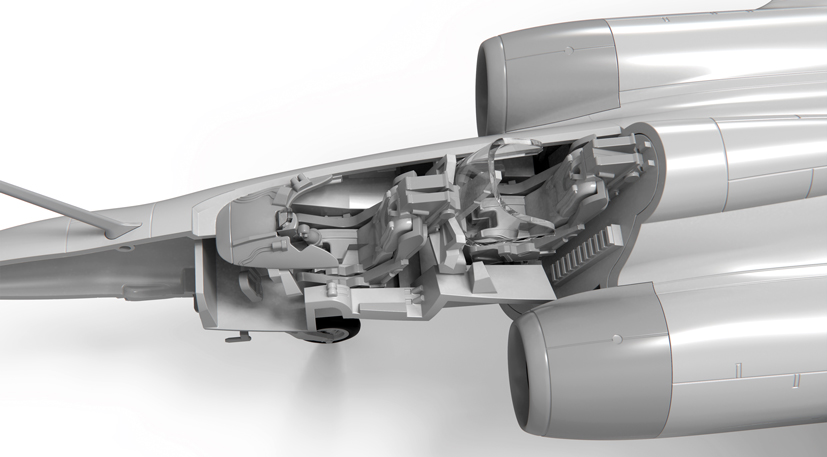
Interesting computer rendered 3D image showing the exploded cockpit section of the new 1/72nd scale Blackburn Buccaneer S Mk.2 tooling project
Although the turn of any new year usually signifies both the end of the Christmas holidays and an impending return to work for most of us, we can always comfort ourselves with the reassuring thought that the latest Airfix model range is on the verge of being announced and it may just include the new model tooling we had been hoping for. This year’s range launch included three new projects which had not been announced previously, including one new kit which has been a long-time resident on our ‘most requested list’, the mighty Blackburn Buccaneer S Mk.2, one of the world’s most accomplished low level strike jets. An aircraft which began its development as a Royal Navy response to a massive Soviet naval expansion programme, the Buccaneer would not only equip the Fleet Air Arm with its most devastating offensive strike aircraft at the time of its introduction, but would also later come to the rescue of the Royal Air Force, following the cancellation of TSR-2. Earning a reputation for rugged no nonsense engineering and operational effectiveness, the Buccaneer may have the appearance of a lumbering giant of an aeroplane, but this was far from the case. It was a fast and agile weapons delivery platform and was capable of being flown in a way that few of its contemporaries could match – it is therefore no wonder that our new Buccaneer has proved to be such a popular addition to the Airfix range.
Workbench readers have now become familiar with many of the design and development stages associated with the production of a new model tooling and will no doubt be pleased to view the exclusive series of images we are pleased to bring you with the latest Buccaneer update. These images not only prove that this highly anticipated model is advancing nicely towards its scheduled release date and also gives us a further opportunity to examine the impressive work of our talented product designers and how they immortalise some of the world’s most iconic aircraft, tanks and vehicles into scale plastic representations. The arrival of the first kit test frames from any new tooling project mark an important stage in its development and the physical manifestation of all the research and computer work which has taken place over the preceding few months. Although the team have many years of experience behind them and are expert in converting scan and drawing data into digital files which can be used in the plastic kit industry, the arrival of the first box of test frame components from the manufacturing facility must cause them to be both excited and a little apprehensive at the same time. Experience tells them that invariably, inspecting the components will reveal some necessary tweaks and slight modification requirements to the tooling before it can be released for production, but in the main, their work will have resulted in a collection of parts which build into an impressive scale model. Having said that, they never actually know until the contents of the box are inspected.
The following selection of images are exclusive to Workbench and being shown for the first time anywhere outside the Airfix development office – this is the on-line way of allowing our readers the opportunity to see what emerged from the Buccaneer test frame box – enjoy.
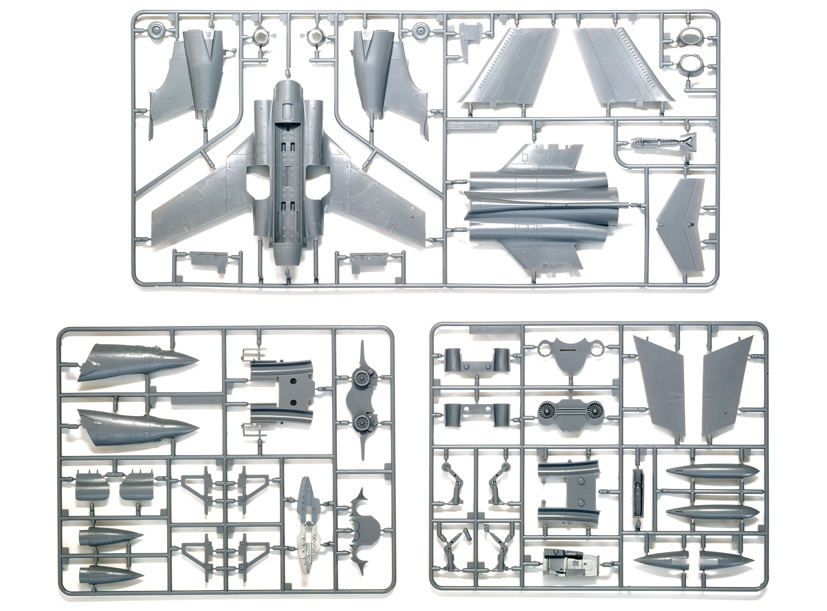
Workbench readers are the first people outside Airfix to see these test frame component images. This first frame includes all the major parts and illustrates how the new kit will come together as a build project
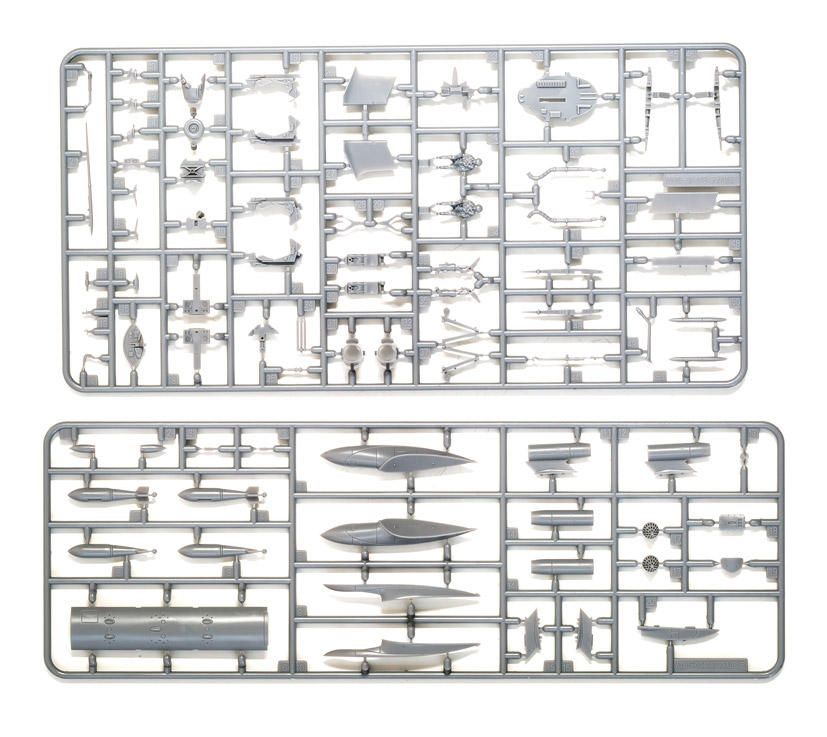
This shot is a little busier, as it includes many of the smaller components, including cockpit, pilot/navigator figures and external fittings for the Buccaneer
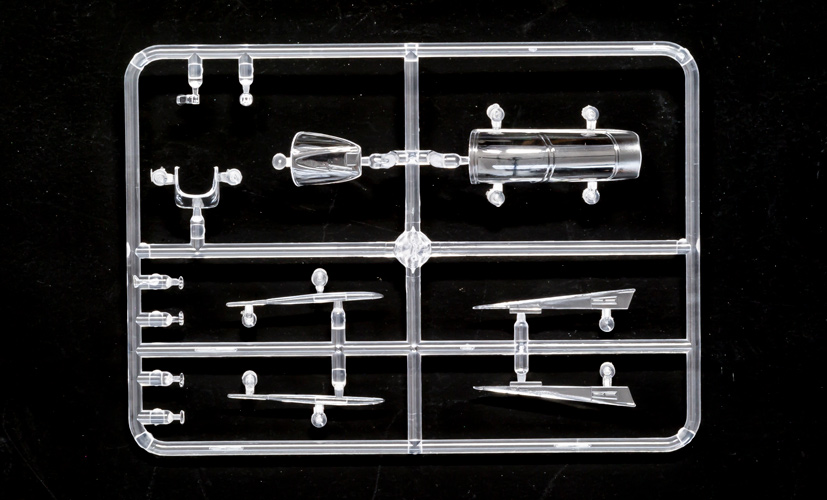
No review of the test frame components would be complete without a look at the clear frame components
In this next series of images, we have attempted to give our readers a more comprehensive view of the Buccaneer parts, by varying the view angle a little. This is courtesy of our photographer David, who is always looking to produce new and interesting photographs for our readers to inspect. The straight down shots are an important aspect of any test frame review, however, David thought that these angled views provided a more realistic perspective for the modeller and resembled something like what the parts might look like when placed on a modellers workbench.
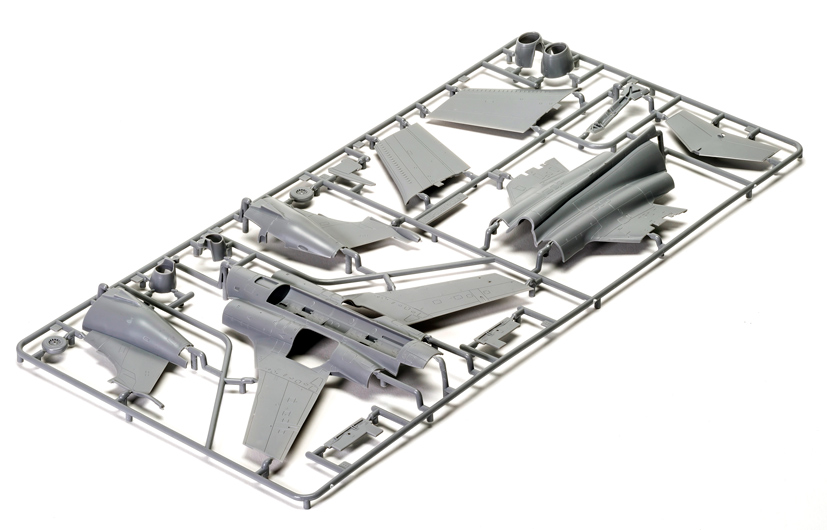
An alternative view of the large component frame, clearly illustrating how the Buccaneer kit has been designed
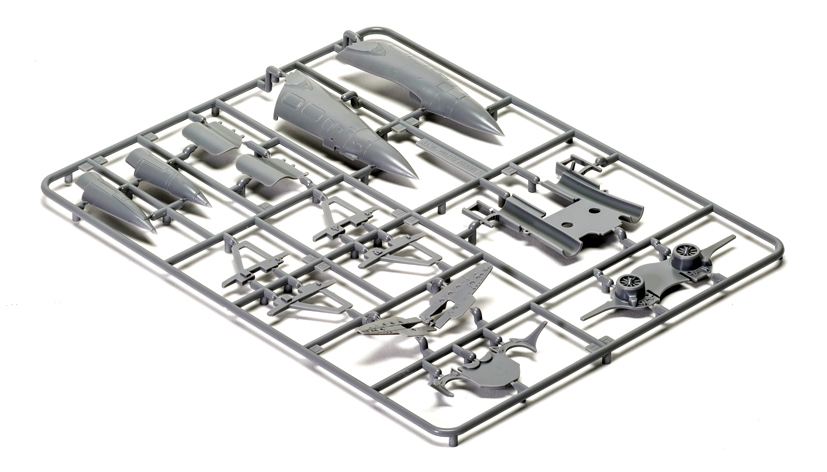
Nose, airbrake and engine detail is visible in this shot
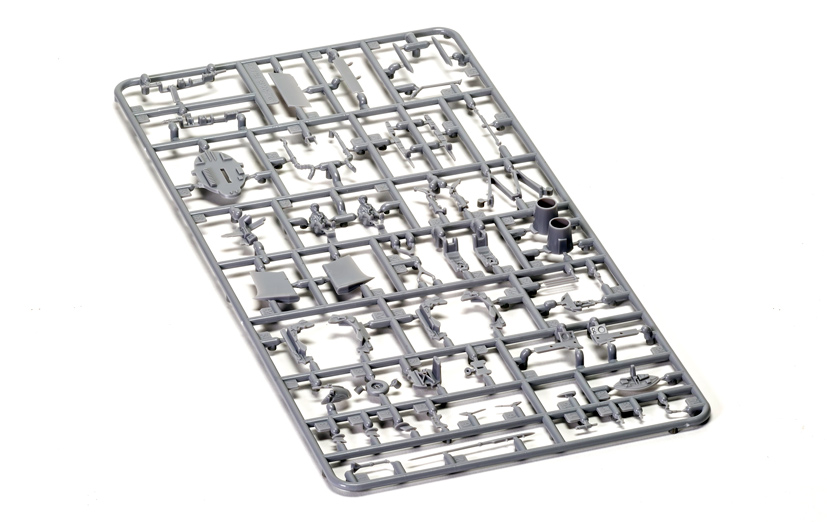
This frame must have been a challenge for the project designer – there are an awful lot of individual components on this Buccaneer frame
The arrival of these frames will result in yet another period of hectic Buccaneer activity for the development team, as every aspect of these components will have to be inspected and assessed. Individual part detail and accuracy will be checked, along with less obvious aspects of the design, such as the thickness of the sprue frame itself, where it holds the parts in place – too thin and this may allow the components to break free, too thick and this could cause the modeller problems when attempting to release the parts. A detailed evaluation of the individual frames will then be compiled and following discussions with other members of this experienced team, a schedule of tooling refinements may be produced for the tooling manufacturing plant, who will then need to act on the findings, before sending revised test frames for further inspection.
Having assessed the component frames in their complete state, the next stage of this fascinating process is for the lead designer on the project to actually build the model from the collection of new parts. As committed modellers, most of us would love to be the first person in the world to build a new kit, but for the Airfix design and development team, this honour comes with great responsibility. Just as they did when assessing the component frames themselves, there are many things to check whilst embarking on the first test build of a new model kit, which not only requires almost obsessive attention to detail, but also the ability to analyse every aspect of the build and the kit’s fit and finish. Whilst desperate to ensure that their new model is a detailed and accurate representation of the subject covered, they also need to ensure that the parts go together in a logical and relatively straightforward manner and will not pose too many problems for the average modeller when building. They want people to enjoy building their latest creation and therefore have to spot and rectify any potential problem areas. The next few weeks will be the stage where the Airfix development desk is littered with 1/72nd scale Blackburn Buccaneer kits at various stages of construction, as this important latest phase of the model’s development is negotiated.
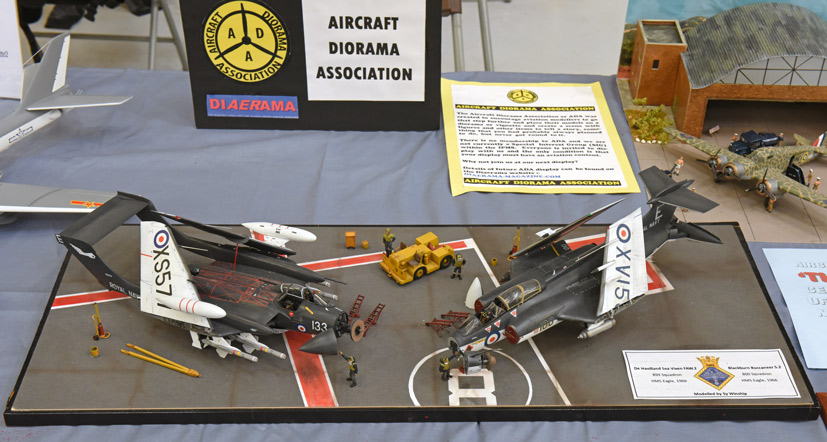
An image which does not feature our new 1/72nd scale Buccaneer, but does highlight the enduring fascination with naval aviation. This 1/48th scale scene was displayed by the Aircraft Diorama Association at last weekend’s Shropshire Model Show at Cosford
The announcement of our new 1/72nd scale Blackburn Buccaneer S Mk.2 at the beginning of the year came as a pleasant surprise for a great many Workbench readers, who were the first to find out about a model which has gone on to enjoy overwhelmingly positive support from the hobby in general. Modellers and enthusiasts appear to have a particular fascination with naval aviation and especially large jets being operated from the decks of Britain’s relatively small aircraft carriers. Anyone who has been fortunate enough to inspect a Buccaneer at close quarters will certainly attest to this being a very large aeroplane indeed and not one you would imagine could be operated from an aircraft carrier with ease. In fact, the Buccaneer was designed with operation at sea as its primary function and was therefore crammed with technology and innovations designed to make this process as stress free as possible. Of course, we also have to acknowledge that naval aircrews were trained to the very highest standards and the environment aboard an aircraft carrier was one of extreme professionalism – everyone knew exactly what was expected of them and they carried out their duties to a very high standard. Because of this and in spite of our preconceptions, airmen who were fortunate enough to fly the Buccaneer at sea described the experience as reasonably stress free and the delights of a catapult launch which would terrify most of us, as being quite exhilarating. The steam catapults on board the latest British carriers at that time were very effective and made for a smooth hands off launch. Once the Buccaneer had been attached to the catapult and cleared for take-off, the pilot would keep his left hand on the throttles, just to ensure they didn’t move from their position and sit back for the ride – there would be nothing else to do until the aircraft had cleared the deck, when he would need to raise undercarriage and flaps and begin his latest sortie. Landing back on the carrier was also described as less stressful than most might think, with the stable Buccaneer benefitting from an extremely robust undercarriage, should the final descent prove a little more enthusiastic than intended.
The first Royal Navy Buccaneer S.1s were powered by a pair of De Havilland Gyron Junior engines and have been described as not providing this large aeroplane with quite enough power. They did, however, allow the Buccaneer to show its impressive credentials as arguably the world’s most capable low-level shipborne strike jet and stimulate further development of this impressive aircraft. These engines actually had a better input to power response time than the later Spey engines, although the loss of an engine in flight would result in a shore based landing wherever possible, as opposed to attempting to land back on its home carrier. The introduction of the S.2 saw the aircraft equipped with the much more powerful Rolls Royce Spey engines and a further upgrade of its already impressive strike capabilities. Possessing greater thrust and increased range, the Buccaneer S.2 was a capable fighting aircraft and one which must have struck fear into the hearts of Soviet naval captains. With its increased power, the S.2 was more than capable of landing back on a carrier with one engine shut down, possessing enough thrust to safely go around again, should the aircraft fail to catch the arrestor hook.
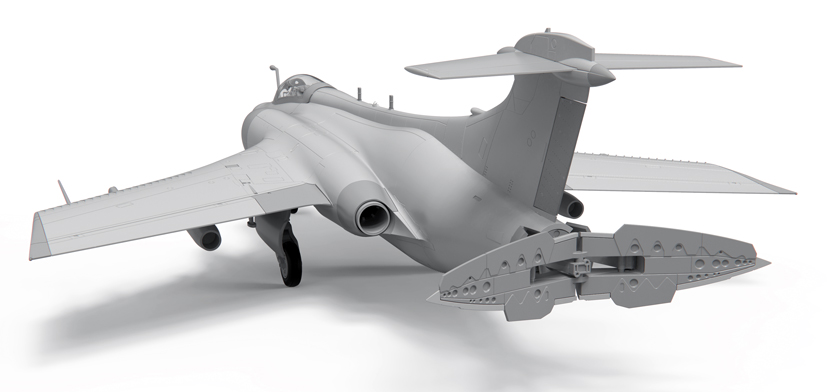
Looking forward. This rear-end computer rendered 3D image from the new 1/72nd scale Buccaneer project helps illustrate why this new kit is proving to be such a popular addition to the range
Despite its naval heritage, the Buccaneer would also go on to become a popular addition to post war Royal Air Force inventory, even though the aircraft was not exactly their first choice for the strike role. The robust design and exceptional low level performance of the aircraft nevertheless made the Buccaneer something of an RAF favourite and a capable Cold War strike jet, with its nimble performance belying its rather large appearance. When the RAF were invited to take part in US ‘Red Flag’ exercises, overseas aircrews initially scoffed at the sight of these RAF beasts parked on the same ramp as their cutting edge Eagles and Fighting Falcons, but mission debrief meetings proved to be quite an eye-opener. Flying at around 540 kts and just feet above the desert floor, the Buccaneers simply could not be detected by defending forces during the exercises and even though they knew they were there, the Buccaneers stayed so close to the ground that missile attacks could not be launched against them by air or from the ground. The combination of RAF pilot training and the Buccaneer’s aviation credentials earned the admiration of their American counterparts, leading many to describe the Buccaneer as the finest low-level strike aircraft ever built.
With aviation heritage such as this, it is no wonder that our new Blackburn Buccaneer S.2 kit has proved such a popular future addition to the range and we look forward to bringing you the next chapter of its development in a forthcoming edition of our blog. This will include pictures of test build sections of the kit, a completed model build and a closer look at the scheme options which will accompany the September release of this beautiful new kit. Until then, for anyone yet to reserve their example of what is already proving to be an incredibly popular kit, your usual model supplier or the Airfix website will ensure you don’t miss out.
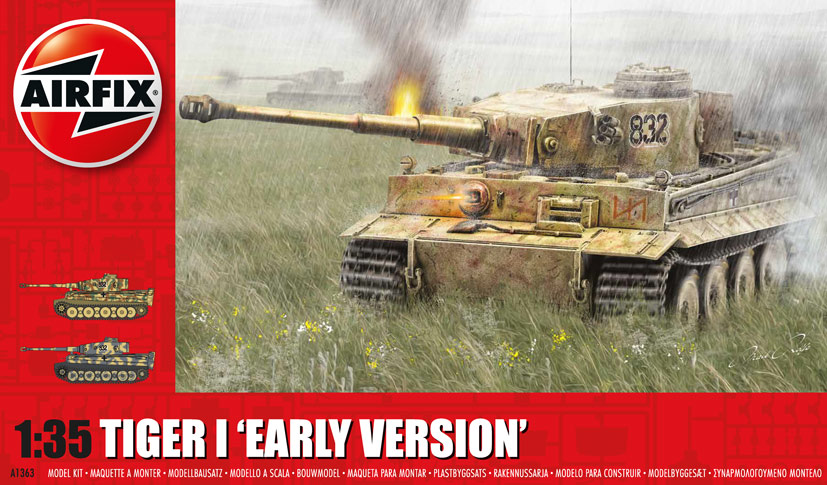
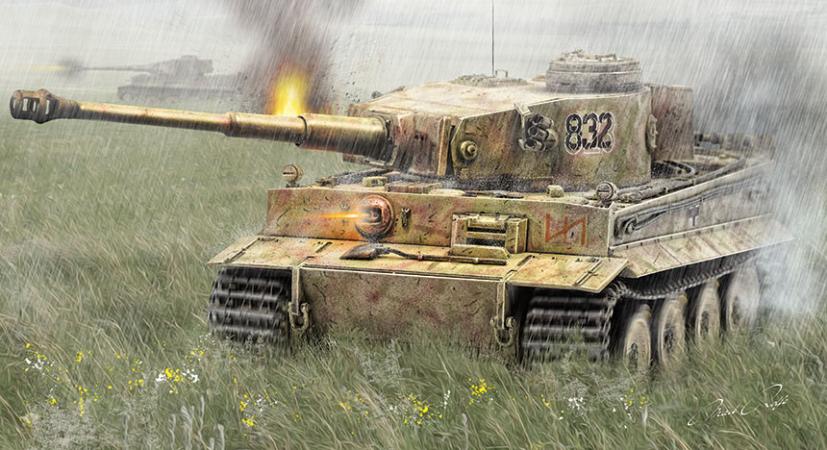
The mighty 1/35th scale Tiger I is an attractive and extremely welcome addition to the 2019 Airfix kit range
At the same time Workbench announced the existence of our new 1/72nd scale Buccaneer, we also included details of a new range of 1/35th scale military vehicles, which introduces no fewer than 16 kits in this popular scale to our 2019 range. As the first three of these kits are due to be released next month and no fewer than six examples were displayed on the Airfix stand at last weekend’s Shropshire Model Show, we thought it was about time we brought you a project update. The ability to include so many new armour kits to the range at the same time comes courtesy of an arrangement with one of our modelling associates and whilst these impressive kits are not actually new Airfix toolings, the products themselves will certainly benefit from a little Airfixisation! With beautiful new box artwork and instruction booklets which will be familiar to anyone who has built an Airfix kit over the past few years, the instructions will also include reference information which will allow you to complete your model in one of two supplied scheme options. Our display at Cosford last weekend included six built sample models, two Tiger 1s, two Stuart Light Tanks and two Panzer 35(t)s, each one presenting an example of each scheme offered with the release of the first three kits, all of which are due to arrive next month. The new models certainly attracted plenty of attention during the show and it was pleasing to see that many were impressed with both the quality and pricing of the new kits. Let’s take a closer look at the first three releases and the two scheme options covered in each kit, starting with the mighty German Tiger I.
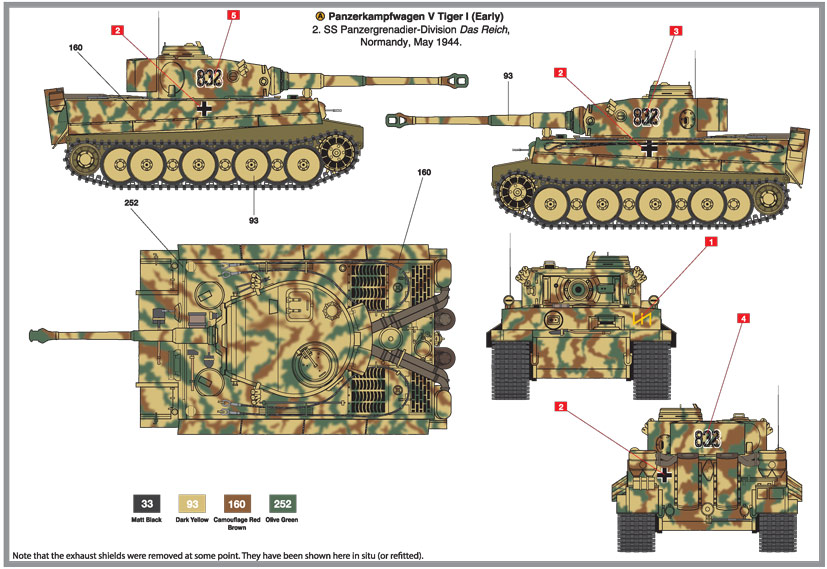
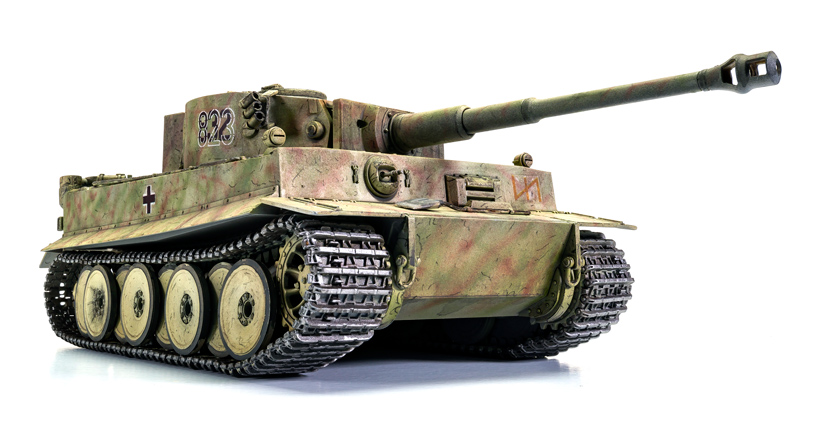
A selection of built sample images, showing this Tiger I in the colours it wore just prior to the Allied invasion of Normandy – it would be seeing plenty of action over the next few weeks
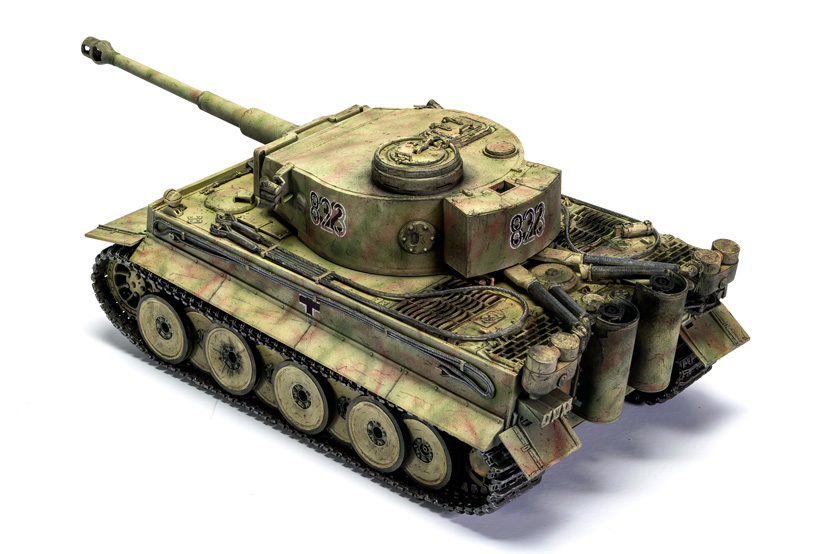
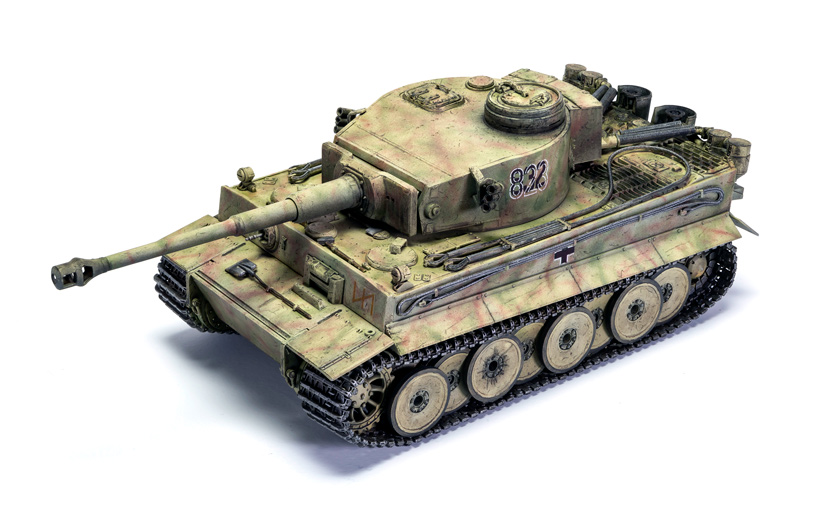
Despite the fact that the first German Tiger I tanks appeared on the battlefields of Eastern Europe back in September 1942, these mighty machines have come to epitomise the awesome power of the tank and is arguably the most widely recognised tank in the history of warfare. A German heavy tank which combined increased armour protection with the devastatingly effective 8.8cm KwK 36 gun, the Tiger had the potential to dominate the battlefields of Europe and North Africa, a fact not lost on Adolf Hitler. Desperate to halt a series of frustrating defeats and propel the Wehrmacht forward again, he insisted the new tank be rushed to the front lines without delay and certainly much earlier than had been intended by its manufacturers – crucially, this removed the ability to iron out the technical issues associated with the introduction of new weapons. Twice as heavy as the Panzer IV and extremely fuel hungry, the new Tigers made short work of Soviet armour, but struggled to maximise its potential in the muddy conditions and with crews who were learning how to operate this monster whilst engaged in combat. With the tanks engine and gearbox needing careful handling, there was an extremely high possibility that these massive tanks would be lost to mechanical problems or becoming isolated on the battlefield, as apposed to falling victim to enemy action.
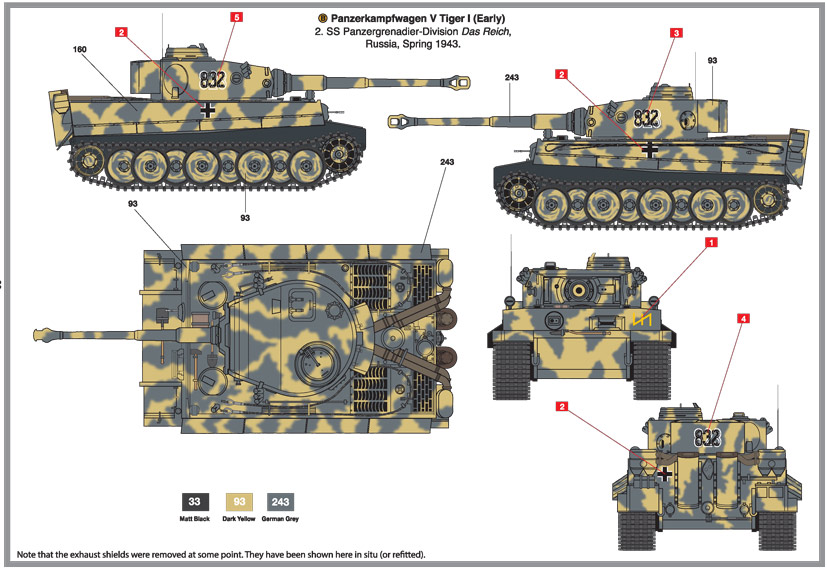
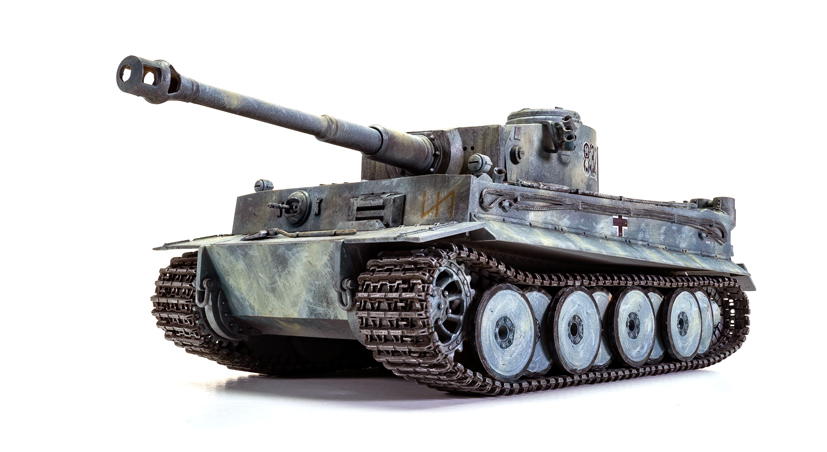
With the frenetic nature of war, modellers are left with quite some flexibility when representing Panzer colours from WWII, particularly as crews would attempt to camouflage their tanks for the operating environment they found themselves in, using anything available to them at the time
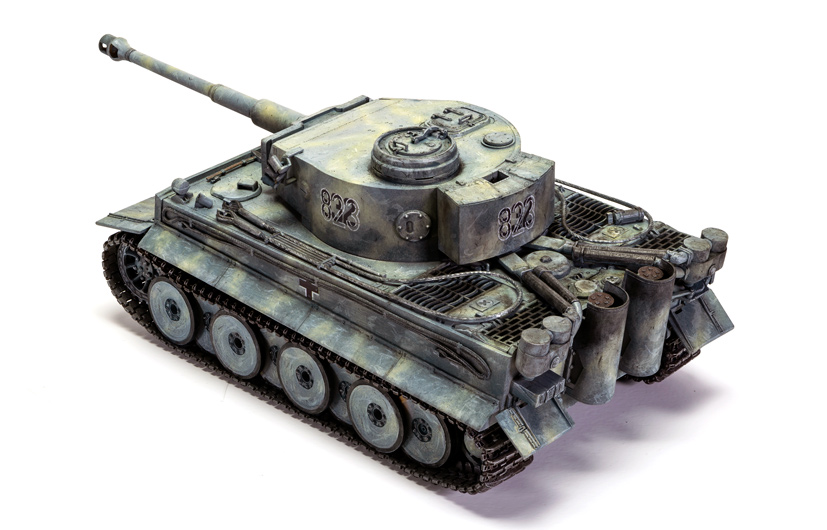
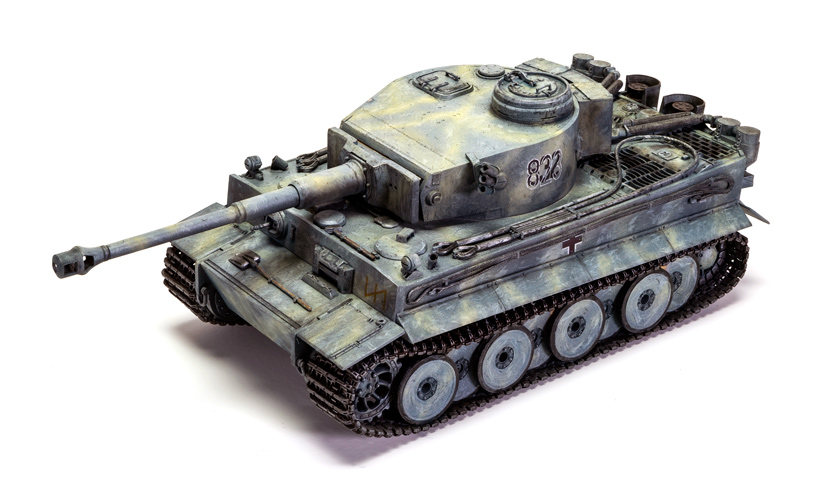
Not only was the tiger an imposing sight on the battlefield, its gun proved to be a devastatingly accurate offensive weapon and far better than anything available to Allied forces at the time of its introduction. The general accuracy of the gun combined with a high muzzle velocity and excellent sighting optics meant that a Tiger crew were capable of dominating the battlefield, destroying distant Allied tanks at ranges well in excess of those where the Tiger crews could be effectively targeted themselves. Despite its weight, the Tiger was not especially slow, however, its manoeuvrability certainly depended on the terrain over which it was being operated – firmer ground and roads were fine, but soft, muddy ground placed additional strain on the engine, gearbox and running gear. Its incredible weight also dictated that could only use the most robust of bridges and certainly not temporary crossings prepared by engineers. In most cases, the Tiger was expected to go through rivers rather than over them and was equipped with watertight hatches and a snorkel, enabling it to negotiate depths of up to four metres.
As impressive as the Tiger was, it was over-engineered. Using only the finest materials and requiring the use of labour intensive production methods, it took too long to manufacture these beasts and despite the huge battlefield potential they offered, only 1,347 tanks were built at a time when the Wehrmacht needed as many of these potential war winners as they could get. Ultimately, the Tiger was a case of too little, too late (or should that be too heavy and too expensive) and proved unable to turn the tide of war. It did, however, create a military legacy which still fascinates modellers and enthusiasts to this day.
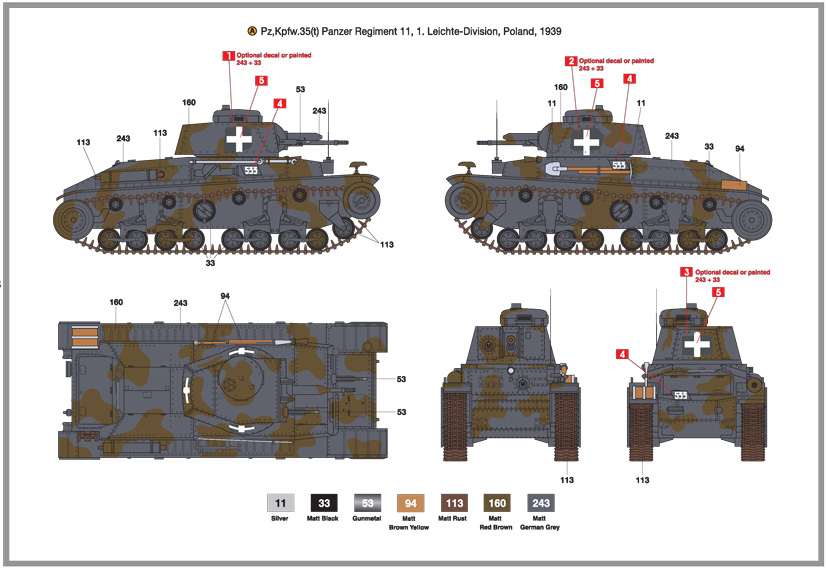
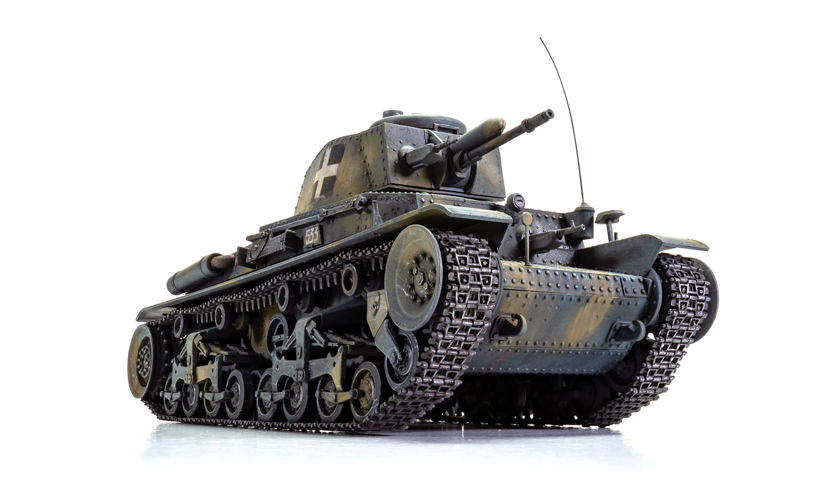
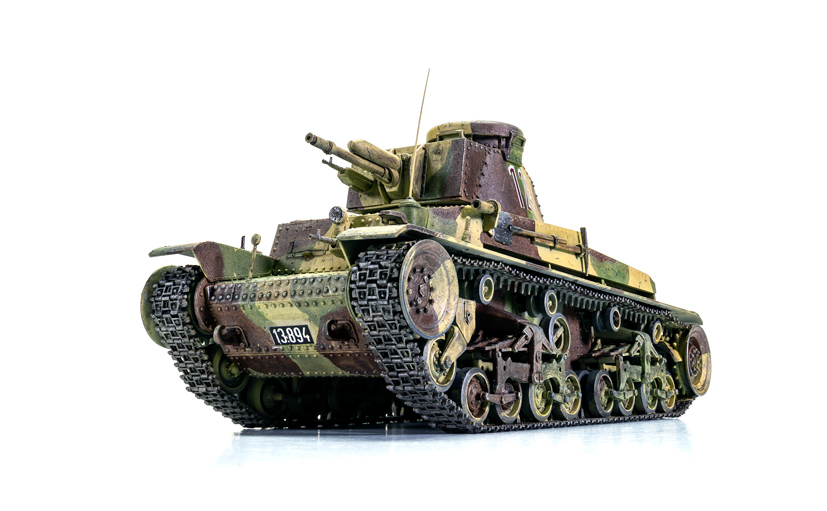
This little Czech built tank is such an interesting subject and tells the fascinating story how these commandeered weapons were instrumental in supporting Germany’s offensive actions during the early months of WWII
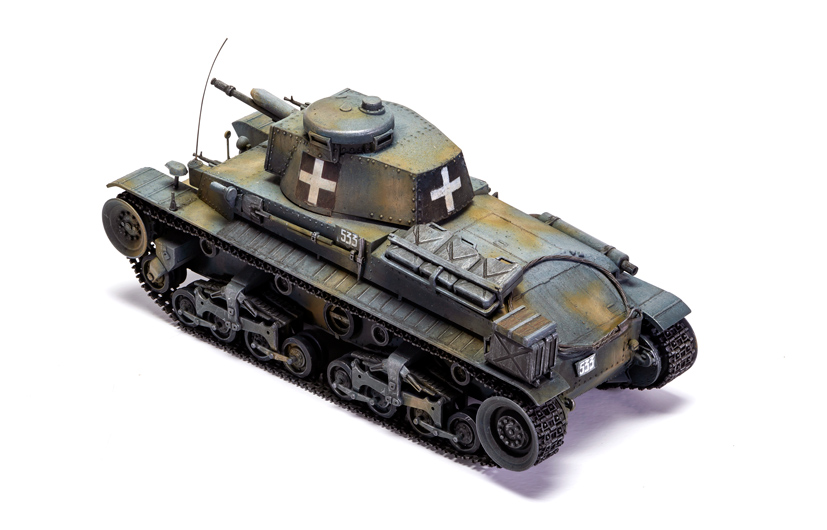
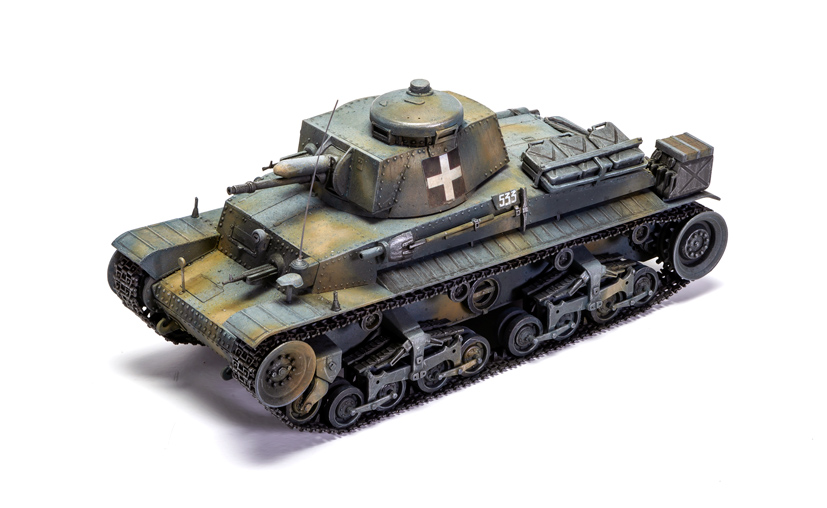
A relatively advanced tank for its time, the Czech designed and produced Lehky Tank vzor 35 (Light Tank model 35) tells a fascinating story about the years leading up to the Second World War and how the German military were extremely resourceful in equipping their forces with weapons. Even though Blitzkrieg proved to be a frighteningly effective military tactic at the start of WWII, the rearmament limitations placed on Germany by the Treaty of Versailles meant that they were not as well equipped as they would have liked to have been and captured weapons were immediately pressed into service wherever possible. The light tank model 35 was in widespread Czech military service at the time of the German occupation in 1938 and 244 machines were commandeered for immediate Wehrmacht use – this number effectively doubled their tank inventory for the battles to come. The 35(t) tanks were used extensively during the invasion of Poland and the strike west, but by the time of the offensive against Russia, a lack of spares and continued mechanical issues saw the type relegated from front line operations. Highlighting the fascinating history of this tank, the letter (t) used in its description identifies is as tschechisch (German for Czech).
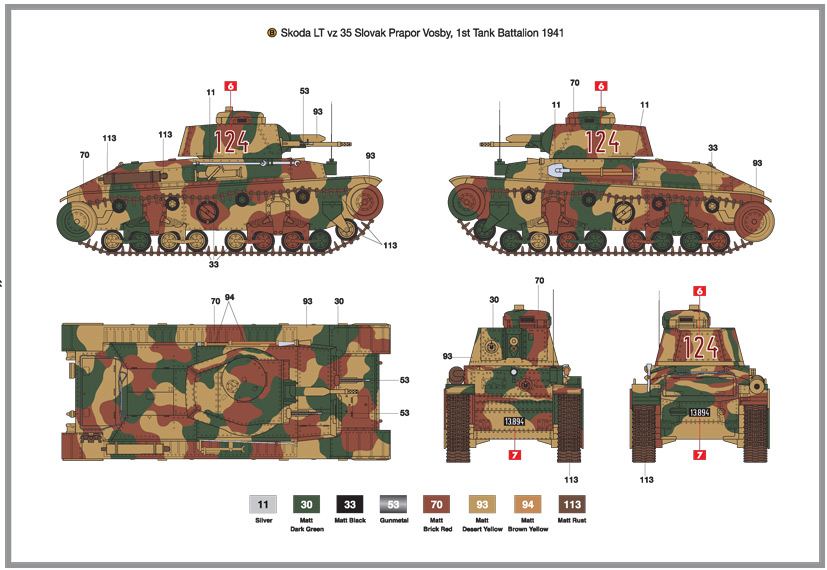
Slovakian tank units were used in support of Operation Barbarossa, but were often left behind by swiftly advancing German Forces
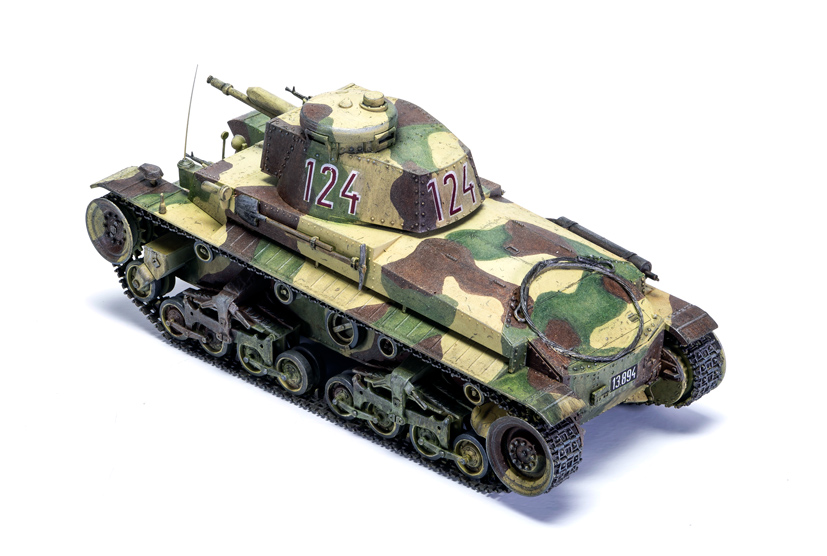
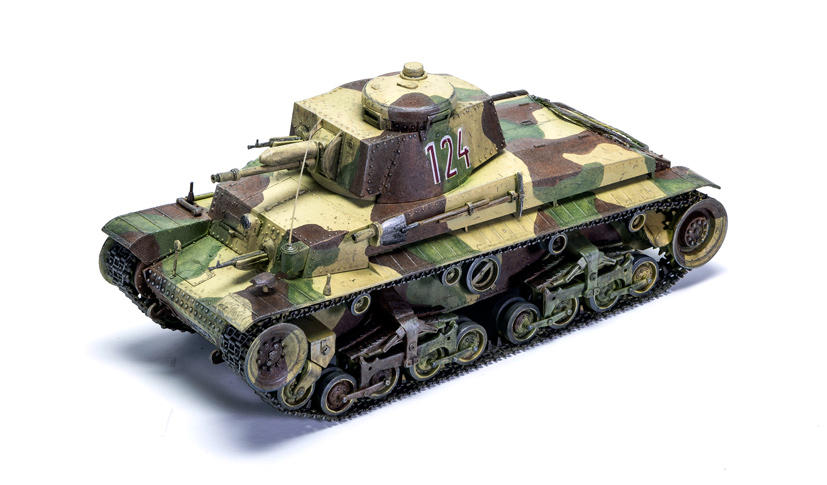
This light 10.5 ton tank had a crew of three and was armed with a 37mm Skoda UV vz 34 main gun and 72 shells, with secondary armament of two 7.92mm machine guns. A particularly reliable performer, the 35(t) (LT vs 35) could withstand machine-gun bullets, 20mm cannon fire and exploding artillery shrapnel, but when it was faced with more effective anti-tank artillery, its limitations began to show. Nevertheless, these deceptively useful tanks would be available to take part in Operation Barbarossa in some numbers and not only wearing the colours of Wehrmacht tank units. The Slovakian Army supported the initial onslaught, although their lack of fully mechanised support units meant that they were unable to keep pace with the swift German advances, resulting in their withdrawal by August 1941. Proving the effectiveness of its Czech design, this reliable little tank was used extensively in military operations during the first two years of the Second World War and remained a capable infantry support tank until it was withdrawn from service. Its relatively light armour dictated that it became increasingly vulnerable on the battlefield if it was contested by the latest Allied armour, but illustrates how mobility and reliability were the key to the early Blitzkrieg successes.
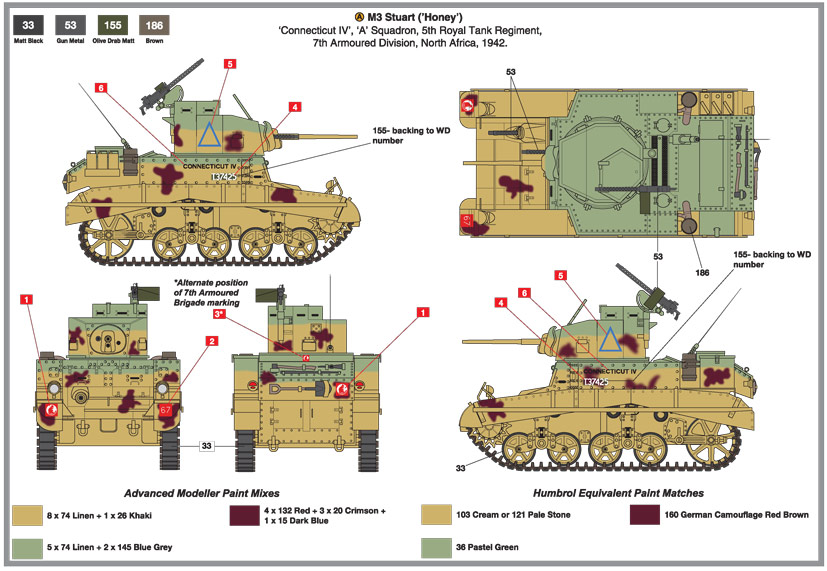
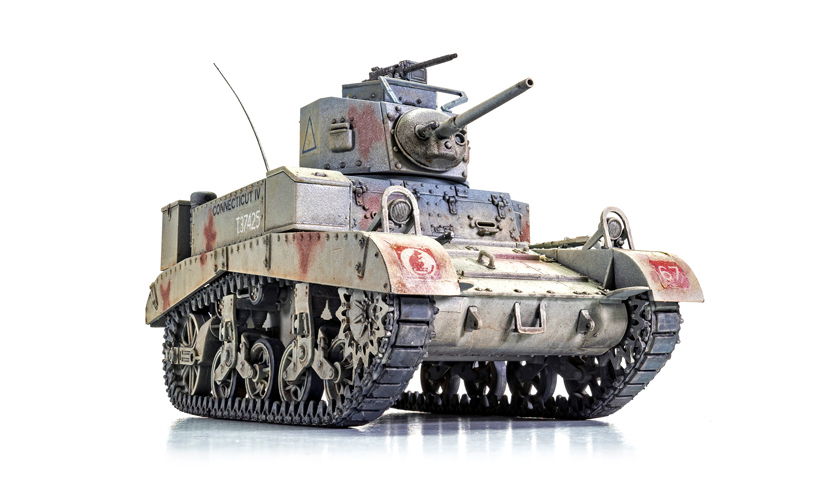
The British Army were the first to use the M3 Light Tank in combat during the Second World War, where the deserts of North Africa saw savage fighting in a struggle for supremacy
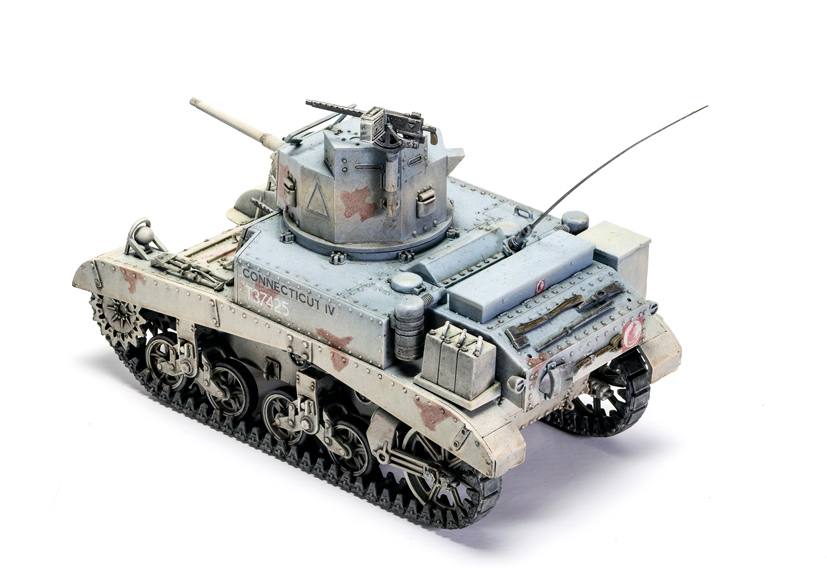
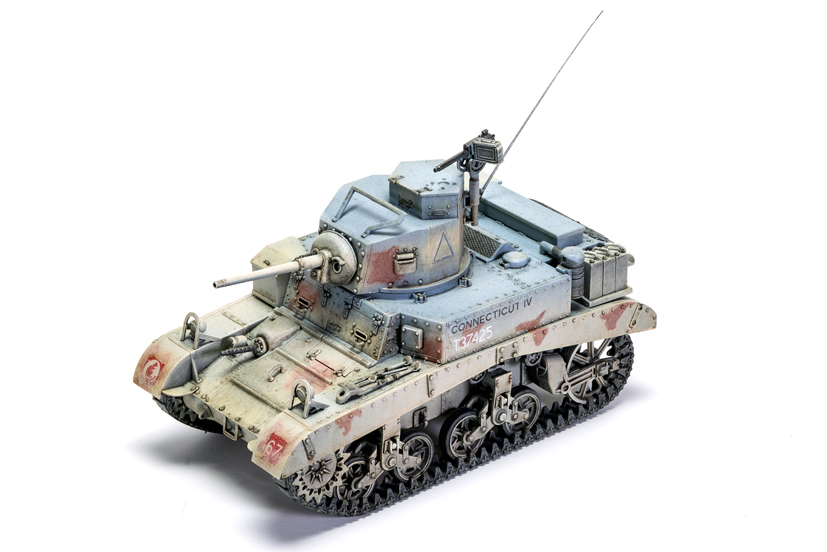
As Europe plunged into conflict in 1939, America realised that it was ill-prepared for war, with its military sadly lacking in effective armoured vehicles. The fall of France and the effectiveness of Blitzkrieg convinced planners that they were in need of a light, mobile cavalry tank, able to quickly and efficiently support advancing infantry, securing any territory gained, before the enemy could re-occupy it. The resultant tank was the M3 Light Tank, a small and mobile 4 man machine, which was relatively well armoured and equipped with a rapid firing 37mm anti-tank gun. Initially, the M3 was also equipped with an impressive five machine-gun secondary armament, although this would be reduced in later variants. The M3 was produced in large numbers and made available to British and Commonwealth forces via the crucial Lend-Lease programme, providing them with a much needed battlefield boost. Immediately thrust into combat in North Africa, it would be British forces who first used the M3 in combat during WWII. In British service, the M3 was known as the Stuart Light Tank, named after the famous US Civil War General of the same name. It did, however, also attract another more affectionate name, as crews christened it ‘The Honey’, due to its speed and relatively comfortable ride – it seems British crews were rather taken with their new American import.
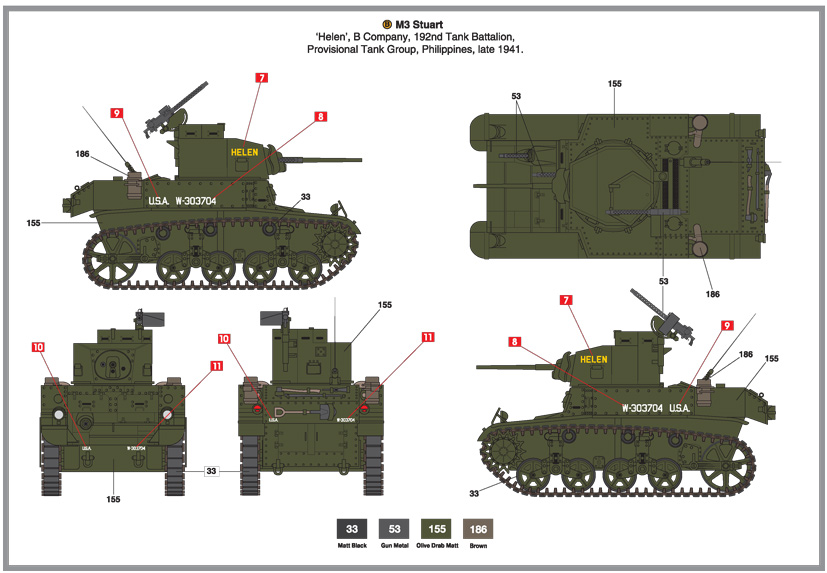
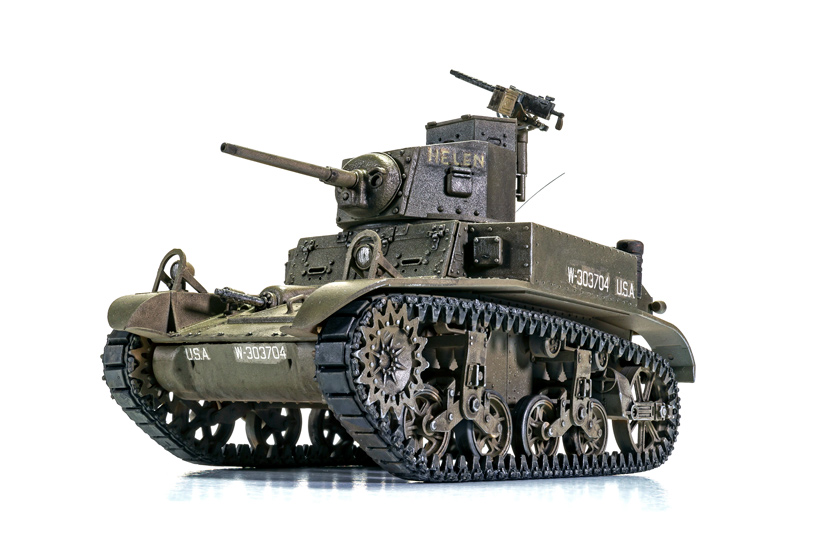
During the Pacific War, the M3 would prove to be a match for its main Japanese opposition, although the M4 Sherman was much needed by the time of its introduction
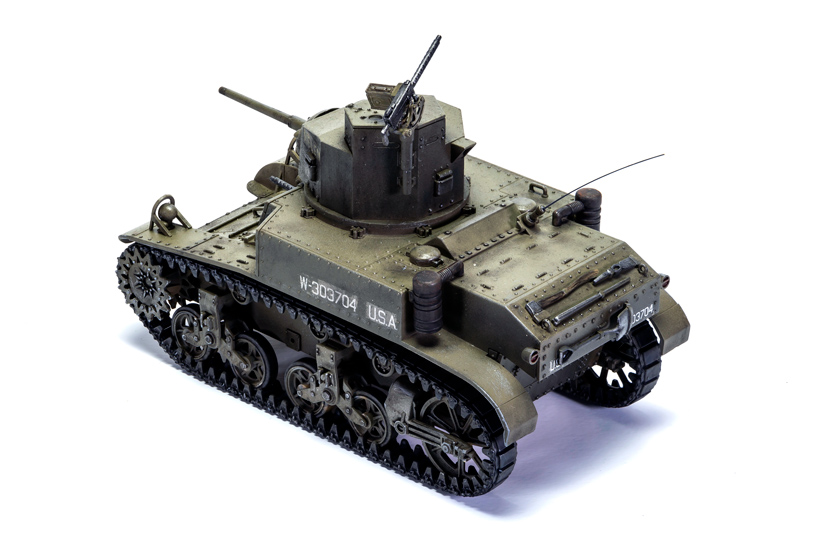
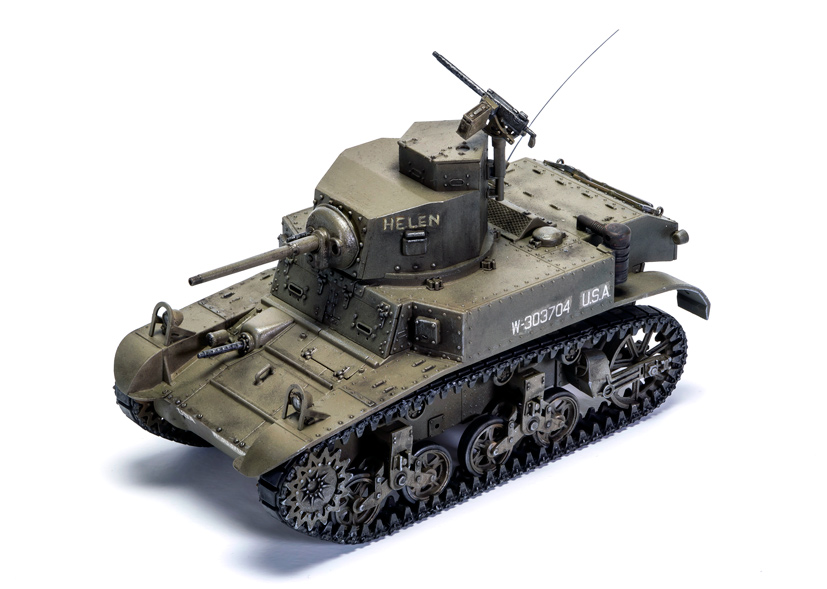
The first US overseas deployment of the M3 was to the Philippines in September 1941, with their first tank versus tank engagement of the war taking place on 22nd December 1941. In the Pacific Theatre, the M3 also proved to be a reliable military workhorse, with its mobility and relatively effective armour protection allowing the tank to compare favourably against its Japanese light tank counterparts. In jungle conditions, the diminutive stature of the M3 made it an incredibly useful asset and was only relegated down the military pecking order following the arrival in theatre of the larger M4 Sherman and its larger, more effective main gun. In the European Theatre, the M3 would see service throughout the remainder of the war, but with the arrival of much more powerful German armour, this would mainly be in secondary roles, or as a high speed reconnaissance tank.
As can be seen in the build pictures featured above, these handsome new kits allow the modeller to produce accurate versions of some of WWII’s most significant military vehicles, perhaps encouraging a little more creativity when selecting the paint scheme in which to finish your build. With the models released in batches of three or four throughout the year, the first group are scheduled for release next month and with their great pricing, seem destined to be a popular addition to the range. The entire 1/35th scale tank range can be viewed HERE.
One of the most enjoyable aspects of producing the Workbench blog is the opportunity we have to attend several of the many model shows which take place the length and breadth of the country. Highlighting the current healthy state of the modelling hobby in the UK, these events allow enthusiasts the opportunity to admire hundreds of magnificent model displays, produced by Britain’s extremely talented army of modellers, as well as picking up those much needed model supplies, or even making an addition or two to the ever growing kit stash. With many in the hobby believing that modelling is simply another form of art, it is interesting to note that plenty of shows continue to see increasing visitor numbers, which keeps existing shows on the events calendar and new events encouraged to take the plunge – dare we say, the modelling hobby is almost in danger of becoming cool! With a large number of events taking place in the UK and work/geographical issues certainly a consideration, it is not possible for Airfix to attend more than a handful of events each year, but when we do, we like to gather as much information as possible, for future inclusion in our blog. This time, our hard-working Lead Researcher Simon Owen visited the Southern Expo Model Show and kindly offered to compile a review for the benefit of Workbench readers, which we are pleased to bring you now. The following words are Simon’s and all photography is shown courtesy of Simon’s father, Neil.
Mid-March saw my annual trip over to Essex, Hornchurch to be exact, to visit the Southern Expo model show. This medium sized event has been running for many years now, and is always a pleasure to attend (once you’ve managed to find a parking space!) and this year was no exception. While last year saw the event take place under skies filled with snow, a rather warmer day greeted us this time around.
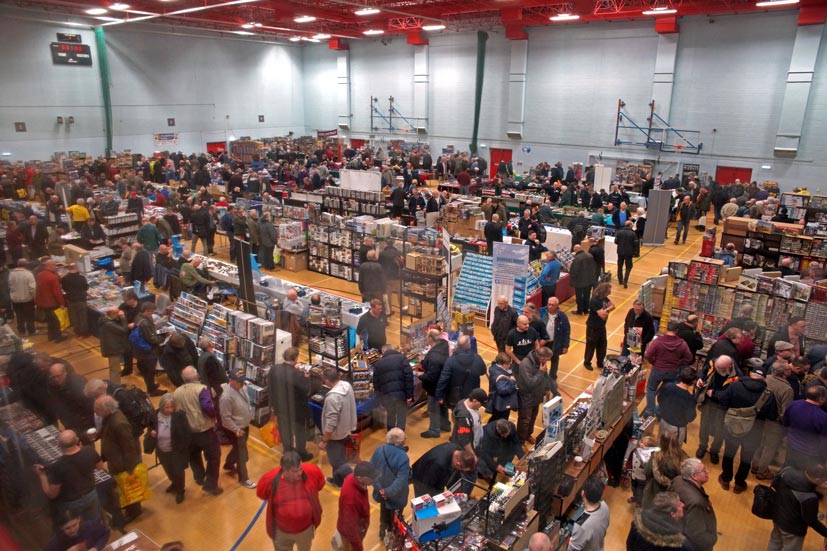
You are always assured of receiving a warm welcome at this event, which is billed as ‘the friendly show’, which it certainly is. Held within the single hall of a sports centre, my visit on the Saturday of this year’s two day show saw the whole place is buzzing with modelling anticipation, from the traders selling all manner of kits and accessories, to the wonderful displays arranged by the clubs and societies in attendance. Featured below is a small selection of the wonderful Airfix (and a couple that aren’t Airfix!) builds I was fortunate enough to see during my visit.
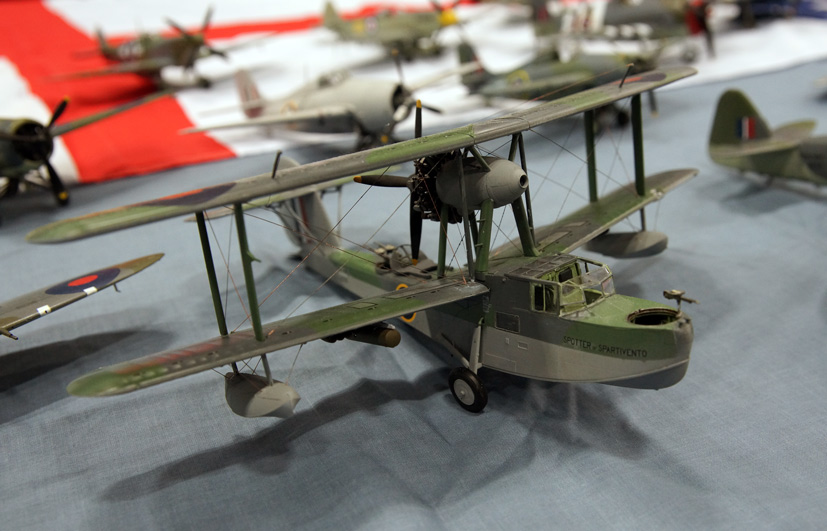
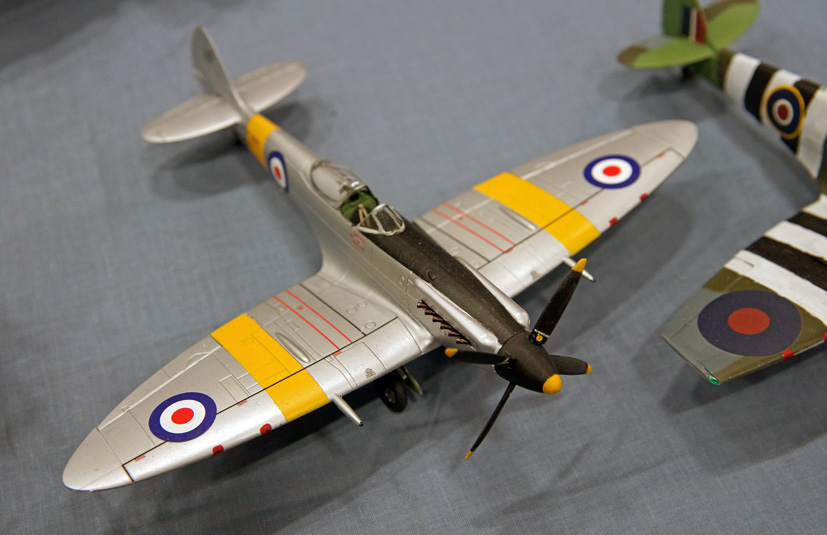
Our Walrus model has been around for a couple of years now and it is always nice to see everyone’s build interpretations on model club displays up and down the land, this particular example being no exception, which was displayed on the IPMS Hornchurch stand. As a contrast, it was displayed next to a slightly more modern naval Supermarine design, in the form of the handsome Seafire XVII.
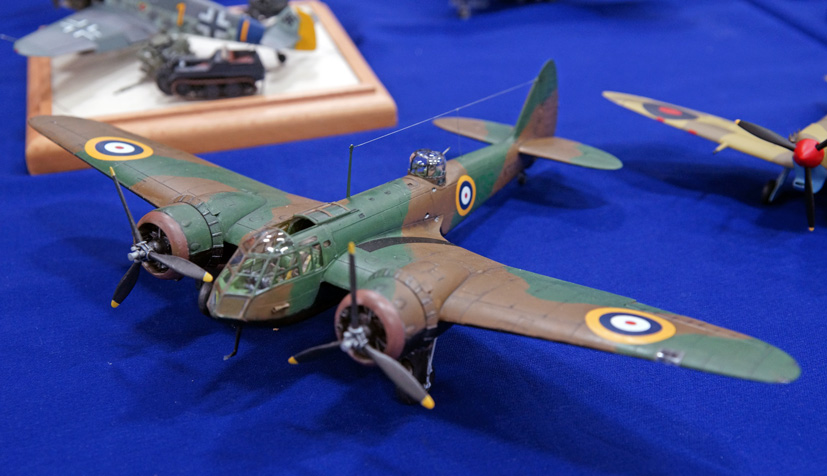
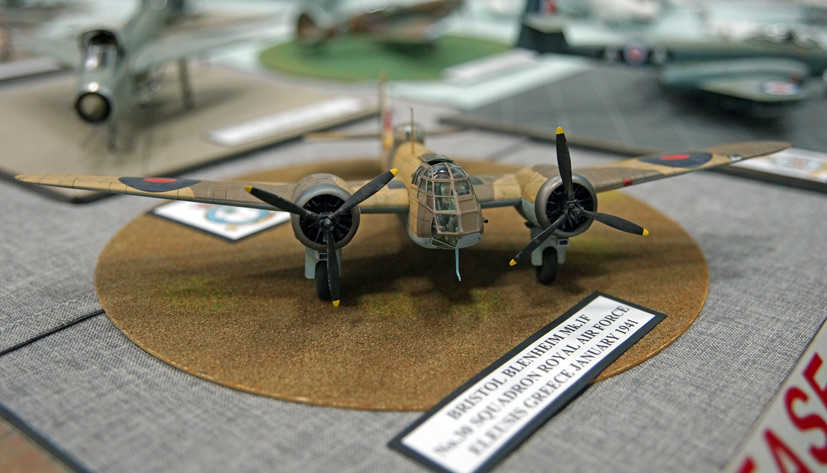
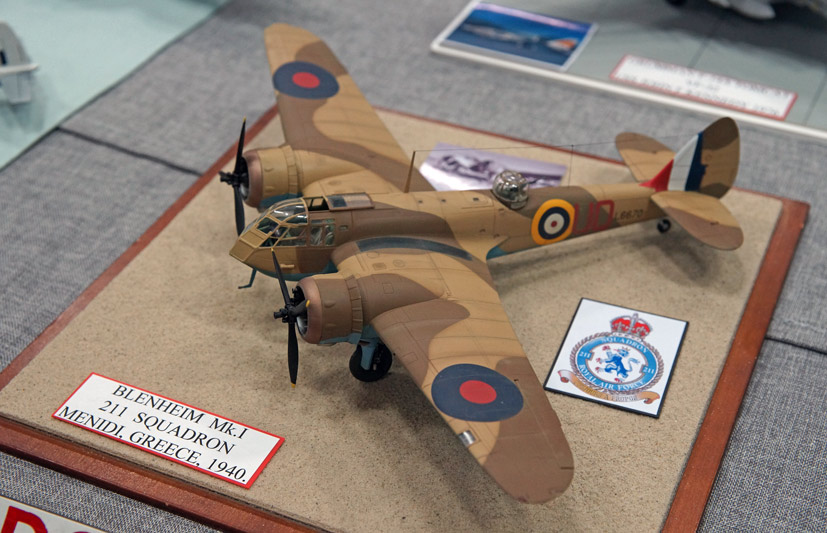
Another recent Airfix release which seems to have caught the eye of the modelling public is our 1/48 Bristol Blenheim and there were a number of extremely attractive examples on various displays around the show.
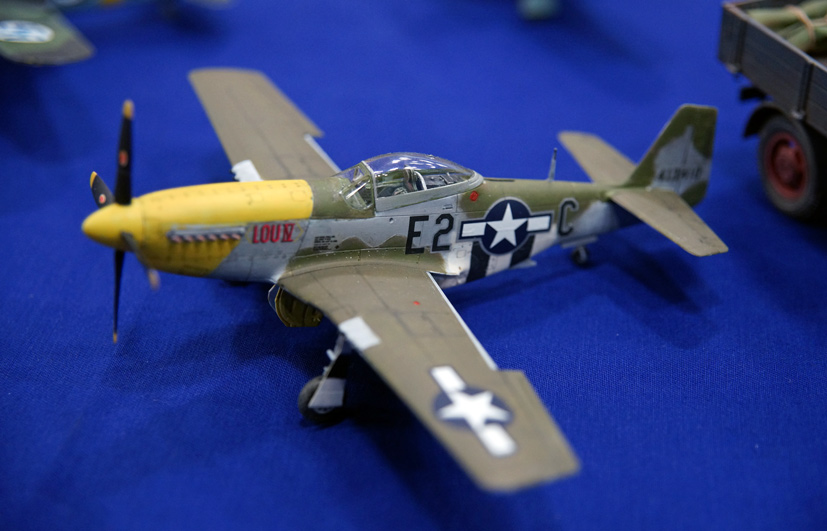
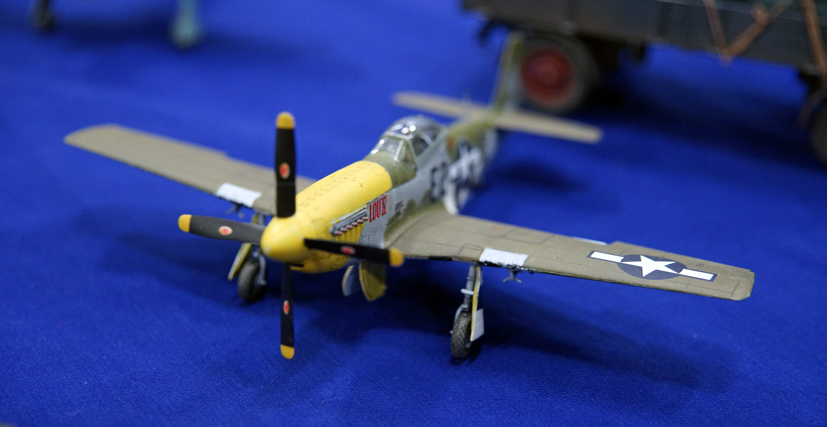
We even managed to see some Airfix kits which had been altered to represent build options we have not even released yet - this conversion of our popular North American P-51D Mustang caught my eye. We are yet to release our D-5 variant, which features the aircraft’s early filletless tail, however, this didn’t deter one talented modeller, who has produced a homemade conversion of our 1/48th Mustang and even finished it in one of the kit schemes, the ever-popular Bottisham based ‘Lou IV’ of the 375th Fighter Squadron.
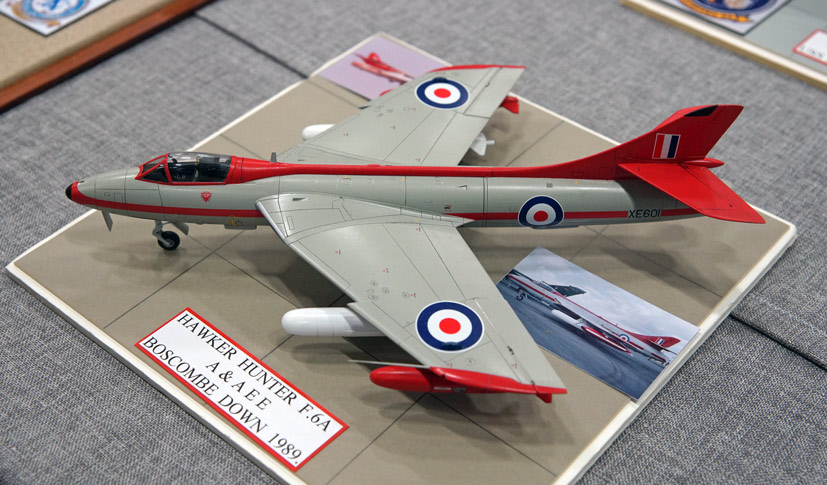
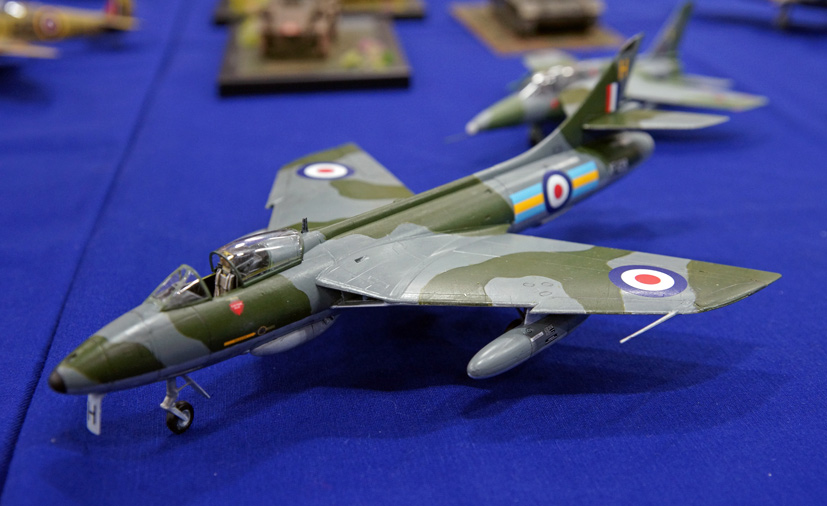
The new 1/48th scale Hawker Hunter was also one of the most popular Airfix display items, with this lovely grey example being the pick of the bunch for me. It was joined by this camouflaged example, which proves that whatever colour you put on a Hunter, you can never detract from the aesthetic appeal of this most beautiful aeroplane.
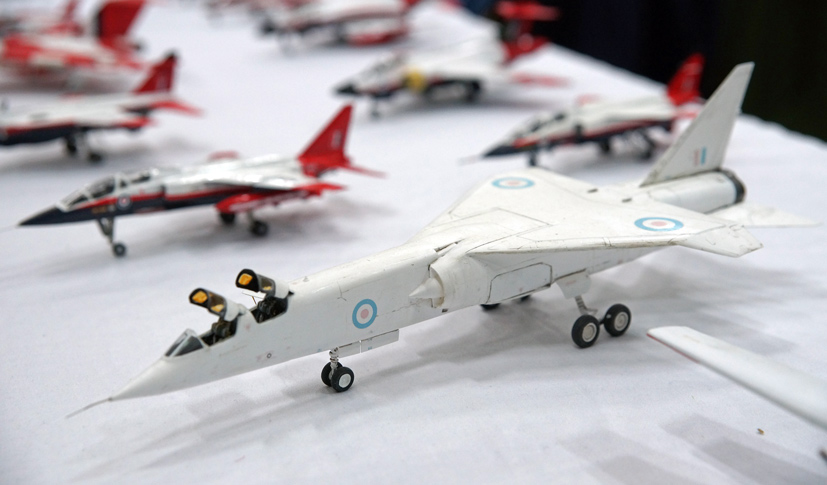
There were also a number of older Airfix tooling’s on display, from the Hurricane, to the fabled BAC TSR2 and classic propliners represented by a beautiful Dan Air Douglas DC3 – there was even an Avro Shackleton making a welcome appearance.
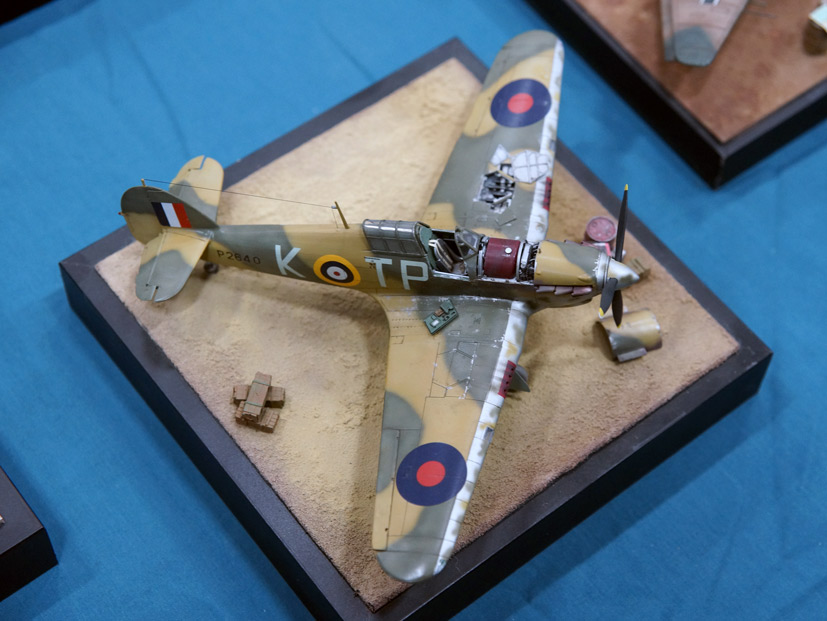
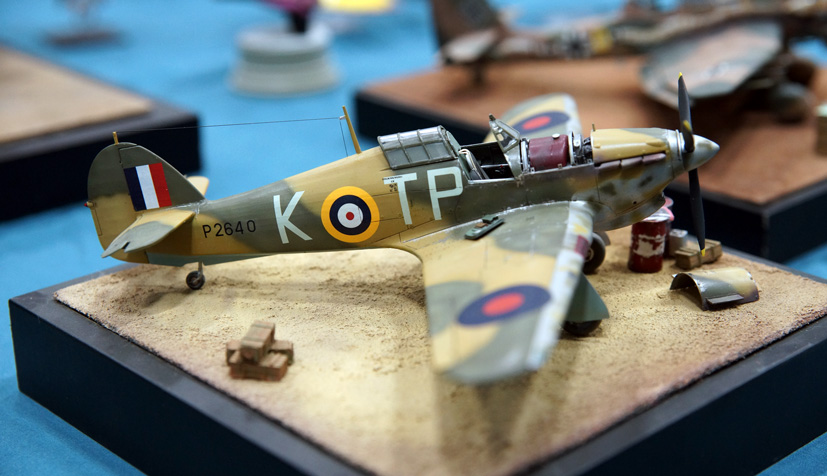
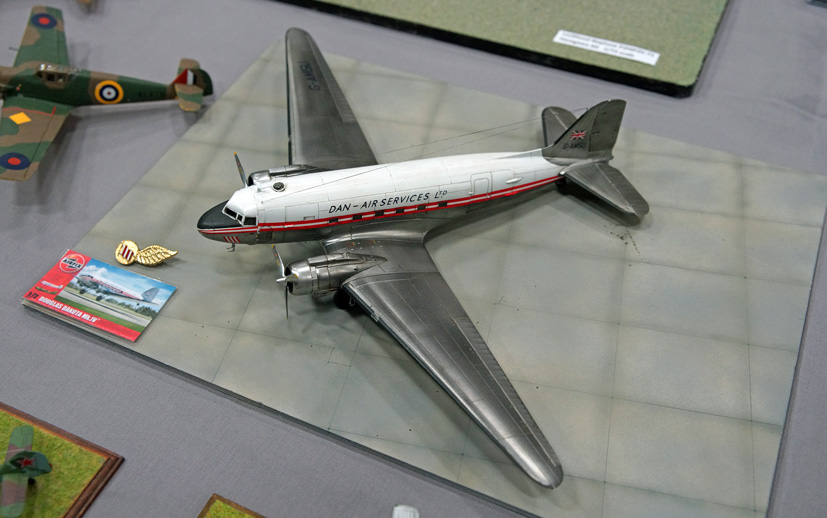
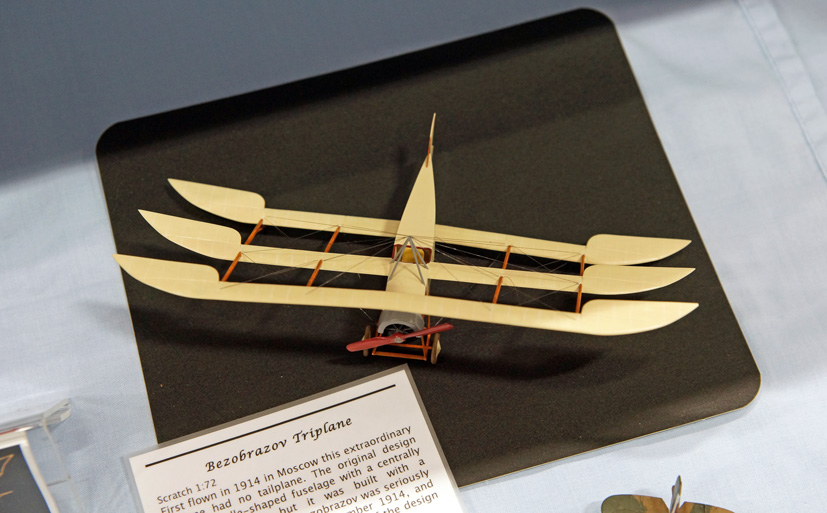
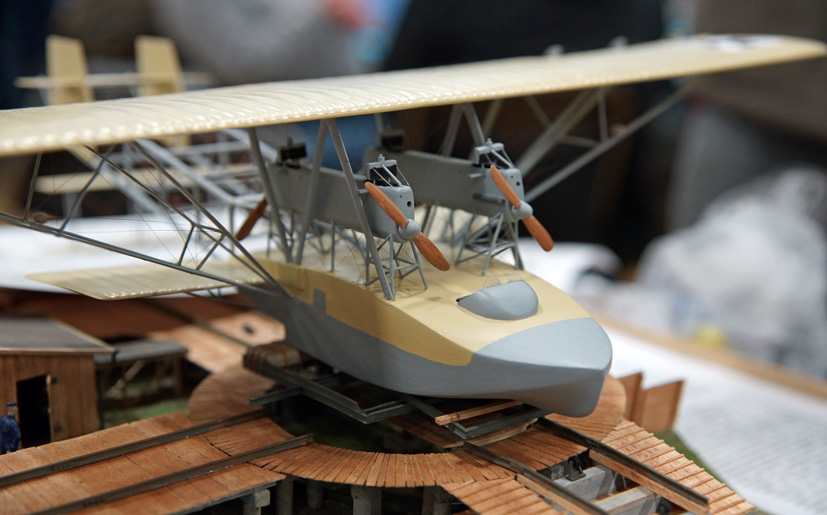
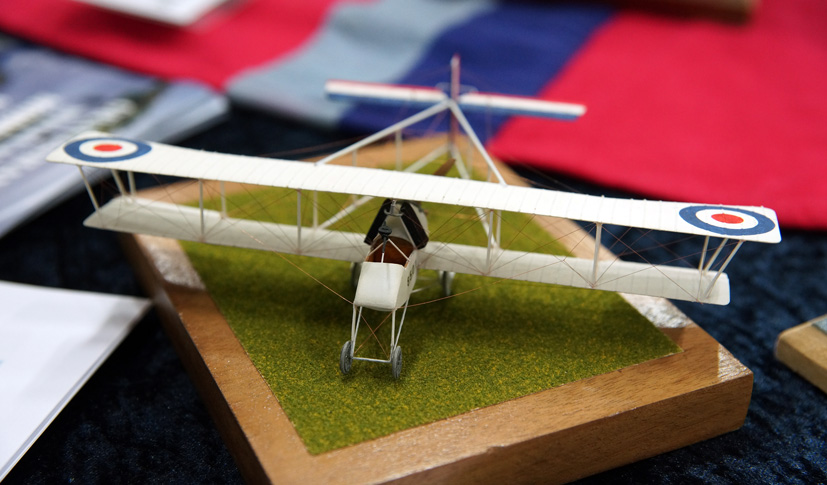
I would like to end this report by featuring a number of impressive none Airfix items. These scratch built WW1 and Edwardian machines really stole the show for me and illustrate an incredible amount of modelling talent by their respective builders – they have been produced in 1/72nd scale and it is amazing to think that these highly accurate representations were produced without the help of a kit and requiring some serious modelling skills.
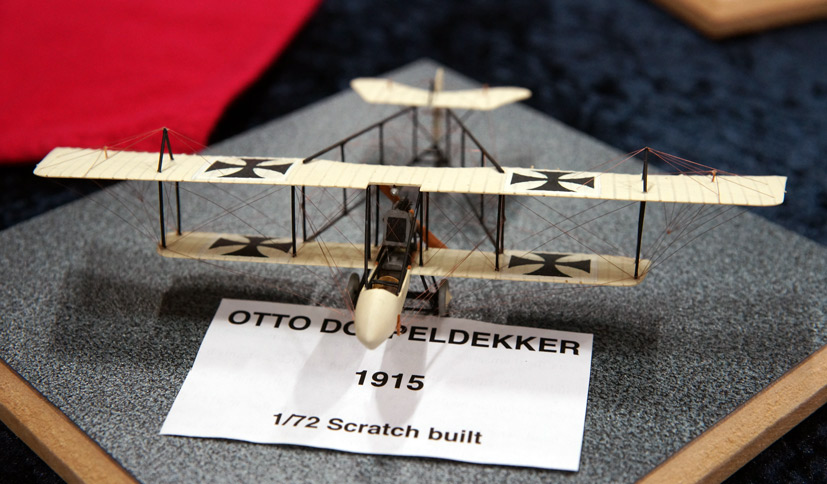
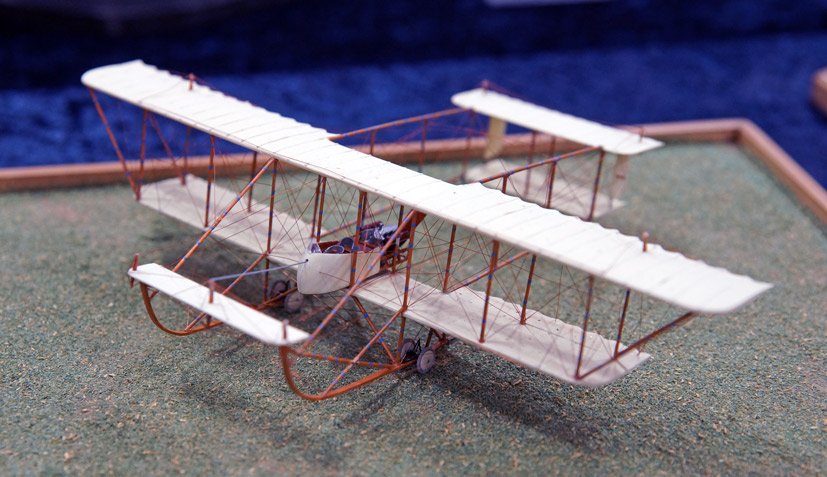
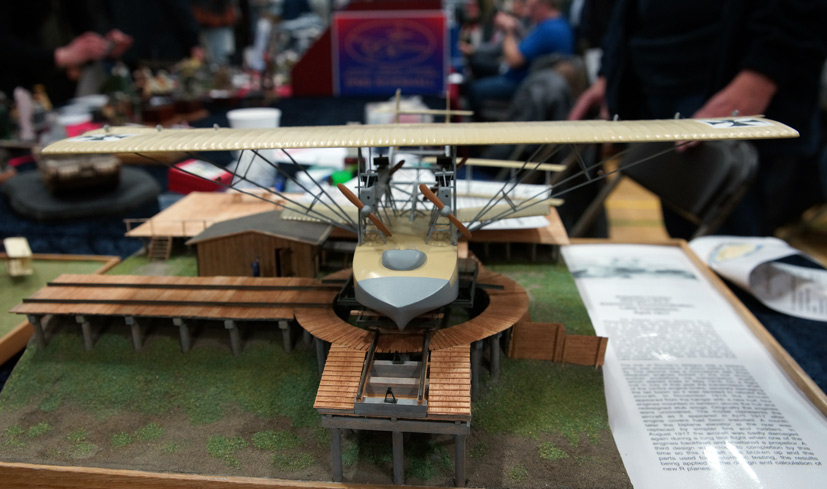
Until next time, happy modelling!
We would like to thank Simon and his father Neil for compiling this Southern Expo Model Show report and for allowing us to see some of the magnificent models they discovered – most enjoyable!
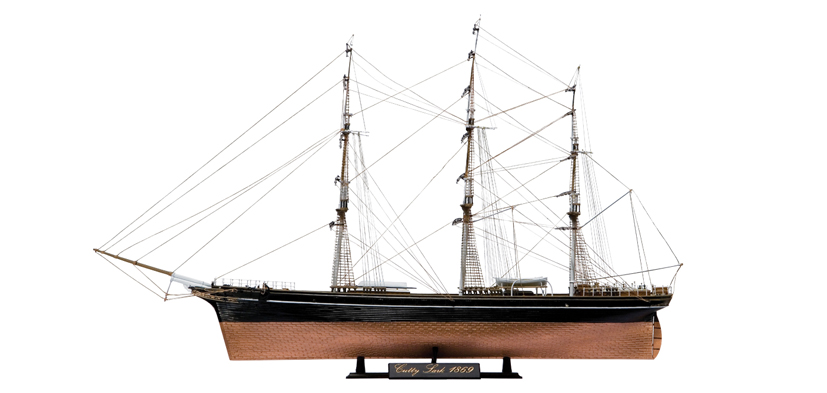
These magnificent kits recreate some of the most iconic sailing ships in history, including Cutty Sark
Our attendance at the recent Shropshire Model Show allowed us the opportunity to speak to a great many modellers and during those discussions, it was interesting to discover just how popular our new Vintage Classics range appears to be. With Airfix models playing an important role in the hobby lives of a great many people, these kits not only remind us of the trouble free modelling days of our youth, but also of the unbridled excitement of finishing one kit build and securing your next project, let alone the importance of making sure you had your copy of the latest Airfix catalogue as soon it was released. Undoubtedly, a big part of our Airfix enjoyment was the iconic box artwork, which both captivated us and made the selection of our next build quite a difficult one – there were just so many great models to choose from. As we have all gone through the same modelling stages, many will probably agree that these early days of our modelling saw us attempting a wide range of kits, mainly due to this artwork and it was not uncommon for a Spitfire build to be followed by a Boeing 727 or even the odd Dinosaur. One range of kits which seemed to be the domain of slightly more accomplished modellers (certainly in the minds of younger hobbyists) were the sailing ships which included impressive levels of detail and were one way in which your dad could still prove he was the No.1 modeller in the house. The Vintage Classics range has seen the welcome return of a number of these models to the 2019 catalogue and we are pleased to confirm the imminent arrival of three of these historic kits.
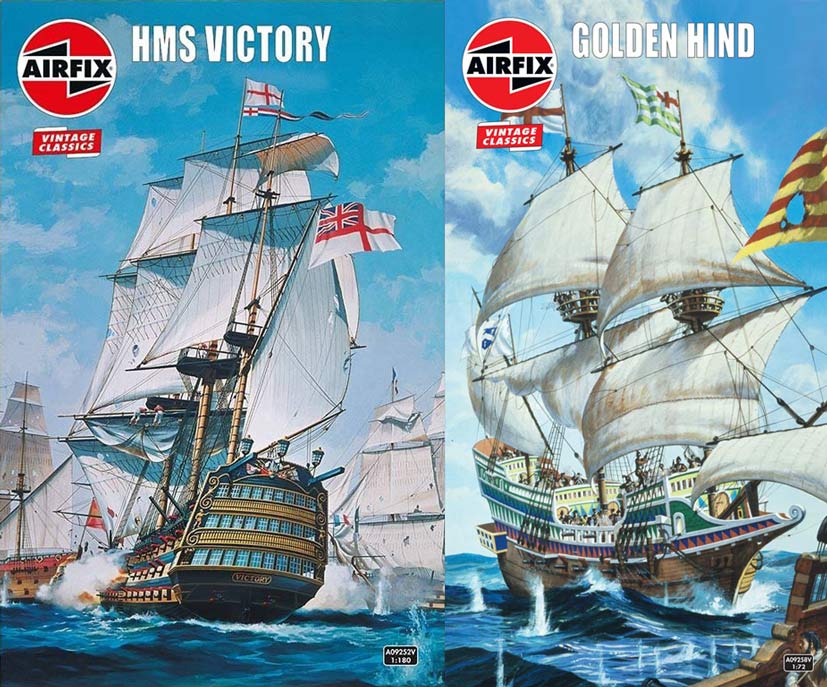
HMS Victory and the Golden Hind are the other two imminent sailing ship releases in the Vintage Classics range
We would usually describe inbound product as being on the water, but that seems a little trite when talking about the impending arrival of several classic sailing ships, however, modellers will be interested to learn that these beautiful models will soon be on the shelves of model stores all over the world. Next month will see the much anticipated release of HMS Victory 1765, The Golden Hind and Cutty Sark, three classic sailing ships and some of the most iconic kits in the history of Airfix. Immortalising some of the world’s most famous ships in scale model form has resulted in several of the most impressive models in the Airfix range and includes such classics as HMS Victory, a ship which fascinated many children during their school years. On 7th May 1765, HMS Victory was floated out of the Old Single Dock in Chatham's Royal Dockyard. In the years to come, over an unusually long service career, she would gain renown leading fleets in the American War of Independence, the French Revolutionary War and the Napoleonic War. In 1805, she achieved lasting fame as the flagship of Vice-Admiral Nelson in Britain's greatest naval victory, the defeat of the French and Spanish fleets at the Battle of Trafalgar.
For Victory, however, active service did not end with the loss of Nelson. In 1808 she was recommissioned to lead the fleet in the Baltic, however, four years later, she was no longer needed in this role and was relegated to harbour service. In this role, she served as a residence, flagship and tender providing accommodation. In 1922 she was saved for the nation and placed permanently into dry dock where she remains to this day – she is visited by 25 million visitors as a museum of the sailing navy and the oldest commissioned warship in the world.
HMS Victory and her two companion kits will be released next month and represent three of the most flamboyant kits in the current Airfix range – the question is, do we now have the skills to put our dads in their modelling place?
That’s all we have for you in this latest edition of Workbench, however, we will be back as usual in two weeks’ time with a further selection of Airfix modelling delights for your enjoyment. In the meantime, if you have any suggestions for subjects you would like to see covered in a future edition of the blog, or ways in which we could enhance your enjoyment of Workbench, please do not hesitate in contacting us. We can be reached via our usual e-mail address workbench@airfix.com or by contributing to our Workbench thread over on the Airfix Forum. If social media is more your style, you could access either our Airfix Facebook page or Twitter channel, (using #airfixworkbench), where you will find plenty of modelling news, views and discussion taking place. Whichever medium is your preference, please do get in touch, as it is always interesting to hear from fellow modelling enthusiasts and the projects you have on the go at the moment.
As always, the Airfix website is the place to go for all the latest model release information, with our New Arrivals and Coming Soon sections both quickly accessed by clicking either of the links above. As updating the website is an ongoing process, a quick search through each section of the Airfix web pages will often reveal new information and updated images in many of the product sections and this is always an enjoyable way in which to spend a few spare minutes.
The next edition of Workbench is due to be published on Friday 26th April, when we will have more news and modelling features from the fascinating world of Airfix.
On behalf of the entire Workbench team, thank you for your continued support our Airfix blog.
The Airfix Workbench Team
© Hornby Hobbies Ltd. All rights reserved.

