


Welcome to this latest edition of Workbench and all the news, updates and exclusive announcements from the fascinating world of Airfix modelling.
At model shows up and down the country this year, the pivotal aerial struggle which took place in the skies above Britain during the summer of 1940 should have been commemorated by the scale modelling community and in some style, probably culminating with a great many themed displays at this year’s Scale Modelworld show at Telford. As the 2020 Airshow season also commenced, enthusiasts would have been hoping to fill their senses with the sound of Rolls-Royce Merlin engines and the sight of the massed flypast of Spitfires and Hurricanes at events throughout the summer months, as the UK is fortunate to have a significant number of restored and airworthy aircraft to call upon. Unfortunately, it now seems likely that neither of these commemorations will be taking place this year, but despite this, modellers will not be derailed from making their own scale tributes to the heroes of the Battle of Britain.
One RAF Battle of Britain era fighter which would certainly not have been represented in the air during the summer’s Airshow commemorations, the Boulton Paul Defiant has been described as an air fighting enigma and one which history has judged something of an operational failure. Making an Airfix scale modelling tribute to this fascinating WWII aircraft, the Defiant will be our lead subject for this latest edition of Workbench, as we look at the latest kit release of this fighter in 1/48th scale, one which serves as the final model in our own Battle of Britain 80th anniversary commemoration.
We follow this up by including an exclusive series of build images featuring our spectacular 1/24th scale Grumman Hellcat and a display innovation which has been developed by one of our product designers – you will be pleased to know that we also have one of these magnificent models available in our latest Workbench competition. We end by mark the impending reissue of our popular 1/72nd scale Bristol Beaufighter TF.X by featuring scheme details and a build project supplied by one of our overseas readers, one which could be described as a particularly moving tribute to the airmen of Coastal Command during WWII.
As usual, we have much to get through, so let’s make a start by heading for the skies above the Dunkirk evacuation beaches and a single engined aircraft where teamwork was vital and potential targets were never in front of them.
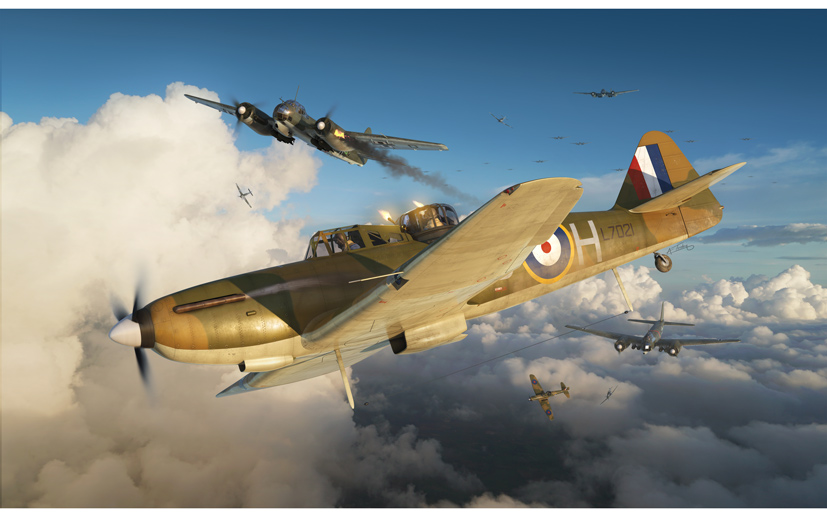
This current 80th anniversary year of the Battle of Britain was supposed to be a significant occasion in what should have been a busy year for WWII commemorations, however, unforeseen global events have and will continue to undermine event planning which were undoubtedly at quite advanced stages of completion. Our own plans to mark the anniversary with a range of appropriately related kits in 1/48th scale were at one stage looking in some doubt, but thankfully, through a combination of meticulous planning, hard work and a little good manufacturing fortune, it seems as if our intended trio of RAF Battle of Britain fighters will all have been released well before Battle of Britain Day itself.
In a series of recent features which proved incredibly popular with readers, our 2020 blog schedule has included details of both the Supermarine Spitfire Mk.1a and Hawker Hurricane Mk.I kit reissues intended as our tribute to the pilots Winston Churchill described as ‘The Few’ and well in advance of their intended release dates. Clearly, both of these models were ‘priority builds’ on the schedules of many modellers in this anniversary year and we have already seen the Spitfire selling out on the Airfix website (although kits may still be available in model shops), with the Hurricane now following closely behind. We are now delighted to be in a position to bring you details of the final release in this RAF Battle of Britain aviation trilogy, an aircraft which may not be held in the same esteem as either the Spitfire or Hurricane, but one which for many people is far more interesting - the Boulton Paul Defiant.
For an aircraft which only made a limited and some would say rather disappointing contribution to the victory statistics during the Battle of Britain, it is interesting to note that the Bolton Paul Defiant made both its first flight and squadron introduction after both the Spitfire and the Hurricane. Indeed, its squadron introduction took place a full two years after that of the Hurricane. Unique amongst most day fighter designs at that time, the Defiant incorporated a powered dorsal turret as its only offensive/defensive armament, equipped with four 0.303 inch Browning machine guns and giving the Defiant an impressive rate of directional fire. The idea behind the design was that modern wars would be waged by large formations of bomber aircraft hoping to obliterate their enemies into submission, but that Defiants could patrol the edge of the bomber stream, blasting them out of the sky with devastating broadside attacks.
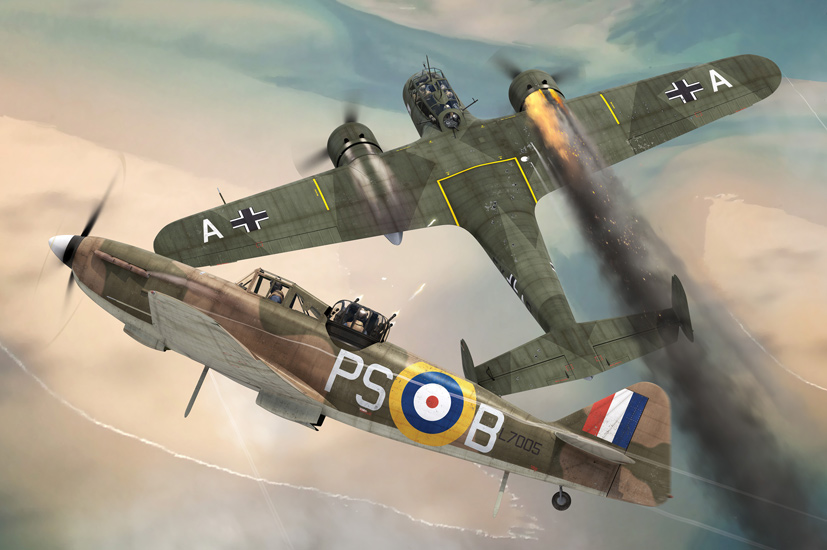
More magnificent Airfix Defiant box artwork, this time from the 2015 release of our Dogfight Doubles Defiant and Dornier Do17z release A50170. We have included it here as it depicts the operating environment for which the much maligned Defiant was intended to be deployed
Although this may seem perfectly logical in theory, it assumed that the bombers would not be protected by their own fighter support and therefore placing the Defiant crew at significant risk of attack themselves. Powered by a single Merlin engine and with the additional weight of the heavy power-operated turret and its gunner, the Defiant was slower and less manoeuvrable than either the Spitfire or the Hurricane, but it was its complete lack of forward firing armament that would prove to be its real Achilles heel. Incredibly for a day fighter aircraft in 1940, the Defiant could not defend itself if attacked from the front and in contested airspace, the concept of a turret fighter was found to be decidedly flawed. Despite the RAF having some 650 Defiants on order, by the time of the German Blitzkrieg offensive against France and the Low Countries in May 1940, only one RAF Squadron was fully operational with their new turret fighters.
Initially, whilst covering the evacuation beaches at Dunkirk, Defiant crews would enjoy some early successes, claiming many victories over the Luftwaffe, with several crews even claiming ‘Ace’ status. A favoured target were Stuka dive bombers pulling out from their steep attack runs, with Defiant crews using the period of disorientation at the foot of the dive to shower the aircraft with bullets. In the melee of a dogfight, the Defiant would have resembled a Hawker Hurricane to the unwitting Luftwaffe fighter pilot, a misidentification which would have been greeted by an unexpected hail of bullets if attacking from the rear as usual. These mistakes were quickly rectified and it did not take long before marauding Messerschmitts began to take a heavy toll of this strange and slightly cumbersome RAF fighter.
The latest release from our highly regarded 1/48th scale tooling of this unusual, but fascinating aircraft was one of the first kits to leave our manufacturing plants following their return to work after lockdown closure and will therefore be arriving in our warehouse during the next few weeks. It includes two attractive scheme options in which to consider finishing your model, one of which represents a Defiant which saw action during the height of the Battle of Britain – let’s take a closer look at both decal options now.
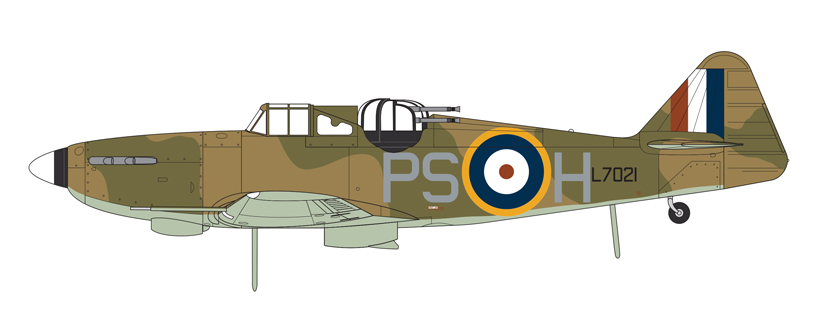
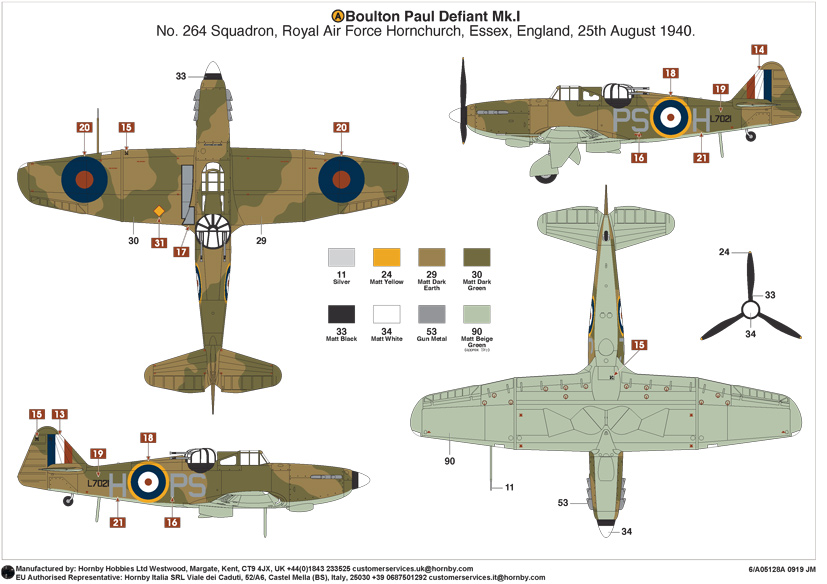
RAF No.264 Squadron reformed at Sutton Bridge on 30th October 1939, where it became one of the ‘Madras Presidency Squadrons’ as the aircraft they were to be equipped with were purchased with money gifted by the Presidency of Madras. In December 1939, the squadron was at full strength and moved to Martlesham Heath for training and trials with their new Boulton Paul Defiant Fighters, the first RAF squadron to be equipped with this aircraft. Their time working up to operational status proved somewhat frustrating, as these new aircraft suffered from numerous niggling technical issues, most commonly associated with hydraulics and engine installation.
The first of the squadron’s Defiants were made operational towards the end of March 1940, but even at this early stage, there were misgivings about the aircraft’s ability to survive in combat against the much vaunted Messerschmitt Bf 109 fighter in a daytime role. This uncertainty appeared to continue throughout the following few weeks of training, as crews embarked on an intense period of flight training in both day and night fighting tactics.
Pilot David ‘Bull’ Whitley joined No.264 Squadron straight from successfully negotiating his flight training courses and before the unit moved to Martlesham Heath. He was going to fly the new Defiant turret fighter and would go on to forge a successful working relationship with his assigned air gunner Sgt. Robert Charles Turner, a team which would fly together throughout the savage fighting which followed the German Blitzkrieg offensive in Western Europe.
In May, 264 Sqn. moved to Duxford airfield so they could be nearer to possible combat zones and whilst one aircraft was kept at a state of constant readiness both day and night, the rest of the squadron continued with the intensive training which would soon stand them in good stead. The retreat of the BEF towards Dunkirk saw No.264 Sqn. thrust into combat, where they would be used in conjunction with RAF Spitfire and Hurricane fighters. This was a considered tactic to fool Luftwaffe pilots into thinking they were attacking a standard RAF single engined fighter, with their misjudgement being confirmed by an unexpected hail of bullets heading in their direction.
During these early exchanges, the Defiants posted encouraging results, with 24 enemy aircraft being destroyed without loss by 28th May. Without question, the most successful day for No.264 Squadron’s Defiants occurred on 29th May 1940. During combat operations over the Dunkirk beaches, Defiants destroyed 37 Luftwaffe aircraft in two sweeps over the area, figures which included 15 Bf 110 Destroyers, 2 Bf 109 fighters and no fewer than 19 Ju-87 Stukas. This would definitely prove to be the highpoint of RAF Defiant operations, as the Luftwaffe quickly learned the weak points of the British turret fighter and how best to launch their attacks.
From the very next day, Defiants began to fall to the guns of the Luftwaffe and would quickly be withdrawn from the fighting. June and July would be spent in a period of rest and replenishment, but in these early actions, the squadron had claimed 65 enemy aircraft for the loss of 14 Defiants – the fighting partnership of Whitley and Turner had also gained ‘Ace’ status, having claimed 5 enemy aircraft over the beaches of Northern France.
The ‘ace’ crew of Whitley and Turner first flew Defiant L7012 in early August 1940 from their training base at Kirton in Lindsay and later the same month, flew it with the rest of the squadron down to a new home at RAF Hornchurch. On 24th August and at the height of the Battle of Britain, they were scrambled to intercept a large enemy raid approaching the Kent coast and in the ensuing combat over the Manston area, they managed to shoot down a Junkers Ju-88 bomber, but not before it had severely damaged their own aircraft. Despite the damage, Whitley was able to nurse the fighter safely back to Hornchurch.
Four days later, whilst flying a different Defiant (N1574), the two airmen were tragically lost having been shot down over Thanet by a strong force of JG26 Messerschmitt fighters. Their previous aircraft L7012 was also lost during the same actions in what proved to be an extremely bleak day for No.264 Squadron. By 1st September, the squadron had been withdrawn back to Kirton and out of daytime combat operations for good.
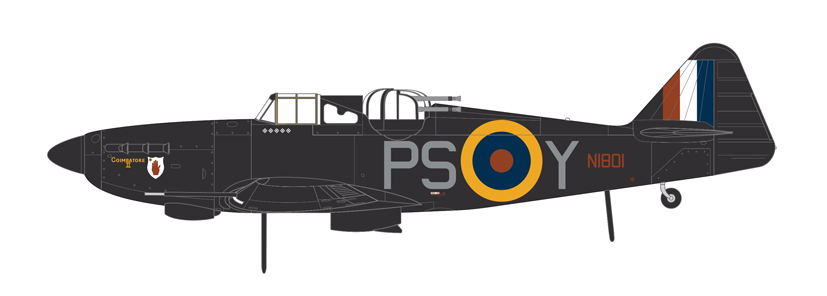
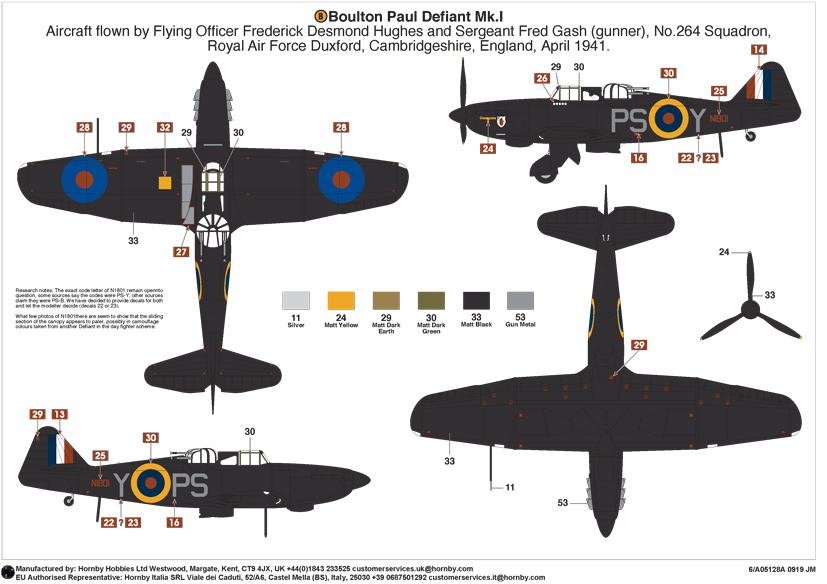
As one of the most distinctive Defiant fighters of the Second World War, N1801 carried the name ‘Coimbatore II’ on the port side cowling, along with a stylised hand in a shield, signifying this as one of the machines purchased by donations from the Presidency of Madras. Indeed, several of the Defiants in this squadron were to benefit from the addition of names, however, this is the only aircraft where conclusive photographic evidence exists. In total, £1.4 million was raised for the Royal Air Force, with five ‘Madras Presidency gift squadrons’ going on to be equipped with the aircraft purchased, which was clearly a significant contribution to the war effort.
The flying combination of pilot Desmond Hughes and air gunner Fred Gash were to form a formidable partnership in their Defiant fighters, eventually gaining the five aerial victories required to earn them the coveted title of ‘Ace’. On 26th August 1940, they claimed two Dornier Do17 bombers destroyed during the same sortie, however, these would prove to be pair’s only successes during daylight operations. With the Defiant becoming increasingly vulnerable to enemy fighter attack, the type was transferred to night defence duties where it was to prove much more successful. Searching for targets in the dark, an extra pair of eyes and the flexible firing positions afforded by the powered turret soon began to pay dividends, as German night raiders were intercepted and destroyed.
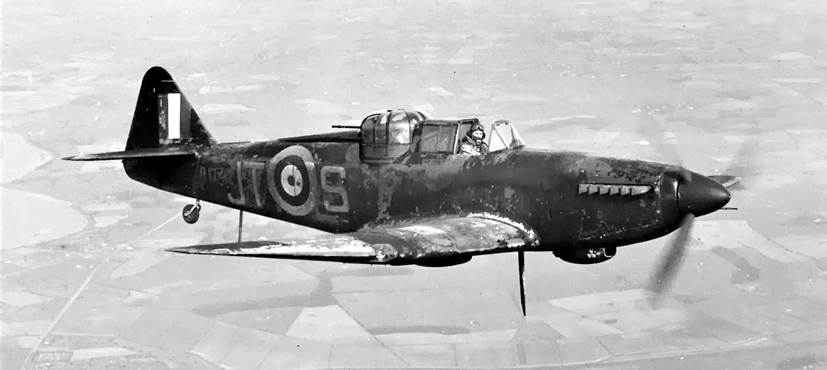
Just look at the state of this Defiant nightfighter. This image definitely raises the question about the finish modellers apply to their kit builds and whether they prefer an authentic weathered finish, or the pristine ‘factory fresh’ representation which has tended to be the norm over the years
Boulton Paul Defiant Mk.I N1801 was only delivered to No.264 Squadron during December 1940 and was therefore not subjected to the savage fighting the squadron was engaged in during the BEF withdrawal from France and the Battle of Britain. The heavy turret used on the fighter was something of a self-contained ‘drop-in’ unit and had its own hydraulic pump for traversing power. The need to reduce drag during transit to combat zones resulted in designers incorporating retractable fairings in front of and behind the turret, which could be retracted using pneumatic jacks to allow the turret to traverse without obstruction when firing. In operation, the pilot had to use his skill and judgement to position the aircraft to best allow his gunner to score a victory, whilst at the same time keeping them both safe from return fire.
The combination of Hughes and Gash continued their combat successes following the transition to night fighting operations and this attractive aircraft would eventually be adorned with five victory markings on the port side fuselage under the canopy. As the war progressed, the team would eventually be split up following Fred Hughes’ decision to convert to the Bristol Beaufighter in 1942 and later on to the de Havilland Mosquito. His victory tally continued to increase throughout the war, as did his seniority – by the end of the war, he was in command of No.604 Squadron and his aerial victory tally stood at 18.5 enemy aircraft destroyed.
As the third and last of our 1/48th scale Battle of Britain 80th Anniversary releases, this magnificent Defiant may not enjoy the same aviation adulation that is bestowed upon either the Spitfire or Hurricane released before it, but it is undoubtedly one of the most interesting British aircraft of the Second World War. This excellent kit also serves as a fitting tribute to the brave crews who took the Defiant into combat during some of the most savage aerial fighting in the history of warfare. This latest kit allows modellers to either finish their model as either an aircraft which fought during the Battle of Britain itself, or one of the machines which help to establish Britain’s nightfighter force. Boulton Paul Defiant A05128A is scheduled to be released in the next few weeks, making this one of the final opportunities to secure your example.
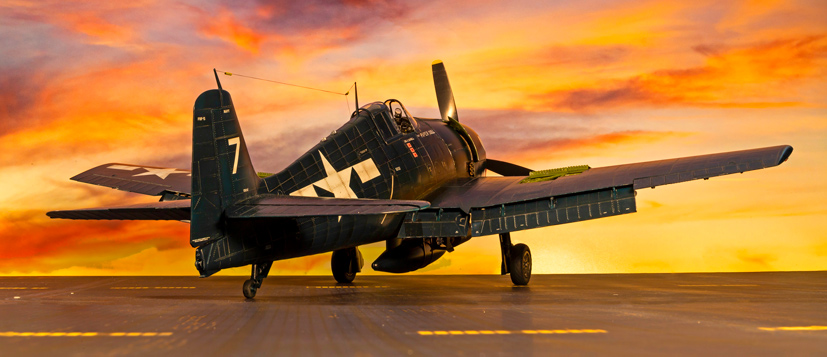
For those modellers who have a number of years invested in building Airfix kits, the 1/24th ‘Superscale’ models first introduced back in the 1970s represent not only a nostalgic trip down modelling memory lane, but also something of a modelling right of passage for the improving modeller looking to show his increasing proficiency. With the original Spitfire, Hurricane and Bf109 incorporating levels of detail which took our modelling to a different level, it seemed like every new release in this scale was irresistible to anyone who had pitted their wits against these impressive large scale kits.
Although the Superscale kits undoubtedly represented the pinnacle of model tooling technology at that time, successive releases in this series continued to push the manufacturing boundaries, as our seemingly insatiable appetite for ever increasing detail had to be satisfied and the resultant models represented the most accurate scale representations of real aircraft. The original Battle of Britain trio were later joined by such kits as the Stuka, Harrier, Mustang and FW190, models which are now viewed as classics and command ever increasing prices on the secondary market.
As the range developed further, the Mosquito, Hawker Typhoon and Grumman Hellcat have continued the proud tradition of these impressive kits, taking tooling design into the digital age and if it were possible, cramming even more detail and scale authenticity into their construction. The new Grumman F6F-5 Hellcat is the latest 1/24th scale achievement of the Airfix design team and faithfully recreates this magnificent fighting aeroplane in model form for all to enjoy. Having said that, anyone who has tackled one of these beasts will attest to the fact that this is an immersive experience and one you really have to commit to. The kit is so detailed that you are sharing an intimate experience with the Hellcat, getting to know everything about its construction in minute detail as you work through the build, learning to appreciate how the designers at Grumman produced one of the most proficient naval fighting machines the world has ever seen.
Young Airfix designer Paramjit Sembhi may only be in his second year with the company, but to many Workbench readers and modelling forum frequenters is already becoming quite the celebrity. Making his mark as a highly proficient product designer by day, he spends many of his evenings and weekends indulging his passion for modelling and amazingly, now has five 1/24th scale Grumman Hellcat builds to his name. His Hellcat builds were a popular feature of our Airfix display stands as events throughout 2019 and at the beginning of this year, but not content with this, he has been at it again – this young man is prolific. His two latest builds have been finished in the remaining scheme options included in the kit he has not previously done, but true to form, he has pushed the boundaries yet again.
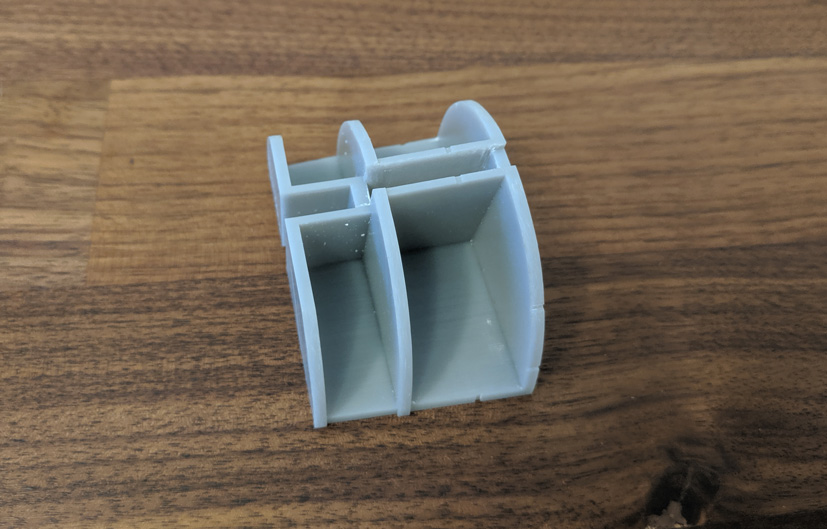
This exclusive series of images have been kindly supplied by Paramjit and feature his latest modelling innovation, which is specifically based around our 1/24th scale Grumman F6F-5 Hellcat kit
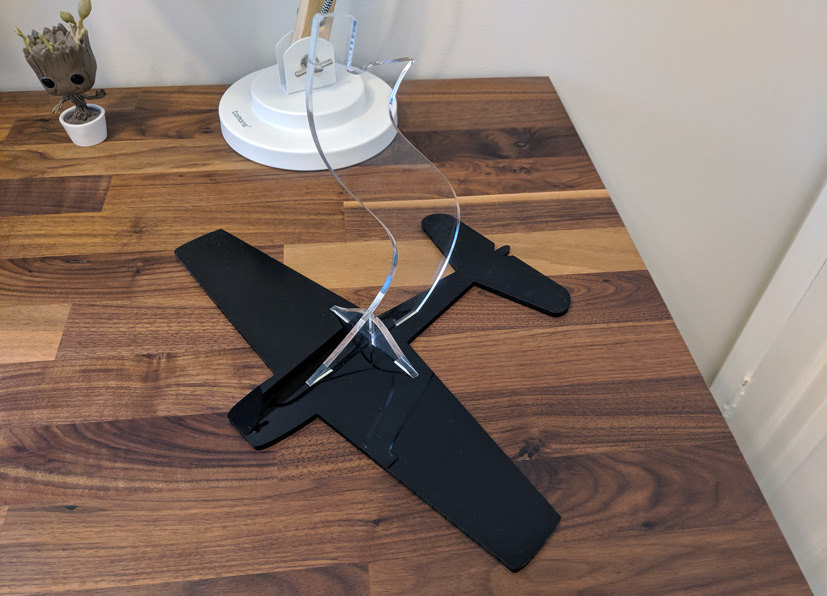
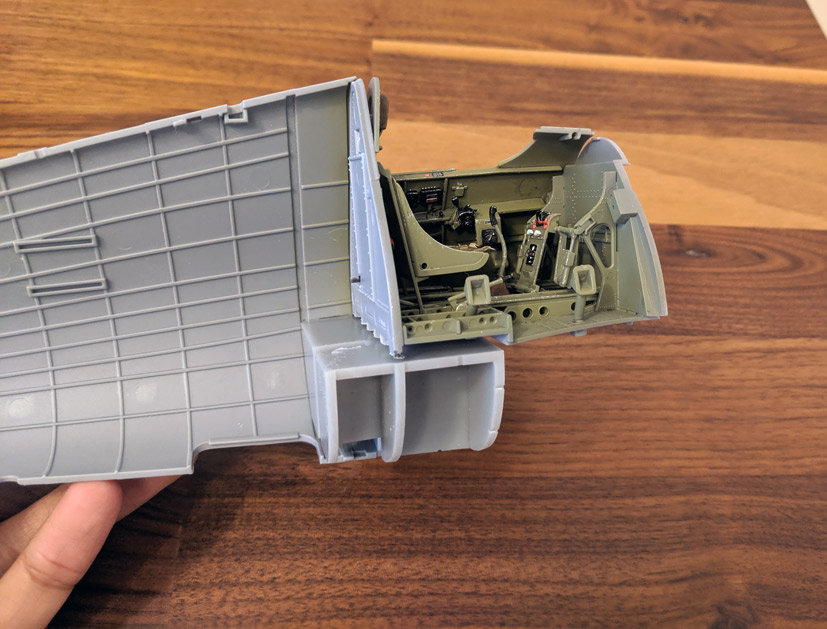
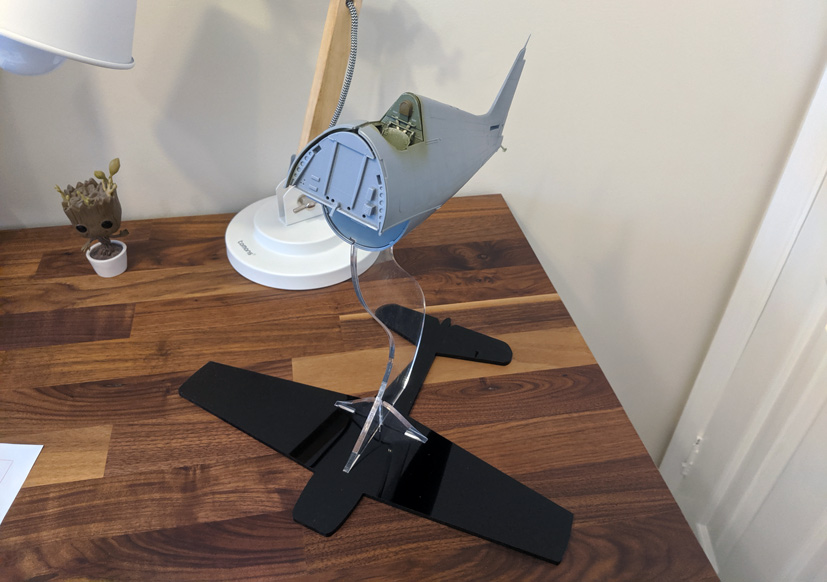
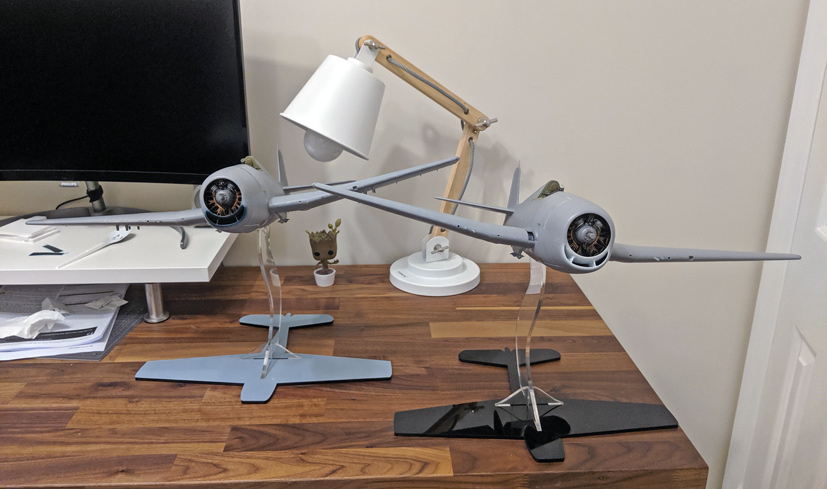
As he has been working on several recent Airfix projects which feature the attractive ‘shadow’ display stands, he wanted to incorporate a similar design in his latest Hellcat builds and for a model of this stature, this was not without its challenges. Designing the stand arms and Hellcat shadow base in his own time, he had the components laser cut to the required shapes and whilst pleased with the results, he knew that if it was to work as intended, he would have to invent something a little more radical for the underside of the model’s fuselage.
Taking his idea to ‘Mr Airfix’, he requested permission to access the Hellcat CAD data files so he could design a cradle section which would allow the model to sit securely on the shadow stand arm. This was granted and he quickly designed the cradle to fit underneath the completed cockpit section of the kit – once completed, he had several of the parts 3d printed and set about incorporating them into the dual Hellcat build. He knew there would be an amount of modelling skill required to make the part fit within the build, but everything went together without too much trouble and most importantly, it was robust enough to securely support this relatively heavy model and one he has invested many hours in – this must have been a fingers crossed moment for him.
With grateful thanks to Paramjit, he has not only allowed us to show Workbench readers the shadow stands and cradle he designed and produced for the 1/24th scale Hellcat kit, but also to exclusively reveal his latest two Hellcat builds, which feature the USS Randolph scheme and the Fleet Air Arm ‘Operation Sunfish’ fighter from March/April 1945.
As if to underline the rugged, no nonsense reputation of the Grumman Hellcat, few US Navy and Marine Corps machines were presented as flamboyantly as some of the American aircraft which operated in the European Theatre. The first F6F-3 Hellcats were presented in the classic US Navy scheme of the time, which was two tone blue upper surfaces with white undersides and pilots were quick to recognise the fighting prowess of their new fighter, proudly displaying their victory tally under the cockpits of their machines. Once the Navy adopted the overall Midnight Blue scheme for their aircraft, it was relatively unusual to find Hellcat units which went into combat with flamboyantly presented machines and certainly nothing as distinctive as the VF-27 ‘Angry cat mouth’ artwork Hellcats, a scheme also available as an option with the release of this latest kit.
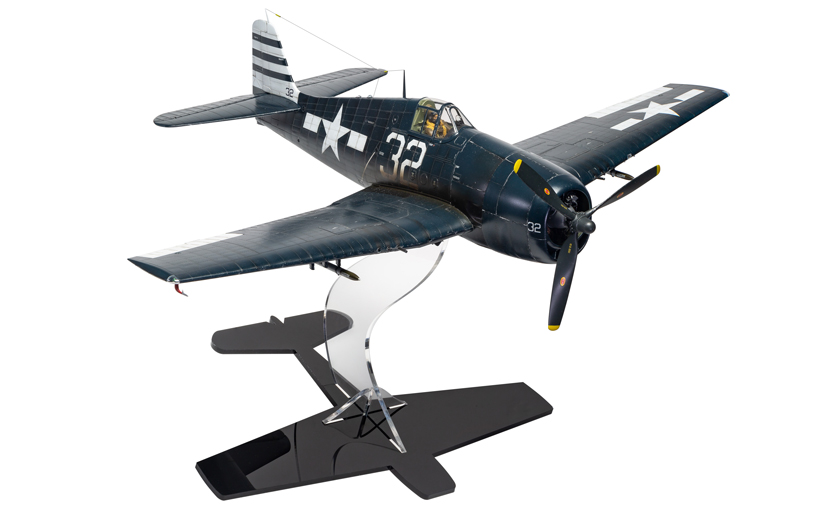
This next selection of images feature Paramjit’s latest Hellcat build and include the impressive shadow stands and anchor modification he created for the project
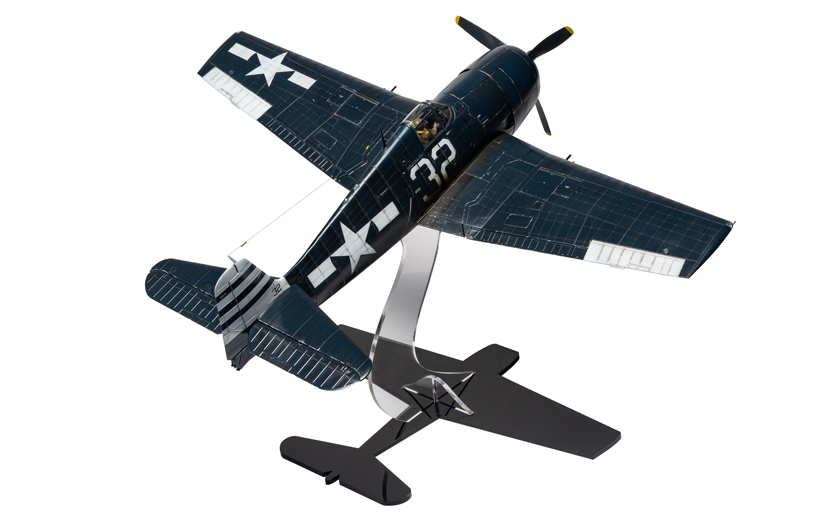
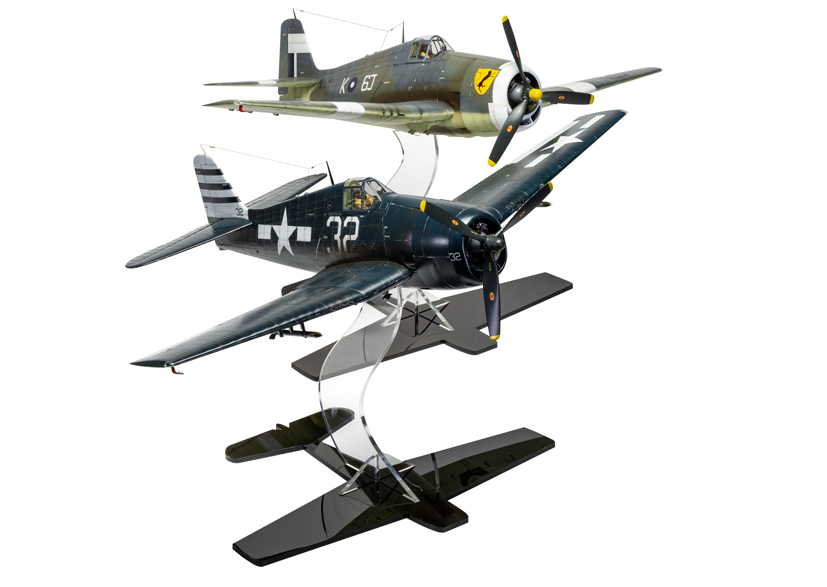
One exception to this general rule were the Hellcats on board USS Randolph, during the final months of the War in the Pacific. Their overall midnight blue scheme was complimented by white coloured ailerons top and bottom, along with four white stripes on their tails. Originally established in January 1943, VF-12 was assigned to USS Randolph in January 1945 and would be heavily involved in the savage island hopping offensives, as American forces prepared for the final onslaught against the Japanese home islands. With overwhelming superiority in men, equipment and supplies, an ultimate American victory was almost assured, however, the desperate resistance of the Japanese at Iwo Jima and Okinawa was cause for real concern, as American causalities were unacceptably high. These offensives also saw the emergence of a devastating new threat which the Hellcats of VF-12 would have to defeat – Kamikaze.
With the Americans now holding a firm superiority of the air, Japanese aerial tactics became increasingly desperate and using any airworthy aircraft at their disposal, would pack them with explosives and launch suicide attacks against the American task forces. Despite facing sometimes obsolete aircraft, flown by inexperienced pilots, the Hellcats of VF-12 were facing new dangers, such as the threat of damage from the exploding aircraft they were trying to bring down, or the fear that multiple diversionary attacks may see one of their fanatical adversaries get through their defensive shield. When not engaged in protecting the fleet against Kamikaze attack, they would either protect carrier strike aircraft, or engage in strike operations themselves. Representing one of the Hellcats at the end of its relatively short but incredibly effective WWII combat career, this scheme marks the aircraft which rose to face this sinister new airborne threat.
As arguably the finest naval fighter aircraft of the war, it was obvious that the fighting qualities of the Grumman Hellcat would come to the attention of other air arms, who were keen to add the aircraft to their own aerial arsenals. Britain was allowed to take a significant number of Hellcats under the vital Lend-Lease programme, with 1,177 aircraft eventually supplied, made up of F6F-3, F6F-5 and F6F-5N variants. The first Hellcats to enter Royal Navy service were actually known as ‘Gannets’, but the naming of US built aircraft was standardised from January 1944 onwards – F6F-3 was referred to as the Hellcat I in Fleet Air Arm service and the F6F-5 the Hellcat II.
It would not only be Hellcats which arrived with British units courtesy of the Lend-Lease programme, but also sometimes the ships they operated from. HMS Khedive was constructed as a US BOGUE class escort carrier and transferred to British operation in September 1943 – these vessels were vital in the final push for victory, as Axis forces were now beginning to yield some of the territorial gains they had made earlier in the war and the Allies needed to keep up the pressure. The Hellcat IIs of No. 808 NAS arrived on the decks of HMS Khedive in early 1945 and would play a significant role in the forthcoming ‘Operation SUNFISH’ and actions against Japanese forces on Sabang Island, as the Allies attempted to force a massed enemy retreat in the region.
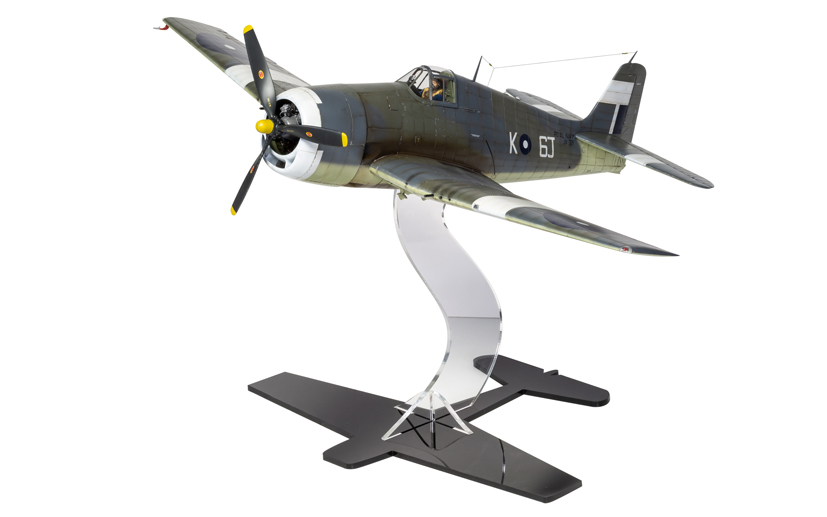
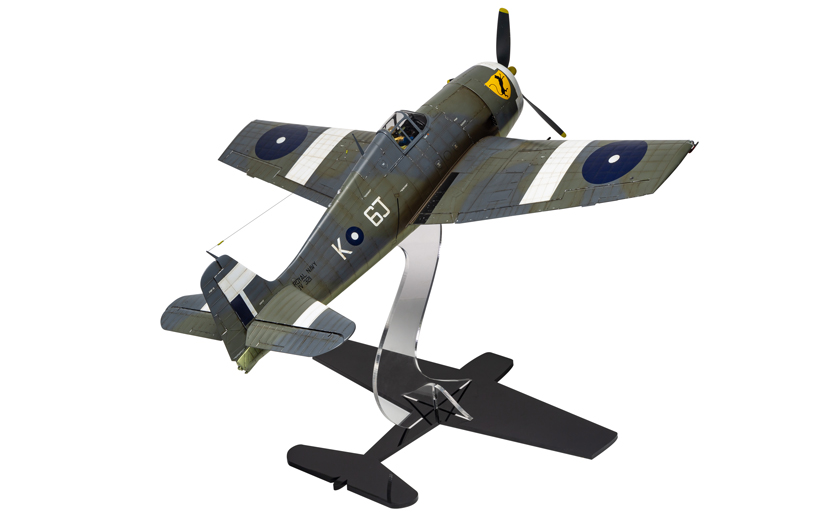
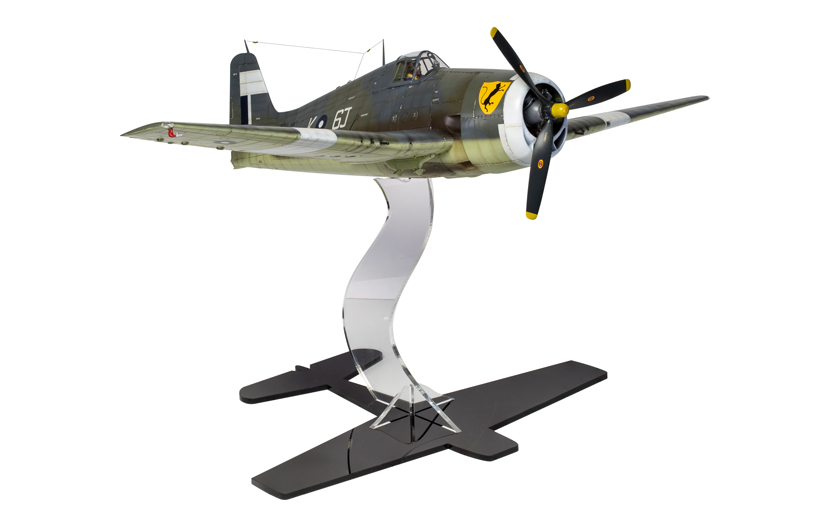
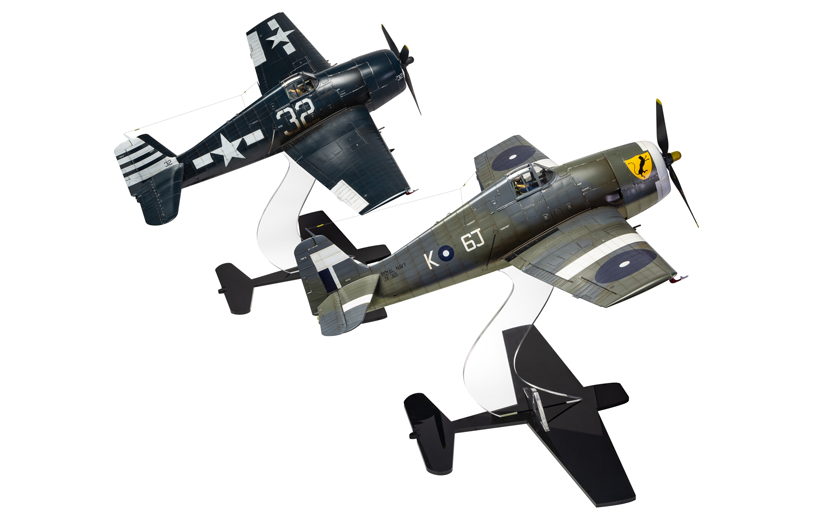
The operation comprised two distinct phases, firstly to gather detailed reconnaissance information of the area, whilst also conducting strikes against enemy shipping, with the second to attack Japanese positions at Emmahaven and Padang. Although Japanese air power in this region was not available in the same strength as that facing American carriers in the Pacific, they still posed a significant threat to the task force and Fleet Air Arm Hellcats would be required to form an aerial shield to protect the ships from attack. The British would end the Pacific War with 52 Hellcat kills, predominantly because they were not facing anything like the enemy aircraft numbers the US Navy were forced to combat, however, British Hellcats provided the Fleet Air Arm with the same rugged naval air asset which was proving to be such a combat revelation for US units.
Following the end of WWII, most airworthy British Hellcats were sent back to the US, in accordance with the terms of the Lend-Lease agreement. The attractive Fleet Air Arm scheme included with the new Hellcat kit will prove irresistible for many British modellers and will result in a particularly attractive display model.
With the last remaining examples of this magnificent 1.24th scale kit waiting to find new homes amongst the Workbench readership, dare you pit your modelling prowess against the mighty Hellcat?
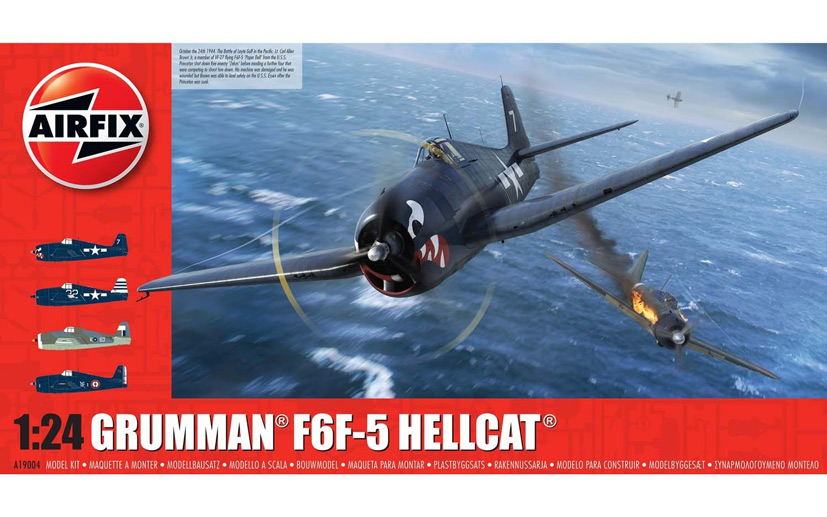
You didn’t think we would be cruel enough to discuss the nostalgia of our 1/24th scale kit range and show you build images of two fantastic Hellcats without giving you the chance to win one did you? Once again thanks to our ever supportive Assistant Brand Manager Sally, we have a pristine example of this impressive kit to give to one lucky reader who will then be able to dive headlong into the world of Grumman’s famous Pacific fleet fighter.
A high profile new tooling announcement made at Scale Modelworld 2018, the Hellcat (A19004) has been a popular addition to our 1/24th scale range of kits. It will also come as no surprize that its release has resulted in the Airfix team being inundated with an avalanche of consumer suggestions for future subjects they feel would be perfect additions to this ever popular series – no suggestion is a bad one, but we are afraid you will just have to wait and see what the future holds on that score!
Despite its relatively late combat introduction, the first Japanese Mitsubishi Zero fighters began falling to the guns of US Navy Hellcat pilots in October 1943 and over the course of the next two years, the Hellcat would post an unequalled combat success ratio of 19 to 1. It was responsible for an astonishing 75% of all aerial combat victories claimed by US Navy pilots during WWII and made ‘Aces’ of no fewer than 305 US Navy pilots – this is an aircraft of unrivalled combat pedigree.
To be in with a chance of winning this magnificent Hellcat kit, simply head over to the Airfix Competitions Page of our website, where you will find all the relevant competition details, along with a simple Workbench edition 125 related question for you to answer. The competition will close on Tuesday 26th May so everyone has plenty of time to have a go – our lucky winner will be selected at random from the list of correct entries and we will announce their good fortune in the next edition of Workbench, which is due to be published on Friday 29th May.
Good luck to all who enter and remember, you have to be in it to win it!
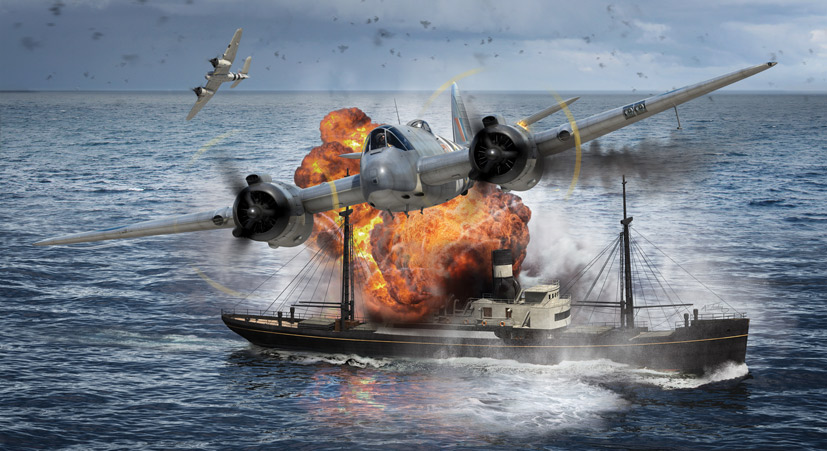
It seems as if this edition is dominated by some of the most interesting British aircraft of the Second World War and how they have made their way into the Airfix range over the years. Our final aviation subject is a real brute of an aircraft and one which was charged with performing some of the most demanding operational roles of the war, the mighty Bristol Beaufighter. A heavily armed and extremely rugged aeroplane, the Beaufighter was originally conceived as a long-range fighter, but would prove such an effective design that it was considered a true multi role aircraft. Synonymous with the hazardous anti-shipping strike missions undertaken by Coastal Command during WWII, Beaufighter pilots were particularly aggressive in their tactics, earning a fearsome reputation amongst their Axis foes.
The Beaufighter has long been a favourite with the Airfix modeller, first appearing in the range back in 1958, but coming to iconic prominence with the release of the ‘Dogfight Doubles’ set in conjunction with a Messerschmitt Bf 109G towards the end of the 1960s. This set will be familiar to millions of modellers and gave us all an appreciation of the rugged qualities of this magnificent aircraft.
As our Workbench blog was still in its infancy, we brought readers details of a new tooling project featuring the Bristol Beaufighter, bringing this classic aircraft up to the latest standards of design and production in the world of scale plastic modelling and as you might well imagine, it proved to be an extremely popular development. The first release from this tooling disappeared from model store shelves in no time at all and led to calls for another run from this fantastic new kit – we are delighted to confirm that this modern classic has now been reissued and will be with us later in the year. It is being released with the original and extremely popular scheme options issued previously, but as we have never reviewed these within the blog, it’s high time we rectified that situation now.
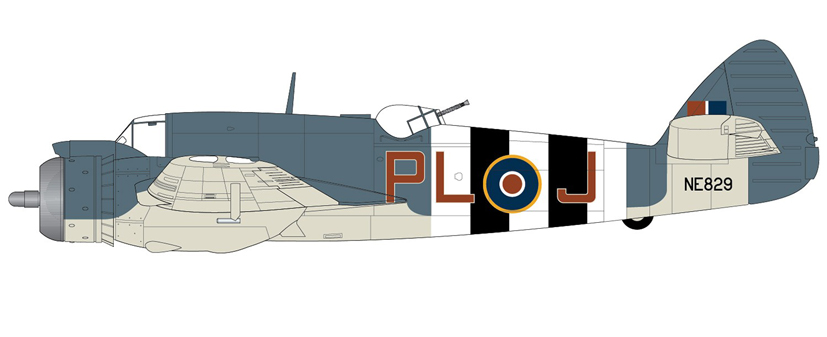
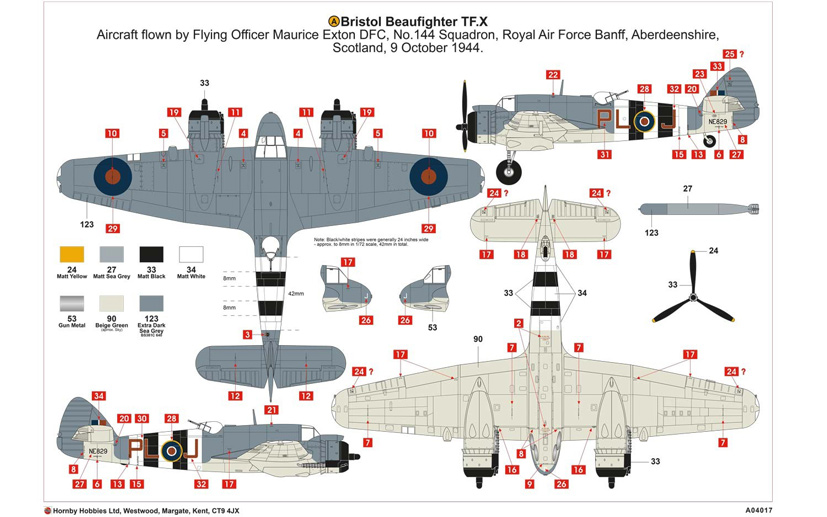
As one of the most capable twin engined aircraft of WWII, the Bristol Beaufighter was originally developed as a heavy fighter variant of the company’s Beaufort bomber, already in service with the Royal Air Force. The first examples were pressed into service as nightfighters and whilst the aircraft proved to be a significant improvement over existing types, there was more to come from the mighty beau. As the aircraft received successive upgrades to make it more powerful and capable of carrying a greater array of offensive weaponry, the Beaufighter became a successful multi-role aircraft, with a particular flair for mounting hard hitting anti-shipping strikes into the North Sea, preventing Axis shipping from moving supplies back to Germany.
It was during one of these missions that Banff based Flying Officer Maurice Exton was awarded a DFC for outstanding flying skill and determination in the face of the enemy. Flying Beaufighter NE829 on 9th October 1944, Exton and his squadron attacked a large convoy of enemy vessels off the coast of Norway, but his aircraft was hit by heavy flak from the ships. Damaging the aircraft’s flight controls, causing it to almost flip onto its back, Exton wrestled with the Beaufighter’s control column, bringing it back straight and level, before immediately pressing home his attack. He then nursed the damaged aircraft back to Banff, where he managed to land safely. Inflicting heavy damage on the enemy convoy they attacked, this incident says as much about the determination of the airmen of Coastal Command as it does about the resilience of the Bristol Beaufighter.
Perhaps the definitive variant of the Beaufighter and certainly the most heavily produced was the TF.X, a two seat torpedo fighter, which was known colloquially as the Torbeau. With a combination of rockets, cannon and 18 inch mark XII torpedo, these rugged aircraft would attack shipping at high speed and at low level, often with rocket firing Beaufighters drawing the anti-aircraft fire of the vessels, allowing the torpedo equipped aircraft to make their attack runs more effectively. Often attacking with large numbers of aircraft, these savage attacks began to take a heavy toll of Axis shipping and should Luftwaffe fighters join the action in an attempt to protect the convoy, they would find the heavily armed Beaufighter more than capable of looking after itself.
These highly effective coastal strike operations, launched from the exposed northern coast of Aberdeenshire, made a significant contribution to the Allied war effort in the final few months of the Second World War and increased the pressure on Germany’s ability to keep fighting. Knowing that Germany had to transport iron ore and other commodities of war through the North Sea to German held ports, the work of the Banff Strike Wing was of significant strategic importance, effectively starving the German war machine into submission. Operating in extremely harsh conditions and spending many hours flying over open water, pilots must have certainly appreciated the rugged reliability of the Beaufighters and Mosquitos which flew from Banff and the committed ground crews who kept their aircraft serviceable.
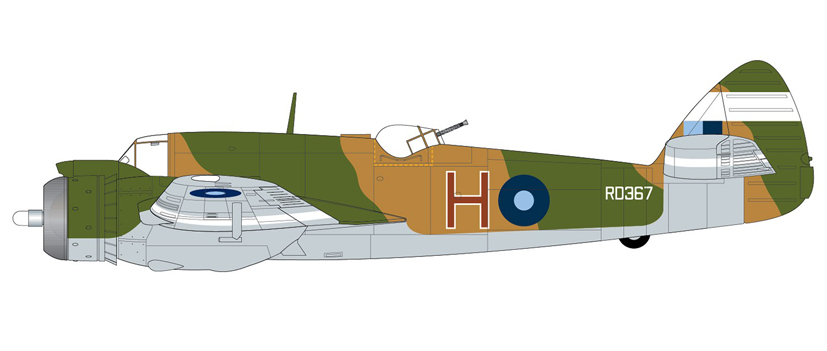
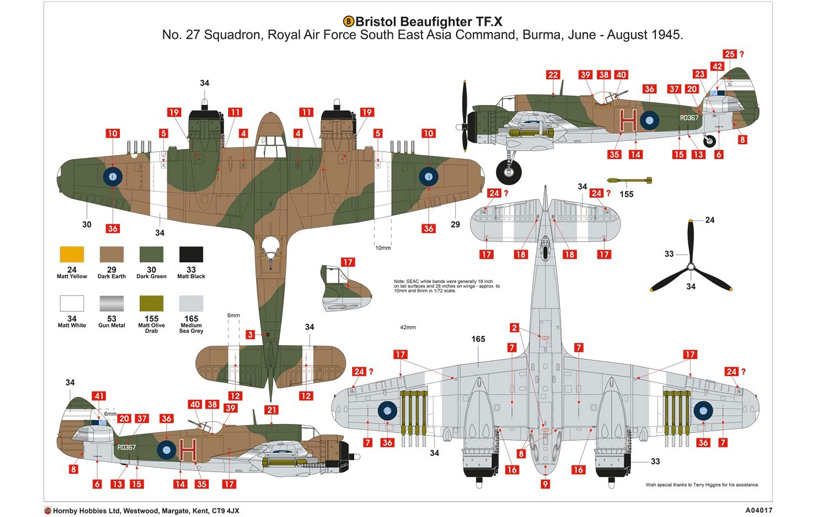
Possibly underlining the main reason why this particular kit has proved to be so popular, is it possible for two Beaufighter schemes to be so different? This magnificent second scheme represents one of the many Beaufighters which saw service with the RAF’s South East Asia Command, where the rugged attributes of the aircraft were put to very good use against Japanese forces in this theatre. Rocket equipped Beaufighters first began equipping SEAC squadrons from the end of 1943 and embarked on an aggressive campaign of anti-shipping and ground attack sorties which were intended to strangle the Japanese supply lines. Adopting the aggressive flying tactics which became the staple of Beaufighter operations, these missions quickly reduced Japanese seaborne supply channels to nothing more than an ineffective trickle of vessels and consequently forced the Beaufighters to look inland for potential targets.
Searching for targets of opportunity over vast expanses of Jungle must have been particularly demanding and a real strain on the senses for the average SEAC Beaufighter pilot. When they did find targets, the crews immediately had to swing into action, destroying the target before it could be concealed in the foliage and with the very real danger of colliding with friendly aircraft which were also wheeling about in the same airspace in this combat melee. In the back of their minds, they also knew that they would be shown little mercy if their aircraft suffered damage and they became guests of the Japanese. These attacks proved so effective that Japanese troops hated the Beaufighter and reputedly referred to the aircraft as ‘Whispering Death’ – one thing that is certain is that these missions seriously reduced Japanese fighting effectiveness and must have made the daily lives of the troops ever more uncomfortable.
Providing the crews with the reassurance of multi-engined operation, anything from light shipping to railways were to become regular targets for SEAC Beaufighters, however, an ever decreasing availability of targets saw missions being driven deeper into the jungles of Burma. RAF No.27 Squadron would also be required to undertake air-jungle rescue missions for downed airmen, a role which the unit would perform until the end of the war.
A development which will be welcomed by many Workbench readers, this re-released Bristol Beaufighter TF.X kit (A04019) is due to arrive in model stores over the next few weeks.
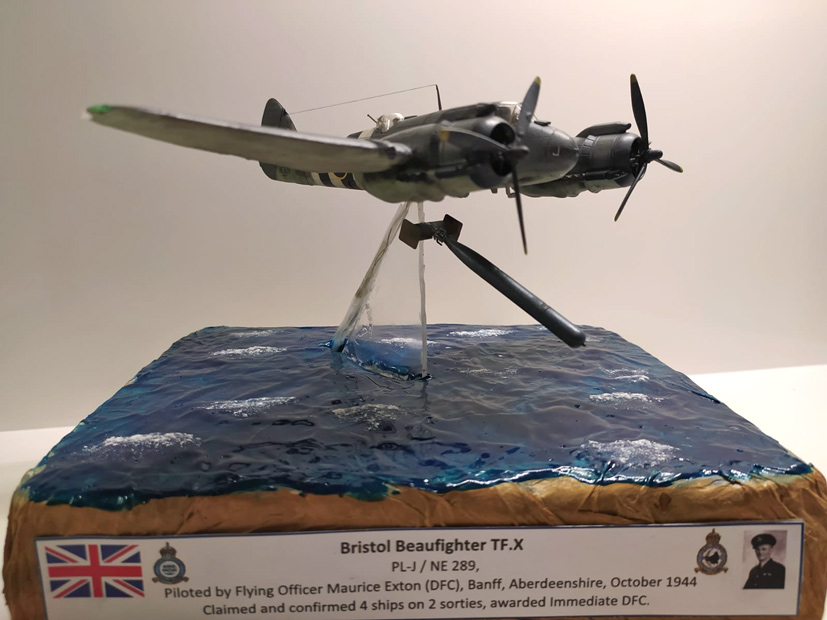
We are always more than happy to feature the modelling talents of Workbench readers within our blog, especially when the project is both linked to one of our related articles and is something just that little bit different from a modelling perspective. That is certainly the case with the 1/72nd scale Bristol Beaufighter build we feature here, the pictures of which were kindly sent in by Christopher Ellul, one of our Maltese readers and a previous contributor to the blog. Back in 2018, we featured Chris’ heavily battle damaged Hawker Hurricane build, which was depicted limping back to the UK following combat over France – it also featured a diorama stand which replicated the White Cliffs of Dover. His latest project features one of the original releases of the Beaufighter kit we looked at earlier, but one which incorporates a rather impressive build innovation.
Chris told us that the inspiration behind this build started with the purchase of the kit, a purchase which he attributed to the spectacular box artwork – he simply could not resist it! As with many of his projects, inspection of the box contents and supporting information led to a period of further research, with the lead Coastal Command scheme proving particularly fascinating for him. He was determined to produce a fitting scale tribute to the bravery of the RAF’s Coastal Command strike crews and in particular to pilot Maurice Exton DFC. He also decided that this would be the model where he would try out his desire to incorporate little electric motors into a build of this scale, so the search was on!
As in many cases, a few hours of research prior to undertaking a build project can pay great dividends when it comes to the finished model and that certainly proved to be the case here. With only a limited amount of space available in the engine nacelles, Chris set about scouring the internet for some small electric motors which were small enough to fit in the engine nacelle of the kit, but produced enough power to turn the props. What he came up with were replacement motors for a camera drone and once they arrived, he set about modifying the kit to accept them. His intention was to retain the engine detail contained in the kit if at all possible, but to have the propellers turn at the flick of a switch, using 2 AA batteries as the power source.
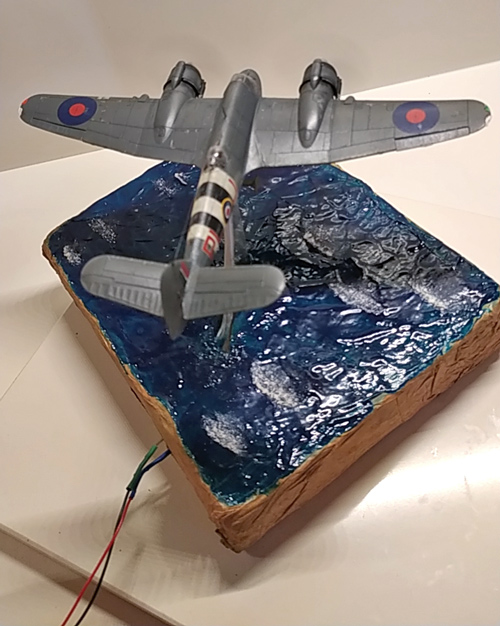
Not your average model build. This selection of images show how Chris went about producing his ‘moving’ Bristol Beaufighter tribute build and how effective it looks when the propellers are turning
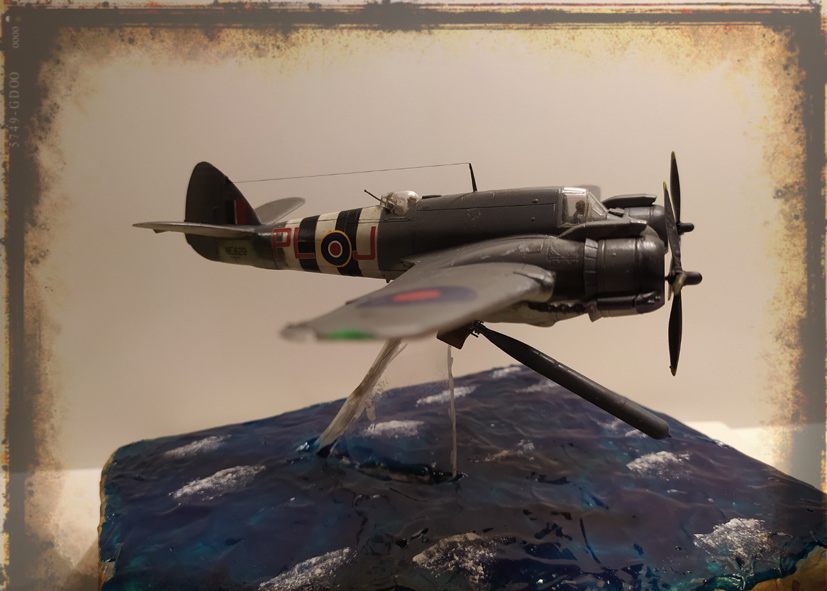
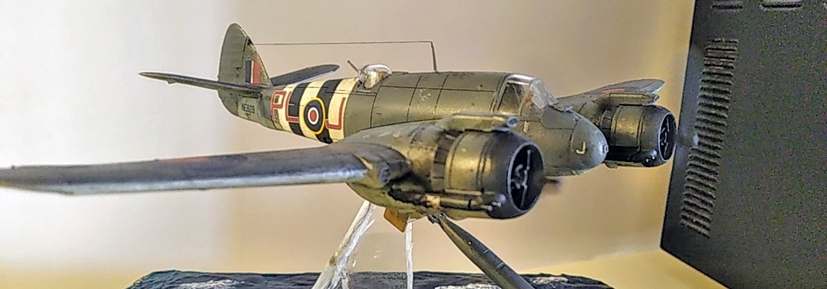
One of the major problems Chris had to overcome was the heat which was generated by the motors was in danger of damaging the plastic which surrounded them and potentially warping the kit. He overcame this by leaving enough space for heat resistant tape to be applied in the affected areas and with the engines only being used for a relatively short period, this proved to be a more than adequate solution. As the model was being finished in flight configuration, not using the main undercarriage legs left enough space for the engines to be fitted, with the wires running through the wing and down through the fuselage of the kit, affixed to the rear of a clear plastic stand and on through the diorama base.
The effect was finished by a presentation display base which featured a representation of ocean at the point of torpedo release, a very dramatic effect indeed. Chris told us that he never likes to finish his models to look like pristine museum pieces, as they were fighting machines first and foremost. The presentation aesthetics of warplanes was never a concern to crews flying them during wartime operations, so weathering is always a feature of his own model builds. With the final addition of a suitable description plaque, we think you will agree that Chris has obtained some really pleasing results – it must also look absolutely fantastic with the propellers turning.
We would like to thank Chris for sending in these fabulous pictures and for spending the time with us to discuss this project. We very much look forward to seeing where his modelling imagination takes him next.
We are afraid that’s it for another edition of Workbench, however, we will be back as usual in two weeks’ time with a further selection of Airfix modelling delights for your enjoyment. If you have any suggestions for subjects you would like to see covered in a future edition, please use this workbench@airfix.com link to contact us.
In between new editions of our blog, the Airfix conversation continues over on our Airfix Forum Worbench thread, with further discussions taking place on both the official Airfix Facebook page and the Airfix Twitter channel - please do get involved in the discussions and let us know what you think about Workbench.
Whenever you decide to visit, the Airfix website is always the place to be for all the latest model availability information, previous editions of our blog, a selection of modelling tips and much more.
The next edition of Workbench is due to be published on Friday 29th May, when we will have more interesting features from the world of modelling.
On behalf of the entire Workbench team, thank you for your continued support our Airfix blog.
The Airfix Workbench Team
© Hornby Hobbies Ltd. All rights reserved.

