

Welcome to this latest edition of Aerodrome and our regular look at the fascinating world of aeroplanes and the historic aviation scene in the UK.
For aviation enthusiasts all over the country, this has to be considered the most exciting weekend of the year - the start of the 2022 Airshow season. Like thousands of others, I will be heading down to Old Warden this coming Sunday to take my place amongst the masses who will be hoping for good weather and exciting displays, as we mark the start of this year’s Airshow season, with the Shuttleworth Collection once again taking the honour of staging the nation’s first event. Our social media team will be sharing images in real time on the day if everything goes to plan and I will be gathering content for a future edition of Aerodrome and a review of what we hope will be a spectacular start to the Airshow season.
For this latest edition of Aerodrome, we have something really special to bring you, images and review details from an exclusive photography event which recently took place at a former Royal Air Force station in North Yorkshire. In search of an early season aviation fix, I joined a small group of photographers at Leeds East Airport (the former RAF Church Fenton) for an afternoon and evening photoshoot with a rather enigmatic aviation subject, a beautifully restored former Fleet Air Arm Sea Harrier FA2. Join me for what turned out to be a truly memorable occasion and a celebration of an aircraft which is remembered as ‘The last all-British fighter’.
Although we are covering the history of the Royal Navy’s Sea Harrier in this latest Aerodrome blog, our photographic subject is Sea Harrier FA2 ZH798, the aircraft which was the star of this recently attended photographic event.
As the nation is currently commemorating the 40th anniversary of the Falklands War and one of the most significant periods in the modern history of the British nation, it is somehow fitting that the subject of this latest Aerodrome blog is an aircraft which secured its unrivalled fighting reputation during those dangerous and worrying times. This weekend forty years ago, the British Task Force in the South Atlantic had started flying operations in support of the 200 mile total exclusion zone they had established around the Falkland Islands, a restriction which included the aircraft and ships of all nations. If this were not significant enough, the RAF’s first ‘Black Buck’ raid was mounted against Port Stanley Airport 40 years ago this weekend, in addition to Royal Navy Sea Harriers mounting strike attacks against targets on the Islands. If the Argentinean invaders had any doubts at that time about Britain’s resolve to retake the Islands, this weekend 40 years ago served as a significant statement of their intent.
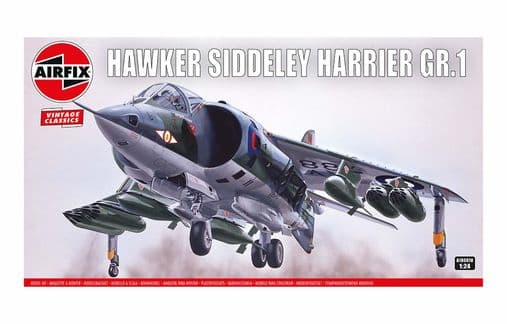
The Sea Harrier was developed during a time of significant restructuring for the Royal Navy and a general reduction in both the size of the fleet and the size of the vessels within it. It was a navalised variant of the famous Hawker Siddeley Harrier which had entered Royal Air Force service in 1969 and had proved to be a resounding success - in fact, the unique Harrier was the envy of the aviation world at that time and as the Navy had been planning to introduce a V/STOL aircraft for some time, so this seemed like the perfect fit. With a requirement for an effective fixed wing fleet defender for their new ‘Through Deck Cruisers’ (small aircraft carriers, by any other description), they tendered for a navalised variant of the successful Harrier, an aircraft which would have quite a different role profile from the aircraft already in RAF service.
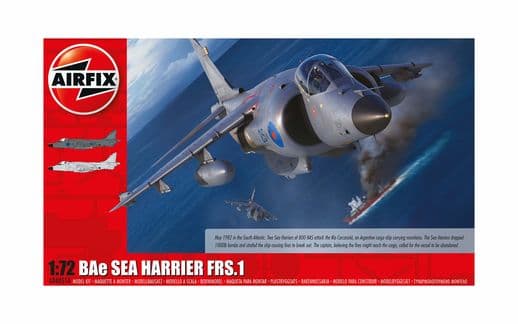
Entering Fleet Air Arm service almost ten years after the RAF received their first Harrier, the Navy’s Sea Harriers were known as the FRS.1, a direct reference to their capabilities and intended operational role profile. First and foremost, this was a capable fleet defender, dominating the airspace around its home carrier and capable of dealing with any aviation threat it faced. It was also capable of performing the secondary roles of fleet reconnaissance and the delivery of both air to sea and air to ground munitions, making this an incredibly important naval aeroplane and arguably, one of Britain’s most flexible military assets.
The Fleet Air Arm received their first production Sea Harrier FRS1 in 1979, with the first operational squadron working up on the new type from March the following year. It is incredible to think that the aircraft was only declared fully operational in 1981, just months before Sea Harrier pilots would be fighting in the South Atlantic, as a major component of the British Falklands Task Force.
As we now look back at the Falklands War in this 40th anniversary year, it really is clear to see just how perilous a situation this was for Britain and how history could have played things out very differently. Significantly, it seems as though despite all their posturing and provocation in mounting their amphibious assault, the Argentineans didn’t really want war and were surprised and dismayed to watch Britain preparing and then dispatching a powerful naval Task Force to re-take the Islands. Britain itself was in a period of austerity, with cuts to the armed forces making any response to events happening more than 8,000 miles away very much touch and go, however, their military were extremely professional and well trained and to them, if there was a will, there was also a way.
Such a pleasant surprise, finding this beautifully restored Sea Harrier FA2 just over an hours journey from my home was a real treat and this special event allowed those in attendance to capture some memorable images.
Out into the bracing Yorkshire air, the Sea Harrier would be the sole subject of our attentions on the day.
Britain’s naval Task Force consisted of 127 vessels, headed by the two aircraft carriers Hermes and Invincible and providing the crucial air defence of this force were just 20 (initially) of the Fleet Air Arm’s Sea Harrier jets, the navalised variant of the VSTOL Harrier which had been classified as fully operational for several months at that point. As the force left Portsmouth and steamed for the South Atlantic, how could this small force of Sea Harriers possibly stand a chance against an Argentinean air armada which numbered at least 100 serviceable aircraft and could possibly be as many as 170 in a worst case scenario. The odds facing them were arguably much greater than those facing the ‘Few’ of the Battle of Britain some forty-two years earlier.
Despite the fact that Sea Harrier pilots were facing odds approaching 10:1 against them when heading down to a potential Falklands showdown, they were supremely confident not only in their own abilities, but also those of their aircraft, one which was equipped with the latest US produced AIM-9L Sidewinder air to air missile. In combat trials during their exhaustive training, Fleet Air Arm pilots flying the Sea Harrier against all of the current Western jets in service proved the excellent fighting qualities of their aircraft, and under the most rigorous of controlled mock combat situations, managed to post some impressive results. Against such aircraft as the Phantom, the Sea Harrier managed to ‘out-combat’ the Phantom by a score of 24:1 and even when pitted against the US F-15, an aircraft which was widely regarded as the ultimate air superiority fighter of the day, the Sea Harriers were reputedly coming out on top by a score of 3:1.
Crucially, Sea Harrier pilots were completely aware of their aircraft’s strengths and weaknesses and were determined to give a good account of themselves in combat. As for the Argentinean military, they had a huge respect for the Sea Harrier and knew their airmen would be coming up against an extremely capable and potentially deadly aviation adversary.
As the world now knows, Britain’s Sea Harriers would acquit themselves extremely well during the Falklands War, posting combat success ratios which had not been seen since the Pacific battles of the Second World War. Reflecting on it’s exceptional showing, the combat experiences of Sea Harrier pilots flying in the South Atlantic were later fully evaluated and any performance deficiencies they experienced discussed - even at that stage, the Navy were looking at how the operational effectiveness of their impressive fleet fighter could be improved further. Of greatest concern was the performance and ongoing capability of the fighter’s Blue Fox radar system, which had had its detractors right from initial adoption. In addition to this, general target acquisition effectiveness and more effective weapons options, allied to a general armament future-proofing would see the next variant of the Sea Harrier being a much more capable fighting aeroplane.
Official approval for the upgrade of Britain’s Sea Harrier fleet was given in 1984 and development work on the Navy’s new fighter started straight away. Rather than simply procuring newly-built aircraft, the programme involved the upgrade of existing airframes, although by the end of the production run, eighteen completely new aircraft would also be manufactured. By the time the Fleet Air Arm took delivery of their first Sea Harrier FA2 in 1993, it was a much improved aircraft over its predecessor, even though it would never eclipse the FRS.1s unequalled combat record.
At the heart of the new aircraft was a powerful new variant of the Rolls Royce Pegasus engine, one which was developed specifically for this naval variant of Britain’s famous V/STOL aircraft and providing it with even greater power output. Perhaps the most significant upgrade was the adoption of the nose mounted GEC-Marconi Blue Vixen pulse-Doppler multi-target radar unit, equipment which was regarded as the most advanced of its kind anywhere in the world at that time. This powerful unit allowed Sea Harrier pilots access to eleven operational modes and the ability to simultaneously track and engage individual targets at beyond visual range, all without alerting the potential adversary that they were being targeted.
If the pilot decided to engage, he would be firing the new AIM-120 Advanced Medium Range Air-to-Air Missile (AMRAMM), the latest missile of its kind and significantly allowing the Sea Harrier FA2 to be the first British aircraft to have this capability. In addition to this, the new Sea Harrier’s impressive list of new equipment included better displays for the pilot, a new navigation system, more effective defensive technologies and better communications equipment. The Sea Harrier was already a unique aeroplane, but with these much enhanced capabilities, the FA2 variant was something very special indeed. The adoption of the new Blue Vixen radar gave the aircraft a distinctly different front profile and a not unattractive ‘bulbous’ nose, which makes it easy to distinguish this final variant from its Falklands defending predecessor. With the operational flexibility of a helicopter and the capabilities of one of the world’s leading air defence fighters, the Sea Harrier FA2 was the most capable fleet defender the Royal Navy had ever deployed and will be remembered as the last all-British fighter aircraft.
Interestingly, the rear section of the FA2 is around 35cm longer than its predecessor, but rather than simply extending this section of the upgraded FRS.1 jets, each one was fitted with an entirely new tail section, with this additional space required for additional avionics equipment. From an armament perspective, it is also interesting to note that the FA2 did not actually feature any built-in armament, even though its defensive and offensive capabilities were greatly enhanced. All weaponry had to be attached to the aircraft, including rockets for short and medium range targets (AIM-9L/M Sidewinders and AIM-120 AMRAAMs), two underbelly 30mm Aden cannon pods, Sea Eagle anti-shipping missiles and various bombs, external fuel tanks and air to ground rocket pods.
Of the Sea Harrier FA2 aircraft which eventually entered service, thirty-one were actually upgraded variants of the existing FRS.1 airframes, with a further eighteen being newly constructed aircraft in their own right. For an aircraft which possessed such impressive capabilities, it came as something of a surprise when the type was withdrawn from service in 2006, with most remaining aircraft having less than ten years on their airframe lives. The decision was based around the expense of procuring the Sea Harrier’s replacement, the Lockheed Martin F-35 Lightning II, which was scheduled to come into service by 2012, but we all know how that plan went!
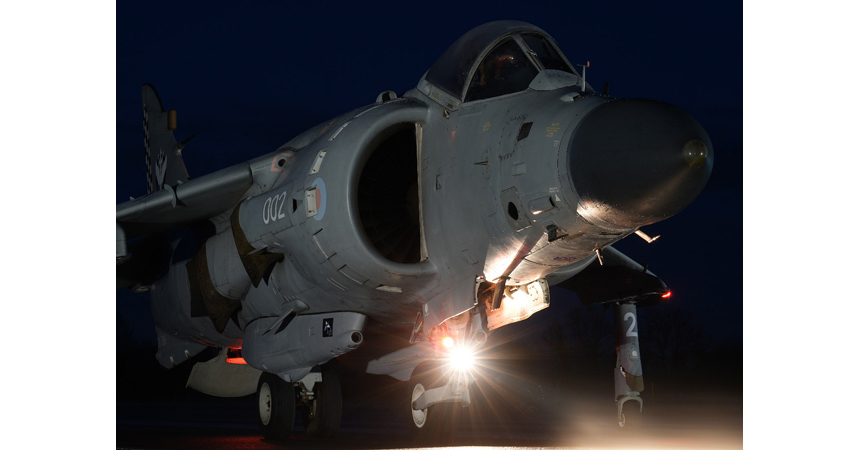
The aircraft which is now residing inside one of the former RAF Church Fenton hangars at Leeds East Airport is Sea Harrier FA2 ZH789, the third new build Sea Harrier FA2 constructed and delivered to the Fleet Air Arm on 13th March 1996. She went on to operate in the colours of No.801 Naval Air Squadron, wearing the fuselage codes 002, but having made her last flight in 2005, was sent for storage at RAF Shawbury in Shropshire. By August of 2007, she was on the move once again, this time being one of three Sea Harriers delivered by road to the School of Aircraft Handling at RNAS Culdrose. There, the aircraft would be used to train deck handling students in the finer points of positioning aircraft on the deck of an aircraft carrier, using the facility’s ‘Dummy Deck’ to provide them with as real an operational experience as possible.
By 2020, the aircraft were no longer required and were made available for tender by the Ministry of Defence. The aircraft were open to bids from anyone, however, there was a stipulation that the successful bidder must have experience in the dismantling and road transportation of aircraft, in addition to holding all the required associated accreditations. The Jet Art Aviation Company were successful with their bid and in January 2021, commenced the dismantling operation of the three Sea Harriers at Culdrose, ready for their trip to their main facility at Thorpe Wood and a new home up north!
Once the team had had a chance to fully inspect the three aircraft, they discovered that ZH798 was actually in impressively complete condition and in really good order. One of the final UK new build 2nd generation Sea Harriers to be constructed, she was only delivered to the Fleet Air Arm in 1996 and when she retired, had been in service for less than ten years, accruing a modest 1,558 airframe flight hours in the process. Possessing both low fuselage and wing fatigue ratings, it was also discovered that the Rolls Royce Pegasus 106 engine was in a similar excellent condition, with many hours of life still left in it. Armed with all this encouraging information, the team felt that it was too soon to consign this magnificent aircraft to museum display and started to think about the possibility of attempting something which was much more ambitious for her.
On 1st February 2021, ZH798 arrived at the former RAF Church Fenton airfield, now Leeds East Airport and access to impressive hangarage facilities arranged through one of JAAs close aviation contacts. Once safely under cover, the Sea Harrier was reassembled and returned to her former No.801 NAS markings, the ones she was wearing when she made her last flight in Fleet Air Arm Service. With the team having already returned a former RAF Harrier GR.3 back to ground running condition, the team were determined to bring this latest aviation classic back to life once more and to this end, embarked on an exhaustive programme of assessment and testing. Their efforts were finally rewarded on 27th September that same year, when the aircraft triumphantly powered up her engine on two separate occasions and significantly, completed a 6 minute taxi test under its own power, around the perimeter tracks at Leeds East Airport, a stunning engineering achievement for all concerned.
These first engine runs did highlight a number of issues which would require further attention and it would be the 15th October before the Sea Harrier’s Pegasus engine fired into life once again. On this occasion, two more ground runs were completed, along with a more ambitious 16 minute taxi test, one which was professionally filmed and later shared by the team across social media. The secret was out, Yorkshire had a working Sea Harrier!
For the Jet Art Aviation team, the thrill of this work is to actually realise their dream of bringing these magnificent aircraft back to life and having succeeded in their quest, it’s time to make someone else’s dream come true. If you have ever dreamt of owning your own 1:1 scale Bae Sea Harrier FA2, this could be your one and only opportunity to secure a pristine, ground running example. If this is something you might be interested in, please do get in touch with the Jet Art Aviation team, who would be only too happy to discuss the finer points and give you all the information you might need, because believe it or not, this beautiful aeroplane is FOR SALE!
I am certain that I am not the only aviation enthusiast who desperately searches for interesting aviation experiences to enjoy in advance of any new Airshow season, so when I saw details of this Sea Harrier photoshoot opportunity advertised, I registered my interest straight away. The event was made all the more appealing due to the fact that it was taking place at the former RAF Church Fenton, an airfield which was only just over an hour’s drive from my home - an aviation related event in the north of the country, well I never!
Thankfully on this occasion, the aviation gods were on my side and I was one of the lucky few to be granted a place for the event and excitedly headed for Yorkshire and the prospect of photographing an aircraft which had been receiving quite some publicity over the previous few months. Even though the aircraft is maintained in ground running condition, we were informed at the outset that it would not be firing up its engine during the event for a number of reasons, but what we were promised was unfettered access to this stunning aeroplane in at least three separate locations on the airfield. This also included photographic opportunities with suitably attired reenactors and if weather conditions were favourable, the prospect of some stunning sunset shots - all we had to do now was hope for good weather.
From past experiences which have not always been good, I have learned that Yorkshire and the weather can have something of a fractious relationship and whilst many millions of people would describe this fair county as ‘God’s Country’, it can often suffer at the hands of Mother Nature. Although we all expected conditions to be cold on the wide expanses of a Yorkshire airfield at this time of year, we could never have imagined the variety of conditions we experienced during our time on the airfield. During the course of the afternoon and early evening, we had sunshine, heavy cloud cover, a violent hail storm, flash flooding and back to glorious sunshine once more - only in Yorkshire!
The sun shines on the righteous - Even the sun was interested to take a late afternoon look at this beautifully restored Sea Harrier
The event itself was centred around three locations, the aircraft’s hangar, a position outside on the aircraft ramp in front of the hangar and finally, a position on the far side of the airfield which offered the best opportunity for sunset shots, if conditions were favourable. Our pilot reenactor accompanied us to the far side location and for quite some time during the evening, he sat in the closed cockpit of the naval fighter with nothing but his own thoughts for company. Conforming to the whims of the gathered photographers, he must have had the patience of a saint.
From a photographer’s perspective, the event was fantastic and we were given ample opportunities to let our creative juices flow and as long as we all remained respectful to the needs of our fellow photographers, were simply left to our own devices, man and camera in perfect unison. Well, in actual fact, that was not exactly the case for me, as I was using my new camera for the very first time and not being used to all the many new and confusing menus, I made a little error with my file format settings, something I jointly put down to advancing years and the convoluted menu systems of modern mirrorless cameras.
Despite my travails, I intend to let the pictures do the talking for this event, something which will hopefully allow you a little flavour of the day and a closer look at this magnificent aircraft, one which has been attracting so much attention since its arrival at Leeds East Airport.
In closing, I would like to thank the organising team behind this event, Jet Art Aviation themselves and the hard working and extremely accommodating reenactors, who all helped to serve up a truly memorable day, one which could hardly have been more enjoyable. Whilst on the airfield though, I couldn’t help thinking that Leeds East Airport would make such a magnificent venue for something like an Imperial War Museum North (on the same lines as Duxford) and if I am ever fortunate enough to scoop the Euromillions jackpot, I might just see if there would be an appetite for such a radical idea. Don’t hold your breath though, I have been doing the thing since it started and have yet to win anything more than the basic prize.
Here is a final selection of image taken during a most enjoyable afternoon and evening spent on the former RAF Church Fenton airfield.
I’m afraid that’s another edition of Aerodrome done and dusted, however, we will have more aviation goodness for you in just four weeks’ time. Should any of our readers have an interesting aviation story of their own they would like to share, or details of an interesting aviation heritage project taking place near to them, please do consider sending details to us here at Aerodrome, so we can share them with our ever-growing, worldwide blog audience, who I am certain would be delighted to learn about it.
To send us details, or to simply open lines of blog communication, please use our aerodrome@airfix.com address when getting in touch.
Between editions of our blog, you will always find interesting aviation discussions taking place on the Airfix Aerodrome Forum and if social media is more your thing, please just click on the respective social media image links at the foot of this page for quick access.
The next edition of Aerodrome is scheduled to be published on Friday 27th May.
Now in our seventh year of publication, thank you for continuing to support our Aerodrome blog.
Michael

