

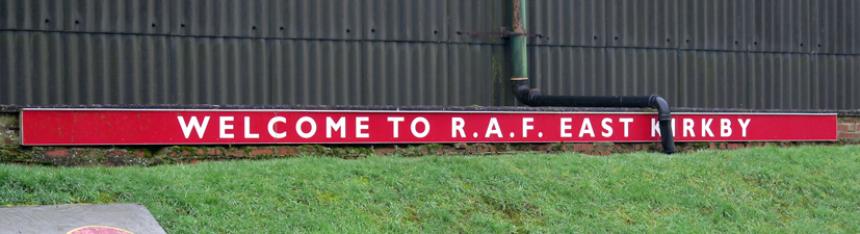
Welcome to this latest edition of Aerodrome and our regular look at the fascinating world of aviation. Before we begin, could we please take a moment to thank everyone who shared, liked and promoted our previous edition, which featured the ongoing renovation works to one of Britain’s best loved historic aircraft. Our visit coincided with both a BBC TV feature and articles in a number of national newspapers and enthusiast magazines, as news of this project is rightly attracting significant media attention. We are proud to report that Aerodrome Edition 63 was one of our most popular blogs and we are grateful to everyone who helped to make it such a success.
In this latest edition of Aerodrome, we will be featuring the second instalment of our ‘Just Jane’ Lancaster NX611 review, where we will be taking another look at this exiting project, which aims to return this magnificent aircraft to airworthy condition once more. Again including many of the images taken during our visit to East Kirkby, this latest blog will be taking a slightly more detailed look at the current renovation works underway, before moving on to show some of the other delights available during a visit to this former Bomber Command airfield. We will also touch a little more on the history of Avro Lancaster NX611 and how this coming year could be one of the most significant in its history.
The determination to see this mighty bomber return to the skies once more is such an engaging story, that it really does seem to have captured the imagination not only of the local Lincolnshire community, but the country as a whole. Indeed, it could even be argued that the world of historic aviation has its sights firmly set on this hangar in East Lincolnshire, willing them to succeed in this fascinating endeavour. So we can all show continued support for this project, please do like and share our review on social media and notify anyone with even the slightest interest in history and aviation of where they can find our Aerodrome blogs and let’s see if we can help to get Just Jane back into the air. The more people that are aware of this magnificent project and one family’s determination to see this Lancaster fly again, the more chance they have of succeeding. Right, off to East Kirkby once more.

With her paint removed, NX611 resembles a die-cast ‘first shot’ model
In the previous edition of Aerodrome we brought you a series of exclusive photographs showing the current state of the much loved Avro Lancaster ‘Just Jane’, as she undergoes significant exploratory work in support of her bid to return to airworthy condition. These fascinating pictures allow enthusiasts a unique view of a bare metal Lancaster and are reminiscent of wartime construction pictures showing rows of Avro’s famous bombers undergoing final assembly. For the aircraft modeller, her current condition also allows the opportunity to view the most intimate of construction detail on the aircraft that would previously only be available to them in books and on technical drawings – this is an unexpected opportunity that will surely have large numbers of visitors heading to East Kirkby to witness this spectacle for themselves.
During our visit we were grateful to be allowed the opportunity to discuss the project with Mr Andrew Panton, who is an expert on all things Lancaster and operating this particular machine successfully. It soon became clear that this seemingly drastic development in the history of ‘Just Jane’ is simply a necessary stage in its continued use and may simply have occurred a little earlier than originally planned. The invaluable support of MAAS Aviation allowed the paint removal and inspection procedures to take place now, which will certainly be beneficial to the continued operation of the aircraft and indeed her bid to return to the skies in the months to come. The renovation team now have a clear understanding of the condition of the aircraft and a much more accurate timeline for the work schedules that must be completed if the aircraft is to achieve airworthy status. Importantly, they have already begun to replace and restore areas of the airframe which required attention and can conform to all the necessary CAA reporting and authorisation procedures as they work, which will surely save the project valuable time and money in the long run.

A spectacular sight awaits visitors to the Lincolnshire Aviation Heritage Centre
As soon as you enter the main hangar at East Kirkby, you are met with the sight of this beautiful bare metal leviathan of the skies, which I have to admit takes your breath away for a few moments. I suspect that many people seeing NX611 in this state for the first time will have similar thoughts to my own and will be quietly asking themselves if they can believe how lucky they are to be looking at this - for the engineers working hard on the airframe, perhaps their thoughts are a little less fanciful.
Once you have got over the initial elation of seeing a bare metal Lancaster in flying configuration, anyone with even the slightest interest in aviation will quickly become captivated by the work taking place on the airframe and the individual components of Britain’s most famous bomber. Arguably the most impressive feature of the Avro Lancaster is its cavernous bomb bay and with the doors currently removed, it is easy to appreciate why this became such an important aircraft to Britain’s war effort during WWII. As can be seen in the pictures attached, the unobstructed bomb bay allowed the Lancaster to carry a seemingly limitless combination of offensive ordnance and the current renovation works allow a much clearer appreciation of its sheer size. Indeed, the bomb bay doors themselves are similarly impressive and must have required some significant force to operate them. There is no doubt that when you see the individual components and operating systems of a Lancaster exposed in this manner, it certainly leaves you in awe of the engineering behind this impressive machine and of the men who designed and built her.


A selection of images showing the exposed bomb bay and bomb bay doors of NX611
During the course of our memorable renovation tour we were given details of some of the works that have been taking place and some of the remedial actions that are already underway. One of the more interesting facts we learned concerned the rivets used in the construction of wartime aircraft – the ones used in the construction of a Lancaster had a 5% magnesium content and many of the rivets inspected on ‘Just Jane’ were showing signs of corrosion. Over the years it has become apparent that these magnesium rivets react with the aluminium skin of aircraft, causing corrosion, and has led to many people questioning the use of such rivets. The main answer to this is that on an aircraft as large as a Lancaster there would certainly have been some weight saving benefits of their use, bearing in mind the sheer number that would have been used during construction, but perhaps the most telling reason is the fact that these aircraft were simply not built to last any length of time. They assumed a relatively short service life for wartime aircraft, so the long-term integrity of the rivets was never an issue – little did they know that NX611 would be preparing for flight in 2017 when she was constructed in 1945.

Lancaster wing tip with paint removed

Flap arrangement and robust elevator coupling

Exposed H2S ground scanning radar dish

The rear turret has been removed from the fuselage
The corrosion found in the rivets of NX611 posed a significant problem for the team and the decision was taken at an early stage to replace each and every one of them, which clearly would run into thousands of rivets. As this technology has long since disappeared from mainstream aviation manufacturing, a specialist supplier had to be sourced and an extremely large order placed. All these rivets are now in the process of being replaced and when you consider that there is at least one rivet placed every inch on a Lancaster, this is an awful lot of rivets to replace. This is, however, another significant step towards seeing this magnificent aircraft fly once more.
Whilst walking around ‘Just Jane’ in her current state you certainly appreciate the size of the task facing the renovation team, as well as the impressive construction of this iconic bomber. With all the underwing panels removed, they were also able to check the huge main fuel tanks which allowed Bomber Command Lancasters to carry their bomb loads deep into enemy territory during WWII. We were told that removal of the two outer-wing fuel tanks is a relatively simple procedure, but the two inboard tanks are much more problematic – these can only be removed once the undercarriage assembly is dismantled, so the current works allowed this important task to be completed. These have now been sent away for specialist inspection and will not be replaced until later in the renovation process – for her usual engine run and taxying duties later this year, NX611 will only have her outer fuel tanks in place.


A series of images showing the location of the installed and removed fuel tanks
For anyone lucky enough to get close to a Lancaster, you are certainly left in no doubt that everything about this aircraft is large and impressive. From the size of the massive wing flaps to the weight of the main undercarriage wheels, you can’t help but wonder how these machines ever got into the sky, let alone went to war. Fully fuelled and armed, the strain in a Lancaster’s airframe must have been incredible and the brave men who flew them on operations must have placed great faith in Roy Chadwick’s design. It is difficult to single out one area of this aircraft's construction that is more impressive than others, but the size and complexity of the main undercarriage units certainly makes you appreciate the skill of aircraft engineers and how they managed to make this extremely heavy and complex arrangement work so efficiently. Having seen the size of the Lancaster’s main wheels and the robust engineering that supported them, visitors to the main hangar at East Kirkby can actually view the complexity of the retraction process first hand, as they have managed to produce a fully functioning Lancaster mainwheel retraction rig. On the pressing of a button, you can watch the retraction process taking place and how the impressive engineering slowly lifts this huge wheel into what would have been the bay behind one of the inboard engines. Perhaps even more impressive than this, the operation is then reversed and the wheel lowers into place, before locking with a loud click and giving the pilot a green light to bring the weight of this mighty bomber down on the two mainwheels – a fascinating insight.

Removed Lancaster main wheels, clearly showing the block tread arrangement

The impressive mainwheel retraction rig at East Kirkby

Lancaster undercarriage struts were built to withstand significant weight loading
We were told that Lancasters operating from grass runways would typically use smooth tyres and the block tread tyres used on ‘Just Jane’ (and indeed the BBMF Lancaster) were introduced when tarmac runways became more common. The tyres currently fitted to NX611 were originally designed for use on either an Avro Lincoln, or a Shackleton, but as the aircraft is intended to be operated from the grass at East Kirkby, it will be interesting to see if new tyres will eventually have to be sourced.
Everyone lucky enough to attend one of the renovation tours at East Kirkby will have their own enduring memory of the experience, but I think for me, the most interesting aspect of the tour was being able to see how these magnificent aircraft were actually constructed. As I was brought up in the Oldham area, close to the famous Avro factories at Woodford and Chadderton, the area was proud of its association with Britain’s most famous bomber, with local newspapers and TV stations regularly carrying features about the areas aviation heritage. Pictures of the wartime construction of Lancasters were a source of fascination to me as a boy and seeing NX611 in her current state was something I thought I would never see. Andrew Panton, who was hosting the tour, described how Lancasters were constructed in sections, often at different factories around the country, before being transported by road for final assembly and flight testing. Each of these component sections were effectively a sealed unit, which would simply be bolted to the next sealed unit, until you had a complete Lancaster. Each section also included its own part of the electrical wiring system, which again was designed to connect to the adjoining section through special access holes in the framing, making the construction of Lancasters faster, more flexible and able to withstand the possible attentions of the Luftwaffe.


With the paint removed, it is possible to see where the various sections of a Lancaster are joined
It is obvious that during the renovation process and certainly before NX611 can be fully assessed for possible return to airworthy status, these manufacturing splits will need to be opened, and the work completed on her original construction over seventy years ago will come under scrutiny once more. The team will be hopeful that they don’t discover any nasty surprises when they come to this stage, which clearly has the potential to delay the project significantly or even put her proposed bid for airworthy status in jeopardy – hopefully this will not be the case and the team will simply be left with admiration for the workers who originally constructed their aircraft in 1945 and under wartime conditions. Although the current status of ‘Just Jane’ is undoubtedly fascinating to the aviation enthusiast, the thought of seeing the aircraft split into her individual manufacturing sections is even more tantalising and even though this will surely be a stage that will cause some trepidation for the renovation team at East Kirkby, it is something that I and many aviation enthusiasts around the world will be looking forward to seeing. For now though, the removal of ‘Just Jane’s’ numerous coats of paint allow these manufacturing splits to be clearly visible and help to tell the fascinating story of wartime Lancaster production.
Our Aerodrome blog will continue to follow Avro Lancaster NX611 ‘Just Jane’ throughout her monumental bid to achieve airworthy status and will bring you regular news updates as this exciting project progresses over the next few months. We will also be covering her return to normal duties later this year and will take a closer look at the history of this much-loved aircraft and what it takes to own and operate a wartime Lancaster bomber, when most surviving machines are simply sitting as museum exhibits. Like many Aerodrome readers, I am very much looking forward to the day when two British based Avro Lancasters are able to fly together once more, serving as a poignant tribute to the men and machines of Bomber Command and the exceptional skills of today’s aircraft engineers in resurrecting the technologies of years past. On behalf of the Aerodrome production team and everyone at Hornby Hobbies, I would like to thank Andrew Panton for giving us the opportunity to view his magnificent aircraft and to discuss this exciting project. We wish him and the restoration team every success in achieving their goal.
Having spent the last two editions of our blog enthusing over everything ‘Just Jane’, it seems a little strange to begin this section with the title above, but anyone visiting this delightful venue can expect to find plenty of interesting exhibits and displays to make their day a memorable one. From the beautifully authentic WWII control tower and restored Bomber Command out buildings, to the wartime chapel and impressive collection of aviation artefacts, a visit to East Kirkby is one that allows you to step back into Britain’s aviation heritage. With plenty to keep you occupied for the full day, a visit to the onsite NAFFI will keep you refreshed and sustained, should you need to re-charge your batteries.

Douglas Dakota ‘Drag-em-oot’ is currently East Kirkby’s only airworthy aircraft
The main hangar is certainly the focal point of the museum and is home not only to the museum's most famous resident, but also the only current airworthy aircraft at East Kirkby – Douglas C-47A Dakota N473DC ‘Drag-em-oot’. Representing an aircraft that proved essential to the Allied war effort in the last two years of the Second World War, this machine is a regular performer at Airshows around Europe and has a fascinating history of its own – this will also feature in a future edition of Aerodrome. Although obviously overshadowed by her more famous hangar-mate, ‘Drag-em-oot’ is also currently undergoing her busy winter maintenance schedule, but is still available for viewing at the rear of the hangar.
An interesting new arrival at East Kirkby is the impressive Lancaster nose and fuselage long term restoration project KB976 owned by Jeremy Hall. This former Canadian Air Force machine was one of three Lancasters modified to long nose Mk10 AR (Area Reconnaissance) configuration and used primarily for Arctic reconnaissance, patrolling the polar ice caps and searching for Soviet submarine activity. With a lengthened nose section to house additional equipment, these long-range patrol aircraft were fitted with eight fuel tanks and crewed by up to four pilots, which allowed them to stay airborne for 24 hours, as they were required to cover huge distances on reconnaissance flights.

Lancaster restoration project KB976 is a recent arrival at East Kirkby

Each side of the aircraft wears a different RCAF livery
The project to restore the cockpit section of this Lancaster has been the passion of owner Jeremy Hall for many years and has received numerous plaudits for its authenticity and attention to detail. Used regularly for film and documentary work, the project was housed for many years at Brooklands museum, before moving to a storage facility at RAF Scampton, home of No.617 ‘Dambusters’ Squadron, in August 2014. Only arriving at East Kirkby the day before my visit, it is unclear how long this Lancaster restoration project will be remaining at the airfield, but whilst it is there, it is yet another of the many attractions available to visitors. It was situated in front of the hangar on the day of my visit, but I believe the intention is to move it inside at the first available opportunity.

Handley Page Hampden AE436 restoration project has been at East Kirkby since 1989
Regular visitors to East Kirkby will always make sure they drop by one of the smaller buildings on the museum site and assess the current status of another long-standing aviation restoration project. Handley Page Hampden AE436 has been slowly taking shape at the Lincolnshire Aviation Heritage Centre since its arrival in 1989 and marks the restoration of one of Britain’s most important early WWII bombers. The slender Hampden was sometimes referred to as the ‘Flying Suitcase’ due to the relatively cramped interior and difficult operating environment for the crew of 4 or 5, but it played an important role in the early months of WWII, including taking part in Britain’s first 1000 bomber raid in May 1942. Of the 1430 Hampdens produced, half were lost on operations during WWII, with most of the remaining airframes destroyed when replaced by newer aircraft. With no examples of this aircraft currently in airworthy condition, the restoration of AE436 is reportedly intended to be to flying condition, which will see this unsung hero of Bomber Command finally receiving the recognition it deserves. Pictured on my latest visit, it seems unlikely that this project will be advancing significantly any time soon and the hope of seeing a completed Hampden at East Kirkby may be some years off. Nevertheless, this is an extremely interesting project and another aircraft to inspect on your visit to East Kirkby and the Lincolnshire Aviation Heritage Centre.
We hope that the last two editions of Aerodrome have both allowed you the opportunity to see Avro Lancaster NX611 undergoing her fascinating renovation works and to see some of the other reasons to visit this former Bomber Command airfield. Although we included information regarding becoming a member of Lancaster NX611’s ‘Rivet Club’ in the previous edition, we have included it once more and ask readers to consider contributing even a modest amount towards this fantastic project and having the pride of saying you were involved in returning this magnificent aircraft to the sky once more – thank you.

The prospect of having two airworthy Lancasters operating from British airfields in future years will be one that warms the hearts of many aviation enthusiasts, but in order to achieve this goal, the renovation team at East Kirkby have a considerable task on their hands. One of the many hurdles facing them will undoubtedly be the cost of such a huge undertaking, with initial estimates quoting a figure in the region of £3 million. The existing activities at this former Bomber Command airfield, which includes regular Lancaster taxi rides on board NX611 will certainly contribute towards this figure, but they are going to need help from many sources if this project is to eventually succeed. To this end and in response to many requests offering donations, the Lincolnshire Aviation Heritage Centre have recently launched their ‘Rivet Club’, which allows people to make a monthly donation to the Lancaster NX611 restoration project, with contributions starting from as low as £2.00 each month, by recurring monthly donation. With enough support, the Rivet Club will allow the restoration process to gather pace and we can all look forward to seeing this magnificent aircraft back in the air where she belongs.
By becoming a member of the Rivet Club, you will receive a monthly e-newsletter, weekly restoration updates from the project (from mid-November to April) and be part of one of the most significant historic aviation projects in the world. No matter where you are in the world, you can play your part in seeing this Lancaster taking to the skies once more.

Avro Lancaster NX611 ‘Just Jane’ poses for a photoshoot in 2012
I am afraid that is all we have for you in this latest edition of Aerodrome. We hope you have enjoyed our extended look at the Lincolnshire Aviation Heritage Centre over the past two editions and how they are planning something really special in the world of historic aviation. We aim to bring you regular updates from the project as it progresses and hope that a future edition will include pictures of ‘Just Jane’ taking off from the grass strip at East Kirkby on her first post-restoration flight – what a memorable day that will be.
Please don’t forget about ‘Project Aerodrome’ and let us have pictures from your local airfield, or an aviation project that is close to your heart. I would be grateful if you would send any photographs and initial contact details to me at aerodrome@airfix.com or aerodrome@corgi.co.uk where I very much look forward to hearing from you and discovering some of the aviation stories behind Britain’s many current and former airfields.
As usual, if you would like to join in with all the latest social media discussions regarding Aerodrome and aviation matters in general, please head for either the Airfix Aerodrome Forum or our Corgi Aerodrome Forum and have your say. If you have any specific comments, questions or suggestions for future editions of Aerodrome, please do feel free to let us know by using either the Airfix Facebook or Corgi Facebook pages, our Airfix Twitter or Corgi Twitter accounts, using #aerodrome. If e-mail is more your style, then please use our usual address above.
Thank you for your continued support. We will have more news from the world of aviation in our next blog, which is scheduled for publication on 24th February.
Michael
© Hornby Hobbies Ltd. All rights reserved

