

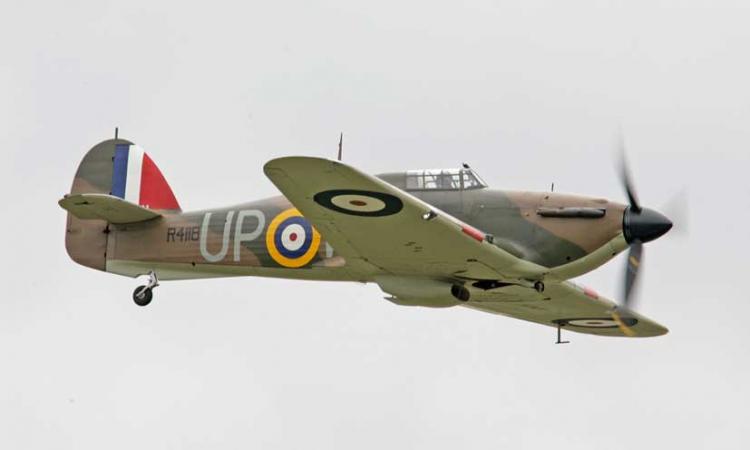
When many aviation enthusiasts consider the Hawker Hurricane fighter, they usually associate it with the Battle of Britain and how it was the understudy of the much more glamorous and war winning Supermarine Spitfire. In this 75th Anniversary year of the Battle of Britain, this week’s Aerodrome will look at why the Hurricane deserves much more respect than this and should be considered as one of the most significant aircraft in the history of British aviation.
The 1930s are regarded as something of a golden era for the British aviation industry, which in many ways was the envy of the world. With a number of aviation records held by British aviators and British aviation companies, it seemed as if the boundaries of flight were being stretched on an almost weekly basis. The British public were totally captivated by these intrepid aviators and their glamorous machines and any opportunity they had to see aeroplanes being displayed saw huge crowds flocking to these venues. At the forefront of this aviation infatuation were the annual RAF Pageants at Hendon aerodrome, where the latest aviation technologies were displayed to an eager public.
The displays were a clever and cost effective way for the Royal Air Force to gain favour with the British Public, as the force was often subject to ministerial cost cutting and they needed the ability to be seen as an essential and technologically advanced section of the armed forces. The Hendon displays would include combat demonstrations and thrilling aerobatic routines, but perhaps the most popular public areas were the record breaking and new aircraft display parks. The Hendon Pageants ended in 1937, as the changing economic climate and gathering clouds of war dictated that the RAF had other priorities, but this final show was perhaps the most spectacular, with over 200,000 spectators on attendance. Significantly, the new aircraft park included both a Hawker Hurricane and a Spitfire!
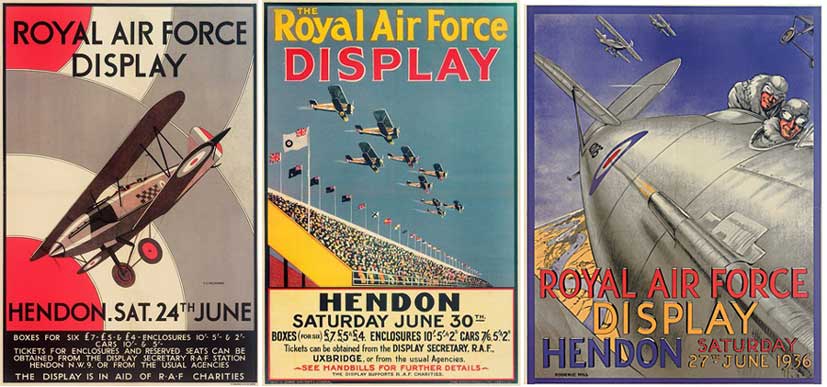 The Hendon Air Displays were the highlight of the aviation calendar
During the inter-war years, Sydney Camm and his Hawker design team had gained an enviable reputation in the production of extremely effective biplane combat aircraft, many of which were now in service with the Royal Air Force. Even though his magnificent Hawker Fury fighter was the most capable aircraft of its type in the world and was the pride of the RAF, Camm knew that the days of the biplane were numbered and for aviation development to advance further, new thinking and new technology would be required - he began working on a new breed of fighter aircraft.
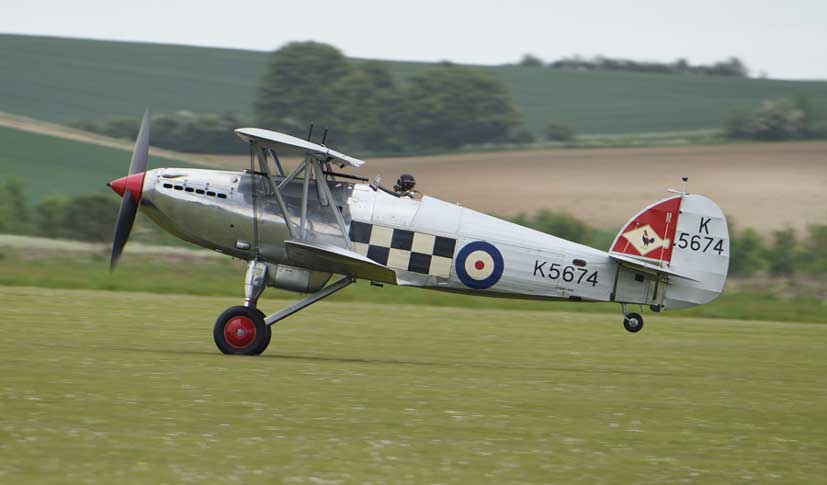
Hawker had a proven track record of producing excellent fighter aircraft
Building on the experience and technological advances incorporated in their magnificent Fury I biplane fighter, the Hawker design team built a new fighter, which was initially referred to as the ‘Fury Monoplane’ - this was very much a combination of existing manufacturing techniques and ground-breaking new technologies. At the time this aircraft was taking shape, Fighter Command was equipped with just thirteen Squadrons of Hawker Fury, Hawker Demon, or Bristol Bulldog biplane fighters, all of which had similar characteristics – fixed –pitch wooden propellers, a fixed undercarriage and limited development potential. The new Hawker monoplane fighter addressed all of these issues and introduced some highly advanced design features, which were all to become commonplace on fighter design across the world, in the years to come.
Most aviation enthusiasts will be fully aware of the development and introduction of the Hawker Hurricane and how it will probably always be in the shadow of the more enigmatic Spitfire, but I firmly believe that the Hurricane was absolutely critical to the survival of Britain during the early years of WWII and actually allowed the Spitfire to be developed into the thoroughbred that it undoubtedly was, by keeping Britain in the fight and allowing the Spitfire the time to be perfected. There were three key factors which dictated that the Hurricane would become such an important aeroplane in the history of British aviation. The gathering clouds of war meant that Britain desperately needed a new fighter, which would keep them at least on par with any potential adversary – any aircraft that provided this would be extremely favourably viewed. Secondly, the Hawker team had a magnificent reputation of producing highly capable aircraft for the RAF – they were a proven manufacturer and had existing manufacturing facilities. Finally, the new fighter used existing, traditional manufacturing techniques and could be immediately put into production, which crucially meant that when called upon, the new monoplane fighter was available in large numbers.
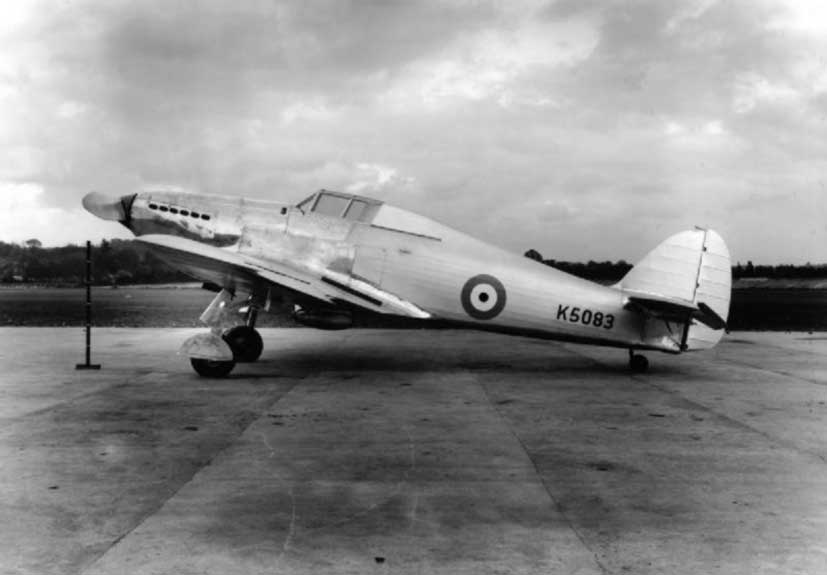
The prototype Hawker Monoplane interceptor K5083
On 6th November 1935, the prototype Hawker Monoplane (K5083) took off from the Hawker facility at Brooklands, in the hands of their chief test pilot Group Captain PWS Bulman and into the annals of British aviation history. Although the new aircraft was hugely different in profile from any other fighter design that went before it, it had a perversely similar feel about it. It could be argued that the new fighter was an exercise in aviation evolution and not revolution, as it adopted the best manufacturing practices of the day with some exciting new features. It was very much a larger, upgraded Hawker Fury, with the top wing removed! This was still quite radical thinking, as the general opinion of the day was that nothing could compete with the manoeuvrability of the biplane in a dogfight and that the country with the most effective bomber force would win any future conflict.
The Hawker monoplane proved to be fast and manoeuvrable, and other than the usual niggles associated with the first flight of a new aircraft type, it showed great promise. From the outset, Camm wanted to produce an aeroplane that was pilot friendly and incorporated some innovations specifically to achieve this. The new enclosed cockpit was placed high on the fuselage of the aircraft, which gave it an extremely distinctive profile, but afforded the pilot an excellent field of view. It also had retractable undercarriage, which greatly reduced drag and increased the performance of the aircraft significantly – importantly, the undercarriage retracted inwards, utilising the thickest part of the wing structure and allowing a wide track for the undercarriage, making the aircraft extremely easy to operate during take-off, landing and general ground handling. This was to become one of the most desirable attributes of the new fighter, particularly when it entered squadron service. The relatively thick wing also allowed the aircraft to carry a pair of machine guns in each wing, complete with large ammunition boxes, but was flexible enough to actually accommodate double this armament. A later specification change did stipulate the use of eight guns. Finally, the use of the latest Rolls Royce piston engine powered the aircraft to 315mph, which was a significant speed increase for an RAF fighter – the new aircraft exceeded all expectations.
Following improvements to the prototype and successful evaluation of the aircraft by the Aircraft & Armament Experimental Establishment at Martlesham Heath, the name ‘Hurricane’ was officially approved for the new Hawker monoplane interceptor. This was quickly followed by a large Air Ministry order for 600 aircraft, a figure which was unprecedented as a peacetime aeroplane order. Time was now very much of the essence and these new fighters were desperately needed in squadron service – despite some problems with the delivery of engines from Rolls Royce and some re-design work needed to accommodate the latest incarnation of the powerplant, the traditional manufacturing techniques used dictated that the Hurricane entered Royal Air Force service in December 1937, with No.III Squadron at Northolt having the distinction of being the first Hurricane unit.
An early Hurricane fighter, with the twin bladed Watts propeller
The first Squadron aircraft were quite similar to the prototype Hurricane in profile and still retained the twin bladed ‘Watts’ wooden propeller. This unit was quickly found to be unsuitable and placed undue stresses on the Merlin engine. It also affected the take-off performance of the aircraft, resulting in the early Hurricane needing an unacceptably long take off run. Whilst these issues were being addressed, the task of converting fighter pilots to the new fighter was taking place. Even though many of the pilots were used to flying much slower, biplane fighters, conversion to the monoplane Hurricane was thankfully much less traumatic than many pilots had feared. As much of the technology used on the Hurricane was similar to the aircraft they were used to flying and many of the improvements on the Hurricane were planned with the squadron pilot in mind, pilots found the new aircraft to be extremely forgiving and reassuringly stable – indeed, many pilots described their first flight in the Hurricane as like flying a faster version of the Hawker Hart biplane.
Improvements to the early Hurricanes came thick and fast and very much highlighted the flexibility of the basic design. The troublesome twin bladed propeller was quickly replaced, first with a De Havilland variable pitch unit and then with a hydraulically operated constant-speed Rotol propeller, both of which significantly improved the performance of the aircraft. The original wings of the Hurricane were actually fabric covered, which really did illustrate the lineage of the aircraft - these were quickly changed for metal covered wings, which could handle much greater stress loads and yield a further performance increase. The flexibility of the Hurricane design meant that the new metal wings, which were obviously fitted as standard on newly manufactured aircraft, could easily be replaced during servicing or repair and would take an experienced team only three hours to complete. Interestingly, although most aircraft had been upgraded to metal covered wings by the time of the Battle of Britain, a small number of Hurricanes still retained their fabric wings and operated during the battle. A number of Hurricanes even flew with one fabric and one metal wing!
As German military aggression in Europe began to steel the resolve of Allied powers, Britain sent sizable forces to France in an attempt to both re-assure their close ally and to deter the Wehrmacht from launching an attack against France. As part of the air component of this force, four squadrons of RAF Hurricane fighters were sent to France, which along with the French Dowoitine D.520, were the most capable fighter aircraft available to the Allies in France at that time. The period known as the Phoney War saw an uneasy period of probing by both opposing sides as Germany, who were clearly preparing for a significant attack, began to send more probing reconnaissance flights over French territory – not wanting to provoke a military response, Allied forces would rise to challenge these incursions, in something of a show of strength and combat readiness.
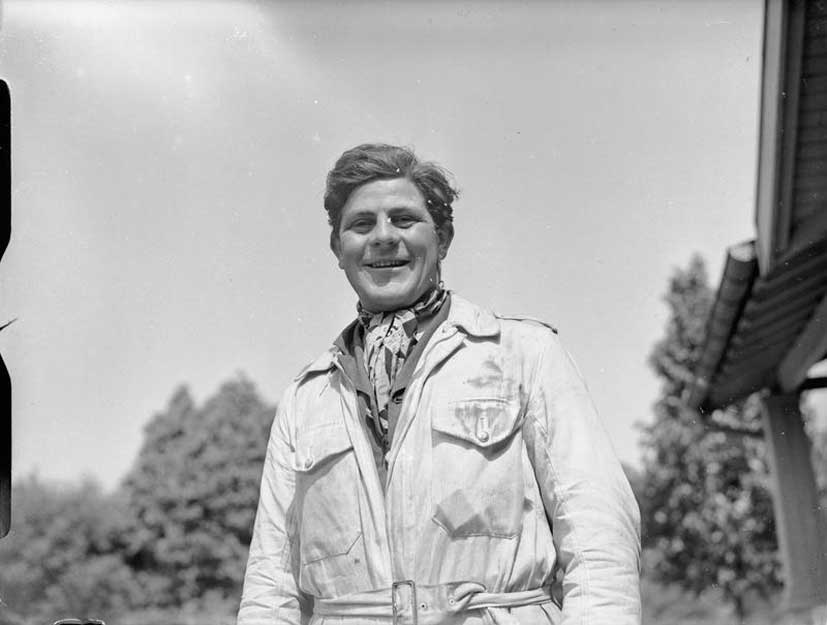
Pilot Officer Peter ‘Boy’ Mould scored the first Fighter Command victory against a German aircraft
The situation developed significantly on 30th October 1939, when a Dornier Do 17P from 2(F)/123 was sent to obtain photographs of Allied airfields close to the border. The German aircraft was intercepted by Hurricane L1842, from RAF No.1 Squadron, which was flown by Pilot Officer Peter ‘Boy’ Mould – the Dornier was shot down in flames, crashing at Meurthe et Moselle, just south of Toul. This was the first RAF fighter victory over a Luftwaffe aircraft in WWII and signified the beginning of a testing period for France, Britain and the Royal Air Force.
Actual aerial combat between the Allied air forces and Luftwaffe units during the Phoney War were quite rare and RAF pilots claimed only four aerial victories during this period. One of these victories occurred on 8th November, when Flying Officer E.J ‘Cobber’ Kain brought down another Dornier Do.17, gaining both his first victory and that of his parent 73 Squadron. Cain was to go on and become the RAF’s first air ace and the leading RAF fighter pilot of the Battle of France, with 17 victories, plus three further aircraft unconfirmed as destroyed. Like so many fighter pilots of this murderous period, Kain was to lose his life before 1940 was out.
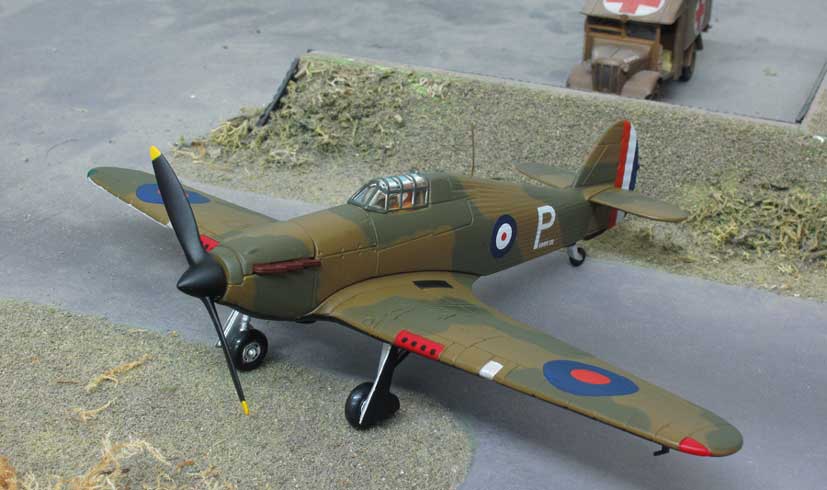
Corgi Aviation Archive release of ‘Cobber’ Kain’s Hawker Hurricane Mk.I
During the spring of 1940, the Battle of France began in earnest as the full horror of Blitzkrieg was unleashed against Allied forces on the continent. Against most of the Luftwaffe aircraft, the Hurricane acquitted itself particularly well and posted excellent combat success ratios – even against the much vaunted Messerschmitt Bf 109E, the Hurricane was capable of taking on all but the most accomplished pilots. Unfortunately, the overwhelming numerical superiority of the Luftwaffe and the speed of the German attack meant that Hurricane operations were constantly under significant pressure. Had more aircraft been available in France, the German advance may have been significantly challenged, but history will show that ‘Blitzkrieg’ simply could not be stopped by the forces sent to oppose them.
At this pivotal period, every RAF fighter sent to support operations in France was depleting defensive forces at home and there came a point when this simply did not make any sense – in a decision which must have been particularly painful for ministers, all the remaining Hurricane fighters in France were ordered to return to Britain, in the certain knowledge that they would be needed much closer to home, in the months to come.
The Battle of France was nothing short of a disaster for the Royal Air Force, with valuable aircraft and even more valuable pilots being lost in something of a futile exercise. It did, however, allow the Hawker Hurricane to make its combat debut against the Luftwaffe and in conjunction with the extremely capable pilots of the French Air Force, destroyed large numbers of German aircraft, which proved crucial during the summer of 1940. Experiences in France would allow the RAF to better prepare for their own impending struggle.
The Hurricane took a heavy toll of Luftwaffe aircraft
As German forces massed on the northern coast of France, the Royal Air Force was very much assessing the attrition it had suffered over the past few months. Weakened by the losses in France, they were determined to maximise the effectiveness of their available forces and the combat experiences of Hurricane pilots in France were extremely valuable to this end. The RAF quickly ensured that the inadequate twin bladed Watts propeller fitted to the early Hurricanes was replaced by more effective units, which very much improved the performance of the aircraft. Many pilots also changed the way that they intended to launch an attack on an enemy aircraft and altered the harmonisation of the guns accordingly. Rather than fire their guns at the previously prescribed 600 yards, the guns were concentrated for an attack at just 200 yards, where a well placed burst from all eight guns would have a devastatingly effective impact – they were much more likely to bring down an aircraft on a single attack this way. It did make the Hurricane much more susceptible to defensive fire from the aircraft they were attacking and must have required a great deal of personal bravery – thankfully, the pilots of Fighter Command were not lacking in this regard.
As Fighter Command prepared to face the might of the Luftwaffe, the Hurricane formed the backbone of Britain’s defence. There is much conjecture regarding the actual Squadron strength available to Fighter Command at this time, but it is generally accepted that there were 29 squadrons of Hurricanes, 19 squadrons of Spitfires, 6 squadrons of Blenheims and 2 of Defiants. Facing them was the most feared air force the world had ever seen, which could boast battle hardened pilots and massive numbers of available aircraft. At the beginning of the battle, aircraft numbers available to the Luftwaffe outnumbered their adversaries by almost 4:1 and on paper, the outcome of this mighty aerial clash was inevitable – thankfully for Britain, the battle would not be fought on paper and the pilots of Fighter Command were confident of their capabilities. As the most numerous fighter available to the RAF, the Hurricane would play a leading role in the struggles to come and prove to be one half of an incredibly effective fighting double-act.
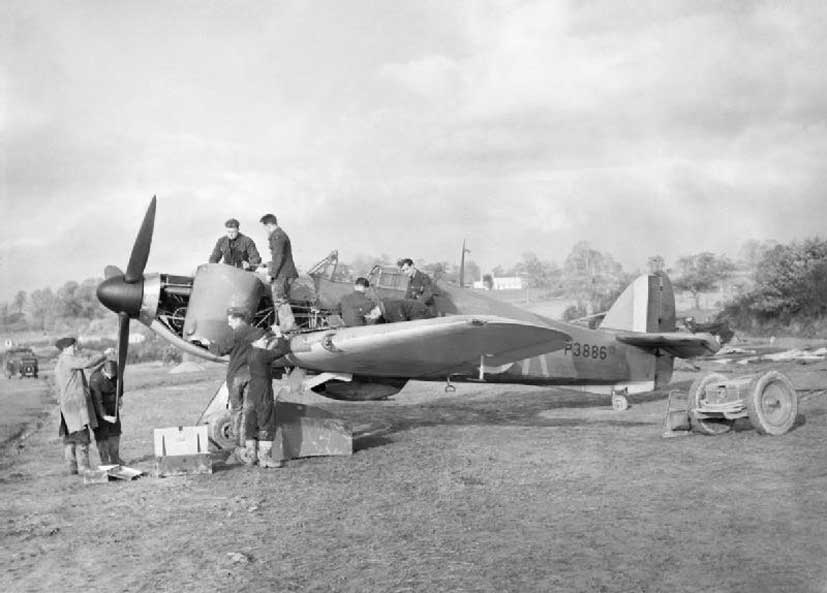
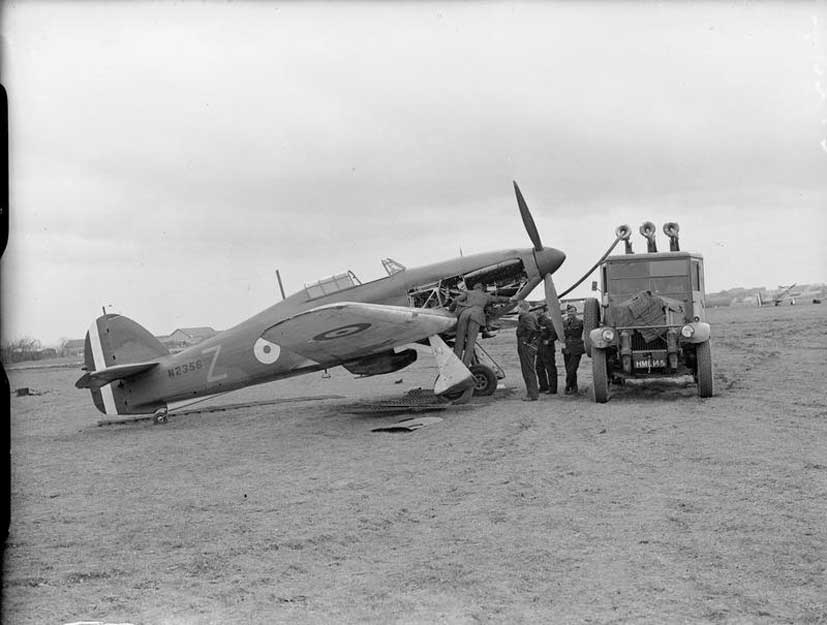
A classic image of a Battle of Britain Hawker Hurricane being readied for action
As we are currently commemorating the 75th Anniversary of the Battle of Britain, the subject has been receiving an incredible amount of media attention and many people will have some knowledge of the details of this pivotal battle. As the RAF’s main defensive fighters, both the Hurricane and the Spitfire are possibly two of the most recognisable British aircraft in the history of aviation, but there is no doubting that the Spitfire is commonly regarded as the saviour of Britain. Although the Spitfire was certainly a critical component of Britain’s defensive network and proved to be the most important British aircraft of WWII, it actually played second fiddle to the Hurricane during the battle itself. There are a number of specific reasons for this, but I often find myself being quite protective of the achievements of the Hawker Hurricane and think that it receives something of a raw deal. The Battle of Britain certainly saw Fighter Command use all of their assets in the most effective manner possible, but these sorties were flown by young men, who displayed skill, resolve and great bravery in defence of their Nation.
The reasons why the Hurricane proved to be so successful during the Battle of Britain are numerous, but it is safe to say that without it, Fighter Command simply would not have prevailed. Some commentators speak in rather derogatory terms about the Hurricane, describing the aircraft as being obsolete as soon as it entered service. This view simply does not stand up, particularly when you consider the combat record of the aircraft during the Battle of Britain. It actually proved to be the perfect fighting companion for the more glamorous Spitfire and was to claim a heavy toll of Luftwaffe aircraft. For every two Luftwaffe aircraft shot down by a Spitfire, the Hurricane accounted for three – in fact, during the Battle of Britain, more German aircraft were shot down by Hurricanes than by all of Britain’s other defences combined. These statistics, whilst certainly open to some deeper scrutiny, illustrate more than anything, how important and effective a fighter aircraft the Hurricane was and how it deserves much greater respect.
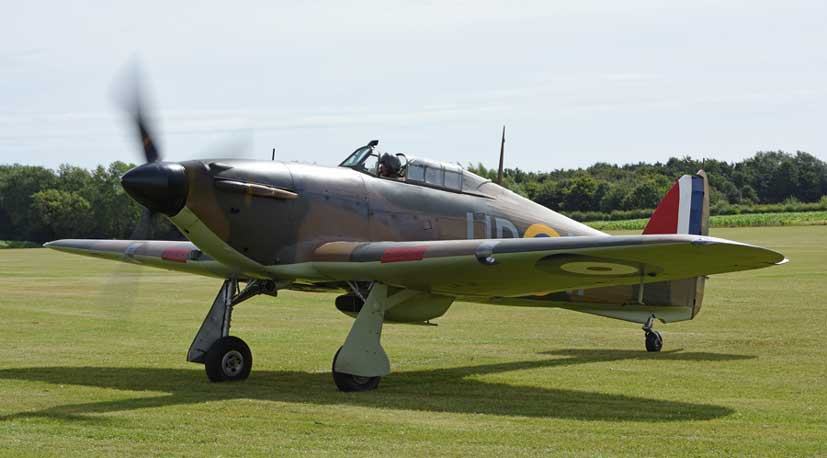
The unmistakable shape of the classic Hawker Hurricane
The qualities possessed by the Hurricane design are many, but at this early stage of the war, the existing, classic manufacturing methods used in its construction proved to be crucial for Britain. It allowed many more aircraft to be in service by the start of the war, than had the Air Ministry waited for the Spitfire to be completed – even though the Spitfire was clearly a more capable fighter than the Hurricane, it was a much more complex aircraft and required new manufacturing processes to be developed. The Hurricane was also an easier aircraft for pilots to convert to, as it was a development of the technology they were already used to and despite the significant increase in speed, it was really pilot friendly. It has been said that the Spitfire needed an accomplished pilot at the controls for the aircraft to be flown well, whereas the Hurricane could be flown well by an average pilot – this was absolutely critical during the savage combat of the Battle of Britain.
In combat, the Hurricane possessed some superb fighting qualities. With the relatively thick wings and closely grouped gun placement, the Hurricane was an extremely stable gun platform and against all but the most agile Luftwaffe aircraft, this proved to be devastatingly effective. The ‘classic’ design of the Hurricane also allowed the aircraft to absorb significant levels of combat damage, which crucially brought many RAF pilots home safely and saw damaged aircraft quickly returned to combat. All these attributes proved to be significant during the summer of 1940 and when Britain was in her hour of greatest need, the Hurricane answered the call. Despite all of these qualities, the Hurricane is still generally regarded as a bit-part player in the Battle of Britain. Indeed, returning Luftwaffe airmen would usually claim to have been attacked by Spitfires, even if they had actually been mauled by a squadron of Hurricanes. Perhaps the most significant indicator of this bias occurred in September 1945. A flypast to commemorate the 5th anniversary of the Battle of Britain took place over central London – not a single Hurricane was present in this formation.
From a British perspective, perhaps the most significant battles of the Second World War were the Battle of Britain and the Battle of the Atlantic. In both of these conflicts, the Hawker Hurricane was to prove decisive and thus enhance its undeniable reputation in the history of British Aviation.
As an island nation, Britain’s survival in WWII was almost totally dependant on maintaining supplies of goods and materials arriving across the Atlantic sea lanes. With the fall of France, Germany now possessed the ability to fly long-range maritime missions from bases on the Atlantic coast, which allowed them to begin taking a heavy toll of British merchant shipping. With the ability to shadow shipping convoys and either provide information for U-boat attacks, or to bomb shipping directly, Focke-Wulf Fw 200 Condor aircraft could operate with absolute impunity of British fighter attack. This situation was becoming critical and a solution to this problem had to be found – with no aircraft currently possessing the necessary range and no escort carriers in service, a more radical solution had to be found. The CAM ship was a converted merchant freighter, which was equipped with a deck mounted catapult and a single Hurricane fighter. The Hurricane would be launched from the catapult, using a powerful rocket pack for additional thrust, in what must have been a highly dangerous procedure. Clearly, this would just be a one launch mission, as there was no facility to recover the aircraft once in the air – the pilot would be forced to ditch his aircraft as near to the convoy as possible, in the hope that he would be picked up before he either drowned, or fell victim to the extreme cold of the icy waters.
Above all other available aircraft, the Hurricane was seen as being the most suitable fighter for this task, due to its extremely rugged design and the stable flight characteristics – referring to some of the less than complementary comments about the aircraft, some could argue that it was selected as it was the most expendable type available! Whatever the reason, a rocket launch at sea would require a rugged, dependable aircraft, that could withstand this extremely hostile environment.
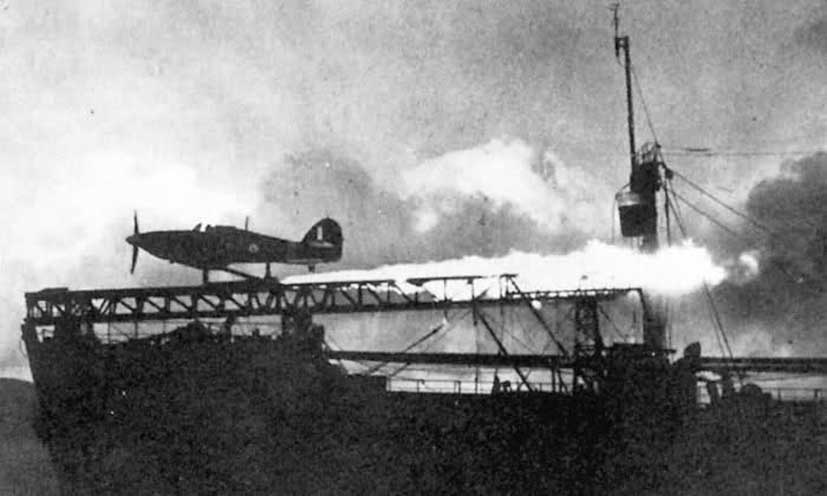
Not for the faint-hearted – a ‘Hurricat’ catapult launch
The catapult launch of a Hurricat fighter was a highly complex affair and required close coordination between pilot, catapult crew and ships captain. Once an enemy bomber was sighted, the Hurricane pilot would start his engine and perform all of his pre-flight checks. At the same time, the catapult crew would prepare the aircraft for launch and remove all the safety pins to allow the rockets to fire – in view of the pilot, these pins were held aloft to show readiness and the engine was run to full power. The pilot applied 30 degrees of flap, one-third right rudder, pressed his head back against the headrest and braced himself for take-off. At this exact moment, the captain of the ship would swing the vessel in to wind and once the bow had risen above the trough of a swell, the catapult was fired and the Hurricane blasted into the air.
The CAM ships and Hurricats were clearly an ingenious, if rather eccentric stopgap measure, to counter a specific problem in the early stages of the war, but was just one in a long line of such resourceful solutions utilised by the British during WWII. The system did enjoy some notable successes and certainly curtailed operations of the vulnerable Fw 200 Condors, providing much needed reassurance for the brave men of the merchant navy. The later introduction of the MAC ships (converted merchant vessels, with a small flight deck) provided a more permanent solution to the problem, but still saw the Hawker Hurricane providing invaluable service to the British war effort.
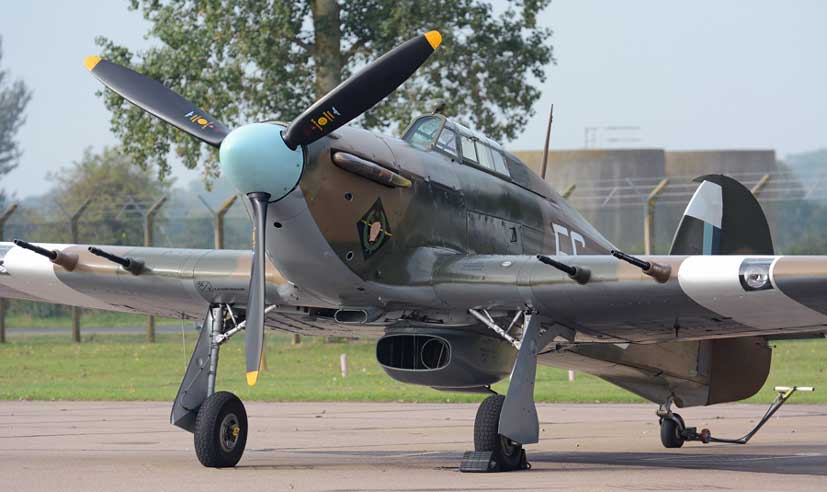
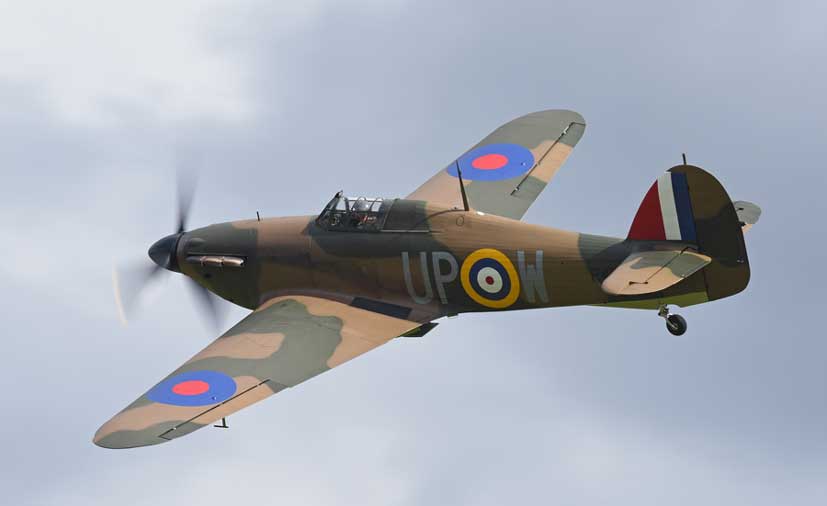
BBMF Hawker Hurricane Mk.IIC PZ865 ‘The Last of the Many’
Following its success during the Battle of Britain, the reliable Hurricane went on to serve with distinction in many parts of the world, including Russia, Malta and the Mediterranean, North Africa and the Balkans. Again building on its rugged reputation, the Hurricane was transformed into an extremely effective ground attack aircraft and was constantly upgraded throughout its service life, but always taking the fight to the enemy. The final aircraft from a production run of 14,533 aircraft (PZ865) rolled off the Hawker production line at Langley in July 1944 and she carried the inscription ‘Last of the Many’ on both sides of her fuselage. Keen to preserve the last Hurricane built, Hawker Aviation bought the aircraft back from the Air Ministry and kept it in storage at Langley. This famous aircraft is now part of the Battle of Britain Memorial Flight at Coningsby and serves as a living reminder of one of the most significant aircraft in Royal Air Force history and the sacrifices of the brave pilots who flew them. More than just a support aircraft for the more famous Supermarine Spitfire, the Hawker Hurricane was the right aeroplane, at the right time and marked the significant transition from biplane, to monoplane fighter technology.
Die-cast aviation collectors will be pleased to learn that Corgi have just introduced a totally new 1/72nd scale tooling release of the Hawker Hurricane Mk.I to their successful Aviation Archive range. Perfectly timed to coincide with this summer's 75th Anniversary of the Battle of Britain, this impressive new model incorporates all the latest manufacturing technologies available to the Corgi team, which has resulted in them producing arguably the most accurate die-cast Hurricane model to date. The first release has been produced in the following livery:
Hawker Hurricane Mk.I
V7434 / DZ-R
Pilot Officer Irving Smith
RAF No.151 Squadron
Digby
October, 1940
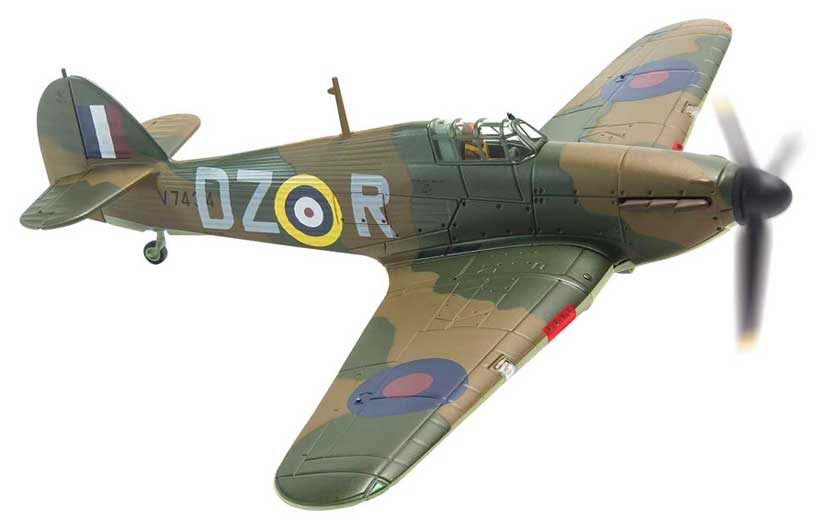
AA27601 is the new 1/72nd scale Hurricane Mk.I from Corgi
P.O Irving Smith was one of ‘The Few’, who enjoyed significant combat successes against the Luftwaffe during the Battle of Britain. He went on to serve as a night-fighter pilot, where he again managed to score victories against the enemy. As his service career progressed, he was possibly best known for his exceptional capabilities as a low level, precision bombing expert, flying the magnificent de Havilland Mosquito. He took part in the famous ‘Operation Jericho’, where low flying Mosquitos attacked the Gestapo jail at Amiens. Surviving the war, Smith died in February 2000, aged 82.
This magnificent new model is available at your usual supplier now, or direct from the Corgi website.
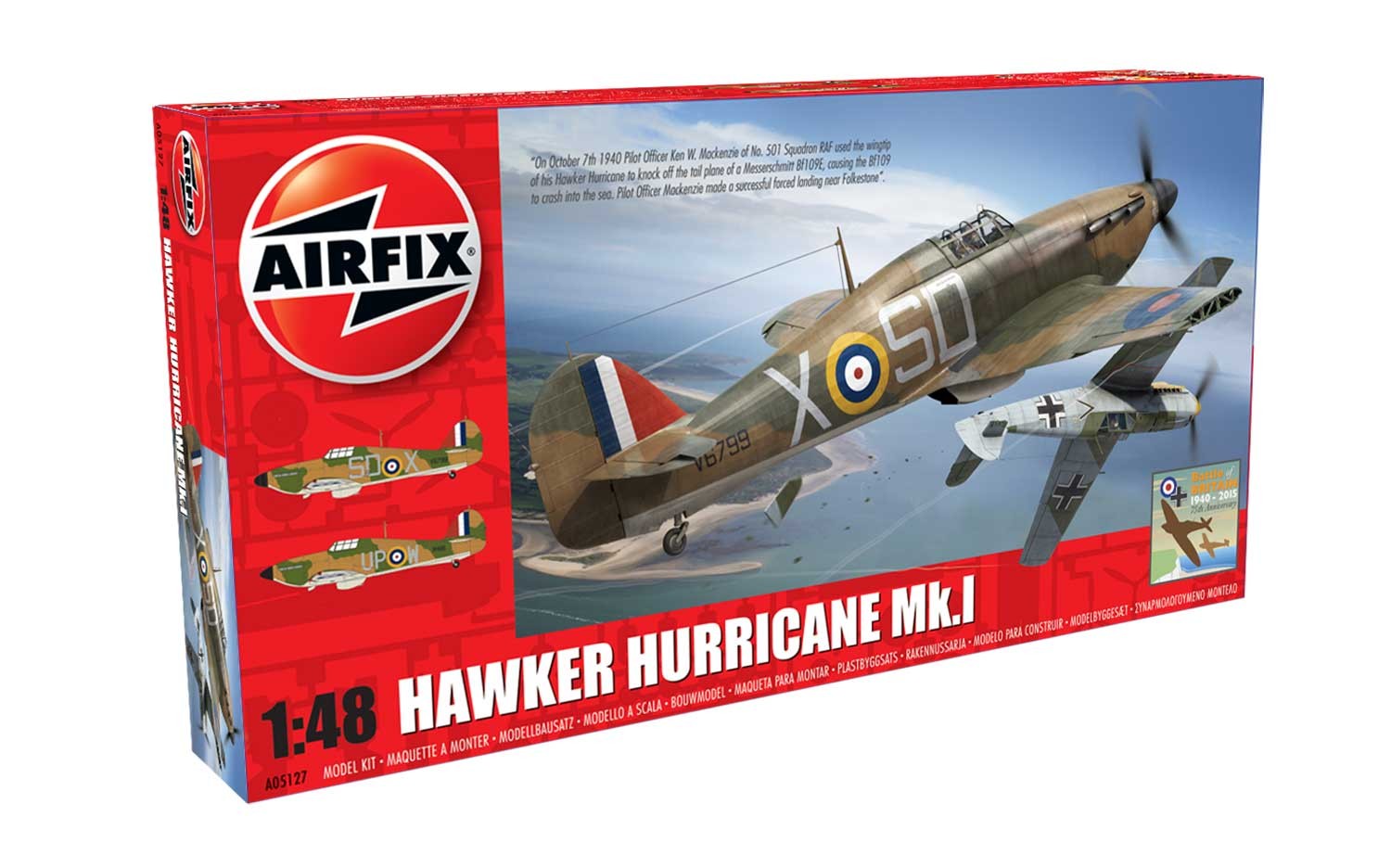
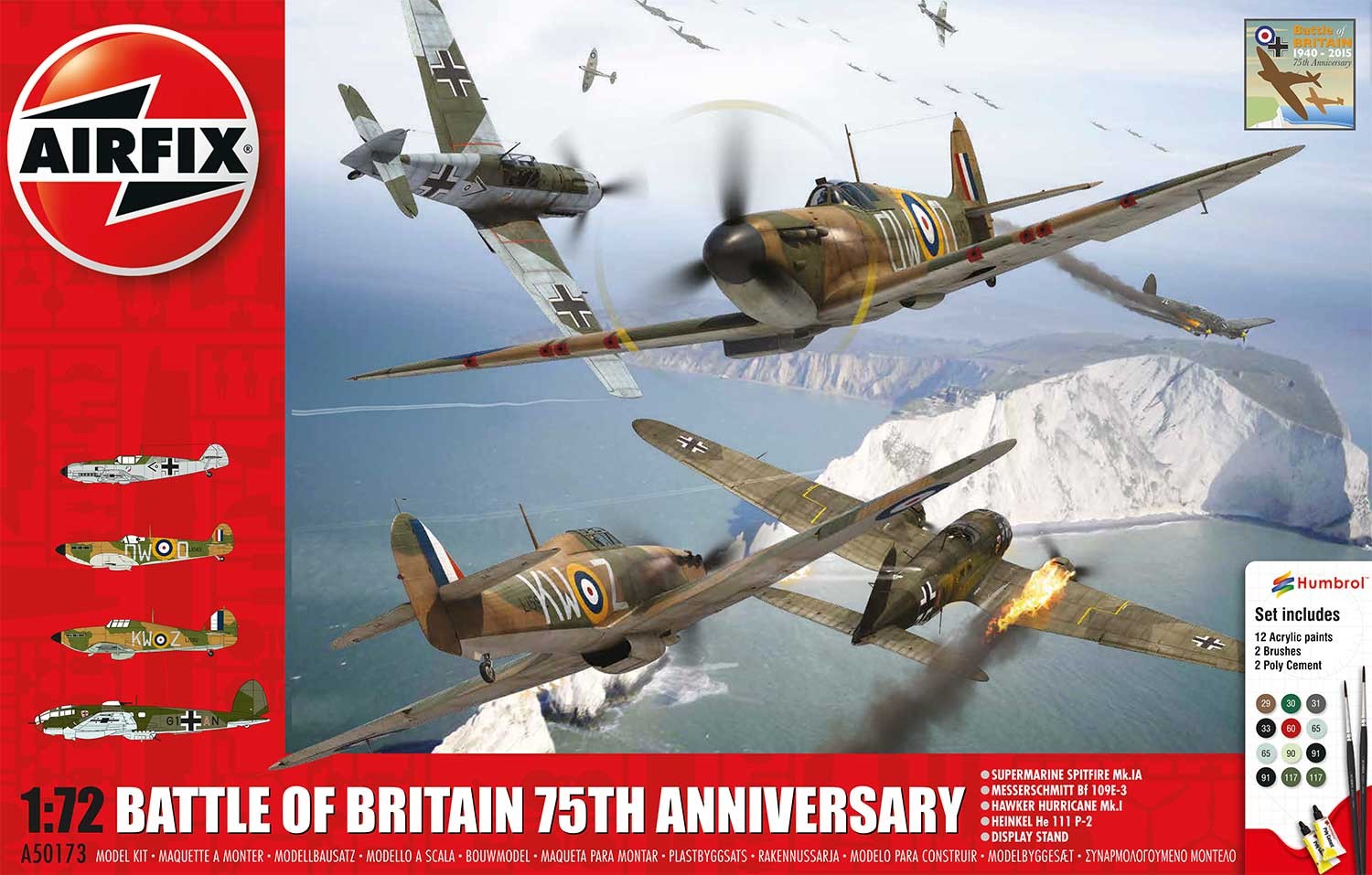
Not to be outdone, Airfix currently have several different incarnations of the Hawker Hurricane available, including the magnificent 1:48 Hawker Hurricane Mk.1 (pictured above), the 1:72 Hawker Hurricane Mk.1 (A02067), and the 1:24 Hawker Hurricane Mk.1 (A14002A), in addition to a Hurricane included in the 1:72 Battle of Britain - 75th Anniversary Gift Set (A50173).
I hope that you have enjoyed the latest edition of Aerodrome and that you think I have done justice to the exploits of the often maligned Hawker Hurricane and its successes during the Battle of Britain. I will be back next week with more from the world of aviation.
You can discuss this week's blog on the Airfix Aerodrome Forum or Corgi Aerodrome Forum, and if you have any comments, questions or suggestions for future editions, please feel free to let us know on Airfix Facebook or Corgi Facebook, or on Airfix Twitter or Corgi Twitter using #aerodrome.
Michael
© Hornby Hobbies Ltd. All rights reserved.

