

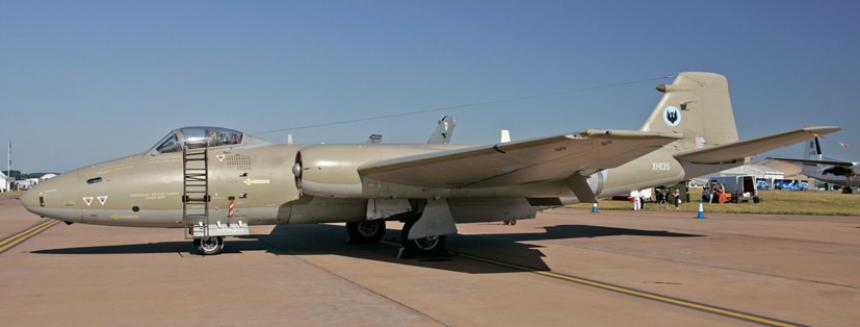
As we find ourselves in the midst of the most hectic period of the 2017 Airshow season, with both the Fighter Collection’s Flying Legends and the Royal International Air Tattoo events taking place over consecutive weekends, we are going to be taking a break from show reviews in this latest edition of Aerodrome. With extensive reports from both shows planned for future blogs, you will not miss out on any of the aviation action from either Duxford or Fairford, but for edition 74, we are going to be raiding the archives. From a time when the British aviation industry was very much the envy of the world, we will be focusing on an aircraft which was developed as a replacement for the highly capable De Havilland Mosquito and became an aviation classic in its own right. We will also see how this magnificent aircraft placed the English Electric company firmly on the aviation map and was to enjoy an unprecedented 55 year service life with the Royal Air Force.
Before we get started, could we please remind readers that we are looking to make blog stars out of you in a future edition of Aerodrome. As we all head out to Airshows and events all over the country over the coming few weeks, please could we ask readers to send in a small selection of your pictures, which may just appear in our first Reader's Pictures review edition of 2017. Always an exciting feature, it is great to see which events prove to be the most popular of the year, whilst we also get the chance to see what occurred at some of the smaller shows across the country – after all, our weekend passes will only extend so far! Showcase some of your best aviation shots of 2017 and let the world experience the photographic talents of Aerodrome readers. Please send us your images and keep your eyes peeled for this ever popular edition of our Aerodrome blog – you could be one of the photographic stars.

The beautifully clean lines of the English Electric Canberra B.2
Although aviation enthusiasts can usually find particularly interesting and noteworthy features about most types of aircraft if they set their mind to it, there are relatively few aeroplanes from over the past 113 years that can be described as truly ground-breaking, or iconic. Aviation superlatives tend to be thrown around all too easily in recent times, however, very few people would argue against the De Havilland Mosquito being classed as one of the finest aircraft of the Second World War and a successful product of Britain’s aviation industry. That being accepted, try to imagine being part of the team who were challenged with producing an aircraft intended as the replacement for the Mosquito – one that would need to fly higher, faster and potentially be just as versatile as Britain’s WWII Wooden Wonder. Using all the very latest aviation technologies which had developed at such pace through six years of war and you can understand the magnitude of the task facing ‘Teddy’ Petter and his design team at English Electric in Lancashire.
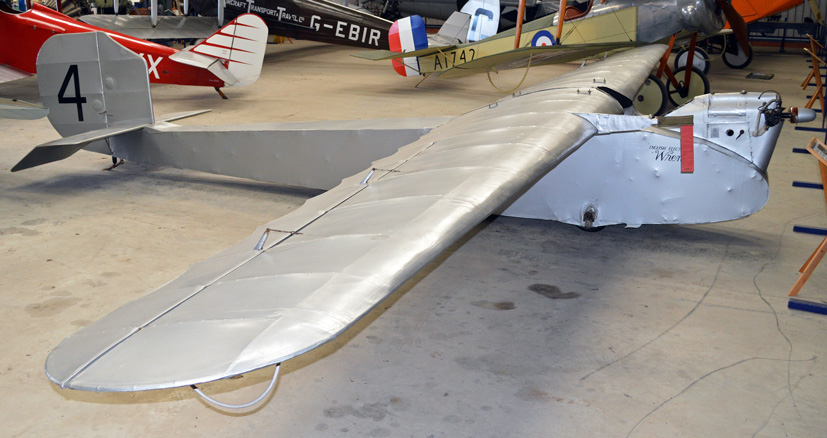
The English Electric Wren on display at Old Warden as part of the Shuttleworth Collection – image credit to Alan Wilson (Wikimedia Commons)
The English Electric company was recognised as an accomplished British manufacturer of electrical equipment, heavy machinery, transformers, trams and railway locomotives. In later years, they also expanded into the growing consumer electronics market, early computer technology and aviation, predominantly developing seaplane designs from their Lytham St Annes facility. In 1921, the company also produced the Wren light motor glider, which was designed to perform short range reconnaissance duties and managed to fly 87.5 miles on a single gallon of fuel, and whilst the aircraft proved successful only three were ever built (one still surviving in airworthy condition with the Shuttleworth Collection at Old Warden).
With the onset of war in the late 1930s, English Electric became much more involved with the production of aircraft, but significantly not machines of their own design. From their factories in Preston and at Salmesbury (near Blackburn), they produced Handley Page bombers for the RAF, first the twin engined Hampden and later the Halifax heavy bomber. At the peak of their production capacity, they were delivering 81 new Halifax bombers to the RAF each month (achieved in February 1944), finally producing a total of 2,145 aircraft, whilst also constructing 770 of the smaller Hampden, which represented over half of the total production run of this aircraft.
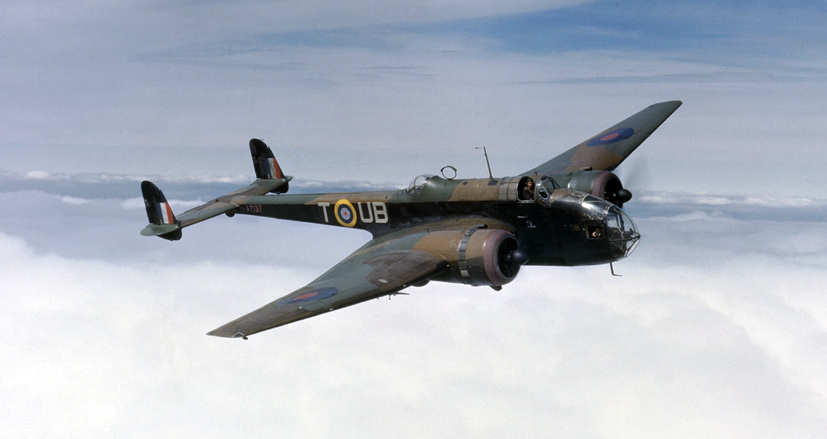
The Handley Page Hampden was built in some quantity by the English Electric Company
With all this invaluable production experience, the English Electric company were determined to produce their own aircraft and embarked on a significant expansion of its design and development department. They secured the services of talented former Westland's designer Teddy Petter, who was allowed to recruit a young and forward thinking team with the intention of working on the development of a significant new aircraft – an intended replacement for the spectacularly successful De Havilland Mosquito. This was a hugely ambitious undertaking for a relatively new aviation company and would be taking their recently assembled design team into uncharted territory. Clearly, their new aircraft would have to fly higher and faster than any British production aircraft had done before, utilising the latest developments in aerodynamic technology and requiring jet engines to reach the high speeds desired. Adopting many of the design philosophies of the Wooden Wonder, the new aircraft would be all about speed, lacking any form of defensive armament, relying simply on its altitude and stealth to avoid interception by enemy aircraft.
Making its first flight in May 1949, English Electric’s new jet bomber showed great promise and was already attracting extremely positive support from the Air Ministry. Even as test pilot Roland Beamont was conducting the first flight of prototype VN799, English Electric had already received an advanced order for 132 aircraft, as the RAF were confident the new aircraft would give them a significant technological edge and were desperate not to delay its service introduction. Now named the Canberra, the new bomber began equipping RAF No.101 Squadron from January 1951, with the Squadron fully equipped just four months later – their aircraft possessed exceptional performance and the RAF knew they had a winner on their hands.

The first prototype English Electric B3/45, which was later named the Canberra
The English Electric Canberra quickly proved to be a great source of national pride for Britain, particularly as the aircraft was coveted by almost every air force in the world. The aircraft possessed incredible performance and almost immediately began breaking aviation records for speed, distance and altitude, underlining its status as one of the most advanced and strategically capable aircraft in the world. It would also be true to say that the Canberra created a few problems for both bomber crews converting to the new aircraft, as well as fighter pilots attempting to intercept them. The aircraft the Canberra was mainly replacing in RAF service was the mighty Avro Lincoln (along with the ageing Mosquito and Washington bombers) and bomber pilots converting to the new jet were facing a huge challenge. They were coming from a large, fairly sedate four-engined bomber which utilised WWII technology, to an aircraft that was the fastest in the RAF, possessing jet fighter performance and littered with the latest aviation developments. It was also reported that during military exercises, the Canberra was so fast and could fly at such extreme altitudes that the Meteor fighters that equipped RAF front line fighter units simply could not intercept it, which was obviously a cause of some embarrassment. This resulted in Canberra pilots being forced to fly their aircraft in a somewhat restricted manner, allowing the Meteors to get close enough to simulate an interception.
The English Electric Canberra is undoubtedly one of the finest achievements of the British aviation industry, however rather than focus on its many records, statistics and accolades, we are going to look at two particular aircraft that are interesting for different reasons, although both serve to mark the long and illustrious RAF service career of this magnificent aircraft. The first aircraft we are going to look at is English Electric Canberra PR.7 WH799, which was involved in a significant incident where one British built jet was shot down by another, only hours before a ceasefire was declared.
During the Suez Crisis of 1956, a detachment of RAF photo reconnaissance Canberra PR.7 aircraft were based at Akrotiri on Cyprus and were engaged in obtaining intelligence information across the region. For identification purposes, the aircraft had yellow and black bands painted around the wings and rear fuselage, similar to the markings applied to aircraft during D-Day operations.

This beautiful artwork depicting the Canberra/Meteor showdown during the Suez Crisis is shown with the kind permission of digital artist Gary Eason
Although Syria was not directly involved in the conflict, they were closely allied to Egypt and many of their pilots had been trained at establishments there. The British military were concerned at reports of Soviet built MiG.15 fighters arriving at Syrian air bases and Canberra PR.7 WH799 was sent to investigate. This unarmed aircraft had been assigned a mission to overfly Syrian air bases of interest, looking for any sign of MiG activity and relying on its speed and agility to avoid interception – no supporting fighter cover was assigned for the mission.
Despite the fact that the Syrian air defence network was basic to say the least, Canberra WH799 was intercepted by a pair of Syrian Air Force Gloster Meteors, ironically only supplied to the Syrians by Britain during the previous year. Attacking from above the Canberra, one of the Meteors saw cannon strikes hit the starboard engine of the British aircraft, which quickly began to lose altitude and make little attempt execute evasive manoeuvres. With his aircraft clearly stricken by the attack, the captain informed his two crew mates to evacuate the aircraft and whilst two of the three men did so successfully, the observer on this flight was tragically killed.
It is sobering to think that the last time a British aircraft was shot down during aerial combat (even though the aircraft was un-armed and engaged in a reconnaissance mission) it was at the hands of another British built aircraft. The Canberra went on to serve the RAF faithfully, with 900 aircraft produced and the final aircraft only retiring after 55 years of magnificent service – Britain’s first jet powered bomber proved to be an exceptional aircraft in every respect.

The Canberra PR.9 was an extremely handsome aircraft
Arguably the most impressive of the 925 British built Canberras were the 23 PR.9 aircraft produced by Short Brothers & Harland in Belfast. The RAF required a new high altitude reconnaissance platform which built on the already impressive attributes of the in-service PR.7 Canberras, with the resultant aircraft being one of the most distinctive jets to see service with the Royal Air Force. Based on the Canberra B(I).8 airframe, the new aircraft had a lengthened fuselage, larger wing area and more powerful Rolls-Royce Avon engines, all designed to give the new Canberra even more performance in the demanding role of high altitude intelligence gathering.
Aesthetically, the Canberra PR.9 was an extremely handsome aircraft which featured an off-set fighter style canopy, greatly increasing the visibility and comfort of the pilot on what could be extremely lengthy missions. This also allowed for the navigator to be equipped with an upward firing ejector seat from his position housed in the hinged nose of the aircraft – although this sounds a little claustrophobic to most, it was actually quite a pleasant environment in which to ply your trade (more on this later). Although the PR.9 may not have been the fastest of the Canberra series, it certainly had the appearance of an extremely speedy aeroplane. For anyone lucky enough to see the last RAF Canberras performing at Airshows around the UK, they will certainly testify that these were exhilarating jet hot-rods, which certainly got the pulse racing.

Many people have described the Canberra as the Gloster Meteor’s big brother

Entering service with No.58 Squadron at Wyton in 1960, the PR.9 provided the RAF with a world class reconnaissance platform which possessed an incredible array of information gathering equipment and was able to operate at altitudes which remained classified throughout its operational career. The Canberra PR.9 was clearly capable of flying at altitudes few other aircraft could hope to attain.
Following an illustrious service career the final RAF Canberra PR.9s were finally retired in July 2006, with each of the remaining three aircraft being at least 46 years old. Described by many observers as the Gloster Meteor’s big brother, or even a Meteor on steroids, the Canberra proved that if an aircraft design is sound enough, it had the ability to survive the ravages of time and technological advances, remaining in service long after more modern aircraft had been consigned to museums and scrap yards. Arguably, the most enduring legacy of the English Electric Canberra is the fact that this first generation jet bomber and reconnaissance aircraft, which was conceived during the latter stages of WWII and introduced just four years after the end of the Second World War, was to remain in RAF service for an impressive 55 years. Quite some achievement for the first jet aircraft design from a fledgling aviation company from Lancashire.

A meeting of aviation classics at Waddington Airshow 2006

The RAF’s final three No.39 Squadron Canberra PR.9s made their final flight from their home base at Marham to their new owners at the former RAF airfield at Kemble on 31st July 2006. Whilst this was undoubtedly a sad occasion for both the crews who flew this final mission and Canberra crews from throughout the aircrafts' illustrious 55 year service career, it was also a moment to celebrate the achievements of Britain’s first jet bomber – an aircraft which led the world and stood the test of time in the demanding world of military aviation.

English Electric Canberra PR.9 XH134 in the sun at RIAT 2006
In the months prior to the final withdrawal from service of the RAF’s last English Electric Canberras, the few remaining aircraft were to become extremely popular Airshow attractions and allowing Britain’s aviation enthusiasts to enjoy the Canberra experience one final time. Performing at the major events at RAF Waddington and the Royal International Air Tattoo, these ageing reconnaissance jets were undoubted highlight acts, with Canberra PR.9 XH134 performing spirited flying demonstrations at both shows. For quite a large aircraft, the PR.9 was certainly a spritely performer and the high speed pass will have been the stand-out moment for many who witnessed these displays. Whilst this was an opportunity for everyone to say goodbye to these venerable old jets, it was also a fitting way for the Canberra to celebrate its many aviation achievements, as well as proving it could still steal the limelight from much more contemporary Airshow display acts.

Blasting into the sky to represent Britain’s famous Canberra force
The Canberra’s attendance at RIAT proved to be particularly memorable for me. Whilst XH134 was thrilling spectators with her dynamic flying demonstration, her sister ship XH135 was the star of the static display, looking absolutely pristine and if she were ready for at least another ten years of service. I had the opportunity to speak to the crew who were only too happy to tell people about their classic jet aircraft and mentioned that my uncle had been a navigator on Canberras. With that, I was ushered over the barriers for a closer inspection of this handsome aircraft, which also included a rather unique and totally unexpected opportunity. The nose of the aircraft was swung open to reveal the navigators position and I was invited to get in. Looking at the limited space and the mass of dials and instrumentation in there, I have to say that I thought this could be a rather uncomfortable experience, particularly as I am 6ft 3ins in height, but I have to say it was deceptively comfortable. As I sat in the navigator’s seat, the nose was closed and I was left to imagine what it must be like to prepare for a reconnaissance mission from the perspective of the navigator. I was left in the aircraft for around twenty minutes and at one point, began to think they might have forgotten I was in there, but they did let me out eventually and I was extremely grateful for this opportunity. I have to say that my experience of a Canberra PR.9 navigator's position was different to what my preconceptions were – rather than being cramped and claustrophobic, it was quite comfortable and a place where you could easily get on with your work. Fortunately for me, my experience was whilst wearing summer clothes, with the aircraft sat firmly on the ground and not wearing full flying kit, travelling at 550mph at 60,000 feet, where it may just have felt a little less comfortable.

A selection of images taken during my fortunate inspection opportunity of Canberra XH135 at RIAT 2006


For her final Airshow appearances, English Electric Canberra PR.9 XH134 was presented in a special commemorative scheme to mark both the end of RAF Canberra operations and also the impending disbandment of No.39 Squadron. The aircraft wore a smart blue/grey tail, with a large representation of the Squadron’s ‘flying bomb’ badge insignia. It also included the Squadron badges of the other RAF units that operated the PR.9 version of the Canberra, No.s 13, 39, 58 Squadrons and No.1 PRU. To complete the commemorative tributes, both sides of the forward fuselage carried the 39 Squadron badge and the legend ‘1916 – 2006 end of an era’. Wearing the standard PRU hemp and grey scheme, this was an extremely striking aircraft and one which provided an attractive focal point for the Canberras withdrawal from RAF service and the end of a glorious 55 years of flying.

A close up of the special nose artwork applied to XH134
The final three RAF PR.9 Canberras arrived at Kemble airfield on 31st July 2006 and are heading towards something of an uncertain future. Even though there were rumours circulating that the new owners intended to keep at least one of the aircraft in airworthy condition, many enthusiasts were uncertain as to whether they would ever see a PR.9 take to the skies again. XH131 was to eventually return back to Northern Ireland, where it joined the collection of the Ulster Aviation Society, whilst the aircraft I was lucky enough to sit inside, XH135, was used as a spares ship to keep the final Canberra XH134 in as near to airworthy condition as possible.
Just as the beautiful Canberra PR.9 was beginning to slip from the memory of most aviation enthusiasts, there was an exciting development during the summer of 2013. Following an eventful seven year renovation and still wearing the special RAF No.39 Squadron disbandment scheme, English Electric Lightning PR.9 XH134 flew to Fairford and RIAT 2013, to take its place in the static display. The aircraft had not been granted a display authorisation, so it would be staying firmly on the ground for the weekend, but the sight of this magnificent aircraft amongst the aviation delights on display at Fairford caused great excitement and left everyone hoping for much more.

Images of the same aircraft in almost the same spot, eight years apart. Canberra XH134 in RAF disbandment livery at Waddington Airshow in 2006

XH134 wearing a smart new silver scheme at Waddington 2014
Display authorisation was granted too late for the aircraft to make a significant impact on the 2013 Airshow season, but there was great optimism that the following year would see the Canberra PR.9 once again take its place on the UK Airshow season. In what turned out to be a particularly poignant occasion, XH134 made her triumphant return to the RAF Waddington Airshow in July 2014, eight years after she last graced the skies of Lincolnshire. Wearing a smart new all silver scheme, the Canberra put on its usual spirited display and delighted the crowds at Waddington who knew they were looking at a piece of aviation history. Unfortunately, the world of classic jet aviation is an expensive and volatile one and the Canberra was withdrawn from the Airshow display scene during the 2015 season and later offered for sale by its owners. To the best of my knowledge, the aircraft is still currently at Kemble airfield and it is uncertain as to whether it will ever take to the skies again – as one of the best looking and most significant jet aircraft in the history of British aviation, it will be a shame if XH134 cannot act as a flying tribute to this magnificent aircraft.

Coming in for a landing at Waddington after wooing the Lincolnshire crowds
I am afraid that’s all we have for you in this latest edition of Aerodrome, but we will be back with more news and exclusive aviation pictures in the 75th edition of Aerodrome. As mentioned in our previous blog, we are planning to schedule our popular Reader's Pictures Edition soon, where we feature the aviation photography skills of Aerodrome readers from around the world. If you would like to take part and have some of your pictures included in the 2017 edition of readers pictures, please send your images to aerodrome@hornby.com - we will give you plenty of notice as to when this edition will be published, as we know you would not want to miss your moment of photographic fame!
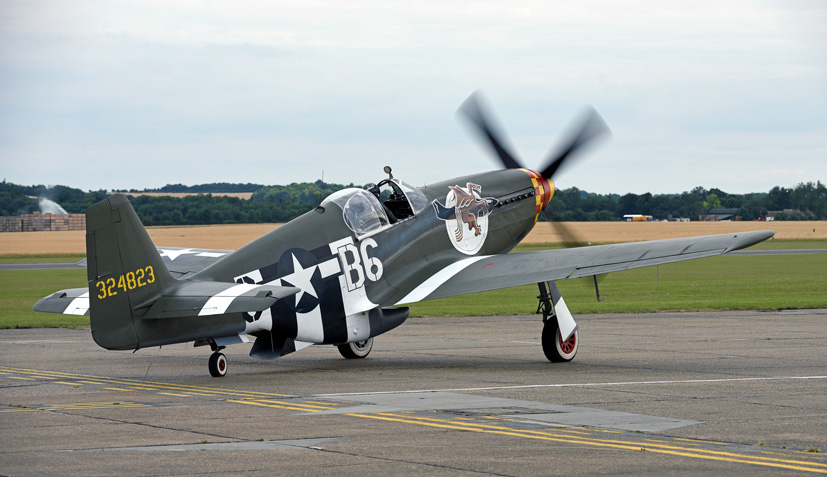
Just a little inspiration - P-51B Mustang ‘Berlin Express’ from this year’s Flying Legends Airshow
As usual, if you would like to join in with all the latest social media discussions regarding Aerodrome and aviation matters in general, please head for either the Airfix Aerodrome Forum or our Corgi Aerodrome Forum and have your say. If you have any specific comments, questions or suggestions for future editions of Aerodrome, please do feel free to let us know by using either the Airfix Facebook or Corgi Facebook pages, or our Airfix Twitter or Corgi Twitter accounts, using #aerodrome – if you are Twitter regulars, you will know what this means! If good old fashioned e-mail is more your style, please use our usual address at aerodrome@hornby.com where we will be only too pleased to hear from you.
We look forward to posting our next blog on Friday 28th July, where we will be focusing on one of the world’s classic Warbird Airshows – Flying Legends.
Thank you for continuing to support our Aerodrome blog.
Michael
© Hornby Hobbies Ltd. All rights reserved

