

In the years immediately prior to the outbreak of the 1914-18 Great War, aviation was very much in its infancy. The use of tethered balloon aircraft was becoming commonplace and designers were desperately trying to perfect the ability to power and control these balloons more effectively, but there was no doubting that aeroplanes were very much considered experimental technology.
The widespread use of balloon technology arose from the desire to obtain a better view of the battlefield – military commanders quickly began to realise that the ability to view the battlefield from a position high above the ground would allow them to better interpret the battle situation and accurately direct artillery fire onto enemy positions. This was of such critical importance to the military that the government established the Royal Balloon Factory, to formally drive the development and introduction of this technology and the more advanced dirigible (Airship).
As the dark clouds of war began to gather over Europe, the War Office authorised the continued development of balloons and airships, but the highly experimental aeroplane technology, which was just beginning to gain momentum, was now discouraged. Up to this point, they had invested a significant amount of money in supporting the aeroplane, but with war looking increasingly likely, they did not see that their investment had resulted in significant enough development and they preferred to proceed with existing, proven technologies. They did however, allow the factory to continue to be involved in the re-construction of damaged, existing aeroplanes and this was to prove to be all the flexibility the engineers needed. The Government's reluctance is hardly surprising, as Britain had only just seen its first official manned powered and controlled flight – the British Army Aeroplane No.1 took to the air on 16th October 1908 and even though this flight only lasted for 27 seconds, the potential it provided pioneer British aviators was unquestionable. Despite the reservations of the War Office, designers and engineers were certain that the aeroplane would be a much more flexible approach to manned flight and were determined to develop the technology at every available opportunity.
Aeroplane designers are undoubtedly extremely clever people and the authority to re-construct aeroplanes was the only encouragement they needed – this designation allowed just enough of a grey area to be useful in the continuation of their work. Using a French Bleriot monoplane as the base aircraft, RBF engineers built their first aeroplane and even though it was supposed to be a refurbished Bleriot monoplane, a large amount of poetic licence was employed on this project, to the extent that only the engine was retained from the original aircraft. This ‘flexible’ approach was also used on the next aircraft to be sent to the factory for repair – a Voisin biplane. This aircraft was to be significant in the history of British aviation, as it re-appeared as a newly designed aeroplane, changing from an obsolete pusher biplane, to a two-seat tractor biplane, with a distinctive ear-shaped rudder and again only retaining the engine of the donor aircraft. Referred to as a B.E 1 (Bleriot Experimental), this new aircraft was the first Factory aircraft to feature silencers on the exhaust stacks, resulting in an extremely quiet engine operation and leading to the aircraft being referred to as the ‘Silent Army Aeroplane’. It was to also signal the start of a successful series of government produced aircraft, which were in effect, the first practical military aeroplanes supplied to the Royal Flying Corps, the later versions of which were some of the first British aircraft sent to France, during the Great War.
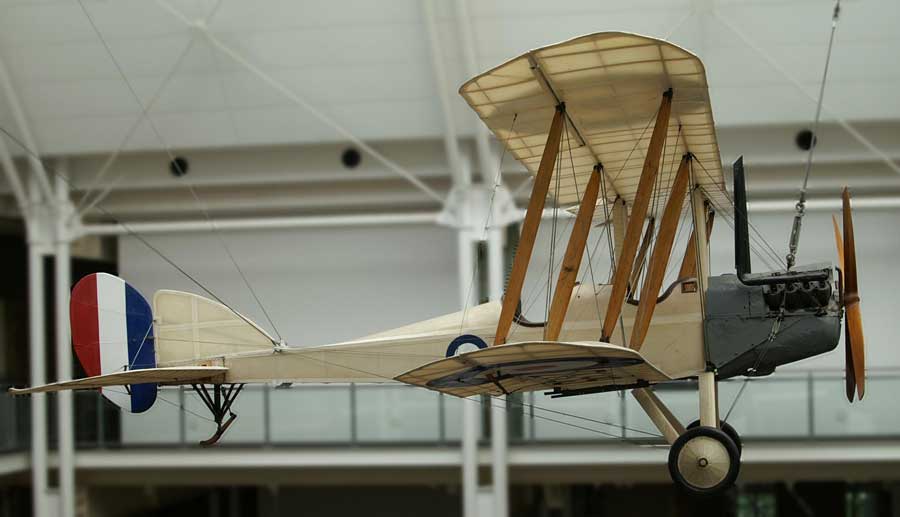
A preserved BE2c reconnaissance aircraft
With the declaration of war in August 1914, any reluctance from the War Office to fund aeroplane development and production was finally removed and investment began to flow. Unfortunately, their lack of foresight over the preceding years meant that only experimental aeroplane designs, or existing airframes could be rushed into production and these would have to immediately go to war. One of the most interesting aircraft of the day was the BE2c.
When considering the development of the Royal Aircraft Factory BE2c, it is difficult to see how things could have been handled differently. At that time, aerial reconnaissance was the military ‘be all and end all’ and aviation was still very much in its infancy. The fear of fast, effective pursuit fighters attacking your reconnaissance aircraft, was not really a concern at the time, so you have to have some sympathy with the people involved in the development of the BE2c, which was to become known as something of an aerial death trap.
A brilliant aircraft designer and mathematician, Edward Teshmaker Busk had recently joined the Royal Aircraft Factory staff and was certain that he could make a significant contribution. Early aeroplanes were particularly twitchy and unstable and Busk was determined to do something about this – reconnaissance and the taking of aerial photographs of enemy positions, was the most important attribute required of the aeroplane at this time. Busk was an extremely talented designer and he engaged in a major re-design of the BE2 airframe, to make it much more stable and therefore, more reconnaissance friendly. He cleverly re-designed each part of the aircraft and considered how each component would interact with other parts around it – the result of this painstaking work was that the BE2c was an incredibly stable aeroplane. The weight distribution was such that under most flights circumstances, the aircraft would tend to almost right itself to level flight, without any major input from the pilot!
It is important to consider that what Busk was trying to achieve with the BE2c flight characteristics, he did so spectacularly well. He produced a reconnaissance aircraft that was extremely stable and would allow crews to achieve their mission objectives much more successfully than any aircraft currently in service. It was therefore no surprise that the service introduction of the aircraft was rather successful and it even took on some light bombing duties, but unfortunately, things were about to change for the worse. The need to deny the enemy the ability to gather reconnaissance information became of paramount importance to combatant nations and the appearance of effective German fighter aircraft changed the fortunes of the highly stable BE2c dramatically.
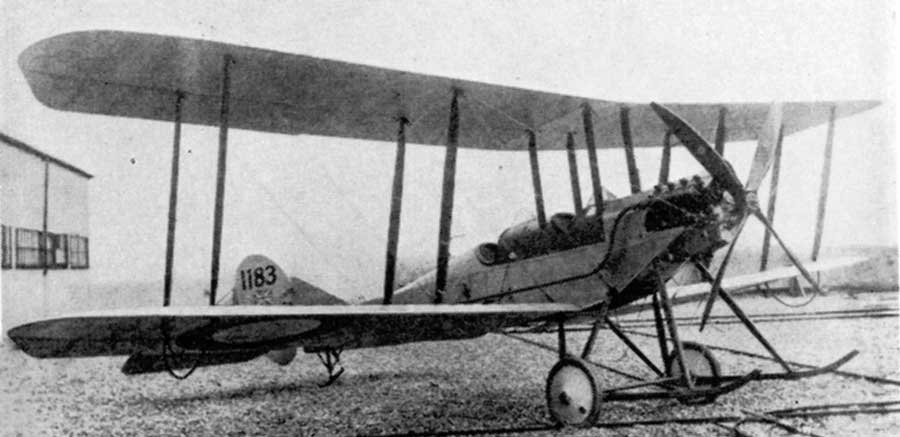
An original image of an early BE2c
As the air war on the Western Front entered an entirely new phase, the designed flight stability of the B.E 2c was to prove disastrous for the pilots of the RFC. When the BE2c was subjected to attack by enemy pursuit aircraft, it was almost incapable of defending itself – it was so stable, that the aircraft did not want to fly in anything other than a straight and level attitude. To make things worse, the observers/gunners position was in front of the pilot and was basically boxed in by surrounding struts and wires. Even if a defensive gun was attached to the aircraft, the gunner would be restricted to either shooting back over the pilots head, or shooting straight forward and running the risk of shooting their own propeller off!
As more capable German fighter aircraft were to reach the Western Front in larger numbers, the BE2c was to suffer terribly. The new Fokker Eindecker monoplane fighter gave the German Air Service a significant advantage, but as the BE2c was one of the most numerous Allied aircraft types in theatre, they were forced to keep flying into the teeth of this Fokker storm. The period which was referred to as the ‘Fokker Scourge’, led to the destruction of large numbers of BE2c reconnaissance aircraft and with the lack of effective RFC fighter protection, simply made the situation worse – the BE2s kept on flying and the Eindeckers simply kept shooting them down. The losses were so significant, that the British press christened the BE2c ‘Fokker Fodder’ and the German airmen gave it the name ‘Kaltes Fleisch’, which rather distressingly translates loosely as ‘Cold Meat’.
Famous British fighter pilot Albert Ball summed up the sentiments of the day regarding the BE2c by simply describing it as ‘a bloody awful aeroplane’! The poor performance of the BE2c against the Fokker fighters even made it as far as the House of Commons, where a member of parliament attacked the design of the aircraft and the Royal Aircraft Factory as the manufacturing company, in a high profile speech. Noel Pemberton Billing described RFC pilots flying the BE2c in France as being “Murdered, rather than killed” and many of the design team at the Factory were either dismissed, or left to pursue other careers.
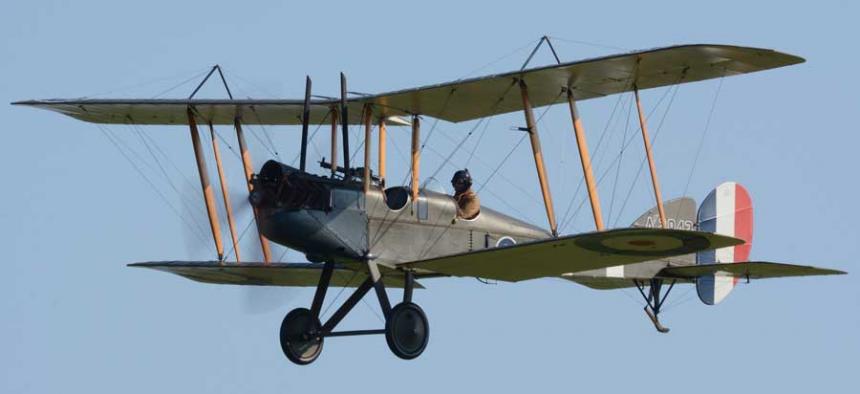
There is no doubting that the Royal Aircraft Establishment BE2c was a flawed aeroplane, when reviewing its operation on the Western Front and that many brave airmen were to lose their lives whilst flying it. The excellent stability that made it such a good reconnaissance platform, also made it an easy aircraft for Luftstreitkrafte fighters to shoot down, but this does not really tell the whole story. The fact that Germany had wrestled air superiority at that time of the war and the BE2c could not rely on effective protection from it’s own fighters, most definitely exacerbated the difficult situation it found itself in. Once it was eventually withdrawn from service on the Western Front, it continued to provide excellent service as a trainer and submarine hunter, but was to prove particularly successful as a nightfighter. Unfortunately, due to the excessively high loss rates it suffered in France and the large number of airmen who were to loose their lives, the BE2c would never recover its reputation.
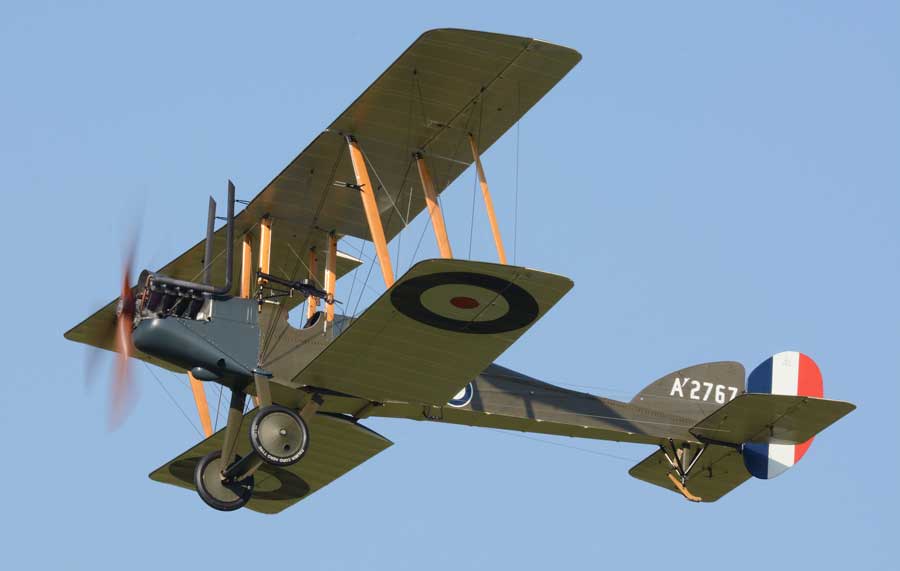
A new build BE2c pictured at an Old Warden Airshow in 2014
One of the most interesting aspects of the First World War conflict in the air were the Zeppelin bombing attacks against Britain – the first Blitz. These mighty airships would launch raids against the UK from bases on the North West coast of Germany and often in some numbers, and at the time of the first raids Britain had almost no defence to these incursions. The UK population had so far only read about the horror of war in the daily newspapers, but now civilians were under direct attack in their own homes and they were petrified. What made the Zeppelin raids even more sinister was the fact that these leviathans of the sky came out of the dark night skies and if the commander turned off the engines of his machine, they were almost silent until the bombs started to impact, which really did increase the terror factor of these mighty weapons. Although initial damage was only slight, casualty numbers began to increase and the population at large referred to the Zeppelins as ‘Baby Killers’ – they demanded that the government act to protect them against this silent night killer.
The War Office were quick to act and even though the measures they put in place were not particularly effective against Zeppelins, they provided the reassurance that the civilian population needed. Searchlight batteries and anti-aircraft guns were sited around the country and aircraft were recalled from the Western Front, to form a new night-fighter force, in order that they could challenge the marauding Zeppelin raiders. It was not until early September 1916 that a home defence aircraft shot down the first Zeppelin, but the event was celebrated in Britain as a spectacular success against the feared silent killer of the dark.
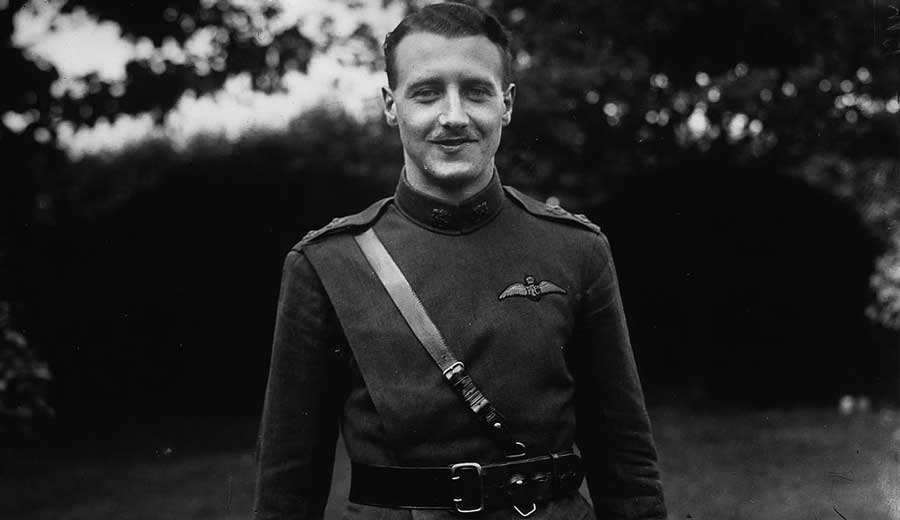
RFC pilot Lt. William Leefe Robinson
On the night of 2/3rd September 1916, Lieutenant W.L Robinson took off from his home airfield of Suttons Farm, near Hornchurch in his converted BE2c nightfighter and climbed to meet a reported Zeppelin raid. Little did he know that over the course of the next few hours, he would become the most famous man in the Commonwealth and a national hero! On this night, no fewer than 16 German airships had left their bases for a large scale raid against Britain and although a number were to turn back, due to technical issues, this was the first time that Army and Navy units had combined for a big attack. To say that the airships had targets would be a little fanciful, as this type of raid was subject to a number of specific factors, all of which dictated that these attacks were rather indiscriminate – this significantly increased the fear factor of a Zeppelin attack as far as the public were concerned. It also has to be stressed that to the British public, all German airships were Zeppelins, even though this was just one of a number of airship manufacturers at the time, but as Count Ferdinand von Zeppelin was the pioneer of this type of aircraft the rather appropriate name stuck.
As this was going to be a night patrol, Lt. Robinson had put his flying suit and over-jacket on top of his pyjamas and smeared whale oil all over his face to afford him some protection against the cold air he would be flying in. His Lewis machine gun was loaded with the new Brock and Pomeroy incendiary ammunition, which was filled with nitro-glycerine and was designed to ignite the gas which kept the Zeppelin in the air. The BE2c took off from Suttons Farm and headed for its allotted patrol area.
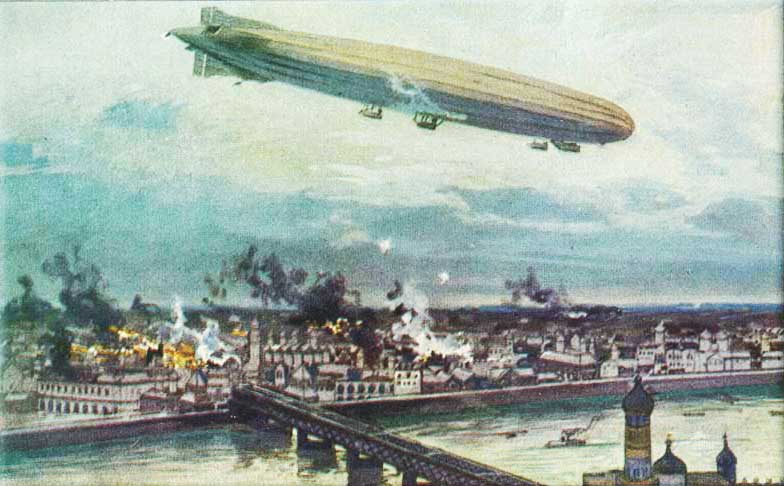
A painting of a WWI Schutte-Lanz airship attack
At 1:15am on Sunday 3rd September 1916, flying through intermittent cloud cover, Lt. Robinson spotted the German Airship LZ38, which had just bombed the Dungeness area. Lightened by releasing its bombs, the airship rose steadily and as Robinson closed in for an attack, the airship entered cloud and disappeared from view – frustrated, Robinson searched the area for some time, but to no avail, the airship had escaped him. Undaunted, he was determined to find a craft to attack and even though he had already exceeded his intended patrol time, Robinson turned his aircraft towards the capital. Attracted by search light beams and the flash of explosions, Robinson headed in the direction of London hoping that the capital's searchlight batteries would illuminate another airship. His perseverance was rewarded and he spotted airship SL.11 in the searchlights – a Schutte-Lanz produced wooden framed machine. Despite the heavy ground barrage being hurled at the night raider, Robinson flew straight towards the raider, determined not to let this second airship escape his attentions.
As SL.11 was caught firmly in the searchlight beams, it was forced to manoeuvre violently in an attempt to evade their attentions. Once again, the airship entered cloud and Robinson was fearful that he would be thwarted for a second time – the anti-aircraft guns fell silent and Lt. Robinson continued to search for his intended prey.
From the ground, thousands of people had been woken by the commotion and had come outside to stare skyward at the drama taking place high above them – each one of them seemed oblivious to the possibility of being killed by falling bombs, or being injured by flying shrapnel. This was a show that was just too good to miss!
Back in Lt. Robinson’s BE2c and his determination had paid off – the airship emerged from the clouds and the anti-aircraft guns burst in to action once more. To prevent damage to his own aircraft, he fired off a red very flare to alert the gunners of his intention to attack – the guns fell silent once more and thousands of people held their breath. Robinson had his chance and he was determined to take it. Cocking his Lewis gun, he dived underneath the huge airship and commenced his attack, using a tactic developed following a number of previously unsuccessful night fighter attempts to bring down a mighty Zeppelin. The Lewis gun on his BE2c was situated above his head and angled upwards at approximately 45 degrees, which allowed the pilot to attack the airship from below. Using the new incendiary ammunition, Robinson flew below the airship, down the length of its belly and discharged a full magazine into the balloon – nothing! The airship continued on its course and despite flying right underneath this gas filled beast, the attack appeared to have no effect. Robinson quickly loaded a second ammunition drum on to his gun and positioned his aircraft for another attack run. Again flying right underneath the airship, the full length of its giant frame, he fired another full drum of ammunition, but again his attack appeared to have had no effect. He reported that he did not think the crew of the airship even knew he was there, as they did not put up any defensive fire at all during the entire engagement.
Robinson had just one final opportunity for success and he attached his last drum of ammunition to his gun and prepared for another attack run. This time, he decided to try a different tactic and intended to fire the entire magazine on the same area of the airship. He dived beneath the raider once more and pulled the trigger – every bullet entered the massive bulk of the airship in the same concentrated area and he looked back for telltale signs of success. Again, initially there did not appear to be any sign of damage to his intended prey, but then he noticed a pale glow, deep inside the hull of the monster. Within seconds, this had grown into a bright red fireball, which grew larger with every passing second – he had done it! In what must have made for a surreal sight in the dark night sky, the burning airship continued to fly on in a slow, almost majestic manner, as if totally oblivious to the fact that it was in its death throws. Burning strips of fabric began to fall from the structure, as the fireball grew in intensity, illuminating the fabric-covered wings of the BE2c, so they almost appeared translucent. It was a spectacular sight for sure, which masked a hideously macabre undertone – the sixteen man crew of the airship were being burned alive, as their aircraft glowed. Slowly, the entire structure was engulfed in flame and it began to sink earthwards.
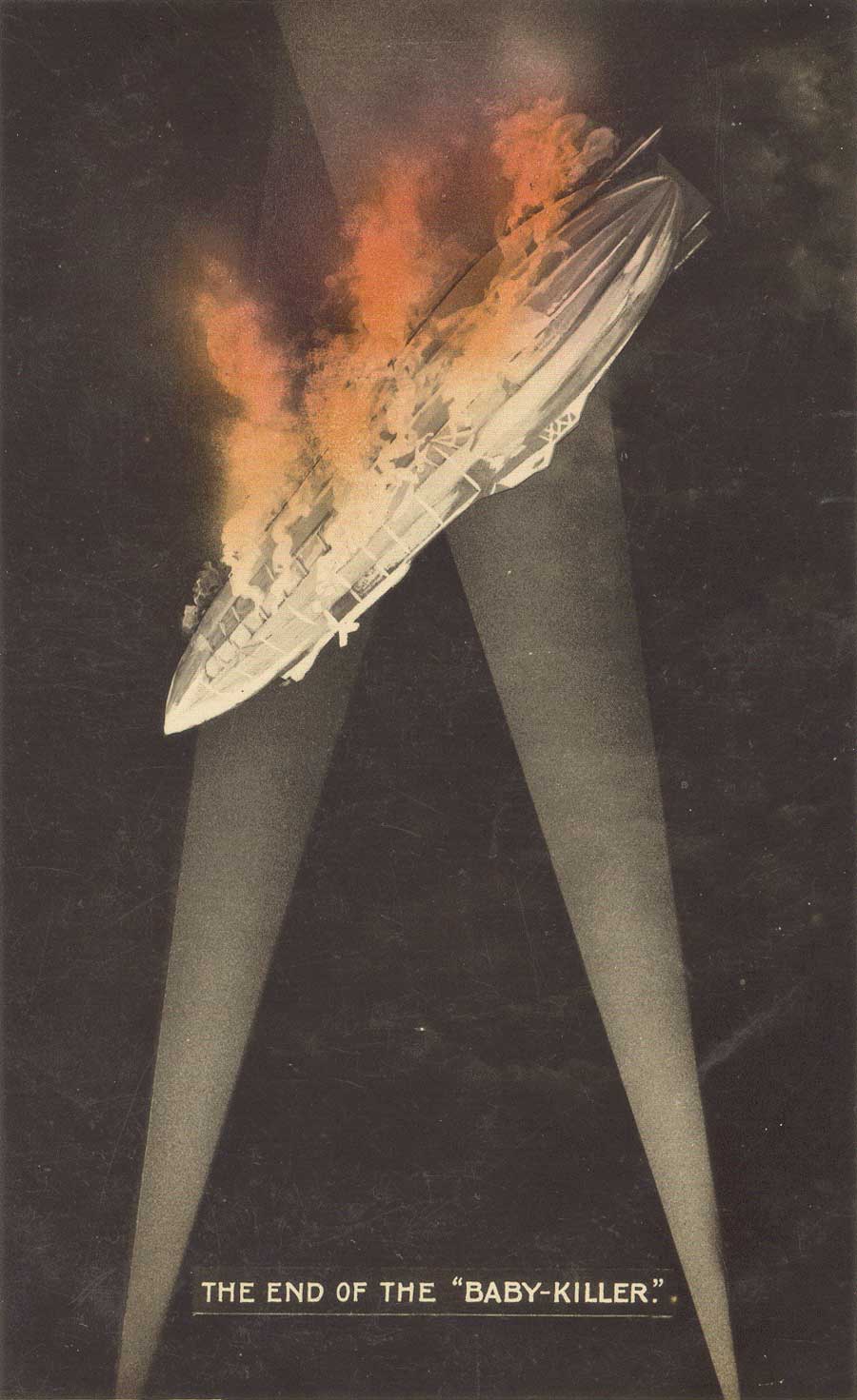
Publicity image of the downing of a Zeppelin intruder
For people viewing this incident from the ground, this would have made for a spectacular sight. The huge fireball in the sky illuminated everything for miles around and would have been clearly visible to many thousands of onlookers. When you consider that the German airship raiders had absolutely petrified the general population for the past few months, the sight of one of the ‘baby-killers’ being blown out of the sky would have been met with unbridled joy. A spontaneous cacophony of cheering and clapping broke out, with many shouting “God save the King”. This was joined by the sound of train whistles blowing, factory hooters sounding and riverboat sirens all making their own contribution to the sentiment of rejoice and approval as the burning airship sank to the ground. A terrified civilian population had their long awaited vengeance over the feared Zeppelin.
The additional length of this eventful patrol had left Robinson’s BE2c dangerously low on fuel and engine oil – indeed, as he brought the aircraft in for a landing back at Suttons Farm at 02:45 in the morning, he only had half a pint of fuel remaining in his tanks. Frozen with cold and absolutely exhausted, Lt. Robinson brought his aircraft to a halt, hoping to catch up on some well earned sleep – unfortunately, he was required to play his part in the extraordinary drama of the nights events. Airfield personnel quickly surrounded his aircraft and there was more shouting, cheering and unbridled joy, as the flight had its first victory against the dreaded Zeppelin. Robinson was pulled from the cockpit of his aircraft and carried shoulder high by his comrades, in triumph. By the time they reached the flight office, the squadron telephone was already ringing and the senior commander offered Robinson his hearty congratulations. Unfortunately for the exhausted Lt. Robinson, he also demanded a full written report of the incident, knowing that he would be required to supply such a report to his own superiors in the morning. Robinson duly obliged, before diving into the sanctuary of his bed and trying to catch up on some well earned sleep – as he did, he was already established as a national hero and his life would never be quite the same again.
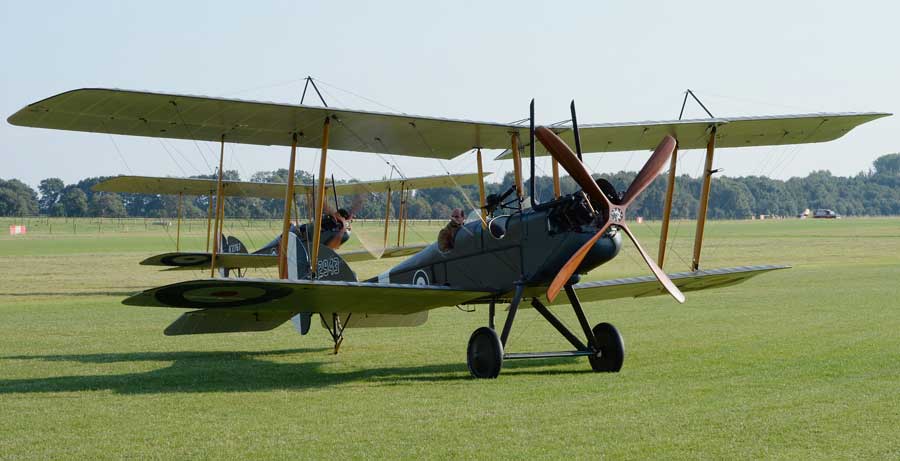
A pair of newly built BE2c reconnaissance aircraft at Old Warden
Just two days later, the press carried the news that Lieutenant William Leefe Robinson, the Zeppelin killer, had been awarded the Victoria Cross for his conspicuous gallantry in bringing down the hated enemy craft. On hearing this news, Britain celebrated once more!
Lt. Robinson was the first pilot to bring down a German Airship over Britain and the first recipient of the VC for actions in the UK. For many within the civilian population, this was the most memorable event of the entire war and Robinson enjoyed absolute celebrity status from a grateful nation.
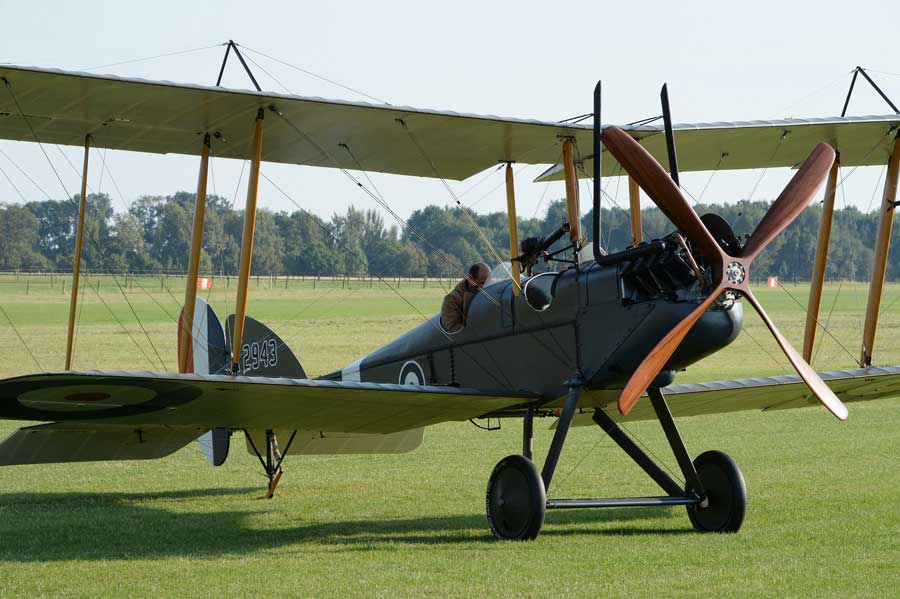
Close up image of the Old Warden BE2c
This incident was also to be the crowning achievement of the much maligned Royal Aircraft Factory BE2c and a further two Zeppelins were to fall to their guns. Unfortunately, it was still on borrowed time and as the airship bombing raids gave way to fixed wing aircraft, the BE2c was obsolete and very much on borrowed time. Soon after the significant events of 3rd September 1916, the BE2c was withdrawn from front line operations and much more successful aircraft designs were introduced to front line squadrons. Although it has been judged as something of a failure, the BE2c was without doubt the victim of a specific set of circumstances, which could not have been foreseen during its development. The rapidly changing nature of aviation during WWI dictated that few aircraft managed to maintain any advantage for long and as the fighter aircraft became the most desirable asset on the battlefield, a dedicated reconnaissance aircraft was always going to be under severe pressure. The fact that so many brave airmen perished flying the BE2 series of aircraft was an absolute disaster for the Royal Flying Corps and did much to tarnish the reputation of this government produced aircraft.
That’s it for this week – I hope that you have found this Aerodrome an interesting read. I will see you in the same place, at the same time next week.
You can discuss this week's blog on the Corgi Aerodrome Forum, and if you have any comments, questions or suggestions for future editions, please feel free to let us know on Facebook or Twitter using #corgiaerodrome.
Enjoy your modelling
Michael
© Hornby Hobbies Ltd. All rights reserved.
Archive images licensed under Public Domain via Wikimedia Commons.

