Painting model tanks: a beginner’s guide
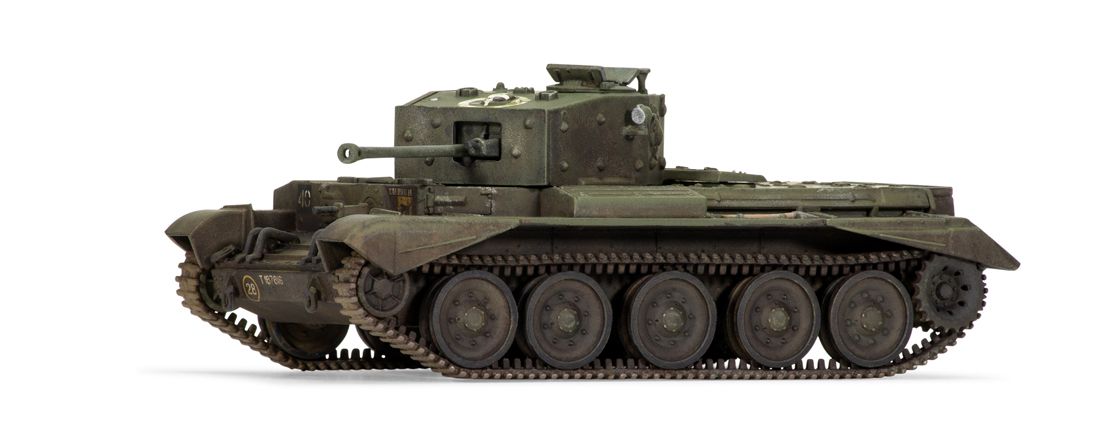
Welcome all to Airfix’s official model tank painting guide, packed to the brim with all the model tank painting tips we could think of, to get you going on your model tank journey! It can be intimidating, standing on the precipice of such an intricate hobby, armed only with a paintbrush pulled from the depths of the cupboard under the sink, and a can-do attitude. Never fear — we’re here to lead you through the setup, build, and paint job!
Preparing your painting area
We’ll start slow. Our first step is to assemble your workbench. Don’t worry too much about having a professional setup right off the bat, any hard surface will do. Your workbench can be anything from a desk to a dining table, — you only need to make sure that it’s sturdy and a place no one will mind if you spill some glue or paint.
Now for the supplies! We recommend a reliable chair and some stellar lighting. You need to be comfortable and able to see everything you’re doing clearly. This is especially important when it comes to painting the finer details. We also suggest a good supply of paper towels to keep ready for spills and any excess paint.
After that, assemble your self-cutting mat (the best in the business in terms of mats), glue, paints, brushes, a hobby knife, and nippers (a clipping tool designed to remove any extra plastic).
Assembling your model tank
Some of our model tanks come with a little assembly required, so we’ve included a few useful tips and tricks here to get you back on track to paint.
You will need your trusty nippers to clip the tank pieces out of the sprue and then cut away any excess plastic still stuck on your model using a hobby knife. Your hobby knife should look like a little scalpel and to avoid re-enacting a particularly gory scene from Grey’s Anatomy or Casualty, make sure that you’re only ever cutting down on the mat Fingers and various other limbs inside the aircraft at all times please, ladies and gentlemen.
Once you have done this, grab the plastic glue and attach the pieces to each other so that you’re ultimately left with a tank (or vague tank shape)!
Priming your tank
The final bit before we move onto the painting itself, is the priming of your tanks. Priming is an essential step because it makes it much easier to apply multiple layers of paint. Think of priming as creating a canvas on your model. It also helps to enable a more even finish on the figure.
If you’re not sure where to purchase a reliable can or pot of primer, the Humbrol website has primer in bucketloads. It’s important to note that whilst some cans are explicitly labelled ‘primer’, really any spray can will do depending on what sort of undercoat you want. For example, a spray can of black paint can give depth to other dark colours such as a forest green (ideal for tanks). Whether you’re a spray can whiz or a pot classic, Humbrol has it all. Just make sure that you’re picking the right primer for your project!
Start painting!
Finally, we’re going to give you some top tips to actually painting your model tanks. The trick to creating a truly breath-taking paint job is to know which brush works best for each aspect. The different sizes are an important distinction- the larger brushes are ideal for covering bigger surface areas whilst smaller brushes are perfect for the dizzying detail you need to make your model come alive. A great tip to keep in mind is the dry brush technique. You apply paint to a brush and then wipe as much of the paint off on a paper towel as possible. Then you sweep the brush over certain parts of your model and this gives it a fantastic texture.
When it comes to the actual painting, many modellers have found it best to start by colour blocking and then adding your detailing last. It’s good to start with thin layers of paint and it’s far easier to build it up later than it is to try to cover a thick initial layer. Thin layers help the drying process and ensures that your coats will dry smooth and even.
In terms of colours, we have found great success in colour blocking with all your dark colours first and then layering the lighter ones on top. This will provide a lovely dimension to your models and ensure that your chosen colours really pop. A beloved technique of many modellers is edge highlighting, where you go in with lighter colours and brush them along the edges of certain points on your figure (where the sun might hit a vehicle). This is a great way of breathing life into your models.