Painting army miniatures: a beginner’s guide
The hobby of modelling has long been a fantastic distraction from the outside world. There’s truly nothing more calming than sitting down, popping on your favourite podcast or album, and spending some time working with your hands. Creating something from nothing, breathing life into a project, is a sure-fire way to bring home a sense of fulfilment (without the need for the 21st century white noise).
A tried-and-true facet of this hobby is miniature figure painting, which is what we’re going to discuss here. Although this might not be the first thing that jumps out at you when beginning to explore the hobby for the first time, our beginner’s guide to painting miniatures is sure to change your mind! Whether you’re interested in the history of armies, looking for a project, or simply needing some ‘me time’, Airfix has got you covered.
Preparing your painting area
What’s our very first step then? You need to assemble the place where the magic will happen — your workbench. Now, don’t be intimidated, we modellers tend to call anything a workbench as long as we can sit at it comfortably and miss a cheeky drop of glue here and there. Your workbench can be anything from a desk to a dining table, through to a camping table in the garage you’ve been banished to. As long as it’s sturdy and not likely to tip at the final hurdle, you have officially found your base camp.
Onto the immediate supplies! It may seem a little obvious but for a really good miniature figure-painting setup, you’ll need a reliable chair and some seriously good lighting. Trust us, bad lighting has ruined more projects than we care to admit; poor lighting can cause you to miss important details on a model! Once your workspace has been sorted, cast your mind back to your GCSE art days. You’ll need a good supply of paper towels to tackle spillages, war wounds (the miniature figures, not yours), and to wipe off the paintbrush every now and again.
After that, assemble your self-cutting mat (the best in the business in terms of mats), glue, paints, brushes, and nippers (a clipping tool designed to remove any extra plastic).
Assembling your figures
This next section is specifically for those of you who need to do a little work before we get to the painting. Some of our miniature figure sets come with a little assembly required, so we’ve included a few useful tips and tricks.
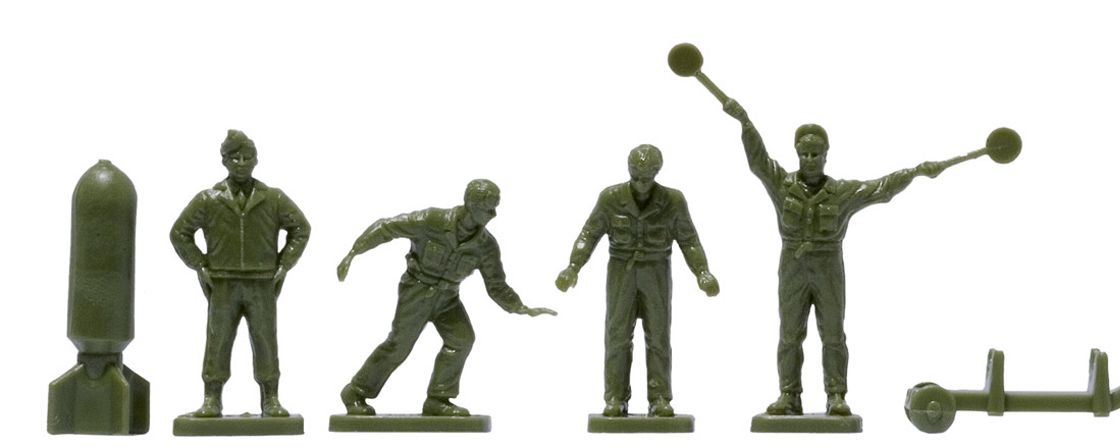
If you have opened your box of army figures and found them in a little plastic prison, then this is for you. You will need your trusty nippers to free the figures from the sprue and then to trim away any excess plastic still stuck on your model. You can use a hobby knife to trim as well, but remember they are incredibly sharp and best left to experienced modellers. Once you have done this, grab the plastic glue and attach the pieces to each other (following the included instructions).
If what you are left with is a fully formed plastic miniature ready for painting, then it’s onto the next step!
Shop figures now
Priming your miniatures
Our final leg of the pre-painting journey is arguably the most important part of all — the priming of your miniatures. Priming is an essential step because it allows you to layer as many coats of paint over the top as you like. It also helps to enable a more even finish on the figure.
To properly base your miniature before painting, you must do two things:
1. Check that the primer you are using is specifically designed for plastic and not walls or wood. We know it sounds silly but it is very easy to get distracted by the word ‘primer’ and accidentally purchase the wrong product.
2. Decide how you are going to apply it. There are two methods, you can either prime a model by hand, or you can use a spray can. The choice is entirely yours to make, but the general modelling census is that it’s far easier (and much quicker) to opt for the spray can.
Shop primers now
Start painting!
Finally, we’ve reached the point where we teach you essential tips on how to paint military figures. The trick to adding finesse to your paint job is to know which brushes to use and when. The different sizes are an important distinction — the larger brushes are ideal for covering bigger surface areas, whilst smaller brushes are perfect for the detail you need to make your figures truly come to life. A great tip to keep in mind is something called the dry brush technique. You apply paint to a brush and then wipe as much of the paint off on a paper towel as possible. Then, you sweep the brush over certain parts of your model, usually the raised details, to apply dynamic highlights that really help a model stand out.
When it comes to the actual painting, many modellers have found it best to start by colour blocking and then adding the details last. It’s good to start with thin layers of paint because it’s far easier to build it up later than it is to try to cover a thick initial layer. Thin layers help the drying process as well, ensuring a smooth coat that dries evenly.
In terms of colours, we have found great success in colour blocking with all your dark colours first and then layering the lighter ones on top. This will provide a strong dimension to your models and ensure that your chosen colours really pop. A beloved technique of many modellers is edge highlighting, where you go in with lighter colours and brush them along the edges of certain points on your figure (where the sun might hit a person). This is a great way of breathing life into your models and giving them an element of realism. Painting models is always a learning process though, even for the pros, so never be afraid to make a mistake or two!