

Welcome to this latest edition of Corgi Diecast Diaries, your regular blog review of all the news, updates and topical stories from the captivating world of Corgi die-cast model collecting.
As we now find ourselves in the festive season, we have decided to do something a little different with our Corgi blogs for December, as we continue to mark the progress of several outstanding models from the current range and prepare for the arrival of a new selection of models at the start of next year. Starting today and for the next two Friday’s to come, our intention is to post weekly, slightly abridged, versions of the Diecast Diaries blog and on Friday 24th, Christmas Eve, we will post our final edition of Corgi Aerodrome for the year, where we will be focusing on a special photography event which was recently hosted by the RAF Museum. As we know the holidays are a time for families and not so much for blog updates, we will not be posting another blog until Friday 14th January, when we will be bringing you details of all our exciting Corgi plans for 2022.
So, what do we have for you in this first of our Corgi Christmas Cracker blogs? It will be Aviation Archive all the way this time, as we bring you the very latest updates from two of the most eagerly anticipated additions to this ever popular model range, showcasing a series of development images which are being published for the very first time. One model is the first release from a brand new tooling addition to the range, with the other being only the second release from a tooling which can now boast being something of a TV star amongst its ever growing list of credentials. The one thing they both have in common is that they are both creations from the same aviation manufacturing company and even though they were only 23 years apart in production, represent completely different eras of aviation. Christmas may well be just around the corner, but that still leaves us plenty of time for a comforting little delve into the wonderful world of Corgi model collecting, before all the madness really starts to kick in.
An exclusive Corgi Christmas first look at the latest version of the artwork produced in support of the release of the first model from this spectacular new tooling.
Many of our blog readers will no doubt have been following the Hornby : A Model World TV documentary series which is currently airing on the Yesterday Channel, a programme which has been showing how the respective Hornby Hobbies brands immortalise the world’s most iconic aircraft, vehicles and locomotives into scale representations for millions of modellers and collectors all over the world. The second episode in this series followed Corgi’s project to introduce the Bristol F2B Fighter into our range of 1/48th scale Great War aircraft models, and whilst it did show some of the many development stages our design team have to negotiate when introducing a new model tooling to the range, this was only something of an overview and simplified the situation somewhat for obvious reasons. This fascinating process is actually really challenging for the team and at any stage during a new model’s development, an unexpected design or manufacturing issue will usually result in additional time in development and associated delays to the overall project.
As CAD design and manufacturing technologies continue to advance, our designers are quite literally able to do things they couldn’t hope to achieve even just a few years ago, however, additional detail and design complexity incorporated into new model toolings can increase overall development time, even though the end result is definitely worth all this extra effort. For many of the reasons mentioned above, both of the models we are featuring in this first festive blog for 2021 have spent quite some time in development, but are now both reaching significant project landmarks, one seeing the second release from its tooling (more on this model a little later), whilst the other is taking an important step closer to a triumphant first model release.
When we announced our intention to introduce a 1/72nd scale diecast version of the Bristol Beaufort Mk.I into the Aviation Archive range at the beginning of this year, we knew we were providing collectors with an aircraft type they had been requesting for several years and one which has to be regarded as one of the most interesting British aircraft of the entire Second World War. As an appealing added bonus, once the model was released, it would allow collectors to display die-cast versions of the three famous Bristol twin engined aircraft of WWII together for the first time, the Blenheim, the Beaufighter and the Beaufort, a tantalising die-cast prospect indeed.
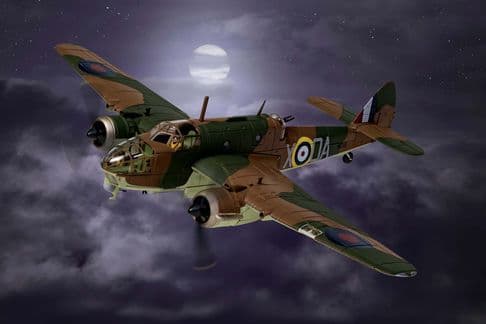
A first look at the latest pre-production sample model produced from our new 1/72nd scale Bristol Beaufort Mk.I tooling, a much requested addition to the Aviation Archive range. As always, the caveat in showing these images feature a model which is still in development and will changed before it is released for production.
As an island nation, arguably the most crucial battle Britain had to win during the dark days of the Second World War was to maintain the integrity of her merchant shipping lanes, whilst at the same time denying her enemies the ability to either operate militarily or obtain materials and supplies by sea. In the months which preceded the beginning of WWII, the most effective anti-shipping torpedo equipped aircraft available to the British military was the Fairey Swordfish biplane and whilst this would actually prove to be an exceptionally capable aircraft during the war, the RAF were in desperate need of a powerful, modern torpedo bomber, and the ability to mount long range maritime strike operations.
The second in what would ultimately be a hugely successful trio of twin engined aircraft designed by the Bristol Aeroplane Company during the 1930s, the Beaufort is significant by the fact that it was the only monoplane produced for the Royal Air Force which was designed from the outset as a torpedo bomber and reconnaissance aircraft. A design which can trace its development lineage directly from the Blenheim light bomber, one of the most important aircraft in British aviation history, the Beaufort was unusual in that it was ordered by the Air Ministry whilst the project was still ‘on the drawing board’, a move which showed they had great faith in the Bristol Company, whilst at the same time highlighting the RAF’s urgent need for this type of aircraft.
Although originally intended as an evolutionary development of the existing Blenheim bomber design, it quickly became apparent that the new aircraft would look quite different to its predecessor, possessing a much deeper front fuselage section to accommodate its crew of four and the requirement to carry a torpedo in a semi-recessed position under the fuselage. These modifications resulted in a gross weight increase of around 25 percent over the Blenheim and required the adoption of more powerful engines, so this extra weight did not hamper the performance of the new aircraft. Indeed, the development of the Beaufort would end up being rather protracted, mainly because of engine issues and even though the initial contract for production aircraft was placed in August 1936, it would be more than two years before the prototype Beaufort took to the air, despite the RAF’s pressing need for this important new aircraft.
A really interesting aeroplane, collectors will be looking forward to being able to complete their collection of famous Bristol ‘twins’ from the Second World War in diecast form.
As mentioned previously, the Beaufort has to be considered as one of the more interesting British aircraft of the Second World War and when positioned next to its other two fighting stablemates, it really is fascinating to see how the Bristol designers altered the basic Blenheim design to produce these linked aircraft which had very different roles and quite different profiles.
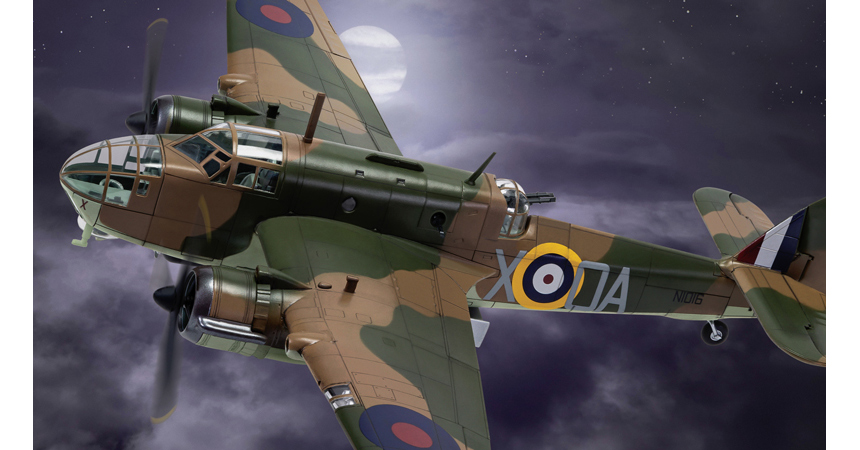
Destined to take its place in the Aviation Archive range during the first quarter of 2022, the development pictures we are exclusively showing here feature the latest pre-production sample model from the new Beaufort tooling and we have to say is looking rather impressive. We have made so many improvements and alterations to this model during development that it has taken us a little longer to get to this stage than we had hoped, however, we are confident that collectors will be delighted with it when they can add one to their collections early in the new year. Please note that we are fully aware this sample model requires several colour and decoration alterations before we see the next, final signed sample model due in a couple of weeks. Despite this, we wanted to give you this little festive update, to illustrate the fact that this stunning new model is advancing nicely and will be with us before we know it. Obviously, we will update our readers with the final sample model as soon as we have those details, but for now, let’s remind ourselves of the incredibly heroic story behind the scheme details of this initial Beaufort release.
AA28901 – Bristol Beaufort Mk.I, N1016 OV-X, F/O Kenneth Campbell, RAF No.22 Squadron, St Eval, Cornwall, 6th April 1941 – Attack on Gneisenau, VC action.
More pre-production Beaufort goodness, once again being shown on the understanding that this is still a development sample model, no matter how good it looks.
As an Island nation, the protection of Britain’s sea lanes during the Second World War was a crucial battle which had to be won. Throughout the first few months of conflict, the German capital ship Gneisenau and her sister vessel Scharnhorst were posing a serious raiding threat and on receiving news that the ships had entered Brest harbour to undergo repairs in late March 1941, the RAF immediately planned raids intended to destroy, or at least damage the ships. On Sunday 6th April 1941, Bristol Beaufort Mk.I N1016 (OA-X) took off from RAF St. Eval in Cornwall and headed for a rallying point off the coast of France, close to the entrance to the harbour. Even though the weather was poor, they were surprised to find that they were the only aircraft to make it and with radio silence crucial to the success of the mission, the crew faced the decision whether to press on with their attack alone, or return to base.
Although the odds were seriously stacked against them, they turned towards the heavily defended harbour and began their attack run, descending to almost wavetop height. Pilot Flying Officer Kenneth Campbell, expertly lined up his Beaufort for the optimum attack angle, passing so close to enemy shore batteries that they could hardly fail to hit their British target, but only releasing the single torpedo when he was sure it would strike the warship. Almost hitting the mast of the ship as the aircraft pulled away in a violent, banking turn, the Beaufort exposed its under surfaces to the anti-aircraft gunners, who raked it with everything they had.
Having sustained heavy damage during its attack run against Gneisenau, Bristol Beaufort N1016 crashed into the harbour almost immediately, tragically claiming the lives of all souls on board. Unbeknown to them, their attack had successful and the torpedo had blown a huge hole under the waterline of Gneisenau, causing it to return to the dry dock from where it had only just emerged, in need of further repairs. It would be out of commission for almost six months following the attack and it is impossible to gauge how many lives were saved and how much vital cargo reached its destination as a result of the heroic actions of this single Beaufort crew.
One thing the pre-production sample models can be used for is the creation of our distinctive release packaging, something which gives these models real presence on any retail display shelf.
Launching their attack alone, the selfless actions of Flying Officer Kenneth Campbell and his crew would have probably gone unheralded had it not been for the intervention of the French resistance. Sending a report on the condition of the German battleship back to British authorities, they also described the actions of this brave Beaufort crew and how they had paid the ultimate price whilst heroically performing their duty. For displaying valour in the face of extreme peril and without regard for his own safety, Flying Officer Kenneth Campbell was posthumously awarded the Victoria Cross, Britain’s highest award for valour in the presence of the enemy, an honour he would surely have gladly shared with the rest of his crew.
A stunning addition to the Aviation Archive range, our new Bristol Beaufort Mk.I is scheduled for release within the first quarter of 2022.
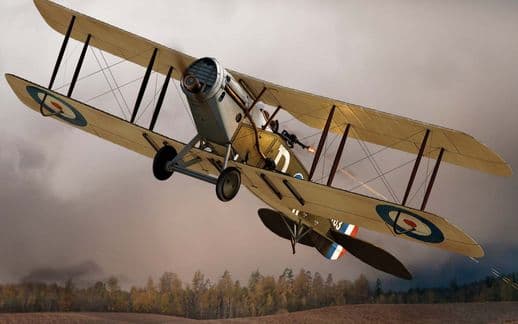
The second release of the highly regarded 1/48th scale Bristol F2B Fighter is here and features even greater detail levels than its stunning predecessor.
Within the Corgi team, we are incredibly proud of our new 1/48th scale Bristol F2B Fighter and particularly how it has been received by our army of loyal collectors. The development of this stunning model was covered in the second programme in the current Hornby : A Model World TV documentary series and gave some indication of just how challenging a project this was for our design team. Marking one of the most impressive fighting aeroplanes of the Great War, the Bristol Fighter was the aircraft model Aviation Archive collectors most wanted to see join our 1/48th scale range, but until recently, the design and manufacturing finesse required to replicate this classic in scale die-cast form simply didn’t exist. Thankfully, that position has changed and this magnificent aircraft is now available to collectors.
It is quite significant that in the week following the one in which the first Bristol Fighter moved to ‘out of stock’ on the Corgi website, the stunning second release from this tooling has become available and it’s an absolute cracker. Taking an already impressive model and adding even more decoration detail, this latest release will surely delight Great War aviation fans and marks an aircraft which is not only a stunning representation of this famous fighter, also carries particularly distinctive nose artwork on its port side engine cowling.
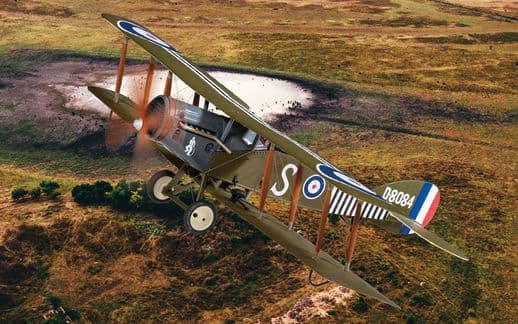
AA28802 – Bristol F2B Fighter, D8084/S, Capt. Sydney Dalrymple and 2/Lt. G. Beagle, RAF No.139 Squadron, Villaverla Aerodrome, Italy, August 1918.
Despite an inauspicious start to its combat career, it did not take long for pilots assigned to fly the new Bristol F2B Fighter to discover it was actually an exceptional fighting machine. An aircraft which was much larger than the Allied scouts which had been fighting for air supremacy prior to its introduction in March 1917, the Bristol was initially flown in exactly the same manner as the vulnerable BE2c which it had replaced, straight and level, relying on the gunner to do his work. This made the aircraft no less vulnerable to enemy attacks, but the Bristol was so much more than just a larger target for the Luftstreitkräfte’s airmen. A true multi-role aircraft, the Bristol F2B Fighter could be flown much more aggressively than its size suggested, something of a heavy fighter as opposed to an armed reconnaissance aircraft.
With the pilot and gunner positioned close together, they could work as a coordinated team when engaged in either offensive or defensive actions, with the ability to bring heavy fire on their targets from any direction. The rear Lewis gun was mounted on a Scarff ring, which could rotate through 360 degrees and elevate high enough to allow it to fire forwards over the top wing. In fact, the Bristol Fighter earned such a fearsome reputation amongst enemy pilots that they were reluctant to attack the aircraft if there were more than two in any formation. Although much larger than most other fighting scouts, the Bristol F2B Fighter proved to be one of the great fighting aeroplanes of the First World War.
Great War Australian ace pilot Captain Sydney Dalrymple transferred to the newly formed No.139 Squadron at Villaverla in Italy during the summer of 1918, where he would be flying the Bristol Fighter in an armed reconnaissance role. At this stage of the war, Dalrymple only had a single aerial victory to his name, however, this was gained whilst flying the Martinsyde G100 ‘Elephant’, an aircraft which gained its nickname due to its size and ungainly flying characteristics. Early operations with the Bristol Fighter in Italy proved disappointing, as the aircraft were initially flown in a similar manner to the much maligned BE2c, flying straight and level to allow the observer to take his pictures. Indeed, the squadron lost three crews in action during this period and only switched to flying the aircraft much more aggressively following the arrival of famous ace William Barker as their new Commanding Officer, who understood the fighting qualities of this effective multi role aircraft.
This next series of images feature an advanced production sample model of the second Bristol F2B Fighter, a model which includes even greater levels of finish than its predecessor - isn’t she a beauty!
On 8th August 1918, Dalrymple and his gunner 2/Lt. G Beagle used Bristol F2B Fighter D-8084 to shoot down two Aviatik D.1 Berg Fighters near Caldonazzo during the same mission and would dispatch two Albatros D.IIIs on 13th September whilst flying a different Bristol F2B. Now officially an ‘Ace’ pilot, Dalrymple was awarded the Distinguished Flying Cross on 1st November 1918. Bristol F2B Fighter D-8084 was unusual in that in addition to its distinctive RAF No.139 Squadron markings, it also carried a Charlie Chaplin figure painted on the port side of the battleship grey engine cowling.
At the time of writing this first edition of our 2021 festive blog trio, this stunning second Bristol F2B Fighter model had arrived in our warehouse and was in the process of being dispatched to those who pre-ordered it and to our trade partners. Hopefully, many an Aviation Archive collection will benefit from the addition of this classic release before we all sit down to our Christmas dinners this year.
Well, we all now finally have to accept the fact that we find ourselves in the festive season and for Corgi fans that can only mean one thing - the launch of our 2021 Advent Calendar. Taking its annual place on the Corgi Website, our advent calendar will be packed to the gunnels with 24 days of competitions, development updates, exclusive 2022 range teasers and gift ideas, all with a magical sprinkling of Corgi collectability. With a new door to open each day, if you do not receive your invitation e-mail any day leading up to Christmas Eve, simply head for the Corgi website and take a peek behind the latest door, making sure you get your entry in for all the available competitions. As this latest blog is published, there are already 3 open doors awaiting your inspection and there will be no let-up in the Advent pace from here - let’s make this a very Merry Corgi Christmas.
That’s all we have for you in this, the first of three consecutive weekly blogs in the month of December. Please check back in with us next week when we will be bringing you two more exclusive project updates and another selection of model images which our readers will be seeing for the very first time. As always, if you have any comments or suggestions about our blog, please do drop us a quick line and if you would like to send us pictures of your own Corgi collection, you may well find them appearing in a future edition of Die-cast Diaries.
For all contact, could we please as if you would use our diecastdiaries@corgi.co.uk contact address.
In-between editions of our blog, you will find plenty of Corgi model collecting discussions taking place on our official social media channels, access to which can be obtained by clicking on the respective links at the foot of the Corgi website homepage.
Whenever you do decide to visit, the Corgi website is always the place where you will find out all the latest model availability information, previous editions of our blog, and all the Customer Service details you might need.
Thank you for continuing to support our Corgi Diecast Diaries blog.
Our next blog is scheduled for publication on Friday 10th December.

