

Welcome to this latest edition of Aerodrome and our regular look at the fascinating world of aeroplanes and the historic aviation scene in the UK.
In a development to warm the cockles of every aviation enthusiast's heart, we are delighted to be able to confirm that the 2022 UK Airshow season is finally up and running and in this latest edition of the Airfix and Corgi Aerodrome blog, we will be reporting from the event which once again had the honour of hosting the inaugural Airshow of the year, welcoming enthusiasts back to its hallowed turf for its first Airshow of 2022. Joining the thousands heading for Bedfordshire on Sunday 1st May, we attempted to put a truly horrendous weather forecast out of our minds and focus on the possibility of seeing some classic aeroplanes displaying in the skies above this historic venue, home to the world famous Shuttleworth collection.
Please join us as we mark this first show of the year Aerodrome style, with a selection of images taken on the day and a report which contains details of a reluctant undercarriage leg, the sight of the Battle of Britain Memorial Flight’s Lancaster at an Old Warden show for the first time in many a year and something of a homecoming for a unique naval Spitfire, which was making her first Airshow display appearance since 2015 - if only the weather would do something it hardly ever does, prove to be better than what was forecast!
Old Warden's control tower and display commentary position was a welcome sight at the start of this first Airshow event of the year, but would the weather hold out?
Any Airshow regular will probably agree that in order to maintain our sanity, we have to be quite philosophical about our hobby and most definitely can never take anything for granted. After spending months locked away in our homes since the end of the previous Airshow season, getting ever more desperate to be around aeroplanes once again and having meticulously planned our intended show attendance for the coming year, we know that our excitement has to be constantly reined in, due to the fact that our hobby is affected by any number of variables which are beyond our control, with any one of them having the potential to ruin our day and throw our plans into disarray.
Even though we may have spent thousands of pounds upgrading our camera equipment during the closed season, bought advanced tickets for our selected events, booked hotels, cleared everything with our families (something which will usually involve forfeits or DIY) and extended the mortgage so we can afford the fuel we will be needing for the coming year, we might still not get to see the aviation entertainment we crave so much. Unquestionably, every Airshow event in Britain relies on the support of thousands of people making plans and commitments to enable them to attend these shows, however, we are all, enthusiast and organiser alike, at the savage mercy of the either (or both) of two great Airshow uncontrollables - aircraft serviceability and the weather. Despite having planned our show attendance with military precision and checked everything is in place, a simple ten second check of the Met Office weather forecast phone app may throw these plans into disarray and leave us questioning why we keep putting ourselves in this position year after year? Do we believe the forecast, cut our losses and stay at home, or do we maintain our optimism and press on regardless, hoping that just this once, the forecasters have been far too pessimistic in the interpretation of their data?
That was the age old quandary facing enthusiasts recently, as they contemplated heading to Old Warden airfield on Sunday 1st May this year and taking their place amongst the crowds for their Season Premier Airshow and the inaugural event of the year. We had all waited so long for this day and we know only too well the many delights offered by this wonderfully picturesque and historic venue, however, there was a big problem - the weather forecast for the day was abysmal. We are not talking a few showers to dampen our enthusiasm, we were looking at black skies, rain of almost biblical proportions and the very real possibility that no flying would be able to take place on the day. I was facing the same quandary as everyone else on the day, should I stay or should I go - do I get up at silly o clock in the morning, travel 200 miles to risk being forced to sit in my car all day, or do I stay in bed? As is usually the case, aeroplanes won the day and I arrived at Old Warden in good time to pick my spot, having crossed my fingers throughout every single mile of the journey south.
Old Warden is such a popular venue for air displays, but would the poor weather forecast put paid to any actual flying on this first Airshow of the new season?
As predicted, the skies were extremely dark and at that early stage, things were looking rather ominous, however, the organisers appeared optimistic and had started moving some of their priceless historic aeroplanes out onto the airfield - did they know something we didn't? Trying to put the dark skies out of my mind, I strolled around the site, looking in the hangars and grabbing a couple of static aircraft shots, all the time fully expecting to have to seek refuge from the rain at any moment, but incredibly, the rain never came and as we moved closer to show time, the skies still looked angry, but we were not getting the forecast rain - perhaps we would get some flying after all.
As you will see from the pictures illustrating this review, the light might have been poor and the skies grey all day, but I have to say that we were so lucky with the weather and were treated to a full show. This must be the first time that I have ever been to an Airshow which endured grey skies all day and yet still counted myself extremely fortunate, because believe me, what we had been told to expect was an absolute drenching. Right then, having described our great weather escape, let's get on with the show.
For many people heading for Old Warden Airfield and the start of the 2022 Airshow season, the undoubted star aviation attraction which made their attendance a certainty was the appearance of the only airworthy Rolls Royce Griffon powered Supermarine Seafire in the world. The navalised variant of Britain's famous fighter, the Spitfire was not the ideal aircraft for operation from the deck of an aircraft carrier, with its narrow track undercarriage placing even greater pressures on the aviators assigned to fly them, but once in the air, the undoubted fighting qualities of the Spitfire/Seafire provided the Royal Navy with a most capable fleet defender. Historically, the Navy found it incredibly difficult to obtain Spitfires, despite requesting the aircraft from very early on in the war. The Air Ministry felt that every single example of Britain's premier fighter was needed for land based operations and were only prepared to allocate Hurricane fighters for Royal Navy use, an aircraft which would go on to acquit itself extremely well in this challenging operating environment.
Supermarine Seafire Mk.XVII SX336 was built under licence by Westland Aircraft Limited at Yeovil in April 1946 and it is interesting to note that the entire production run of 232 of this variant were built under licence, with Westlands accounting for no fewer than 212 of them. She was accepted into Royal Navy service at RNAS Bramcote later in 1946 and during her short service life, it is thought that she spent time with No.833 NAS Royal Naval Volunteer Reserve, but by May 1950, was relegated to a ground instructional role. By 1953, the Seafire had been moved to RNAS Stretton near Warrington for storage, but this would be her final Royal Navy posting, as she was selected for disposal in 1955 and collected by a local scrap merchant. With her dismantled airframe stored along with those of several other Seafires in this scrapyard for many years, this could have been the end of her short and relatively uneventful story, but thankfully, that was not to be the case.
Seafire SX336 was discovered in the Warrington scrapyard by a well-known Warbird enthusiast in 1973, who purchased her fuselage and substantial sections of several other Seafires he found at the same location, with the intention of returning at least one of them to airworthy condition, after embarking on an ambitious restoration programme. Although now having the aircraft in his possession, it would be a further five years before work started in earnest and even then, it did not appear to be a priority project. Over the next few years, work was started, then left unattended for long periods, in addition to the aircraft changing hands on several separate occasions, with a concerted effort to get her back in the air looking some way off in truth.
Perhaps the most significant development in the history of this particular aircraft occurred in November 2001, when former US naval aviator Tim Manna acquired the aircraft and provided both the investment and impetus to get the restoration underway in a concerted manner. With work continuing apace at his Kennet Aviation facilities at North Weald airfield, SX336 would go on to make her first post restoration test flight from the airfield on 6th May 2006, a date specifically chosen as it was exactly sixty years to the day since she performed her maiden flight from RNAS Yeovilton.
It was so good to see this magnificent Seafire at Old Warden again and it proved rather fitting that its former home should be the venue of its first public display outing of the year.
Up where she belongs, the Seafire Mk.XVII is now owned and operated by Navy Wings - The Fly Navy Heritage Trust, where we hope she will stay for many years to come.
Quickly becoming the darling of the UK Airshow circuit, the Seafire was a much loved addition to the Warbird scene, until she was involved in a belly landing whilst performing at an Airshow in France in 2011. Brought back to the UK and repaired, she would return to the display circuit the following summer and for the next four seasons, captivated audiences everywhere she performed with her demonstrations of naval air power, Griffon style.
Moving on to 2016, the aircraft was due to undergo her major inspection, during which an unwelcome discovery was made - fatigue cracks in the firewall of the aircraft. This was a significant development and would require the aircraft to spend much time in the hangar over the next few years, particularly as the team decided that if she was going to be out of commission for a while, they may as well dismantle her and check absolutely everything. As this process was ongoing, the Kennet Aviation team were in a position of having to renegotiate their lease at North Weald, but as there was some uncertainty about the future of the airfield at that time, it was decided that they should look for a new home. That search eventually paid real dividends and following a brief stay in some temporary premises, the Kennet Aviation team moved to a new facility on the far side of Old Warden airfield, behind the tree, on the opposite side of the grass runway. here, the restoration work on the Seafire could gather momentum again, with engineers at the Shuttleworth collection always on hand to lend their expertise.
As it did with almost every part of our lives, the recent pandemic restrictions would have an impact on the pace of the restoration project, however, on 18th November 2021, Supermarine Seafire SX336 made her latest post restoration test flight from Old Warden, to the delight of the UK's historic aviation enthusiast community - we had our Seafire back! The aircraft has been finished in the markings of a 767 Naval Air Squadron Seafire, one which was based at RNAS Yeovilton, with the number 105 on her fuselage and Yeovilton station code VL on her tail - Yeovilton has and will continue to play a significant part in the history of this particular aircraft.
First display of the year completed, Lt. Cdr. Chris Gotke brings the Seafire back in for a landing at Old Warden.
Thanks to an incredibly generous donation from an anonymous benefactor, it was announced later the same month that the Seafire had been acquired by Navy Wings - The Fly Navy Heritage Trust and was flown to RNAS Yeovilton. She will now be operated by Navy Wings at events all over the country, helping to preserve Britain’s significant naval aviation heritage and inspiring future generations of navy recruits. She will be cared for at a station which is only 15 miles from where the fighter was built 76 years ago, but it was somehow fitting that her first post restoration Airshow appearance should be at the season opening show at her former home, the airfield from where she made her first post restoration test flight.
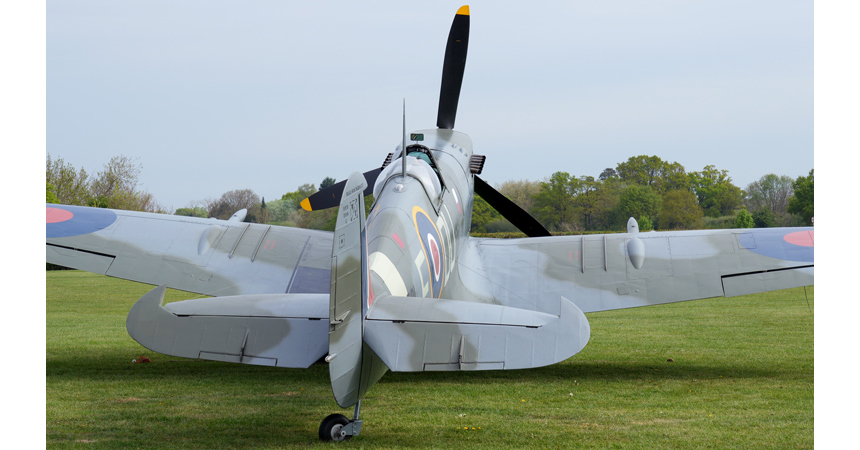
The Seafire truly is a beautiful sight and even though they say that you could never spoil the looks of a Spitfire, no matter what scheme you finish it in, it does have to be said that it looks particularly appealing when wearing the colours of the Fleet Air Arm. On the ground, she looks stunning, particularly when viewing her from the rear, with that large arrestor hook protruding from the lower section of her rudder clearly distinguishing her from a Spitfire. Once in the air, the aircraft simply demands your attention, with those beautiful colours caressing your eyes, whilst the growl of the Griffon assaults your eardrums - with each successive pass, she works her way into your affections just that little bit more and if she manages to have a busy display season, I am certain that Navy Wings will have a real jewel in their historic naval aviation crown. There is a saying that everyone loves a Spitfire and if that is the case, we should all now prepare to have a Griffon powered Seafire trying to muscle its way in.
The Catalina id a big bird to be operating from the relative confines of Old Warden airfield, but when she does, it's a real treat.
For the second year in a row, the aircraft which was given the honour of opening Shuttleworth's Season Premier Airshow and with it, heralding the start of the UK Airshow season itself was bestowed on Plane Sailing’s beautiful Consolidated Catalina ‘Miss Pick Up’, one of the most distinctive aircraft on the Airshow circuit. Further adding to the appeal of her attendance, at the end of her display, it was intended that her crew would be landing the aircraft at Old Warden, allowing us all the opportunity to inspect this stunning aeroplane at close quarters, but significantly as one of the largest aircraft to have ever operated from the hallowed turf of Old Warden’s grass airstrip.
As far as UK based Warbirds are concerned, there can be few aircraft as uniquely distinctive as the Consolidated Catalina, an aircraft type which must also qualify as one of the unsung aviation heroes of the Second World War. Always a popular Airshow display item, the Catalina is a surprisingly agile performer for such a large aircraft and the inclusion of the UK’s only airworthy example of this amphibious aircraft at Old Warden is always an anticipated show highlight for many. You can never get too much of seeing this mighty beast swooping in low over the boundary hedge at Old Warden, before touching down using that hefty, wide track undercarriage, a real aviation experience.
This aircraft is presented as Consolidated OA-10A Catalina 44-33915 ‘Miss Pick Up’, an aircraft which flew with the USAAF 5th Emergency Rescue Squadron, out of Halesworth in Suffolk during the Second World War. Sent to rescue a downed North American P-51 Musang pilot on 30th March 1945, the crew of the amphibian located him and landed their aircraft as close to him as safety allowed, at a location close to the Dutch Island of Schiermonnikoog. Unfortunately, in a heavy swell and with light fading, they lost sight of him and were unable widen their search due to a faulty engine. Unable to take off, they weighed anchor and used the darkness to hide their predicament, spending an uncomfortable night worrying about what the coming day might bring.
A problematic undercarriage leg left the crowd a little worried at the Season Premier Airshow, but thankfully the crew managed to solve the problem prior to the aircraft landing back at Duxford.
At around midday the following day, the stricken Catalina was strafed by a pair of Messerschmitt Me 262 jet fighters from Jagdgeschwader 7, which made two devastating firing passes against the amphibian, using the sun to mask their position and managing to inflict significant damage on the Catalina. The aircraft immediately started taking on water and began listing to one side, however, disaster for the crew was averted by the timely arrival of a flight of USAAF Mustangs, who managed to drive off the enemy fighters. The crew were eventually rescued, but 'Miss Pick Up' wasn't so fortunate - she slipped beneath the waves of the North Sea, a victim of the Luftwaffe's new wonder weapon.
Thrilling the crowd with its usual spirited display, it soon became apparent to us all that the Catalina was having a spot of bother and the crowd collectively held their breath. The display includes several passes with the large undercarriage legs of the Catalina extended, showcasing the amphibius credentials of this impressive aircraft, but it appeared that during one of the retraction cycles, the starboard leg refused to deploy. With the aircraft scheduled to land at Old Warden, the display was cut short as the crew flew sedate circuits of the airfield as they attempted to rectify the issue, but to no avail, the wheel would not come down. The aircraft eventually headed off in the direction of Duxford and we all hoped that the commentator would provide us with a positive update a little later in the afternoon, which he thankfully did - drama over, but what a start to the season.
The Lancaster was making its first appearance at a Shuttleworth Airshow for several years.
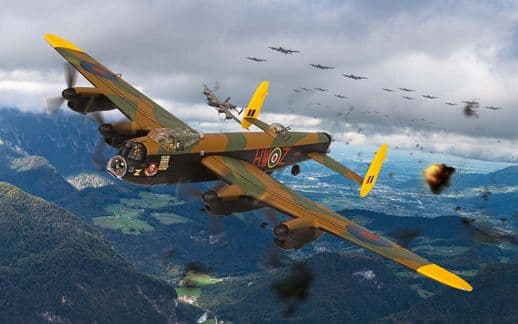
When it comes to icons of the UK Airshow scene, there are few aircraft which can come close to the reputation established by the Battle of Britain Memorial Flight's Avro Lancaster, an aircraft which is familiar to millions of people. Still serving the nation valiantly by performing at Airshows and undertaking hundreds of commemorative flypasts each and every year, she serves as a flying memorial to the men and women of Bomber Command and the incredible sacrifices they made during the Second World War in helping to bring about an end to war.
Constructed at the Vickers Armstrong factory at Hawarden in May 1945, this particular Lancaster was intended to head for the Far East as part of Britain’s ‘Tiger Force’ commitment, but the end of WWII dictated that she would never see action. After serving as a reconnaissance and pilotless drone aircraft, she was eventually earmarked for museum display, but not before starring in the feature films ‘Operation Crossbow’ and ‘The Guns of Navarone’. In 1965, the Commander of No.44 Squadron at RAF Waddington (the first RAF Squadron to receive Lancasters in 1941) requested that the Lancaster be placed under his care and following the arrival of PA474 in Lincolnshire, underwent a period of restoration, flying occasionally whilst this work continued.
After operating under the stewardship of No.44 Squadron for several years, the Lancaster was passed over to the Battle of Britain Memorial Flight in November 1973, as it was felt the Flight were better positioned to keep this important aircraft serviceable for the foreseeable future and take on the continued restoration to as close to wartime configuration as possible. Over the years, the Flight have earned a reputation for presenting their aircraft in different liveries, each one depicting a famous aircraft or action involving a Bomber Command Lancaster, but always commemorating the effort and sacrifice of the men flying and preparing these aircraft for operations during WWII.
For her latest Shuttleworth appearance, the Lancaster was only scheduled to give us a flypast, as she routed between some of her many commitments for the day and unusually, she would be without any fighter escort on the day. For Shuttleworth regulars, that didn't matter, because the sight of this magnificent aeroplane in this historic venue is always something which is worth driving half the length of the county to see, especially as this would be the first time in several years that an Old Warden crowd would have seen Europe's only airworthy Lancaster. True to form, it appears as if the chance to display at this classic venue is one successive Lancaster crews always hold dear and our promised flypast tuned into something which was really rather memorable - three passes, with steep turns as either end of the display line and something which is highly prized amongst aviation photographers, a Lancaster top-surface pass. Top marks to the BBMF Lancaster crew.
For many people, the story of Britain's fighter aircraft begins and ends with the Supermarine Spitfire.
One of the main attractions of attending an Old Warden Airshow is that even if there are no visiting aircraft participants at any given display event, this historic venue can boast a stunning collection of airworthy home based aircraft which really is the envy of the aviation world. With aircraft types spanning the history of aviation from the very early days of aviation, right up to the Percival Provost from 1955, many of their aircraft are the only airworthy examples of their type to be found anywhere in the world and for those visiting a show for the first time, they must be in awe at whet they are experiencing. For most of us regulars, we can sometimes be guilty of taking these aviation delights a little for granted, finding ourselves a little disappointed if a visiting headliner is not included in the programme, but even for us, Old Warden just feels like home.
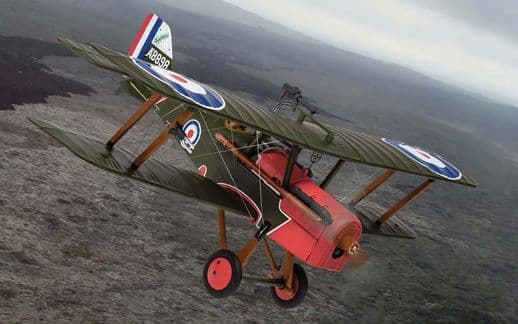
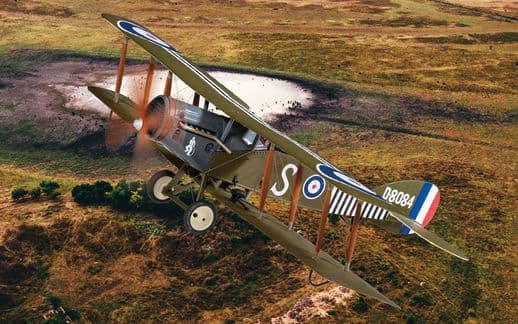
One of the most fascinating aspects of a trip to Old Warden is the ability to chart the development of British fighter aircraft from the Bristol F2B Fighter and SE5a of the Great War, through to their stunning Supermarine Spitfire Mk.Vc, with the glorious Gloster Gladiator in between. Each one of these aircraft can claim to have been at the very pinnacle of world fighter design at their date of introduction and visitors to Old Warden have the unique opportunity to inspect examples of each of these aircraft both on the ground and in the air.
Classic British fighters, Shuttleworth style, Bristol F2B Fighter, Royal Aircraft Factory SE5a, Gloster Gladiator and Supermarine Spitfire.
The Collection's Spitfire only took to the skies again at Old Warden in March 2018, having spent the previous twelve years undergoing extensive renovation of both its airframe and the Rolls Royce Merlin engine which powers it. She is a genuine combat veteran aircraft and unlike many airworthy Spitfires flying in the world today, is in remarkably original configuration, currently sporting clipped outer wings, even though she has previously displayed in the more usual full elliptical wing configuration. The idea behind removing the outer sections of the wing was to give the aircraft a better roll rate at lower altitudes, something which could prove crucial when engaged in combat with the latest Luftwaffe fighters at low to medium altitudes.
It is a common misconception that these aircraft had the outer sections of their wings cut off when making this modification, however, the wingtips of all Spitfires were actually manufactured as separate pieces, made from wood and covered with an aluminium skin. These were attached by using two large bolts and a collection of smaller screws, so there was nothing as savage as taking a saw to a Spitfire in order to allow it was to operate at lower altitudes, perish the thought.
A classic curved landing approach from the Shuttleworth Spitfire as it recovers to Old Warden following the completion of its display.
First entering Royal Air Force service with No.310 (Czech) Squadron, a relatively short but active wartime career included providing fighter escort for USAAF bombers and on at least one occasion, providing cover for a bomber formation which included the famous B-17F Flying Fortress ‘Memphis Belle’. Spitfire AR501 has been in the care of the Shuttleworth Collection since the mid 1970s and following the recent completion of its extensive renovation, she is now a regular performer at Old Warden shows, thrilling audiences with the sight and sound of this aviation classic. Interestingly though, for this first show appearance of 2022, you will notice that she is once again sporting her outer wingtips, the first time in several years that she has been presented in this classic configuration.
It is sometimes difficult to comprehend that the Shuttleworth Collection’s Gloster Gladiator Mk.I L8032 (G-AMRK) has been thrilling UK Airshow audiences for over 60 years now and for many of those years, she was the only flying example of this ultimate biplane fighter to be found anywhere in the world. Manufactured as the last Mk.I airframe from the initial order for the Royal Air Force, this aircraft was not fully assembled until 1938, which in itself helps to illustrate the historic aviation positioning the Gladiator has had to endure. By the time she was built, the new Spitfire and Hurricane monoplane fighters were very much the order of the day and Gladiator airframes were no longer needed for service with home based Squadrons. With many Gladiators sent overseas or relegated to secondary duties in the UK, aircraft which were damaged or no longer required were simple scrapped on the spot or left to rot where they stood. As the Gladiator represented now represented older aviation technology and Britain was by that time very much at war, it is a wonder how any of these magnificent aeroplanes managed to survive at all.
A thing of aviation beauty, this Gloster Gladiator is one of the longest serving aircraft on the UK display circuit.
This particular Gladiator arrived at the Shuttleworth Collection for safe keeping in 1960, following the closure of the Gloster Aviation Company. She was already in flying condition back then and it was thought that the collection would be the best home for this extremely rare aircraft, which at the time was the only flying example in the world. This beautiful aeroplane now wears the colourful flashes of an RAF No.73 Squadron Gladiator which was reputedly flown by future WWII fighter ace ‘Cobber’ Kain, at the 1937 Hendon Air Pageant. Although an incredibly rare aeroplane in its own right, she continue in her role as one of the longest serving display aircraft on the UK Airshow circuit, providing a unique link to a time of great change in the world of aviation - she also happens to be an absolute stunner of an aeroplane.
The Avro Triplane replica is an example of early British aviation and those intrepid men in their flying machines.
It has now become something of a tradition at Shuttleworth shows that when the weather conditions allow and when all the high octane flying has come to an end, the crowds are sent home having experienced a much more sedate and relaxing period of flying entertainment. Referred to colloquially as the Edwardian section, this is when some of the oldest, most fragile and most modestly powered aircraft in the collection are flown and whilst this is a much loved feature of a trip to Old Warden, it actually happens all too infrequently. The aircraft which take part in this display are some of the most delicate airworthy aeroplanes in Britain and as such, can only be operated when the weather conditions are particularly benign and usually in the mid evening of a calm summer's day.
With the weather forecast for this show being particularly horrendous, we didn't think we would see anything flying during our latest visit, but can you believe it, not only did we get a full display, three of the collection's most fragile aeroplanes took to the air at the end of the show - can you believe our luck? The three 'oldies' providing the calming flying entertainment this time were the Bristol Boxkite, the Avro Triplane replica and the strange, but fascinating English Electric Wren.
Photographic proof that the English Electric Wren, the Bristol Boxkite and the Avro Triplane all took part in this first Shuttleworth show of the year, but would the Wren actually make it into the air?
The English Electric Wren was an ultralight aircraft which was produced in response to a requirement to find an aircraft that could fly whilst using the least amount of power. Making its first flight in Preston on 5th April 1923, the Wren was powered by a 3 horse power, 398cc motorcycle engine and even in optimum conditions, it struggled to attain a speed of 50mph. It would go on to post a record of flying 87.5 miles on a single gallon of fuel, but this aircraft was never going to be setting any speed or altitude records. This unusual aircraft has been in the care of the Shuttleworth Collection since 15th September 1957 and during its latest display outing, we were all left wondering if the engine would actually have the power to allow the Wren to become airborne.
As it trundled along the grass runway at Old Warden, is seemed as if the ground was holding on to the tiny aircraft, determined that it would not be spending even a few seconds in the air on this occasion. Its take off run simply kept on going, with the damp grass not aiding the aircraft it its valiant attempt to claw its way into the air and as it finally passed out of our sight at the opposite end of the airfield, it still appeared to be firmly on the ground. Then, after what seemed like an eternity, we saw it just a few feet in the air and making a tentative turn to head back down the display line - after such an effort to get into the air, she wasn't going to come back to earth so easily.
The Wren actually ended up attempting to set an altitude record for a performance at a Shuttleworth Airshow.
Making several spirited passes (okay, perhaps tentative would be a more accurate description here), I can honestly say that there was more air under the wings of the Wren on this occasion than I can remember ever seeing during previous displays - it was quite magnificent.
With this enigmatic trio now back on the ground and heading for the sanctuary of their hangars, it was time to head off and start the long journey home, reflecting on how clever we had been in not letting a pretty dismal weather forecast prevent us from making the first entry in our 2022 Airshow log books. We definitely got away with one this time, but I am sure Mother Nature will be looking to get her own back some time soon.
I would like to thank everyone involved in hosting this aviation spectacle for serving up a thoroughly memorable day and for the help and support of the Shuttleworth events team for their generous hospitality. To the person who managed to fix the weather for us, there must be several thousand people who now owe you a pint, so when you decide to call that in, that could turn out to be a very good night indeed!
Here are a final selection of images from the day.
de Havilland DH 88 Comet racer
Avro C-19 Anson
Ryan STM
Spartan 7W Executive
Bristol F2B Fighter
Hawker Sea Hurricane 1B
I’m afraid that’s another edition of Aerodrome done and dusted, however, we will have more aviation goodness for you in just four weeks’ time. Should any of our readers have an interesting aviation story of their own they would like to share, or details of an interesting aviation heritage project taking place near to them, please do consider sending details to us here at Aerodrome, so we can share them with our ever-growing, worldwide blog audience, who I am certain would be delighted to learn about it.
To send us details, or to simply open lines of blog communication, please use our aerodrome@airfix.com address when getting in touch.
Between editions of our blog, you will always find interesting aviation discussions taking place on the Airfix Aerodrome Forum and if social media is more your thing, please just click on the respective social media image links at the foot of this page for quick access.
The next edition of Aerodrome is scheduled to be published on Friday 24th June.
Now in our seventh year of publication, we would like to thank you for your fantastic support our Aerodrome blog.
Michael

