

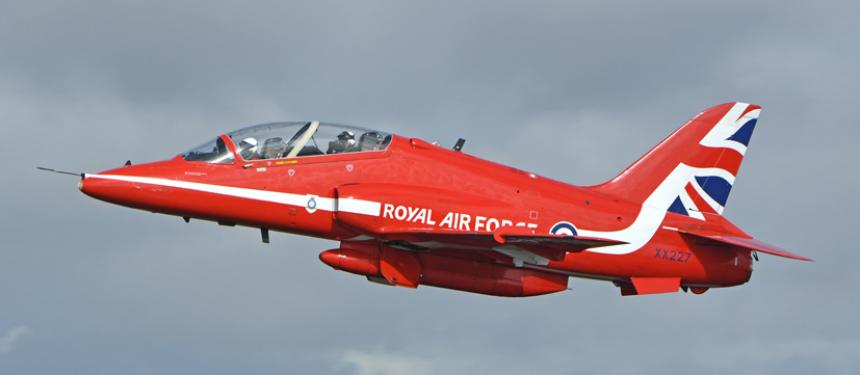
The past few years have proved to be extremely challenging times for the UK Airshow industry. Spiralling costs and ever-increasing regulation have placed a heavy burden on display organisers and aircraft operators alike, causing many long-standing events to consider whether they continue to stage shows in the future. Unfortunately, enthusiasts who are old enough to remember the glory days of the 80s and 90s are having to admit that these are now well and truly behind us and it really is becoming difficult to find more than a handful of aviation related events to attend each year. For these reasons, news of any new event on the UK Airshow circuit is something to be enthusiastically celebrated and in this latest edition of Aerodrome, we will be taking a look at a new Airshow which replaces one of the most popular events in the county of Lincolnshire and how this exciting development holds great promise for the future.
In the first of a two-part show review, we head for the inaugural Scampton Airshow and one of the most historic and atmospheric military airfields in Britain. We will see how this new event restores a long-standing aviation link with the county of Lincolnshire and how it gives the UK enthusiasts and general public alike the opportunity to have their say on the future of Airshows in this country. Without further ado, it’s destination Lincolnshire.
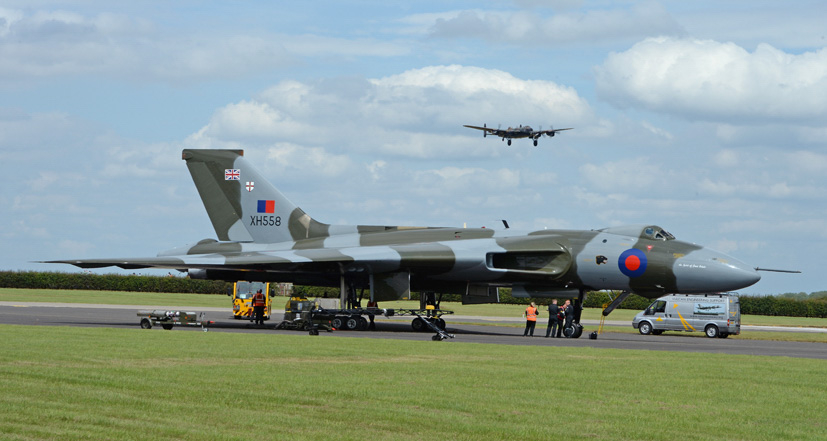
The Waddington show celebrated the links between the RAF and Bomber County
If you are ever fortunate enough to be travelling around the roads of Lincolnshire on an aviation voyage of discovery, it will not take you long before you come across an active airfield, abandoned former airfield, or the name of a village that is linked to aviation in some way – they are absolutely everywhere. As the vast expanses of Lincolnshire are relatively flat and predominantly covered by farmland, the county was ideally suited to the location of airfields, especially during the dark days of WWII. Able to quickly develop the abundant farmland into airfields, it is thought that Lincolnshire was home to around 100 military airfields, decoy sites and relief landing grounds during the Second World War, a figure which is generally accepted as being more than any other county in Britain. The sheer number of British and US bomber bases situated in Lincolnshire saw the county carry a heavy burden during the aerial offensive against Germany and quickly led to the area being known as ‘Bomber County’, a name which endures to this day and one which highlights Lincolnshire’s close links with the Royal Air Force, past and present.
Proud of their long association with the men and machines of the Royal Air Force, the people of Lincolnshire would always come out in force to support the annual International Airshow held at RAF Waddington, which was viewed by many locals as ‘their’ Airshow. First held in 1995, the impressive Waddington show attracted visitors from the surrounding towns and villages, as well as enthusiasts from much further afield and generated many millions of pounds for both local businesses and forces charities each year. Seen as an opportunity to celebrate the county’s links with the Royal Air Force, the event would regularly attract attendance figures in excess of 100,000 people and quickly became the largest of the RAF organised displays.
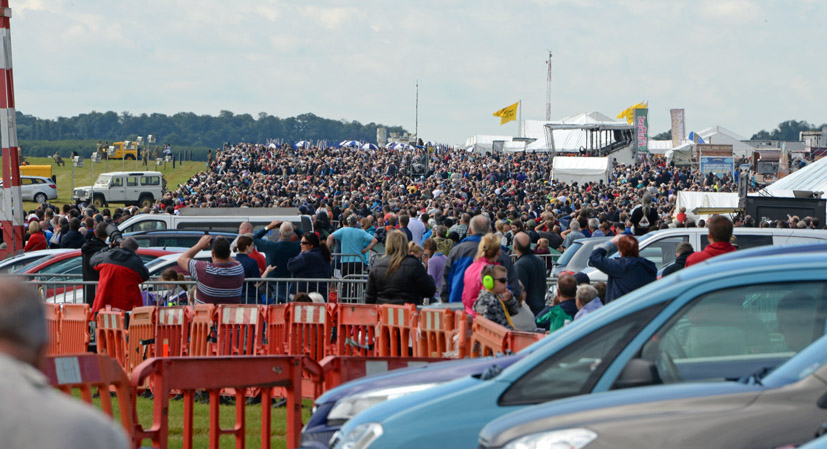
The people of Lincolnshire were proud of their Airshow
In what turned out to be the last of the great Waddington Airshows, the 2014 event took place under a cloud of uncertainty regarding the future of this popular show. With runway refurbishment works due to begin almost as soon as the Airshow had ended, it was announced that there would certainly not be a show in 2015 and rumours soon began to circulate that it may not return at all. Following an MOD review in 2015, which was established to assess the RAF’s commitment to future Airshow events, it was finally confirmed that Waddington would no longer be hosting its annual Airshow. The review concluded that future operational activities at the base, combined with ever increasing threats to national security made hosting future events at Waddington insupportable and whilst it appreciated the decision would come as a major disappointment to local communities, it was unavoidable. This was devastating news for local communities – Lincolnshire had lost its Airshow!
For many in Bomber County, this was not a decision they could accept without a fight and immediately following the announcement, communities across Lincolnshire began to gather support in voicing their objections. Local MPs were lobbied, town meetings convened and a national e-petition started, all with the aim of encouraging the RAF to reconsider their decision and return Waddington Airshow to the annual display calendar. Despite the strength of their arguments, it soon became clear that the Waddington decision would not be overturned, but the depth of local feeling certainly appeared to have made an impact. It was announced that a new Airshow was being planned to take place at nearby RAF Scampton and whilst the first event would not be taking place until 2017, it would be organised by the RAF Charitable Trust on behalf of the Royal Air Force, with their impressive pedigree including staging the annual Royal International Air Tattoo, one of the largest events of its kind in the world and a magnet for aviation enthusiasts. This was a significant breakthrough and one which caused great excitement throughout the county - a major UK Airshow would once again be taking place in Bomber County, in what for many people was considered the spiritual home of the Royal Air Force.

A new major Airshow for Lincolnshire
Anyone who has ever attended an Airshow will appreciate just how much work must go on behind the scenes to ensure we all have an enjoyable experience. Teams of dedicated people will have been working tirelessly over many months in the lead-up to a show, trying to ensure everything is arranged in time, as well as anticipating things that may cause them problems over the weekend. Indeed, most annual shows will begin planning for their next event as soon as the last spectators have left the airfield, as there is just so much work to be done. With that being the case, try to imagine the size of the task facing the Scampton Airshow team, who were attempting to arrange a significant event at a completely new venue, which just happened to be an operational RAF airfield which had never held an event of this size before. Apart from arranging the flying and static aircraft displays and showground attractions and facilities, they also had to ensure that the local infrastructure could safely cope with the arrival and departure of tens of thousands of visitors to the event – this all sounds like it may have caused a few sleepless nights.
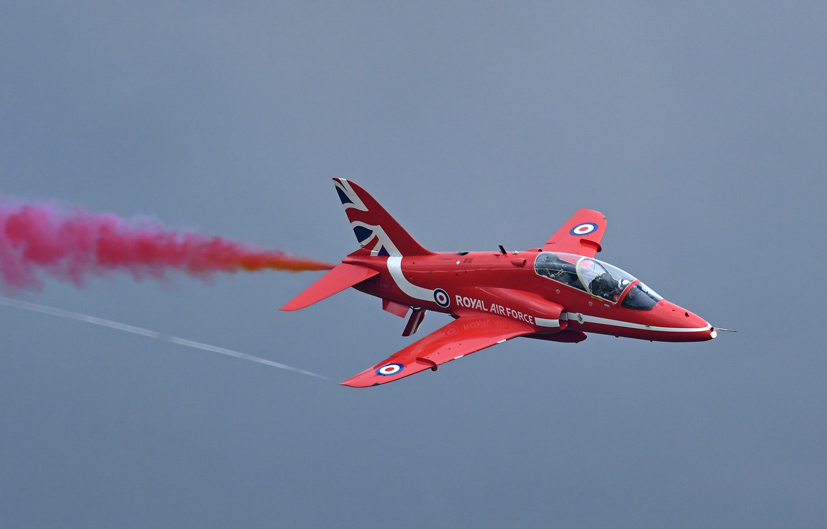
The new Airshow would be held at the famous home of the Red Arrows
Two years in the planning, the inaugural RAF Scampton Airshow was the first event of this scale to be hosted by this famous airfield and was a triumph in logistics and planning by the RAF Charitable Trust and their partners. From the outset, they were keen to stress that this show was never intended to be a replacement for the Waddington Airshow, being a much smaller and more immersive event. Drawing on the undoubted aviation heritage at RAF Scampton, the show would offer an interesting day out for all the family and allow everyone the opportunity to experience today’s Royal Air Force at close quarters. The varied five hour flying display would boast strong RAF participation, along with some overseas contributors that would help to give this first Scampton Airshow a real international flavour. Despite the best efforts of a less than encouraging weather forecast, the show was excellent and a real triumph for the organising team – it really did have the feeling of one of the fantastic relaxed Airshows of my youth and it was a very pleasant surprise.
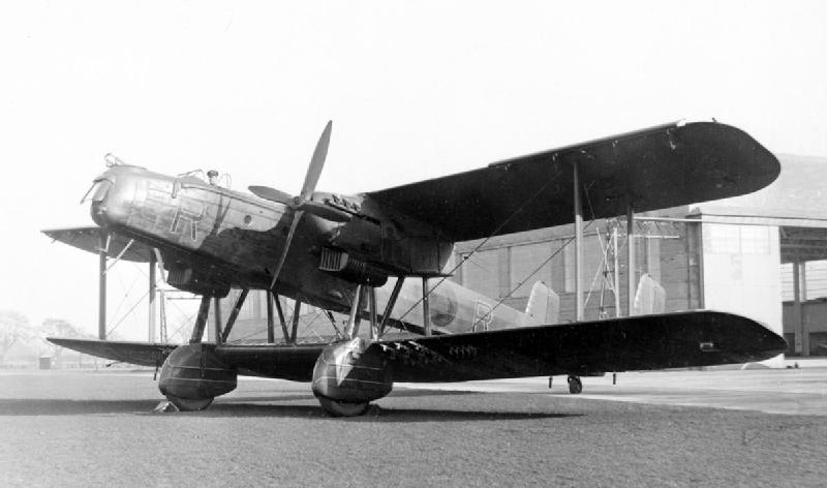
The Handley Page Heyford was the first large bomber to be based at Scampton
For many people who decided to attend the inaugural RAF Scampton Airshow, one of the major attractions would have been the opportunity to wander round this famous airfield, retracing the footsteps of some of the RAFs greatest airmen. Scampton has to be considered one of the most important aviation sites in the country and for any self-respecting enthusiast, a trip to this historic aerodrome is something of an aviation rite of passage.
There has been an airfield on the site at Scampton since the Royal Flying Corps opened the Home Defence Flight Station Brattleby at the end of 1916, flying such aircraft as FE2bs, RE8s and Avro 504s against the Zeppelin threat and on coastal defence duties. These aircraft were soon joined by training squadrons operating Sopwith Camels, Pups and Dolphins at a time where the airfield also changed its name to Scampton. The end of the Great War soon brought about the closure of the airfield and by 1920, all the aircraft and most of the buildings had been removed from the site, which simply reverted back to farmland.
Construction of the current RAF Scampton site began in 1935 and had the original Great War Brattleby aerodrome at its centre. Even whilst construction works were still ongoing, the impressive Handley Page Heyford biplane bombers of No.9 Squadron had moved in, beginning a long association between RAF bomber types and this famous station. In the period immediately prior to and throughout WWII, the airfield was home to Squadrons of Hawker Hinds, Fairey Battles, Handley Page Hampdens, Avro Manchesters and its replacement, the mighty Lancaster and the brave men who flew them. On the night of 3rd September 1939, following declaration of war against Germany, a 20 year old Guy Gibson took off from Scampton with the rest of No.83 Squadron in their Hampden bombers for a raid against targets in Northern Germany. Although this particular raid was actually aborted, it is significant that Scampton was involved from the first night of hostilities in WWII and this young pilot would go on to become one of the most famous fighting airmen of the entire war.
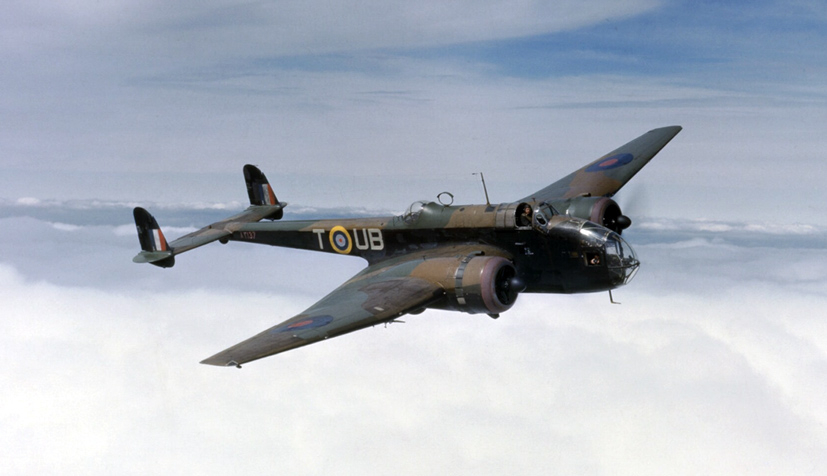
Scampton based Hampdens launched a bombing raid on the first night of Britain’s involvement in WWII
Without doubt, the most famous raid to be mounted by Squadrons based at RAF Scampton was the ‘Dambusters Raid’ of 16/17th May 1943, where specially modified Lancasters of No.617 Squadron attacked the mighty German dams that served the industrial powerbase of the Ruhr Valley. Led by Wing Commander Guy Gibson, this audacious attack followed weeks of intensive training and required the accurate delivery of ‘Upkeep’ bouncing bombs developed by talented British inventor Barnes Wallis, but relying heavily on the exceptional flying skills of nineteen Avro Lancaster crews. Proving the determination of the Allies to prevail in WWII, the raid came at a heavy price, with eight Lancasters failing to return and 53 of the 133 airmen taking part paying the ultimate price for their devotion to duty.
As the RAF entered the jet age, Scampton continued to be at the forefront of Royal Air Force operations and welcomed the highly capable English Electric Canberra B.2 into service, but the increased demands imposed by jet bomber operations resulted in the base closing for refurbishment in 1955. The main runway at the airfield needed to be lengthened, with the alterations requiring the A15 road at the north eastern end of the runway to be diverted around the extension. The reopening of the airfield heralded the significant arrival of the Avro Vulcan and a twenty four year association with this mighty delta bomber. It was fitting that No.617 should have the honour of operating the Vulcan from Scampton, continuing the proud heritage of RAF bomber units based at this famous airfield and spiritual home of the Dambusters. The Scampton Vulcans would serve throughout the Cold War period, providing Britain’s independent nuclear deterrent force until this duty was handed over to the submarines of the Royal Navy.
With the final departure of Scampton’s Vulcans in 1982, the airfield transferred from RAF Strike Command to Support Command, but befitting the rich heritage of the station, the next aircraft to be based here were arguably the most famous RAF aircraft of them all – the red Hawk trainers of the Royal Air Force Aerobatic Display Team the Red Arrows.
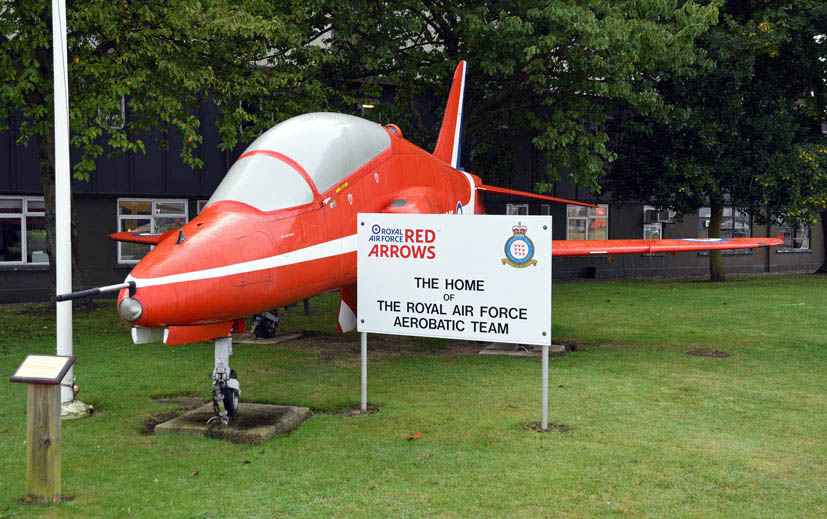
RAF Scampton is home to the world famous Red Arrows Display Team
Although RAF Scampton is undoubtedly one of the most famous airfields in the country, it could be argued that their current residents are the aircraft that most people associate with the base. As the world’s premier aerobatic display team, the Red Arrows are a source of national pride and are not only the highlight of any Airshow programme, but also act as airborne ambassadors for Britain all over the world. First arriving at RAF Scampton in 1983, the team have always flown the Hawk T1/T1a during their time at Scampton, having upgraded their diminutive Folland Gnats following the end of the 1979 season.
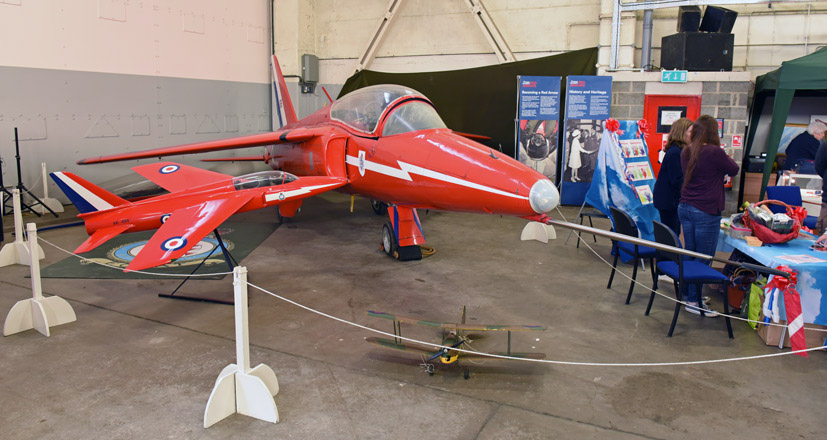
This Folland Gnat was found in the Scampton heritage hangar
In 1995, RAF Scampton was facing an uncertain future and was placed in a Care and Maintenance programme – this saw the Red Arrows move to nearby RAF College, Cranwell, but the team would still use the controlled airspace around Scampton to practice their displays. Thankfully, the threat of closure and disposal did not materialise and the Red Arrows returned to Scampton once more in December 2000 where they have remained ever since. Having now spent more time based at Scampton than any other airfield, it is surely right that this can now rightly claim to be the home of the Red Arrows.
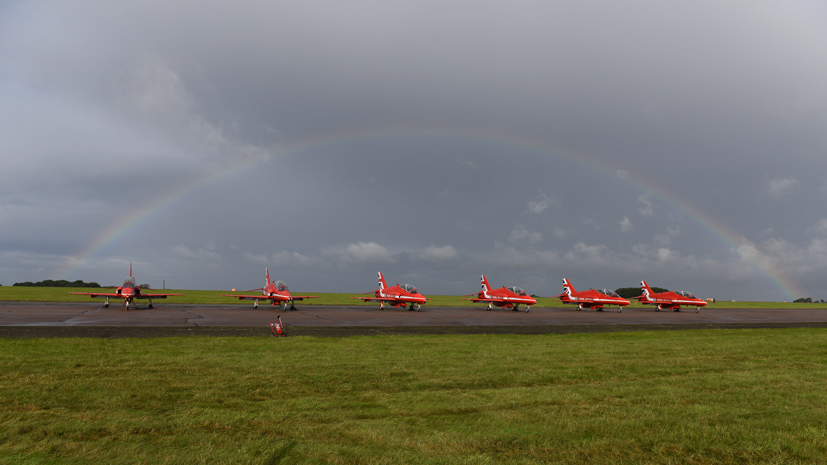
A natural tribute to the first Red Arrows ‘At Home’ Airshow
Despite the Hawks of the Red Arrows being based at Scampton for around 29 years, the inaugural Scampton Airshow was actually the first opportunity the team had to perform in front of a home Airshow crowd. There had been displays for special events and families days over the years, but the weekend of the 9/10th September 2017 would be the real thing and just as the excited spectators flocked to the airfield for this momentous occasion, the significance cannot have escaped the pilots themselves. Coming at the end of another busy season for the team, this would be an emotional weekend not only because they were performing in front of an adoring home audience, but also because the 2017 season will see a number of the team stepping down from their duties. This includes the current leader of the team (Red 1) Squadron Leader David Montenegro and the unmistakable voice of a Red Arrows display (Red 10) Squadron Leader Mike Ling MBE.
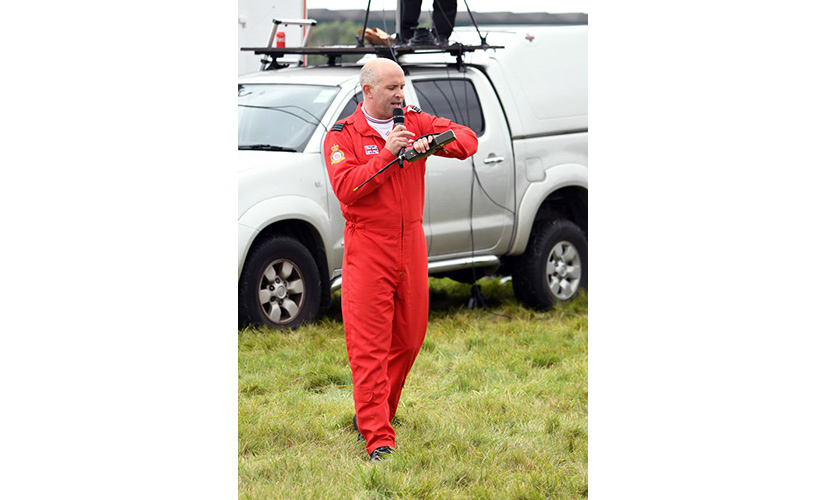
Squadron Leader Mike Ling making his final UK display commentary
Former Synchro Pair pilot Mike Ling is the supervisor for the team and anyone who has experienced a Red Arrows display over recent years will also have enjoyed his enthusiastic commentary which has seen him enjoy something of a cult status amongst the Airshow going public. Having spent nine years with the team and six as Red 10, Mike has decided to seek a new challenge and his typically enjoyable commentary during the Sunday display at Scampton was his last in front of a UK audience. I was pleased to be in the same part of the airfield during this significant occasion and joined the rest of the crowd as we gave Mike a rapturous round of applause at the end of his commentary, thanking him for his sterling efforts over the years and to wish him well in the future. He hands the Red Arrows baton to his successor Squadron Leader Adam Collins, who has quite some act to follow.
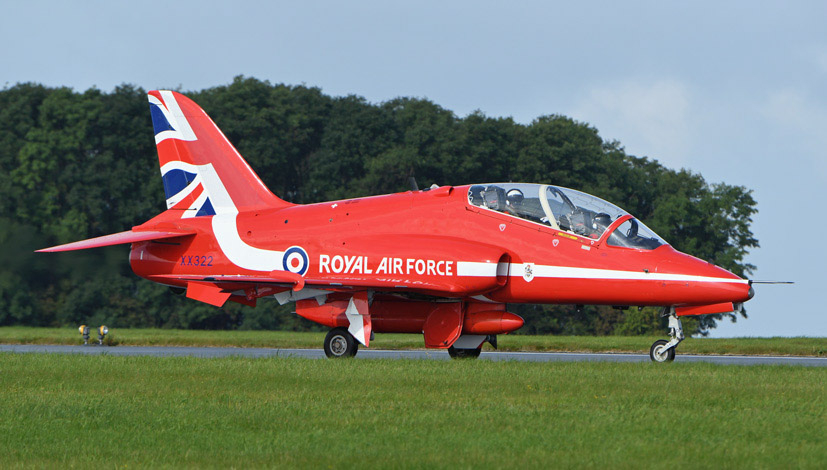
British Aerospace Hawk T.1A XX322 is the mount of the Red Arrows team leader
The distinctive Hawks of the Red Arrows were always going to be a major highlight at the inaugural Scampton Airshow, particularly as it allowed their greatest fans the opportunity to get close to the aircraft and personalities that have to be considered amongst the most famous airmen and ground crew in the world. It was also evident that one of the jets appeared to be coming in for special attention, with many people having their pictures taken with Red 1’s Hawk in the background. British Aerospace Hawk T.1A XX322 is now not only famous as the aircraft flown by the leader of the Red Arrows, but is also the focus of the RAF Museum’s ‘Names on a plane’ initiative, with the tail of the aircraft now displaying many hundreds of supporter’s names on both sides.
The idea behind this programme was to raise funds for the RAF Museum’s ambitious centenary programme and thanks to the generous support of thousands of people, they have managed to raise over £300,000 for the cause, which will certainly be put to good use over the coming months. Although you can no longer have your name displayed on a Red Arrows Hawk, you can still contribute to this initiative by heading to their dedicated web-page at namesonaplane.org where you can make a donation, or a purchase from their on-line store.
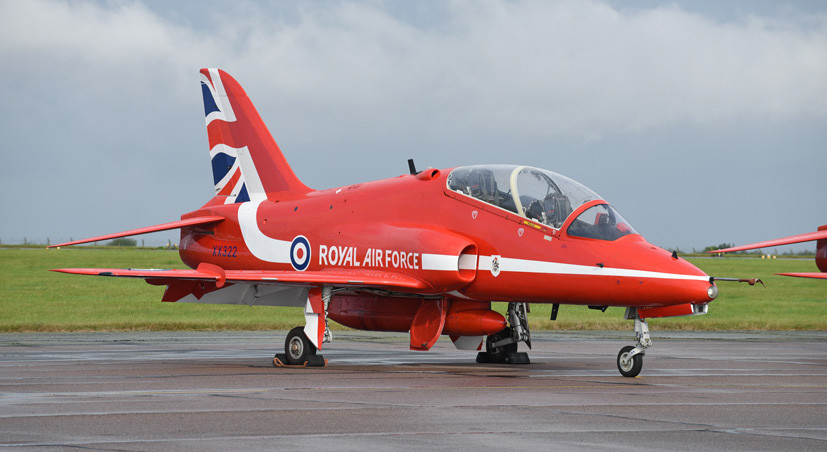
Many people were attempting to get a picture of themselves with XX322 in the background
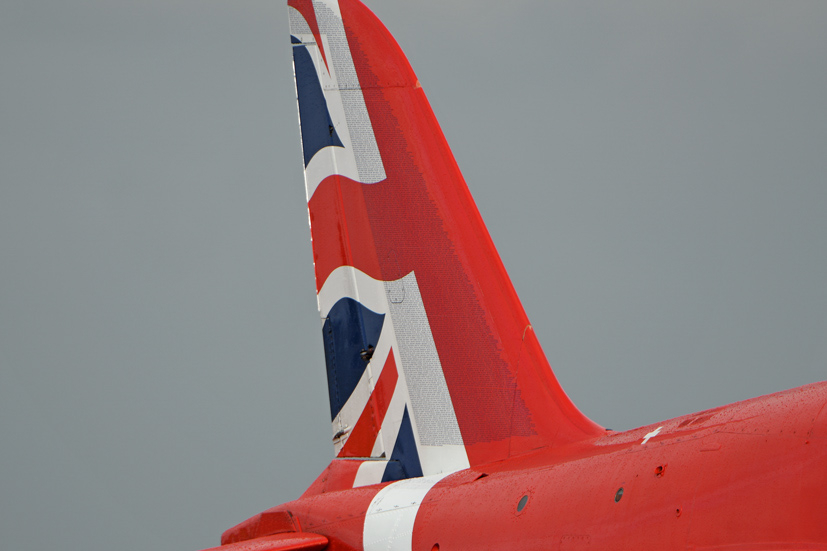
A close-up image of the names applied to the tail of Hawk XX322
This first Scampton Airshow was an ideal opportunity for people who have their names applied to Hawk XX322, to take a picture of themselves with the aircraft in the background and judging by the sheer number of people lined up to get their picture, many ‘Names on a plane’ supporters must have made the journey to Scampton for that specific reason. As the aircraft took to the skies later in the day, it must have been quite a satisfying feeling to think that your name was emblazoned on the tail of a Red Arrows Hawk, flown by the leader of the team.
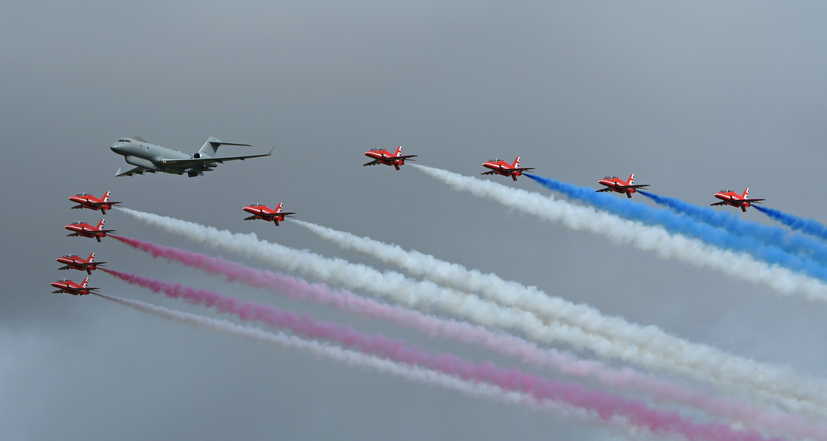
This unique formation flypast opened the show on both days at Scampton
One of the undoubted highlights of the inaugural Scampton Airshow was the opportunity to see the Red Arrows performing in front of a home Airshow crowd for the first time and will have probably been the reason that many people had decided to attend the event. With the opportunity to discover this historic airfield, get close to the aircraft and personalities of the Red Arrows and witness their historic display, many people simply wanted to be able to say that they were there at the first Scampton Airshow.
On both days of the show weekend, the Red Arrows opened proceedings with a unique formation flypast featuring a Waddington based RAF Sentinel R.1 airborne surveillance aircraft, which paid tribute to the enduring link between the Royal Air Force and the county of Lincolnshire. With all nine Red Arrows taking their place in the formation, little did we know that this would be the only time we would see all nine jets in the sky together over the Airshow weekend. With challenging weather conditions, strong winds and aircraft serviceability issues all playing a part, I think it is fair to say that the Red Arrows first home based Airshow did not go as they would have hoped. As one of the team members was unavailable for the weekend due to the imminent arrival of a baby, the display would be restricted to eight aircraft at best, but as the team lined up for their display under grey skies on Saturday, one of the lead five aircraft reported a technical issue that could not be resolved. With one aircraft already down and a second now with technical problems, the team leader decided that for safety reasons, only the back four aircraft should display and the front four taxied back to their dispersal positions.
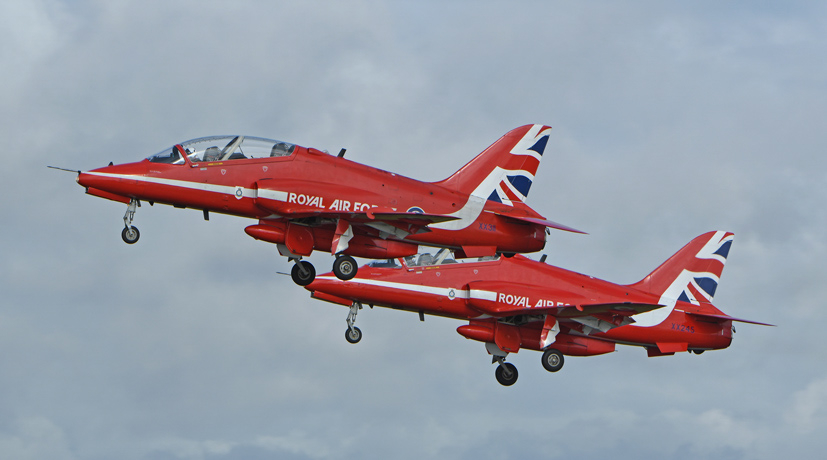
The Red Arrows were forced to perform in some challenging conditions
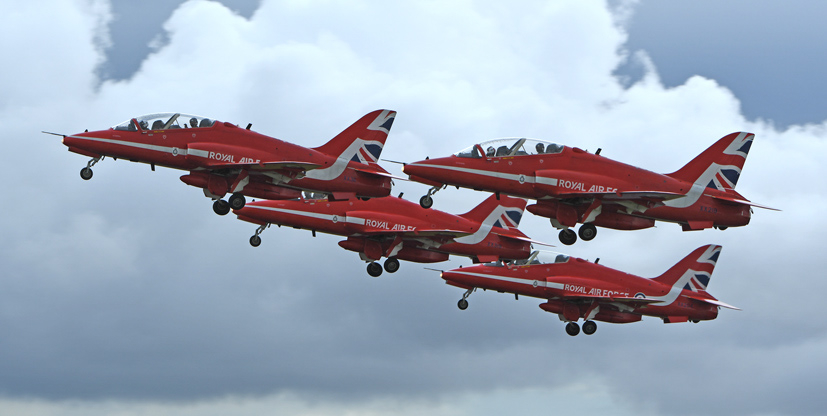
A Red Arrows display usually consists of nine aircraft performing a series of graceful formation manoeuvres, followed by a split into two elements for a dynamic opposition sequence. The front five aircraft are known as Enid (after Enid Blyton’s famous five and include the team leader), whilst the back four are known as Gypo (after the nickname of one of the teams founding members). The back four aircraft perform the thrilling opposition passes and slingshot routine, which are so popular with audiences all over the world, whilst Enid continue to fly the more graceful manoeuvres. Having seen many Red Arrows displays over the years, I don’t think I have ever seen a four-ship display before and whilst this will have been a disappointment for both the crowd and the team members on the day, it will certainly live long in the memory as an unusual feature of Scampton 2017.
Thankfully, Sunday saw all eight jets take to the sky, however the grey skies and strong winds dictated that the team were forced to perform their flat display and not the high, rolling manoeuvres we have come to know and love. With several of the team performing their final UK display appearance with the Red Arrows, this will certainly have been something of a bitter-sweet moment, but one the sizeable crowds at Scampton will feel lucky to have witnessed.
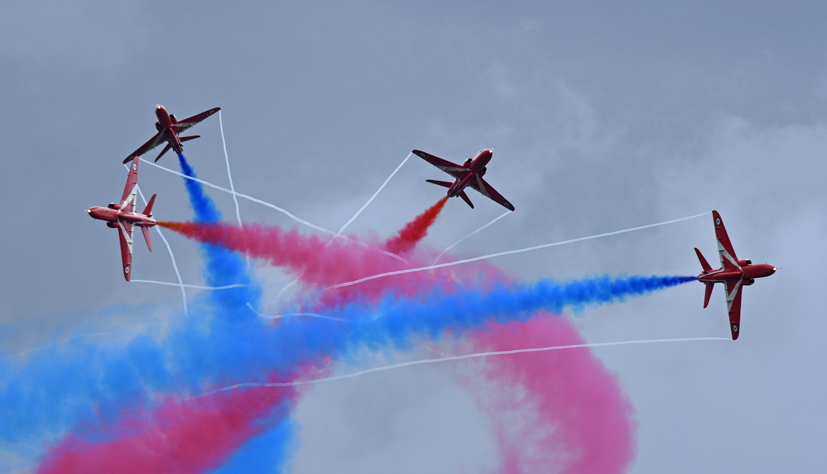
The crowds were entertained by the four Hawks of Gypo on Saturday
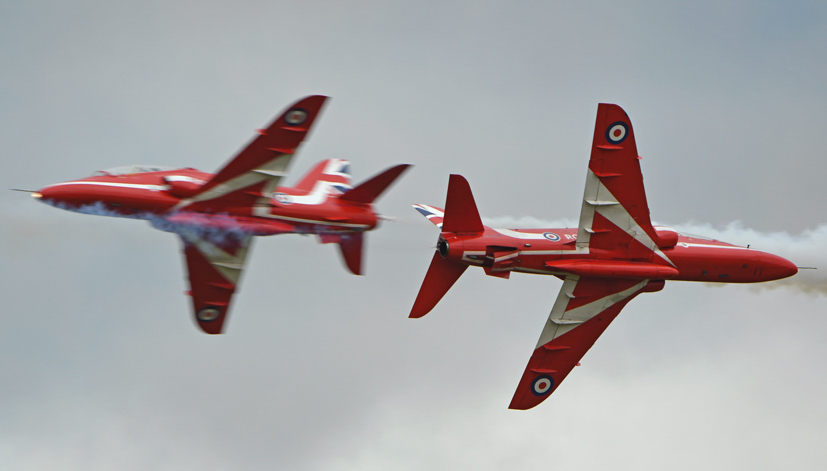
Announcing the return of a major Airshow event to Lincolnshire, this first RAF Scampton show was the result of two years meticulous planning and preparation and with over 50,000 people attending the event, it has to be viewed as a resounding success. The show itself was very different to the Waddington show that preceded it, but the organisers were clear from the outset that this would be the case and Scampton would not be a direct replacement, but a show in its own right. With off airfield parking on the Lincolnshire showground and a heightened state of security in place, many had already decided that the show was destined to fail before it had even taken place, but having attended hundreds of shows in my time, I have to disagree. I thoroughly enjoyed the weekend and think the organisers did a fantastic job - yes, it was different, but when Airshows can be hard work at times, this was a rather chilled out event and one that reminded me of the shows of years past. I will certainly be back to enjoy the delights of Scampton Airshow again.
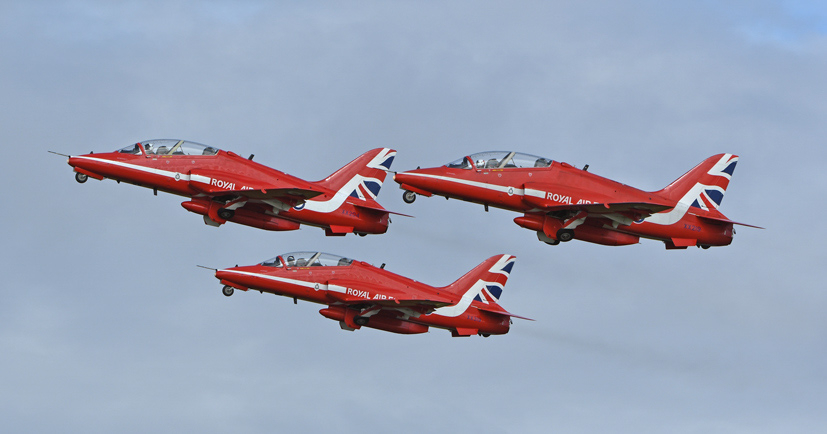
Hopefully, the Red Arrows will have an annual ‘At Home’ show in future years
As aviation enthusiasts, we have a significant role to play in determining the future of our hobby and if it is actually going to have one. At a time when Airshow events seem to be falling off the calendar with each passing year, a significant new show of this magnitude is one to be welcomed and we need to get behind it and help stop the demise of the British Airshow. Attending events such as Scampton illustrates to prospective show organisers that these are still popular events and if they arrange decent Airshows, the people will come. It also serves to protect our hobby and the heritage of the British Airshow, which has been under threat for many years now.
Thankfully, Lincolnshire has its major Airshow back and the organisers are to be commended for arranging a memorable event, which will surely now be regarded as one of the highlights of the annual display calendar. The first event was always going to require some fine tuning, but they have to be pleased with how everything went and the positive feedback they have received from a great many people in the days following the event. Clearly, they could do nothing about the weather, but they produced an interesting and varied Airshow, which catered for both the enthusiast and the family looking for a memorable day out and I am certain that the good people of Lincolnshire will take this show to their hearts and ensure it goes from strength to strength in the years to come.
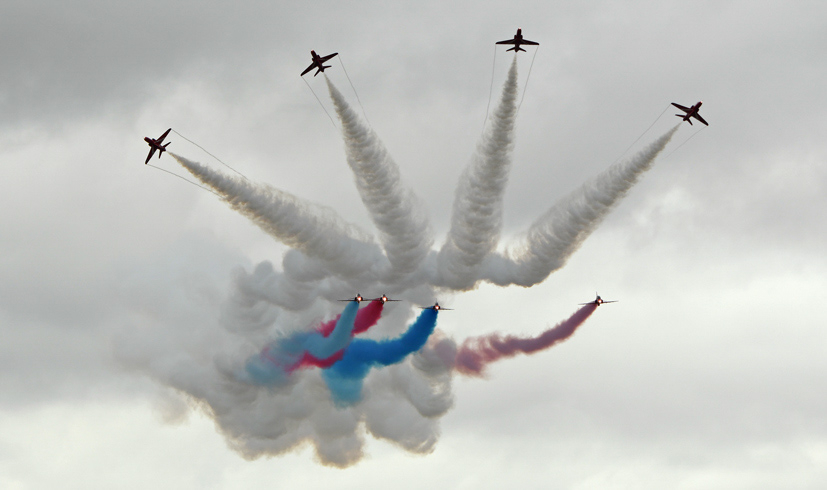
The Red Arrows are always star performers at any Airshow they attend
In the next edition of Aerodrome, we will look at some of the other highlights at Scampton 2017, including a trip round the heritage hangar, a look at the unusual static aircraft display and of course the flying programme itself.
I am afraid that is all we have for you in this edition of Aerodrome. As we near the end of the 2017 Airshow season, the first of our Readers Pictures Aerodrome specials is nearly upon us, so please let us have your best aviation pictures from 2017. You may just find one of your images immortalised on the Airfix and Corgi website for all to admire. Please send your pictures to our usual aerodrome@airfix.com e-mail address.
All the latest social media discussions regarding Aerodrome and aviation related matters in general are taking place on the Airfix Aerodrome Forum and the Corgi Aerodrome Forum and if you have any specific comments, questions or suggestions for future editions of Aerodrome, please do feel free to let us know. We also have our vibrant Airfix Facebook and Corgi Facebook pages, along with Airfix Twitter or Corgi Twitter accounts – please use #aerodrome.
If good old fashioned e-mail is more your style, please use our usual address at aerodrome@airfix.com where we will be only too pleased to hear from you.
We will be heading back to Scampton Airshow on Friday 6th October – and we look forward to seeing you all then.
And finally, could I please just take this opportunity to thank you for your continued support of our Aerodrome blog, which is very much appreciated.
Michael
© Hornby Hobbies Ltd. All rights reserved.

