

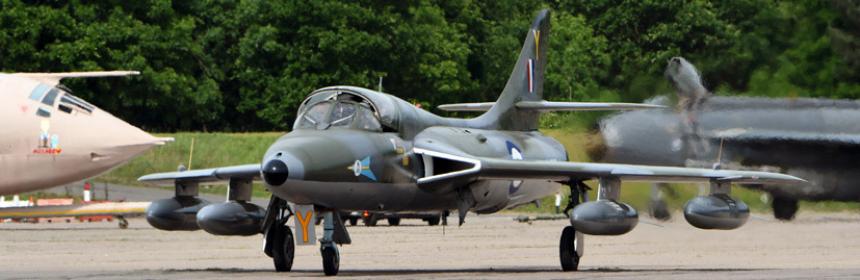
Classic Cold War British jet action takes centre stage in the latest edition of Aerodrome as we head to Brunthingthorpe airfield and the latest in their series of ever popular open days, which continue to attract ever greater attendance figures as more aviation enthusiasts discover the delights of this unique event.
Welcome to this latest edition of Aerodrome and our regular look at the fascinating world of aviation. Britain’s love of aviation heritage ensures that enthusiasts have plenty of museums and preserved aircraft to enjoy all over the country, but no matter how well a particular aircraft is maintained, there is nothing quite like the experience of seeing (and hearing) their engines bursting into life and threatening to blast the aircraft into the air. The Cold War Jet Collection at the former RAF airfield at Bruntingthorpe is home to a unique collection of classic British jet aircraft, many of which are maintained in serviceable order by an army of experienced volunteers. Although most will probably never grace our skies again, they are kept in such a condition as to be capable of performing fast taxy runs down the length of Bruntingthorpe’s impressive 3.2 km runway and recreating scenes that occurred at airfields all over Britain during the heyday of the RAFs post war jet force. Join us as we review the recent Cold War Jet Open Day and bring you a pictorial record of this memorable event.
Anyone who has been fortunate enough to visit the former RAF airfield at Bruntingthorpe in Leicestershire cannot fail to be impressed by the size of the complex. It also appears as if every inch of space is taken up by machines of one kind or another, as Bruntingthorpe now performs a wide variety of roles, from housing the impressive Cold War Jets collection of aircraft, to storing thousands of vehicles through their integrated automotive solutions programme. With vehicle testing facilities and a care and maintenance storage facility for former RAF tanker and transport aircraft, the site is also regularly used as a location for TV and film production units.
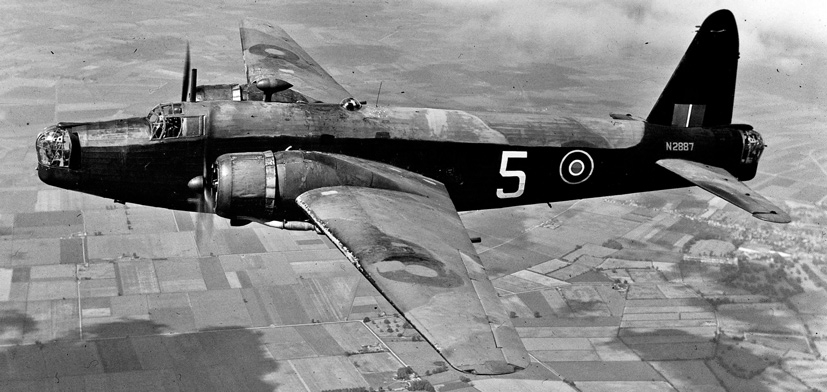
The Vickers Wellington was used to train bomber crews at Bruntingthorpe
The airfield itself was opened in late 1942 as an operational training unit for new RAF bomber crews and was intended to allow entire crews to be trained together, before being sent on to their operational postings (again as a complete crew). For this critical task, the crews would be flying Vickers Wellington bombers for the duration of their training, although many other aircraft types would have also used the airfield during this time. Following the end of WWII, Gloster Meteors were operated from Bruntingthorpe for a time, which is quite significant as Frank Whittle and his Power Jets Ltd company also used workshops on the site to develop his top secret jet engine and conduct flight trials during the war. The inevitable reduction in peace-time RAF unit strength saw the airfield placed under the care and maintenance programme until early 1957.

The awesome sight of a Boeing B-47 Stratojet blasting in to the air
The next residents at the airfield would see it come under US control and brought about a huge expansion programme at Bruntingthorpe. Needing a European base to operate their six engined B-47 Stratojet nuclear bombers, the airfield saw significant infrastructure upgrades, including the purchase of surrounding farmland and the construction of a longer, upgraded runway. Despite spending millions of pounds on this upgrade, Strategic Air Commands stay at this Leicestershire base was to be a short one and by the autumn of 1962, the last US aircraft had left the airfield and it was handed back to MoD control. Many of the older, more historic buildings were demolished over the next few years and with no plans to use the facilities for RAF operations, the airfield was eventually sold into private ownership.
Today, the Bruntingthorpe airfield site is a hive of activity and must look extremely impressive if viewed from the air. With a large number of aircraft preserved, stored or recycled on the site, their numbers are dwarfed by the cars, vans and trucks that seem to be arranged in endless rows across the airfield and are now clearly big business for the airfield owners. Despite their much greater numbers, the cars still play second fiddle to the aircraft as far as enthusiasts are concerned and the aviation heritage of the airfield continues to increase in profile with each passing year.
Perhaps the most famous resident at Bruntingthorpe airfield in its recent history has been Avro Vulcan B.2 XH558. As the last flying Vulcan in the world, XH558 had performed as the RAFs popular Vulcan Display flight for 7 years until 1992, when the aircraft made its final public display at Cranfield. Put up for sale, the Vulcan was purchased by C.Walton Ltd, who arranged for the aircraft to be flown to Bruntingthorpe, where it would form the centrepiece of their growing aviation collection. Arriving in Leicestershire on 23rd March 1993, the Vulcan would be maintained in ground running condition and for the next six years, become the star attraction at the regular ‘Rolling Thunder Days’, thrilling spectators as she blasted down the runway at full power.
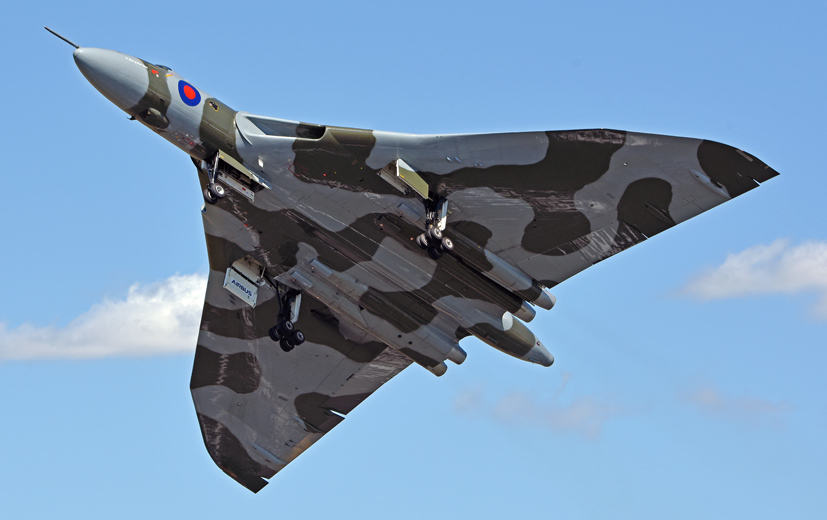
The unmistakable shape of the Avro Vulcan, which became Britain’s most popular Airshow performer
Even as the Vulcan was still entertaining enthusiasts with her Bruntingthorpe taxy demonstrations, the feasibility of returning this much loved aircraft to the air once more was being considered by some committed and influential people. This would be a significant undertaking on many levels, not least the fact that her taxy demonstration appearances have to end, resulting in a significant loss of income for the owners. XH558 would then have to be dismantled and thoroughly inspected by a team of engineers who were experienced in dealing with this older jet technology, which would take time and lots of money. Indeed, over the next few years, the words Vulcan and money appeared to be inextricably linked, as work finally began on this amazing project. Surely this was all just a pipe dream, with the ambitious Vulcan to the sky project destined for failure. This would be the most complex return to flight project ever attempted in the world and with so many potential pitfalls ahead of them, most people were certainly hopeful, if extremely sceptical.
As the years passed, enthusiasts were given regular updates on this huge undertaking and the enormity of the task facing the renovation team. The Vulcan would need to be dismantled component by component, have each part be returned to its original manufacturer for assessment and renovation, before the aircraft could be re-assembled from the ground up. At any stage during this period, an insurmountable problem could manifest itself, or the money simply run out, but miraculously, due to the drive and professionalism of the Vulcan team and the generosity of thousands of individuals and businesses, they did it – they restored a Vulcan to airworthy condition and as the aviation world looked towards this former RAF airfield in Leicestershire, Avro Vulcan XH558 prepared for her first post restoration flight.
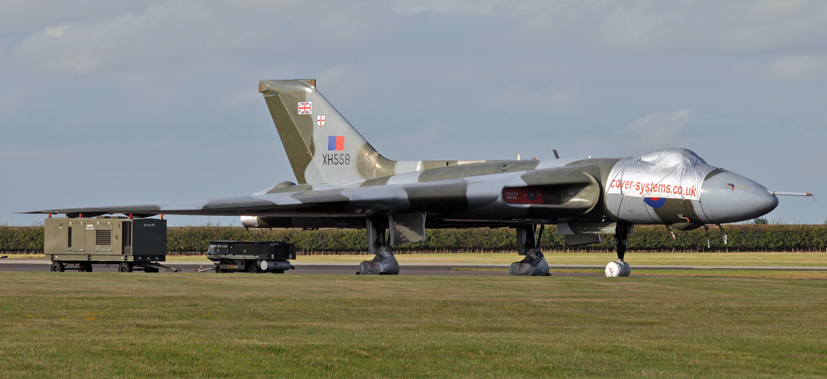
Avro Vulcan B.2 XH558 waiting in the evening sunlight at RAF Waddington
Even as the Vulcan powered up her engines and sped off down the runway at Bruntingthorpe, I, like millions of other onlookers could hardly believe what I was seeing. This mighty Cold War bomber had overcome seemingly insurmountable odds and was about to become the most famous historic aircraft in the world – the last flying Avro Vulcan and without doubt the most complex aircraft on the British civilian register. Her first triumphant post restoration flight took place on 18th October 2007, but it would not be until the following July that she would make her public display debut, fittingly at her former RAF home at Waddington – so began Britain’s love affair with a relic of the Cold War and one of the most distinctive aircraft ever to take to the skies.
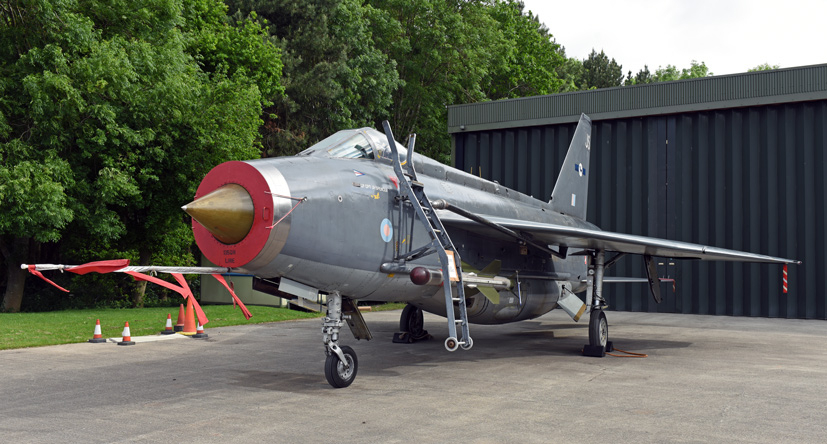
English Electric Lightning F.6 XR728 of the Lightning Preservation Group
If the Avro Vulcan can claim to Britain’s favourite Cold War bomber, the fighter equivalent during a similar service period must be the superb English Electric Lightning - the only all-British built Mach 2 plus capable fighter aircraft. At the time this aircraft entered RAF service, it represented a huge technological leap forward and possessed spectacular performance that was the envy of the aviation world. As Britain’s primary interceptor fighter during some of the most turbulent times in our nation’s history, the Lightning earned something of an iconic status amongst aviation enthusiasts and is certainly regarded as one of the finest achievements of the British aviation industry. In all, nine RAF Squadrons were equipped with the mighty English Electric Lightning, which defended the airspace of the UK, Near and Far East and the former West Germany.
Without doubt, one of the main reasons enthusiasts flock to the open day events at Bruntingthorpe is the opportunity to see Britain’s most famous jet fighter at close quarters and to experience the thrill of having one blast down the runway in full afterburner. Based at the airfield, the Lightning Preservation Group are now the custodians of three examples of the Lightning and are an organisation dedicated to preserving the Cold War legacy of this magnificent aircraft. Through many years of dedication and honest endeavour, the LPG have managed to keep Lightning F.6s XR728 and XS904 in magnificent ground running condition, with both aircraft regularly featuring at Bruntingthorpe open days. They have also recently acquired former RAF No.111 Squadron gate guardian Lightning F.3 XR713, which is now resident at their Bruntingthorpe facility following transportation from Leuchars and re-assembly. Whilst the aircraft will be preserved in ground running condition like the two F.6s, it is a valuable addition to the collection and is destined to be presented in a unique colour scheme – more on this in a future edition of Aerodrome.
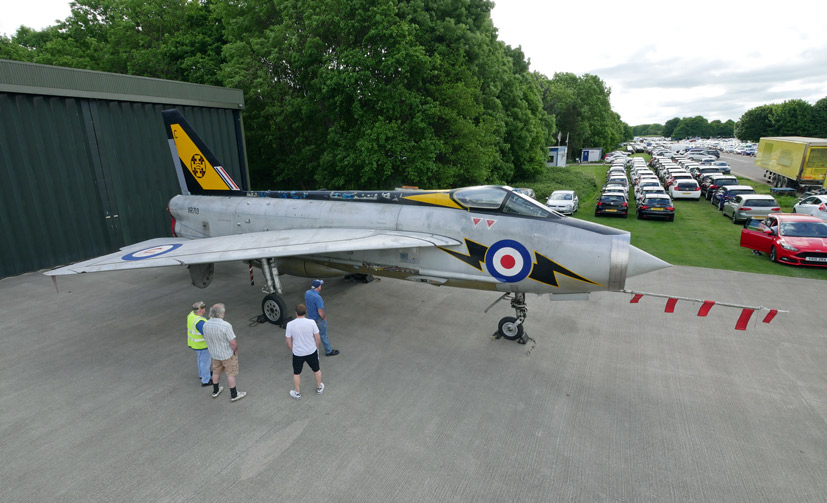
When Lightning F.3 XR713 emerges from the QRA shed, she will be wearing a rather unique colour scheme
Without doubt, the aircraft that stands testament to the drive, professionalism and the determination of the Lightning Preservation Group is Lightning F.6 XR728/JS. For over 29 years, the LPG have managed to maintain this magnificent aircraft in ground running condition and with it, provide a lasting legacy for this famous jet interceptor, which protected Britain’s skies during the volatile Cold War period. Not content with preserving the aircraft for future generations to admire, they also needed to protect their Lightnings against the elements, whilst at the same time enhancing the experience they allowed enthusiasts to enjoy. In 1994, the group secured a genuine Cold War Quick Reaction Alert ‘Q shed’, which was formerly stationed at RAF Wattisham and housed a pair of Lightnings ready to defend Britain’s air space. Following a successful fund raising campaign, the newly erected ‘Q shed’ was opened in 2010 and now protects Lightning XR728 and her stablemate XS904 from the elements, as well as being the focal point for many of the popular LPG enthusiast events arranged each year. This year marks a significant one in the history of Lightning XR728, as she celebrates the 50th anniversary of entering RAF service with No.23 Squadron at RAF Leuchars.
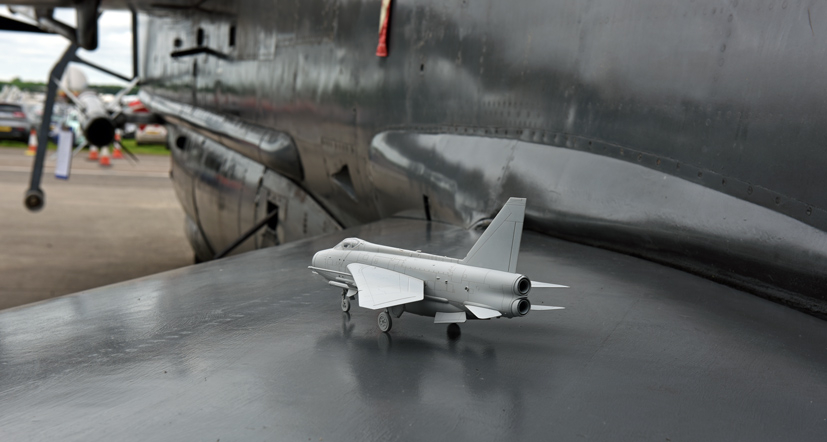
A meeting of Lightnings at the recent Bruntingthorpe Cold War Jets Open Day
This was my first visit to a Cold War Jets Open Day and it turned out to be a memorable day for a number of reasons, but mainly as I was lucky enough to spend the day with the members and officials of the LPG. I was allowed to bring the only metal pre-production sample model of the new 1/48th scale Corgi English Electric Lightning F.6 tooling with me to the event and this was the first opportunity for the die-cast model to meet the aircraft on which it is based – the first release will be XR728, which one of the two Lightning F.6 aircraft owned and maintained by the Lightning Preservation Group. The model turned out to be quite a celebrity in its own right and I was able to take some pictures of the sample model with the magnificent aircraft on which it is based, when I eventually managed to prize it away from enthusiasts and LPG members. Everyone we met at Bruntingthorpe is very much looking forward to the release of this model, but the highlight of my day was certainly seeing XR728 speeding down the runway in full afterburner – what a magnificent aircraft.
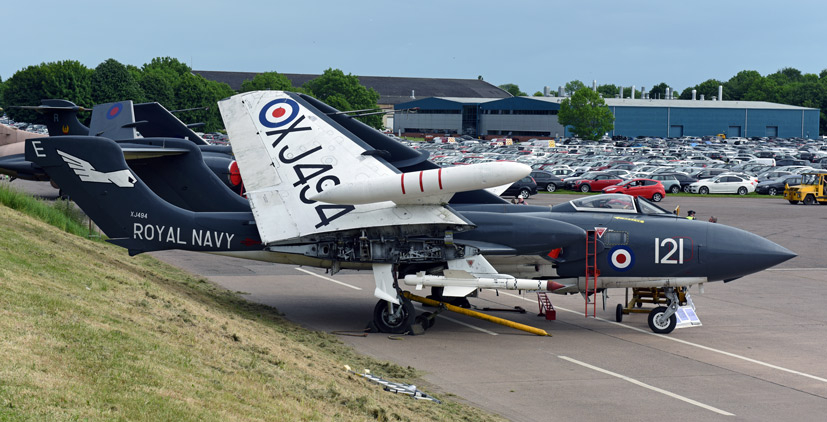
My second Sea Vixen in two days. XJ494 can be seen with just a few of the vehicles stored at the Bruntingthorpe site
Having missed my usual attendance at the May Sunday Duxford Airshow to attend my first Cold War Jets Open Day, I was a little unsure of what to expect at Bruntingthorpe. I knew there would be some unique jet action to enjoy and some magnificent Lightnings to get close to, but this was going to be something of a voyage of discovery. Arriving at a much more civilized time than I usually turn up for a show, I feared I had already made my first miscalculation – the place was packed. Thousands of cars packed with enthusiasts clearly indicated that this was a very popular event and one which has to be considered a major show in the UK display calendar. I should have known better. The Cold War Jet Collection includes such classic types as the Victor, Nimrod, Buccaneer, Hunter, VC10 and Canberra and with many examples maintained in serviceable condition, this is a genuinely unique show for the classic jet enthusiast.
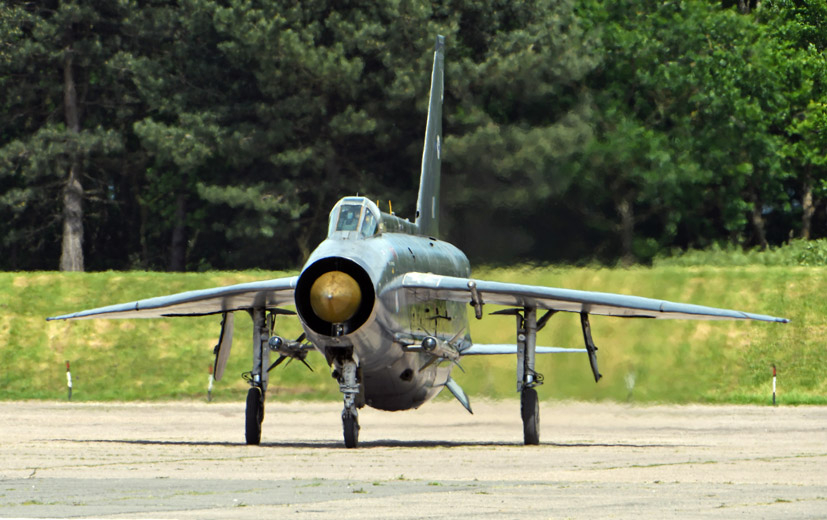
Can there be a more enigmatic aviation sight than a Lightning preparing to blast off?
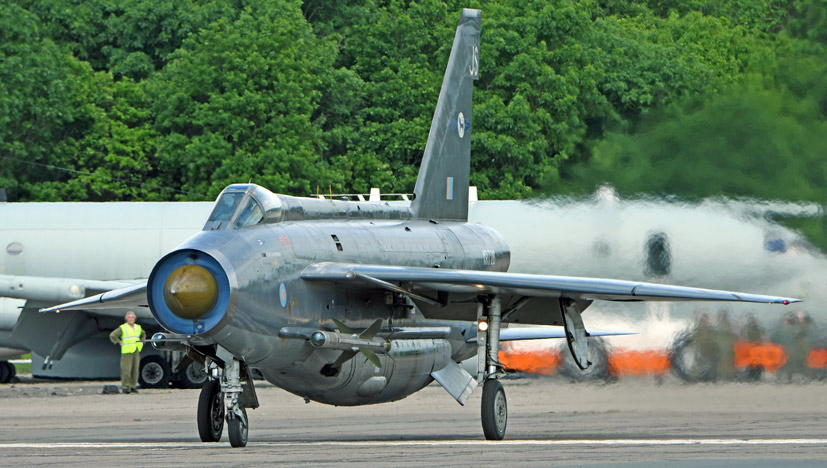
As the afterburners are engaged, a blue vapour ring appears in the intake of XR728
The main purpose of my visit was to meet the Lightning Preservation Group members I had been in contact with over the past few months and I was definitely excited at the prospect of getting close to the three magnificent Lightnings they now have under their care. This would also be the first time I had seen Lightning F.3 XR713 since I had the opportunity to photograph her many years ago during an enthusiast visit to RAF Leuchars and I was interested to hear what plans the LPG had for this famous aircraft. Unusually for me, this would be one event when I would not be situated on the crowd-line, trying to get the best possible pictures of the day’s events, however being surrounded by Lightnings more than made up for this.
As I was not in a position to see many of the aircraft performing their fast taxy demonstrations during the Cold War Jets Open day, I have included a selection of images from the displays I did manage to see, including the awesome sight of Lightning F.6 XR728 charging down the runway in full afterburner. This will certainly go down as one of my aviation highlights of 2017.
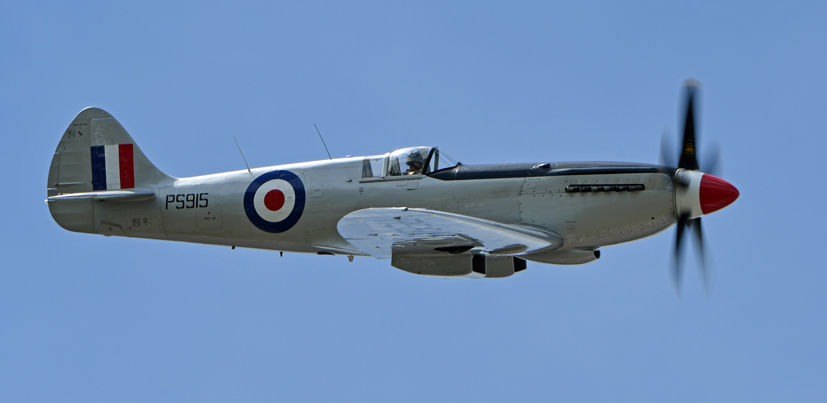
Battle of Britain Memorial Flight Spitfire PR XIX (PS915) was the only flying display aircraft during the day
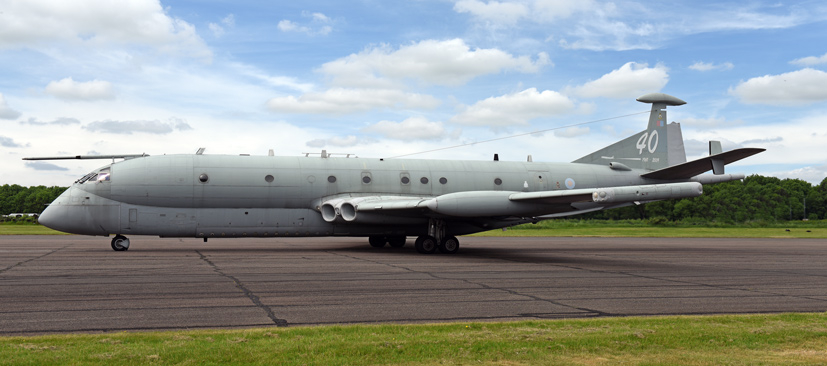
This magnificent former RAF Nimrod was one of the largest aircraft to perform at Bruntingthorpe
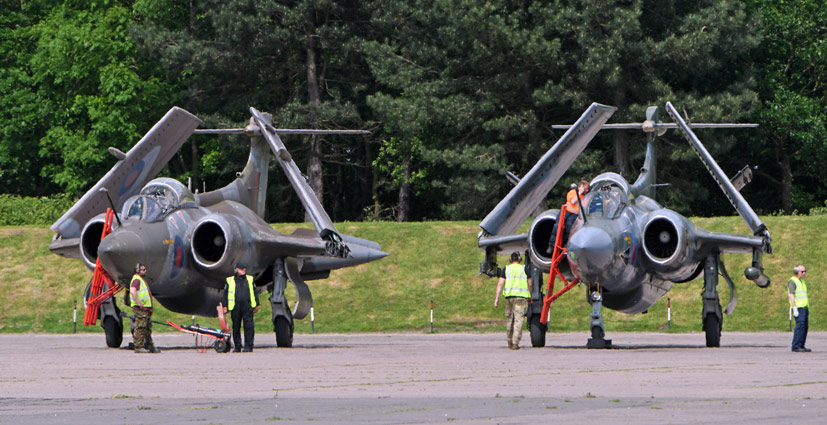
The museum’s Buccaneers are amongst the most popular performers at a Cold War Jets Open Day
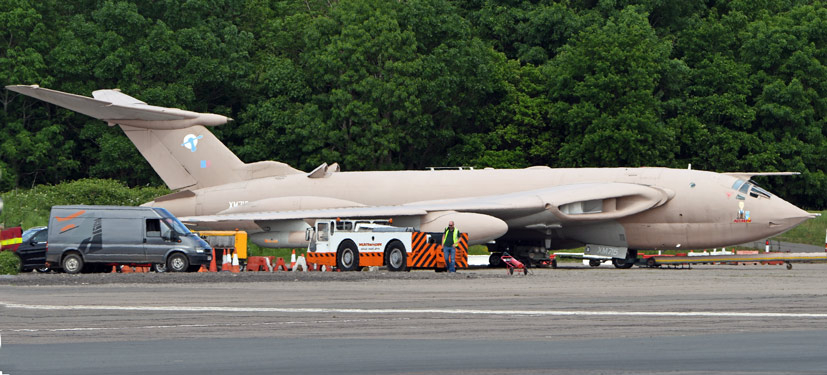
Handley Page Victor K.2 XM715 ‘Teasin’ Tina’ took her usual place as the show’s finale act
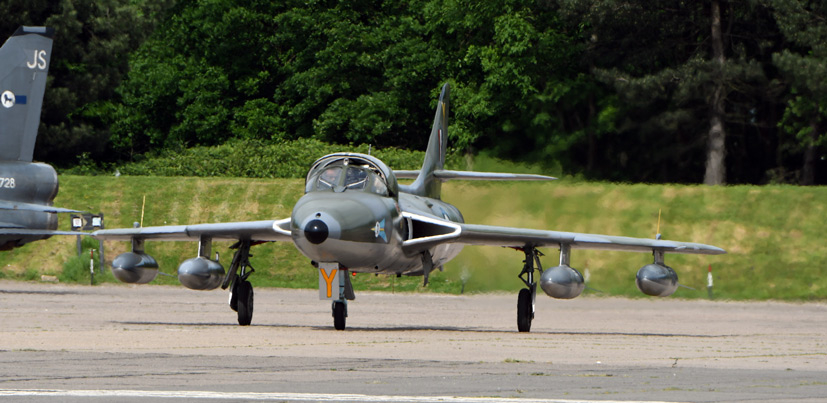
The beautifully clean lines of the classic Hawker Hunter are a sight to behold
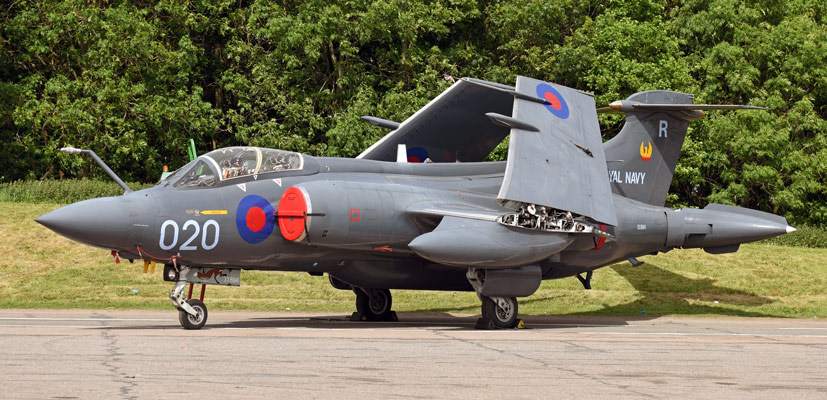
Famous Buccaneer S.2B XX894 looking resplendent in her Fleet Air Arm scheme
My first visit to a Bruntingthorpe Cold War Jets Open Day was something of an aviation voyage of discovery for me, but proved to be a real eye opener. This unique event offers enthusiasts the opportunity to return to the glory days of post war RAF air power and see these magnificent aircraft come to life once more. I was surprised by the sheer number of people who flocked to Leicestershire to experience this unique jet powered event and can confidently say that I will definitely be joining them again for future open days.
I would also like to extend my sincere thanks to the members of the Lightning Preservation Group for their kind hospitality during my visit, especially Richard and Chris Norris and Colin Collis – thank you guys. I very much look forward to my next visit to the Lightning Preservation Group and their expanding collection of Lightnings.
I am afraid that’s all we have for you in this latest edition of Aerodrome, but we will be back with more news and exclusive aviation pictures in two weeks time. We are also planning our annual Readers Pictures Edition, where we feature the aviation photography skills of Aerodrome readers from around the world. If you would like to take part and have some of your pictures included in the 2017 edition of readers pictures, please send your images to aerodrome@airfix.com or aerodrome@corgi.co.uk and keep an eye out for this popular edition of our Aerodrome blog.
As usual, if you would like to join in with all the latest social media discussions regarding Aerodrome and aviation matters in general, please head for either the Airfix Aerodrome Forum or our Corgi Aerodrome Forum and have your say. If you have any specific comments, questions or suggestions for future editions of Aerodrome, please do feel free to let us know by using either the Airfix Facebook or Corgi Facebook pages, or our Airfix Twitter or Corgi Twitter accounts, using #aerodrome – if you are Twitter regulars, you will know what this means! If good old fashioned e-mail is more your style, please use our usual addresses above where we will be only too pleased to hear from you.
We look forward to posting our next blog on Friday 14th July.
Michael
© Hornby Hobbies Ltd. All rights reserved

