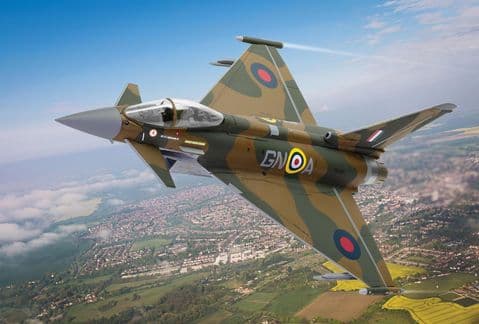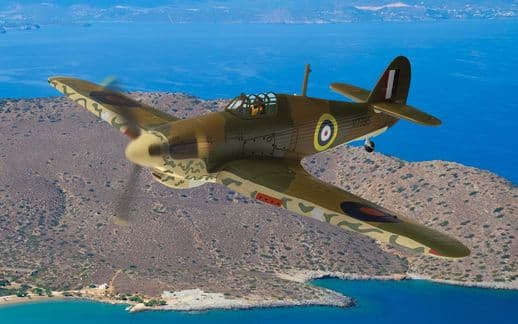
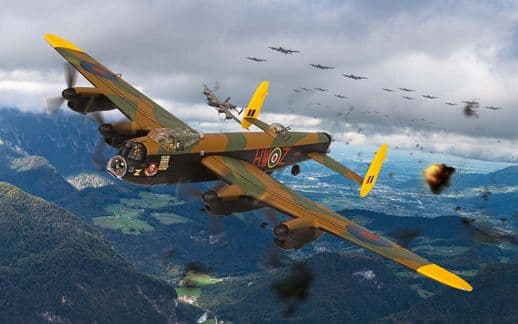



Welcome to this latest edition of Aerodrome and our regular look at the fascinating world of aeroplanes and the historic aviation scene in the UK.
In this edition of Aerodrome, we will be revisiting a blog format which has been a little underused over the past six years, but one we intend to feature more regularly in future. Our Aircraft Profiles allow us the opportunity to take a closer look at details behind the history of individual aircraft, be that one we can find on display in a museum, or indeed one which regularly entertains the crowds during the summer Airshow season. On this occasion, we will be looking at one of the magnificent machines under the care of the Battle of Britain Memorial Flight, one which has not long since emerged from a period of maintenance wearing a smart new colour scheme and markings, Hawker Hurricane Mk.IIC PZ865.
One of two Hurricane’s operated by the flight, we will be seeing why this is a particularly important aircraft in Britain’s aviation heritage and whilst we will be looking back to a scheme the aircraft wore around fifteen years ago, we will see that this proved to be one of the most popular in this aircraft’s illustrious history. Straying somewhat from the single aircraft format, as other aircraft of the BBMF will also feature, this blog would perhaps better be described as an Aircraft Profile Plus edition - all the images were captured during a Lincolnshire Lancaster Association Members Day some years ago, an event where members are allowed close access to all the aircraft of the Flight for one memorable day. Bringing this story right up to date, we will also be including some recently taken photographs of Hurricane PZ865 in her latest scheme, one which further marks the aircraft’s participation in the night air war during WWII. It’s historic aviation action all the way in this latest edition of Aerodrome, with our destination being a sunny RAF Coningsby, with images of the same aircraft captured some 16 years apart.
Four of the magnificent aircraft in the care of the Battle of Britain Memorial Flight, taken on a more recent visit to RAF Coningsby than the one which forms the basis of this feature
As one of the busiest military airfields in the UK, RAF Coningsby is a big draw for aviation enthusiasts from all over the country and on any given day, there can be many hundreds of people positioned around the perimeter of the airfield, or taking up one of the highly valued places in the spotters car park at the western end of the airfield. Anyone who has ever been to Coningsby will know that you have to you get up very early to bag one of those spaces. In addition to the home based Eurofighter Typhoon units, there is always the possibility of seeing a wide variety of current military aviation hardware during a visit to Coningsby, including all the latest aircraft in RAF service, UK based American aircraft and even overseas visitors who may be in the UK on exercise or squadron exchanges. RAF Coningsby also offers visitors the possibility of experiencing a unique and fascinating aviation dichotomy, as the station is not only home to the UK’s latest cutting edge air superiority fighters, but also some of the oldest aircraft in RAF service, at least one of which performed the same task as today’s Typhoons over eighty years ago. Since 1976, Coningsby has also been the home of the Battle of Britain Memorial Flight, a collection of WWII era aircraft which are maintained in airworthy condition for the benefit of the nation and the preservation of the country’s rich aviation heritage. During any visit to Coningsby, it is quite possible to see a QRA Typhoon clearing the runway, just as a restored Spitfire Mk.IIa powers up its Merlin engine and blasts into the air - a quite magnificent sight!
Although the aircraft of the BBMF are now a much loved aviation institution in their own right and a must have display item on any self-respecting Airshow programme, the Flight can actually trace their history back to the years immediately following the end of the Second World War and the popularity of the Victory Day flypasts which took place over London, watched by thousands of grateful people. In those days, it was traditional for the flypasts to be led by RAF hero pilots of WWII, such as Douglas Bader, Johnnie Johnson or Robert Stanford Tuck and were often used by the RAF to show the capital their latest aviation hardware, as the RAF was now very much in the jet age. Despite all this cutting-edge aviation technology being on display, in the eyes of the public, it was the Spitfires and Hurricanes flown by ‘The Few’ at the head of the formation they undoubtedly had the most affection for.
Despite the incredible affection the public had for the handful of airworthy former WWII fighters the RAF could call upon for these events, it was becoming quite a challenge to ensure their availability, particularly as the force was now only concerned with looking towards the future, and that future was all about jet power. There seemed little appetite to allocate funding for the securing and maintenance of former WWII aircraft, with most usually either ending up as museum exhibits or as much-loved gate guardians at RAF stations up and down the country, but in both cases, very much grounded. Something had to be done about the situation before it was too late and former WWII fighter ace Wing Commander Peter Thompson was determined to do it.
There is absolutely no doubt that over recent years, the aircraft most closely associated with the Battle of Britain Memorial Flight is Britain’s only airworthy Avro Lancaster PA474, however, it is interesting to note that it was actually one of her ‘little friends’ which brought about the establishment of the flight in the first instance. By the mid 1950s, Hawker Hurricane Mk.IIC LF363 was the only airworthy example of the fighter still available to the RAF at that time and was in high demand to perform ceremonial duties commemorating the Battle of Britain. Based at the famous old fighter station at Biggin Hill, the aircraft became a favourite of Wing Commander Peter Thompson (himself a Battle of Britain fighter pilot), who firmly believed that the RAF should continue to mark its greatest battle honour by retaining airworthy examples of the aircraft which won the Battle of Britain, Spitfires and Hurricanes. As their numbers were dwindling fast, he became a passionate advocate for the formation of a Historic Flight, where a small number of aircraft could be preserved for these commemorative duties, remaining in RAF service. He managed to persuade RAF officials to allow him to form such a flight, but with no public funding available at that time, everything would have to be done on a voluntary basis. As he already had his Hurricane, the search was on for suitable Spitfires to join the fledgling flight.
A flying tribute loved by the British public. The aircraft of the BBMF are loved by the British public and a highlight act at any Airshow in which they perform
By 1957, only three airworthy Spitfires remained in service with the RAF and these were flying meteorological sorties from RAF Woodvale in the North West of England as part of the Temperature and Humidity Monitoring Flight. Coming towards the end of their operational service lives, all three Rolls Royce Griffon powered Spitfire PR XIXs (PM631, PS853 and PS915) were subsequently allocated to Wing Commander Thompson at Biggin Hill, with the aircraft leaving Woodvale on 11th July 1957 destined for their new home. Once there, they joined Hawker Hurricane LF363 to become the founding aircraft of the RAF Historic Aircraft Flight, the forerunner of the Battle of Britain Memorial Flight and a group of historic aircraft which continue to perform the important role which Peter Thompson intended to this day.
From this first gathering of classic British aircraft at RAF Biggin Hill in July 1957, the Battle of Britain Memorial Flight has written its own illustrious history and undergone many changes over the years and it would be fair to say that it has not always been plain sailing for the Flight. For various reasons, the early years saw the flight forced to change its home base several times, as RAF station closures and continued cost cutting began to take hold, seemingly following the flight wherever it went. There would also be aircraft acquisitions, disposals, restoration projects and accidents along the way, but as the years passed, the fortunes of the Battle of Britain Memorial Flight began to improve markedly, a fascinating story in its own right, but one for another blog. For today’s aviation enthusiast and certainly for the purposes of this blog feature, perhaps the most significant development in the history of the BBMF occurred when the Flight moved to their current home of RAF Coningsby in 1976. Working closely with Lincolnshire County Council, who clearly understood the importance of this development to the local economy from both a heritage and tourism perspective, the airfield would benefit from the building of a permanent visitor centre at the western end of the airfield, which opened to the public in 1986. This provided to Flight’s aircraft with a dedicated hangar for their continued operation and gave the public greater access to the men and machines of this now world famous historic aircraft flight. Of even greater importance than this, the BBMF now had a home and their immediate future appeared to be much more secure.
An extremely historic aeroplane, do people know the history of this classic fighter which taking pictures of it during its latest Airshow performance?
Although the RAF’s triumph during the Battle of Britain is usually associated by most people with the effectiveness of the incomparable Supermarine Spitfire fighter, it was actually its fighting hangar-mate the Hurricane which scored the majority of the aerial victories during the summer of 1940, a fact well known by former Hurricane pilot Peter Thompson. Despite his love of the aircraft and desire to preserve its historic importance to the history of the Royal Air Force, it would be fifteen years before the Flight benefitted from the addition of a second example of this famous fighter and what a historic example it would be.
Hawker Hurricane Mk.IIC PZ865 has the distinction of actually being the last Hurricane produced at Hawker’s famous Langley factory, from a total production run of 14,533 aircraft. As the fighter occupied such a significant position in the company’s history, workers at the factory painted the slogan ‘The Last of the Many’ on the aircraft’s fuselage, an artwork addition this aircraft would proudly wear for many years to come a clear identifyer of her status for all fortunate enough to see her. Marking her importance within the history of the Hawker company, she was immediately purchased back from the Air Ministry and would be used as a general communication, media asset and test aircraft in coming years, with this development definitely saving her from the scrapman’s torch, with the end of the war being so near.
Making her first flight on 27th July 1944, it is interesting to note that the test pilot who performed the maiden flight of the last Hurricane ever produced was also the man who took the controls of the very first flight of the Hurricane prototype (K5083) back on 6th November 1935 - George Bulman began a twenty year career as a test pilot with the Hawker company in 1925, flying many maiden flights of their various designs, but most noticeably the first and last Hurricanes. Originally manufactured with four rather distinctive 20mm Hispano Cannon protruding from the leading edge of her wings, PZ865 would later relinquish this armament whilst serving with Hawkers, as indeed she soon would her military markings, in favour of a distinctive and rather contentious scheme. Wanting to preserve the aircraft for posterity, PZ865 would spend long periods stored safely inside one of the buildings at Langley, but during the early 1950s, she would be added to the UK civilian register and given the registration G-AMAU, along with a smart new blue Hawker company scheme, with gold spinner and cheat lines. She was kept company in this scheme by the two other historic aircraft in the Hawker fleet, a Tomtit and a Hart, all three of which would be regular attendees at aviation events up and down the country.
Wearing this distinctive colour scheme, Hurricane G-AMAU (PZ865) would take part in several air races which were popular spectator events in the years which followed the end of the Second World War. She was entered in the 1950 King’s Cup air race by HRH Princess Margaret, with Group Captain Peter Townsend at the controls, a pairing which clearly attracted national interest at that time. The Hurricane finished second in that race, but was just the start of this aircraft’s time in the public spotlight, as she would go on to be quite the aviation celebrity. Only months later, she would take part in the production of the movie ‘Angels One Five’, along with a collection of Hurricanes on loan from the Portuguese Air Force, as the number of airworthy examples in the UK was dwindling fast - this would not be the end of her film credits.
Of the many attractive schemes worn by this magnificent aircraft, was the ‘Night Reaper’ most popular with enthusiasts?
After filming, she returned to Hawkers and to her use on the Airshow and air racing circuit, as well as performing any number of valuable test, research and development tasks for the latest aviation projects the company were working on. She would spend many hours in the air acting as a target tug during the Sea Fury programme and would even be used as a chase plane during the development of the aircraft which would go on to be known as the Harrier. The venerable old Hurricane proved to be the ideal platform from where to observe the Hawker P.1127 as it transited from hover to forward flight, which somehow seems quite fitting, as the two aircraft were so closely related.
Several years later, the silver screen would beckon this famous Hurricane once more, as her services were required to play a fulsome role in the filming of the 1960s classic the ‘Battle of Britain’. Due to the fact that the film unit only had access to three airworthy examples of the Hurricane at that time, PZ865 was asked to masquerade as several different Hurricanes during production, swoping her codes regularly to represent different RAF squadrons taking part in the battle. Following the end of this significant undertaking, she returned to the protection of Hawkers, but was only seen sparingly at aviation events over the coming years, as the company were extremely busy at a crucial period of their history commercially. With Hawker’s historic aviation trio now taking up valuable hangar space and proving to be quite a distraction to their staff, a decision was taken in the early 1970s to donate the trio to the Royal Air Force Museum.
Even though the Hart did end up with the RAF Museum and the Tomtit eventually came under the care of the Shuttleworth Collection, certain influential Hawker officials at that time were determined that the historical provenance of their Hurricane had to be maintained and that she should retain her airworthy status and not just be consigned to the display halls of a museum. To this end, they suggested that the most appropriate home for the aircraft would be for her to be presented to the Battle of Britain Memorial Flight and as this argument appeared to meet with approval, these same officials took positive action. On 29th March 1972, Hawker Hurricane Mk.IIC PZ865 was flown to RAF Coltishall, the then home of the BBMF and delivered to their care, the start of another exciting chapter in the story of this incredibly historic aircraft. Some 28 years after the aircraft had made its first flight, PZ865 became the last Hurricane to be delivered to the Royal Air Force and at the same time, the oldest aircraft ever delivered for RAF service.
This scheme marks the achievements of the RAF’s Czech fighter ace Karel Kuttelwascher, the top Hurricane night intruder ace of the war
As with all the aircraft operated by the BBMF over the years, the Flight have a tradition of regularly repainting their aircraft, presenting them is different liveries, each one depicting a famous aircraft, crew or action involving either a Fighter Command or Bomber Command aircraft. In addition to freshening up the collection and attracting significant attention amongst the nation’s army of aviation enthusiasts, this popular tradition is aimed squarely at commemorating both the contribution and sacrifice of the men who flew these aircraft operationally during WWII and the men and women who were instrumental in supporting them. Back in 2005 and following the completion of her winter maintenance schedule, Hurricane PZ865 returned to Coningsby wearing a smart new scheme, one which has since gone on to be regarded as perhaps the most attractive this magnificent aircraft has ever worn throughout its illustrious flying career. Wearing the markings of Hurricane IIc (BE581) JX-E ‘Night Reaper’, the new livery commemorated an aircraft flown by the top scoring Czech ace in the Royal Air Force, Karel Kuttelwascher.
Kuttelwascher posted a relatively modest RAF combat service career which spanned from August 1940 to October 1942, however, this would be just as eventful as his wartime arrival in Britain proved to be. Joining the Czech Air Force at the age of 18, ‘Kut’ duly qualified as a pilot and was later assigned to the 32nd Fighter Unit and the air defence of his nation. Following the German occupation of his country in early 1939, Kuttelwascher escaped to Poland and despite being implored to stay and join the Polish Air Force, made his way to France with around 100 of his fellow pilots. Expecting to help the French with the war which would certainly not be long in coming, they were dismayed to learn that French law did not allow foreign nationals to join their air force, so he was forced to take a commission in the Foreign Legion. Once the full horror of Blitzkrieg was directed towards France, Kuttelwascher and many of his comrades immediately transferred to the French Air Force, where he would be trained to fly the Morane Saulnier M.S 406 fighter, however, on being posted to an operational squadron, he was forced to immediately re-train on the more capable Dewoitine D.520, the most capable of the French fighters in service at that time.
Although the night intruder Hurricanes only had ammunition for nine seconds shooting time, this didn’t stop ‘Kut’ from scoring regular victories
Having had little time to get used to this new fighter, the marauding Luftwaffe dictated that it was straight into the action for Kut and his squadron mates and even though they were fighting against a well-organized enemy who had a significant numerical advantage, they fought courageously at a time of great confusion. In his memoirs, Kuttelwascher described how he shot down several Luftwaffe aircraft during this frenetic period, however, the few official records which survived this period only attributed two aircraft destroyed and a further classified as probable against his name.
With the inevitable fall of France, Kuttelwascher was on the move once more, first flying his fighter to Algeria and then via Gibraltar to Britain. With the British knowing they were going to need every pilot they could get their hands on in the coming months and with an agreement in place with the Czech Government in exile, he was almost immediately assigned to the RAF, where he began training to fly the Hawker Hurricane. Joining No.1 Squadron in the Autumn of 1940, he took part in the latter stages of the Battle of Britain, before moving on to fly some of the RAF’s first fighter sweeps into enemy occupied Europe.
No.1 Squadron was assigned to fly night intruder sorties into Northern France, a task for which the Czech airman seemed to be particularly suited. Extremely dangerous and flown autonomously, these sorties not only required a high degree of flying skill, but also a calm demeanour, exceptional navigational skills, good eyesight and a hunter’s instinct. In addition to this, their black painted Hurricanes only had 91 rounds of ammunition per gun, which was equivalent to just nine seconds firing time each - during these missions, pilots would usually only press the fire button once the enemy aircraft filled their windscreen and they could hardly miss, not least of which was the fact that firing would reveal their position.
Kuttelwascher proved to be an exceptionally gifted night hunter and was certainly amongst the most successful individual RAF fighter pilots flying such missions during WWII. Claiming victories in the night air war from 1st April 1942, his score would rise steadily over the coming months, including several ‘multiple’ claims, such as the ones scored on the night of 4th/5th May 1942, when he shot down three Heinkel He-111 bombers in less that 4 frenetic minutes. In the space of 3 months, No.1 Squadron shot down 21 enemy aircraft during these night intruder missions and of this number, no fewer than 15 of these were attributed to Kuttelwascher. For this incredible feat of airmanship, he was awarded the Distinguished Flying Cross and given the unofficial title of the ‘Czech Night Hawk’ amongst his squadron mates. One of his Hurricane fighters was reported to have carried the pilot’s personal emblem of a yellow scythe and the name ‘Night Reaper’ on the forward starboard fuselage.
He would continue fighting the night air war with No.23 Squadron flying the de Havilland Mosquito, but in this aircraft, he failed to even detect any Luftwaffe aircraft during these sorties. Withdrawn from combat flying, Kuttelwascher joined the lecture circuit regaling audiences with tales of his experiences and crucially, spending time in the UK and America trying to encourage people of Czech decent to join Allied air forces. He would eventually return to flying before the end of the war, but in the role of test pilot.
Since I managed to photograph Hawker Hurricane Mk.IIC PZ865 at the 2005 Lincolnshire Lancaster Association Members Day event, she has since worn two different schemes to this one, only recently emerging from her latest period of maintenance in another nightfighter scheme. Bringing the continuing story of Hurricane PZ865 right up to date, her latest scheme is that of Hawker Hurricane Mk.IIC BE634/ZY-V of RAF No.247 Squadron, which flew out of Predannack and Exeter during 1942 engaged in the night defence of the area encompassing Plymouth and Exeter and later, conducting night intruder operations into northern Europe.
Bringing the story of Hurricane PZ865 right up to date, this next trio of images were taken during a visit to RAF Coningsby in June, not long after the fighter had returned home after deep maintenance
No.247 Squadron were famous for being the only RAF Gloster Gladiator equipped unit to serve during the Battle of Britain, only to re-equip with the Hawker Hurricane on Christmas Eve 1940. Later still, these were traded for more capable long range Hurricane Mk.IIBs in June 1941, they would maintain their night defence missions in the south west, but would go on the offensive flying night intruder operations into occupied Europe. Usually only flying on moonlit nights, these missions were intended to strike fear and confusion amongst Luftwaffe night bomber crews, as these lone RAF nocturnal hunters loitered in areas around known bomber bases, picking off their targets either as they embarked on their latest raid, or as they were making their landing runs - would the RAF be waiting for them this night? A fascinating aspect of the air war during WWII, these early night interceptions relied very much on prior intelligence, the skill of the aircrews taking part and no little luck, but as the war and technology progressed, more suitable aircraft and night interception radar would result in many more aircraft falling victim to the night hunters.
It's clear to see from the details above that this is a very special aeroplane indeed and one which represents the proud aviation heritage our great nation. The last of 14,533 Hawker Hurricanes built, she became a famous air racer as G-AMAU, starred in both the ‘Angels One Five’ and Battle of Britain movies and became the oldest aircraft ever to be delivered to the RAF when she joined the BBMF in March 1972, some 28 years after her first flight. Since then, she has served the BBMF faithfully for almost half a century, thrilling millions of Airshow spectators over that time, whilst always upholding the proud traditions of the Flight, honouring those who served in the Royal Air Force, whilst at the same time promoting the professionalism and dedication of the modern RAF. Undoubtedly, each and every aircraft operated by the Battle of Britain Memorial Flight has an interesting story to tell, but perhaps Hawker Hurricane Mk.IIC PZ865 tells the most colourful one.
Lancaster devotion, members of the Lincolnshire Lancaster Association are dedicated to keeping a preserved Lancaster in Bomber County for as long as possible
Before we end this review, as these pictures were all taken during the 2005 Lincolnshire Lancaster Association Members Day, it is probably appropriate to just spend a moment or two looking at this impressive long-standing organisation. The Lincolnshire Lancaster Association are dedicated to the preservation of Avro Lancaster PA474 and ensuring that this magnificent aircraft remains in the county which was home to so many Lancasters during the Second World War. A registered charity, the association is unique as the official support group for the Battle of Britain Memorial Flight and over the years, its continually growing membership has managed to raise many thousands of pounds for the Flight, whilst at the same time, helped to and source rare aircraft artefacts and components which have benefited all the aircraft operated by the Memorial Flight.
Originally established to ensure a preserved example of an Avro Lancaster remained in the Lincolnshire area to mark the close association between the county and Bomber Command during WWII, the association has worked tirelessly towards this goal over the years and can be extremely proud of their steadfast efforts. Not only do they now have an Avro Lancaster permanently based in Bomber County, but they also have Europe’s only airworthy example of this famous bomber operating from Lincolnshire, just as so many did during the Second World War. Originally, the association’s request was that PA474 be brought back to the county for preservation when she was due to be retired back in the early 1980s, however, things have certainly moved on from those humble beginnings. Their efforts, along with those of influential members of the Royal Air Force, helped to establish what the entire nation hold dear at to this day, an airworthy Avro Lancaster and an impressive collection of other WWII era aircraft. With continued care and attention being lavished on these famous aircraft by the engineers and technicians of the BBMF, Lincolnshire will hopefully have a flying example of the mighty Avro Lancaster for many years to come, with the continuing work of the Lincolnshire Lancaster Association and their worldwide membership helping to support their efforts.
Amongst the many benefits Lincolnshire Lancaster Association members enjoy, in most years, there is an opportunity to attend the annual Members Day, which takes place at the BBMF Visitor Centre at RAF Coningsby each year, usually at the end of September or the beginning of October. Unfortunately, with many more members than places available for this memorable day, attendance is allocated by ballot and if you are one of the lucky recipients of a ticket, you know that you are in for a very special day indeed. With the event usually scheduled to coincide with the end of BBMF’s hectic flying display commitments for the year and the start of their busy winter maintenance programme, this delightfully informal event is an opportunity to meet other Association members in this unique setting and to get close to the men and women behind the Memorial Flight. The highlight of course, is to see the Flight’s magnificent aircraft at close quarters and if weather and serviceability permit, enjoy a short flying display in celebration of the unique bond between the two organisations.
Keeping her up where she belongs, the BBMF and the LLA have a unique bond and a shared aim, to keep this magnificent aircraft in authentic, airworthy condition for a long as they can
Unfortunately, the past two years have been very different for both the BBMF and LLA members and few people have been able to marvel at these classic aeroplanes flying in Britain’s skies during this time. The important work to maintain these aircraft has continued apace during these troubling times and as we have seen with Hurricane PZ865, even the tradition of presenting aircraft in new schemes has been maintained. All we hope for now is that the future will be much brighter and not only will people be able to enjoy a visit to the BBMF visitor centre once more, but that these magnificent aircraft can take their place on Airshow display programmes once more, providing a unique classic aircraft link to our glorious aviation past.
Here is a final selection of images taken during my visit to Coningsby and the 2005 Lincolnshire Lancaster Association Members Day.
Both powered by Rolls Royce Merlins, but very different aeroplanes, two aviation classics on display at RAF Coningsby
Avro Lancaster PA474 in her striking ‘Mickey the Moocher’ livery
The second largest aircraft operated by the Flight, Dakota ZA947 was wearing her No.267 ‘Pegasus’ Squadron markings back in 2005
Classics everywhere you look, Spitfire PR.Mk.XIX PS915 wears the markings of the aircraft which performed the last operational sortie by an RAF Spitfire
Looking resplendent in its D-Day markings and sporting clipped wings, Spitfire LF.IXe was a real picture in these No.443 Squadron RCAF markings
A final look at the Hurricane which was the star of both ‘Angels One Five’ and the ‘Battle of Britain’
We have a rather eerie shot of Lancaster PA474 to finish this review, one which will appeal to some, but probably not to all
I’m afraid that is all we have for you in this latest edition of Aerodrome, but we will be back with more aviation related content for your enjoyment in four weeks’ time. If you would like to send us a selection of your own pictures, or suggest an aviation related subject you would like to see covered in a future edition of the blog, please use our aerodrome@airfix.com address to drop us a line - we will be delighted to hear from you.
Between editions of our blog, the aviation related conversation is always continuing over on the Airfix Aerodrome Forum and if social media is your thing, there is always interesting content and discussion taking place on our Official Airfix Facebook, Twitter and Instagram accounts, not forgetting our Official Corgi Facebook, Twitter and Instagram sites too. We would be delighted if you took part in all the aviation related discussions going on there and please don’t forget to let us know what you think about Aerodrome and any suggestions you may have.
The next edition of Aerodrome is scheduled to be published on Friday 27th August, where we will have more interesting aviation content to bring you.
Thank you, as always, for continuing to support our Aerodrome blog.
Michael
Return to the Aerodrome home page
Model link section
Airfix
Battle of Britain Memorial Flight set, Hawker Hurricane 1/24th, Hawker Hurricane Battle of Britain, Hawker Hurricane Battle of France, Avro Lancaster B.III, Avro Lancaster B.II, Spitfire Vb, Spitfire Vc and Spitfire FR.Mk.XIV
Corgi
Hawker Hurricane, Avro Lancaster, Gloster Gladiator, Eurofighter Typhoon in Battle of Britain 75th Anniversary livery, Showcase Battle of Britain Fighters